
Being told you have low AMH can be frightening — especially when you are still getting regular monthly periods. Many women feel confused: If my periods are normal, why is fertility a concern? Can I still get pregnant?
The reassuring truth is that pregnancy is still possible with low AMH and regular cycles. Regular menstruation means ovulation is occurring, while AMH reflects egg reserve — not your immediate ability to conceive.
For patients from Nigeria, Guyana, Jamaica, Kenya, the Middle East, and Europe, India offers advanced fertility treatment at affordable costs, giving hope to couples who may not have access to such care locally.
Get a Free Medical Opinion to understand your fertility potential and treatment options.
Understanding Low AMH with Regular Periods
Anti-Müllerian Hormone (AMH) measures the number of eggs remaining in the ovaries (ovarian reserve).
What This Combination Means
✔ Regular periods → ovulation is likely occurring
✔ Low AMH → reduced egg reserve
✔ Egg quality may still be good (especially under age 35)
✔ Natural pregnancy remains possible
Why This Situation Confuses Patients
Many assume regular cycles equal normal fertility. While regular ovulation is a positive sign, fertility also depends on:
- Egg quantity & quality
- Age
- Hormonal balance
- Uterine health
- Male fertility factors
Can You Get Pregnant Naturally?
Yes — especially if:
- You are under 35
- Ovulation is regular
- Fallopian tubes are open
- Partner sperm health is normal
However, low AMH indicates a shorter reproductive window, meaning early planning is important.
Natural Pregnancy Chances
Women with low AMH can conceive naturally, but time is critical. Fertility specialists often recommend early evaluation to avoid delays.
Why AMH Levels Matter Even with Regular Cycles
Low AMH does not stop ovulation — it indicates the remaining egg supply is lower than expected.
Fertility Implications
- Reduced response to ovarian stimulation
- Fewer eggs retrieved in IVF cycles
- Shorter fertility timeline
- Earlier menopause risk
Early fertility planning helps preserve options.
? Talk to Our Medical Tourism Expert to understand your timeline and next steps.
When Should You Consider Fertility Treatment?
Doctors may recommend evaluation if:
- Trying to conceive for 6–12 months without success
- Age above 35
- Previous miscarriage history
- Family history of early menopause
- Planning delayed pregnancy
Early intervention improves outcomes significantly.
Treatment Options Available in India
Indian fertility specialists customize treatment based on age, ovarian reserve, and fertility goals.
Ovulation Monitoring & Timed Intercourse
Best for younger women with good overall fertility.
Fertility Medications
Stimulate ovulation and improve timing.
IUI (Intrauterine Insemination)
Improves chances when sperm or cervical factors exist.
IVF (In Vitro Fertilization)
Most effective for maximizing pregnancy chances with low AMH.
Egg Freezing (Fertility Preservation)
Recommended for women delaying motherhood.
IVF with Donor Eggs
Considered when ovarian reserve is extremely low or previous IVF fails.
Doctors explain all options clearly, ensuring informed decisions.
Why International Patients Choose India for Fertility Care
India is a leading fertility destination due to:
✔ Experienced Specialists
Globally trained fertility experts.
✔ Advanced IVF Labs
Modern embryo culture and genetic testing.
✔ High Success Rates
Comparable to global standards.
✔ Affordable Treatment
Up to 70–80% lower cost than Western countries.
✔ Quick Appointments
No long waiting periods.
Cost Comparison: India vs Other Countries
Affordability is one of the biggest reasons patients travel to India.
| Treatment | USA | UK | UAE | Nigeria/Kenya | India |
|---|---|---|---|---|---|
| Fertility consultation | $200–$500 | $150–$300 | $200+ | $100+ | $30–$80 |
| IUI | $800–$2,000 | $700–$1,500 | $1,500+ | $600+ | $200–$400 |
| IVF cycle | $12,000–$18,000 | $7,000–$10,000 | $6,000–$8,000 | $4,000–$7,000 | $2,500–$4,000 |
| Donor egg IVF | $25,000+ | $15,000+ | $12,000+ | $8,000+ | $5,000–$7,000 |
? Get Treatment Cost from Top Indian Hospitals customized to your case.
Leading Fertility Hospitals in India
International patients often choose accredited hospitals such as:
- Apollo Hospitals
- Fortis Healthcare
- Max Healthcare
- AIIMS New Delhi
These centers offer advanced reproductive technologies and international patient services.
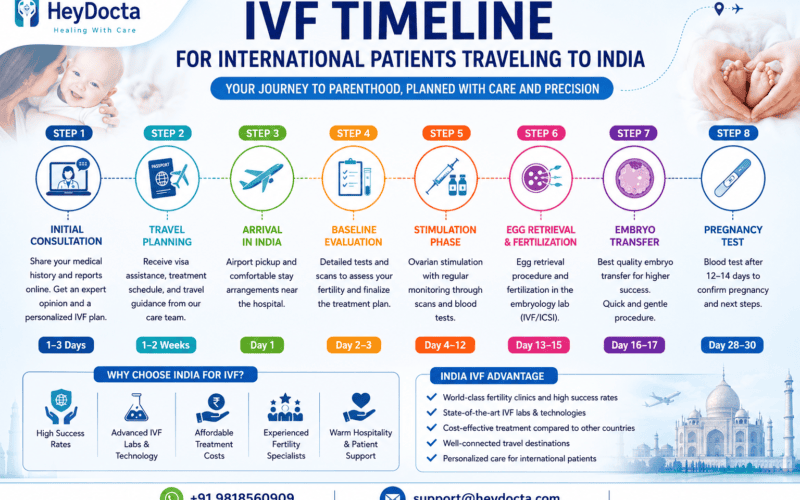
Step-by-Step Fertility Treatment Journey in India
Step 1: Online Consultation
Medical history review & fertility assessment.
Step 2: Diagnostic Testing
Hormonal tests, ultrasound, semen analysis.
Step 3: Treatment Planning
Personalized approach based on results.
Step 4: Travel & Visa Assistance
Scheduling and documentation support.
Step 5: Treatment Cycle
IUI or IVF based on medical advice.
Step 6: Monitoring & Procedures
Egg retrieval, fertilization, embryo transfer (if IVF).
Step 7: Pregnancy Testing
10–14 days after embryo transfer.
Medical Visa & Travel Support
elession.com/heydocta/ assists with:
✔ Medical visa documentation
✔ Hospital invitation letters
✔ Airport pickup & accommodation
✔ Language & local assistance
✔ Travel coordination
This ensures a smooth and stress-free experience.
Recovery, Stay Duration & Follow-Up
Typical stay in India:
- IUI: 7–10 days
- IVF cycle: 2–3 weeks
Recovery:
- Resume routine activities quickly
- Avoid strenuous activity for a few days
Follow-up care:
- Online consultations
- Medication guidance
- Pregnancy monitoring support
Frequently Asked Questions (FAQs)
1. If my periods are regular, why is my AMH low?
Regular cycles indicate ovulation, while AMH measures egg reserve — both are different fertility indicators.
2. Can I still conceive naturally?
Yes, especially if you are younger and ovulating regularly.
3. Does low AMH mean early menopause?
It may indicate reduced ovarian reserve, but menopause timing varies.
4. Is IVF necessary with low AMH?
Not always. Many women try natural conception or IUI first.
5. Should I freeze my eggs if I am not ready for pregnancy?
Egg freezing is recommended if you plan to delay motherhood.
6. Does lifestyle affect AMH levels?
Healthy habits support egg quality but may not significantly increase AMH.
7. How long should I try naturally before seeking help?
If under 35, seek help after 12 months; if over 35, after 6 months.
Final Thoughts: Regular Periods Mean Hope Still Exists
Having low AMH with regular periods does not mean pregnancy is impossible. It simply means time is important and fertility planning should begin early.
With advanced fertility care, experienced specialists, and affordable treatment options, India offers hope and accessible solutions for international patients.
? Contact elession.com/heydocta/ today to:
✔ Get a free medical opinion
✔ Understand your fertility timeline
✔ Receive cost estimates from top hospitals
✔ Plan your treatment journey with expert support
✔ Access end-to-end assistance at no extra cost
Your dream of parenthood is still within reach — and the right guidance can make all the difference.