
Infertility is a growing concern for couples around the world. Many patients from Africa (Nigeria, Kenya, Ghana, Zimbabwe, Cameroon), the Middle East, Europe, and the USA are increasingly searching for natural ways to improve fertility before moving to advanced treatments like IVF. One of the most common questions doctors hear is: Can lifestyle changes improve fertility naturally?
The answer is yes—healthy lifestyle habits can significantly support reproductive health in both men and women. However, for couples who have been trying to conceive for a long time, lifestyle changes alone may not always be enough. In such cases, advanced fertility treatments like IVF become an effective solution.
India has emerged as one of the most trusted destinations for affordable and high-quality IVF treatment, attracting thousands of international patients each year.
Why International Patients Choose India for Fertility Treatment
India is now one of the leading global hubs for IVF and fertility treatments. Patients from Africa, the Middle East, Europe, and North America often choose India because of the combination of medical expertise and affordability.
Key reasons include:
• Highly experienced fertility specialists
• Advanced IVF laboratories and technology
• International-standard hospitals
• Transparent treatment packages
• Significant cost savings compared to Western countries
Hospitals such as Yatharth Hospital and Zeeva IVF Clinic are known for providing world-class fertility services. Leading IVF specialist Dr. Amreen Singh, with over 16 years of experience, has helped many international couples achieve successful pregnancies through personalized fertility care.
Understanding Fertility and Lifestyle Factors
Fertility depends on many biological factors, but daily lifestyle habits also play an important role. Unhealthy lifestyle patterns can disrupt hormonal balance, ovulation, sperm quality, and overall reproductive health.
Common lifestyle factors that may affect fertility include:
• Poor diet and nutrition
• Obesity or underweight
• Smoking and alcohol consumption
• High stress levels
• Lack of physical activity
• Sleep disturbances
• Environmental toxins
While these factors do not always cause infertility directly, improving them can significantly enhance natural conception chances.
Lifestyle Changes That May Improve Fertility Naturally
For couples trying to conceive naturally, doctors often recommend several lifestyle modifications.
Maintain a Healthy Weight
Being overweight or underweight can disrupt hormone levels and ovulation in women and reduce sperm quality in men. Maintaining a healthy BMI can improve fertility outcomes.
Improve Your Diet
A fertility-friendly diet includes:
• Fresh fruits and vegetables
• Whole grains
• Lean proteins
• Healthy fats such as omega-3 fatty acids
• Folate-rich foods
Reducing processed foods, sugar, and trans fats can support hormonal balance and reproductive health.
Exercise Regularly
Moderate exercise helps regulate hormones, improve metabolism, and reduce stress. Activities such as walking, yoga, and swimming can be beneficial.
Reduce Stress
Chronic stress may impact hormonal balance and reproductive function. Techniques like meditation, yoga, and counseling can help manage stress levels.
Avoid Smoking and Alcohol
Smoking damages egg quality and reduces sperm count. Excessive alcohol consumption may also negatively affect fertility.
Improve Sleep Quality
Adequate sleep supports hormonal regulation and reproductive health.
It is important to remember that while lifestyle improvements can support fertility, they may not resolve underlying medical conditions such as blocked fallopian tubes, severe male infertility, or genetic issues.
When Lifestyle Changes Are Not Enough
If a couple has been trying to conceive for:
• 12 months (for women under 35)
• 6 months (for women over 35)
they should consider consulting a fertility specialist.
Common medical conditions requiring advanced treatment include:
• Polycystic Ovary Syndrome (PCOS)
• Endometriosis
• Low sperm count or poor sperm motility
• Blocked fallopian tubes
• Age-related fertility decline
In such cases, IVF treatment can significantly improve the chances of pregnancy.
IVF Treatment Options Available in India
India offers multiple IVF treatment options depending on the medical condition of the patient.
IVF with Self Eggs
In this procedure, the woman’s own eggs are used during fertilization.
Cost in India: 3300 USD
IVF with Donor Eggs
Recommended for women with poor egg quality or ovarian reserve.
Cost in India: 4500 USD
IVF with Donor Sperm
Used when male infertility is a major factor.
Cost in India: 3800 USD
IVF with TESA
TESA (Testicular Sperm Aspiration) is performed in cases where sperm cannot be collected normally.
Cost in India: 3800 USD
These treatments are performed in advanced fertility centers such as Yatharth Hospital and Zeeva IVF Clinic by experienced specialists like Dr. Amreen Singh.
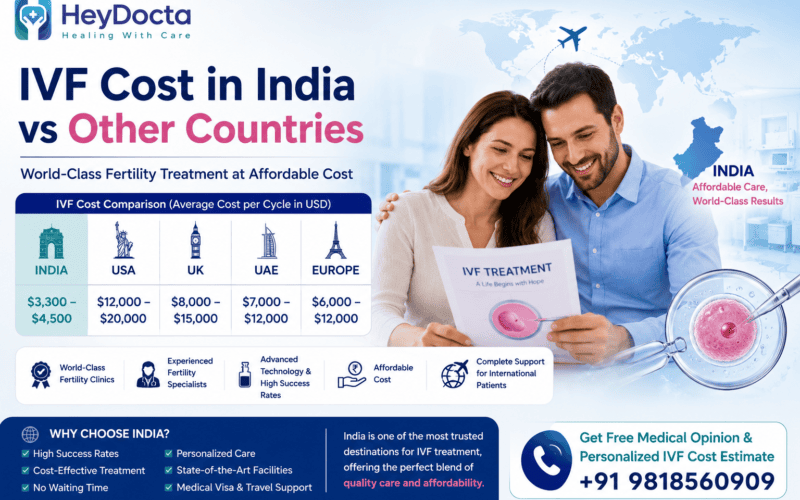
IVF Treatment Cost Comparison: India vs Other Countries
One of the biggest advantages of choosing India for IVF treatment is affordability.
| Country | Average IVF Cost |
|---|---|
| USA | 15,000 – 20,000 USD |
| UK / Europe | 10,000 – 14,000 USD |
| Middle East | 8,000 – 12,000 USD |
| Nigeria / Kenya | 6,000 – 9,000 USD |
| India | 3300 – 4500 USD |
Patients can save up to 70–80% on fertility treatments by choosing India without compromising on quality or safety.
Accommodation in India for international patients typically costs 600 to 800 USD for a 6-week stay, making the entire treatment journey affordable.
Step-by-Step IVF Treatment Process for International Patients
International patients traveling to India for IVF typically follow a structured process.
Step 1: Online Consultation
Patients share medical reports with fertility specialists in India for initial evaluation.
Step 2: Treatment Planning
Doctors recommend the most suitable IVF procedure based on medical history.
Step 3: Travel to India
Patients travel to India with the assistance of a medical visa.
Step 4: Ovarian Stimulation
The patient receives hormonal medications to stimulate egg production.
Step 5: Egg Retrieval
Eggs are collected using a minimally invasive procedure.
Step 6: Fertilization
Eggs and sperm are fertilized in a laboratory.
Step 7: Embryo Transfer
Healthy embryos are transferred into the uterus.
Step 8: Pregnancy Test
A pregnancy test is conducted approximately two weeks after embryo transfer.
The entire IVF process typically requires a stay of about 6 weeks in India.
Medical Visa and Travel Assistance
International patients traveling to India for IVF treatment require a medical visa.
heydocta.com provides complete assistance including:
• Medical visa invitation letters
• Hospital appointment scheduling
• Airport pickup and hotel booking
• Interpreter support if required
• Treatment coordination with hospitals
Our goal is to make the treatment journey smooth and stress-free for international patients.
Recovery and Follow-Up Care
Most IVF procedures are minimally invasive and allow patients to resume normal activities within a short period.
After embryo transfer, doctors recommend:
• Adequate rest
• Avoiding strenuous activity
• Healthy nutrition
• Regular follow-up consultations
Patients can also continue follow-up care remotely through online consultations after returning home.
Frequently Asked Questions
Can lifestyle changes alone cure infertility?
Lifestyle changes can improve fertility health, but they may not cure underlying medical conditions that cause infertility.
How long should we try natural methods before IVF?
Doctors usually recommend trying natural conception for 12 months (or 6 months if the woman is over 35) before seeking medical treatment.
Is IVF treatment safe in India?
Yes, IVF treatment in India is performed in advanced fertility clinics following international medical standards.
How long do international patients need to stay in India?
Most IVF treatments require about 6 weeks of stay to complete the full cycle.
Is IVF treatment affordable in India?
Yes. IVF treatment in India is significantly more affordable compared to the USA, Europe, or the Middle East.
Can international patients consult doctors before traveling?
Yes. Patients can share medical reports and receive online consultations before planning their trip.
Conclusion
Lifestyle changes such as maintaining a healthy diet, managing stress, and improving daily habits can positively impact fertility. However, for many couples facing medical infertility issues, advanced treatments like IVF may be necessary.
India offers a unique advantage for international patients—highly experienced fertility specialists, modern IVF technology, and treatment costs that are significantly lower than in many other countries.
Hospitals like Yatharth Hospital and Zeeva IVF Clinic, along with experienced IVF specialist Dr. Amreen Singh, provide comprehensive fertility care to international patients from Africa, the Middle East, Europe, and the USA.
heydocta.com serves as a trusted medical tourism partner, helping patients connect with top hospitals, manage travel logistics, and receive personalized treatment guidance.
If you are considering IVF treatment in India, our team can help you understand your options and plan your journey with confidence.
Contact heydocta.com today to Get a Free Medical Opinion, Talk to Our Medical Tourism Expert, and Receive Treatment Cost Estimates from Top IVF Hospitals in India. Our team provides end-to-end support, hospital coordination, visa assistance, and travel planning—at no extra cost to patients.