Choosing between IVF with donor eggs and IVF with self eggs is one of the most important decisions for couples facing infertility. Many international patients from Nigeria, Kenya, Ghana, the Middle East, Europe, and the USA travel to India to explore these options due to advanced fertility care and affordable costs.
Both options can be effective depending on your medical condition, age, and fertility history. Understanding the differences, success factors, and costs can help you make the right decision with confidence.
Get a Free Medical Opinion from IVF specialists in India through heydocta.com to know which option is best for you.
Why International Patients Choose India for IVF Treatment
India has become a leading destination for IVF due to its combination of quality and affordability. Patients from Africa, the Middle East, and Europe prefer India because:
- Experienced fertility specialists like Dr. Amreen Singh with 16+ years of experience
- Advanced IVF labs and modern reproductive technologies
- High success rates aligned with global standards
- No long waiting lists
- Affordable IVF packages
- Personalized care for international patients
Partner hospitals such as Yatharth Hospital and Zeeva IVF Clinic provide comprehensive fertility services with dedicated support for overseas patients.
Understanding IVF with Self Eggs vs Donor Eggs
Before choosing the right option, it is important to understand how both treatments work.
IVF with Self Eggs
In this process, the woman’s own eggs are retrieved, fertilized with sperm in a lab, and then transferred into the uterus.
This option is suitable for:
- Women under 35–38 years
- Patients with good ovarian reserve
- Couples with mild infertility issues
IVF with Donor Eggs
In this process, eggs from a healthy donor are fertilized and transferred to the recipient’s uterus.
This option is recommended for:
- Women with low ovarian reserve
- Advanced maternal age (above 38–40 years)
- Poor egg quality
- Repeated IVF failures
Both options are medically accepted and widely practiced in India under regulated guidelines.
Key Differences Between Donor Eggs and Self Eggs IVF
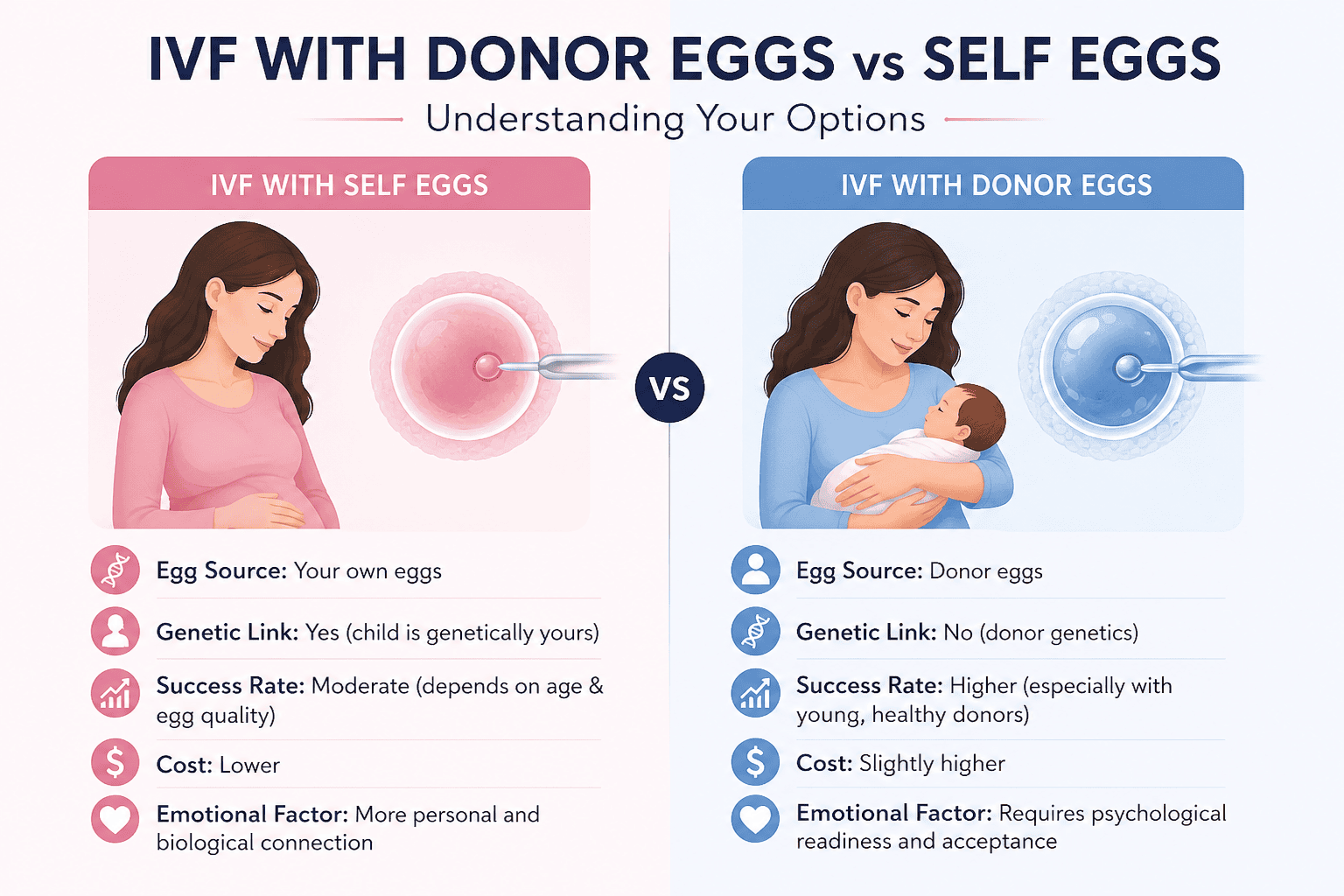
| Factor | IVF with Self Eggs | IVF with Donor Eggs |
|---|---|---|
| Egg Source | Patient’s own eggs | Donor’s eggs |
| Recommended Age | Generally recommended for younger women with a good ovarian reserve | Recommended for older women or those with low ovarian reserve, poor egg quality, or premature ovarian insufficiency |
| Success Rate | Moderate; depends on the woman’s age and egg quality | Generally higher, especially when using eggs from young, healthy donors |
| Genetic Link | Yes, the child shares the mother’s genetics | No, the child carries the donor’s genetics |
| Cost | Usually lower | Slightly higher due to donor screening, compensation, and additional procedures |
| Emotional Factors | May feel more personal because of the genetic connection | May require emotional counseling and psychological readiness to accept donor conception |
The “better” option depends on your individual medical condition and fertility goals, not just cost or success rates.
Success Rates: Which Option Has Better Outcomes?
IVF success rates vary based on several factors such as age, health, and embryo quality.
- IVF with self eggs: Success rates decline with age, especially after 35
- IVF with donor eggs: Often higher success rates due to younger, healthy donor eggs
However, success is not guaranteed in any IVF cycle. A proper medical evaluation is essential before making a decision.
Cost of IVF with Donor Eggs vs Self Eggs in India
Cost is a major deciding factor for international patients, especially from Africa and the Middle East.
IVF Package Costs in India
| Treatment Type | Estimated Cost (USD) |
|---|---|
| IVF with Self Eggs | 3,300 USD |
| IVF with Donor Eggs | 4,500 USD |
| IVF with Donor Semen | 3,800 USD |
| IVF with TESA | 3,800 USD |
Living and Stay Cost
- Duration: Around 6 weeks in India
- Cost: 600 to 800 USD
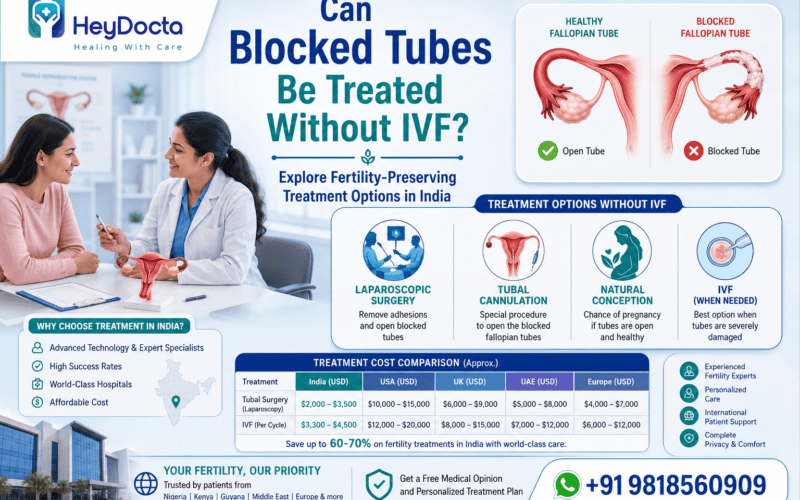
Cost Comparison: India vs Other Countries
| Country | Estimated IVF Cost (USD) |
|---|---|
| India | 3,300 – 4,500 USD |
| USA | 12,000 – 20,000 USD |
| UK | 8,000 – 15,000 USD |
| UAE | 7,000 – 12,000 USD |
| Europe | 6,000 – 12,000 USD |
Patients can save up to 70% by choosing India without compromising on quality.
Cost may vary depending on:
- Number of IVF cycles
- Medications and hormone therapy
- Donor selection and screening
- Additional procedures like ICSI
Get Treatment Cost from Top Indian Hospitals through heydocta.com with a personalized IVF plan.
Best IVF Hospitals and Specialists in India
India offers world-class fertility care with experienced doctors and modern facilities.
Partner Hospitals
- Yatharth Hospital
- Zeeva IVF Clinic
IVF Specialist
- Dr. Amreen Singh (16+ years of experience)
These centers provide ethical treatment, advanced labs, and personalized care for international patients.
Step-by-Step IVF Treatment Process
Step 1: Online Consultation
Share medical history and reports for evaluation
Step 2: Treatment Recommendation
Doctor suggests self eggs or donor eggs IVF
Step 3: Travel Planning
Medical visa and travel arrangements
Step 4: Ovarian Stimulation or Donor Preparation
Hormonal treatment for egg production or donor cycle synchronization
Step 5: Egg Retrieval and Fertilization
Eggs are retrieved and fertilized in the lab
Step 6: Embryo Transfer
Healthy embryo transferred into uterus
Step 7: Pregnancy Test
Conducted after 10–14 days
Step 8: Follow-Up Care
Continuous monitoring and support
Medical Visa and Travel Support
India provides a straightforward medical visa process. Required documents include:
- Valid passport
- Medical reports
- Hospital invitation letter
With heydocta.com, patients receive:
- Visa assistance
- Travel and accommodation arrangements
- Airport pickup
- Dedicated support team
Recovery, Stay Duration, and Follow-Up Care
Stay Duration
Approximately 6 weeks for a full IVF cycle
Recovery
- Egg retrieval: 1–2 days recovery
- Embryo transfer: minimal downtime
Follow-Up
- Online consultations after returning home
- Medication and pregnancy guidance
Patients are advised to follow all medical instructions carefully for the best possible outcome.
Frequently Asked Questions (FAQs)
Which is better: donor eggs or self eggs IVF?
It depends on your age, ovarian reserve, and medical condition. A fertility specialist can guide you after evaluation.
Is donor egg IVF safe?
Yes, donor egg IVF is a well-established and regulated procedure in India.
Will the baby be genetically related to me?
With self eggs, yes. With donor eggs, the genetic link is with the donor, but the pregnancy is carried by you.
Is donor egg IVF more successful?
In many cases, yes, especially for women with low egg quality or advanced age.
How do I choose the right option?
A detailed fertility assessment and doctor consultation are essential.
Can international patients easily access donor programs in India?
Yes, India offers structured and ethical donor programs through licensed clinics.
How long do I need to stay in India?
Around 6 to 8 weeks is recommended for a complete IVF cycle.
Conclusion
Choosing between IVF with donor eggs and self eggs is a deeply personal decision that depends on medical, emotional, and financial factors. While self eggs IVF offers a genetic connection, donor egg IVF provides higher success chances for many patients facing age-related or ovarian issues.
India offers both options with advanced technology, experienced specialists, and highly affordable costs, making it a preferred destination for international patients.
heydocta.com is your trusted medical tourism partner, providing end-to-end support including hospital coordination, transparent pricing, visa assistance, and travel planning—at no extra cost to patients.
Contact HeyDocta today to get a free medical opinion, connect with our Medical Tourism Expert via WhatsApp, and receive a personalized IVF treatment plan tailored to your needs.