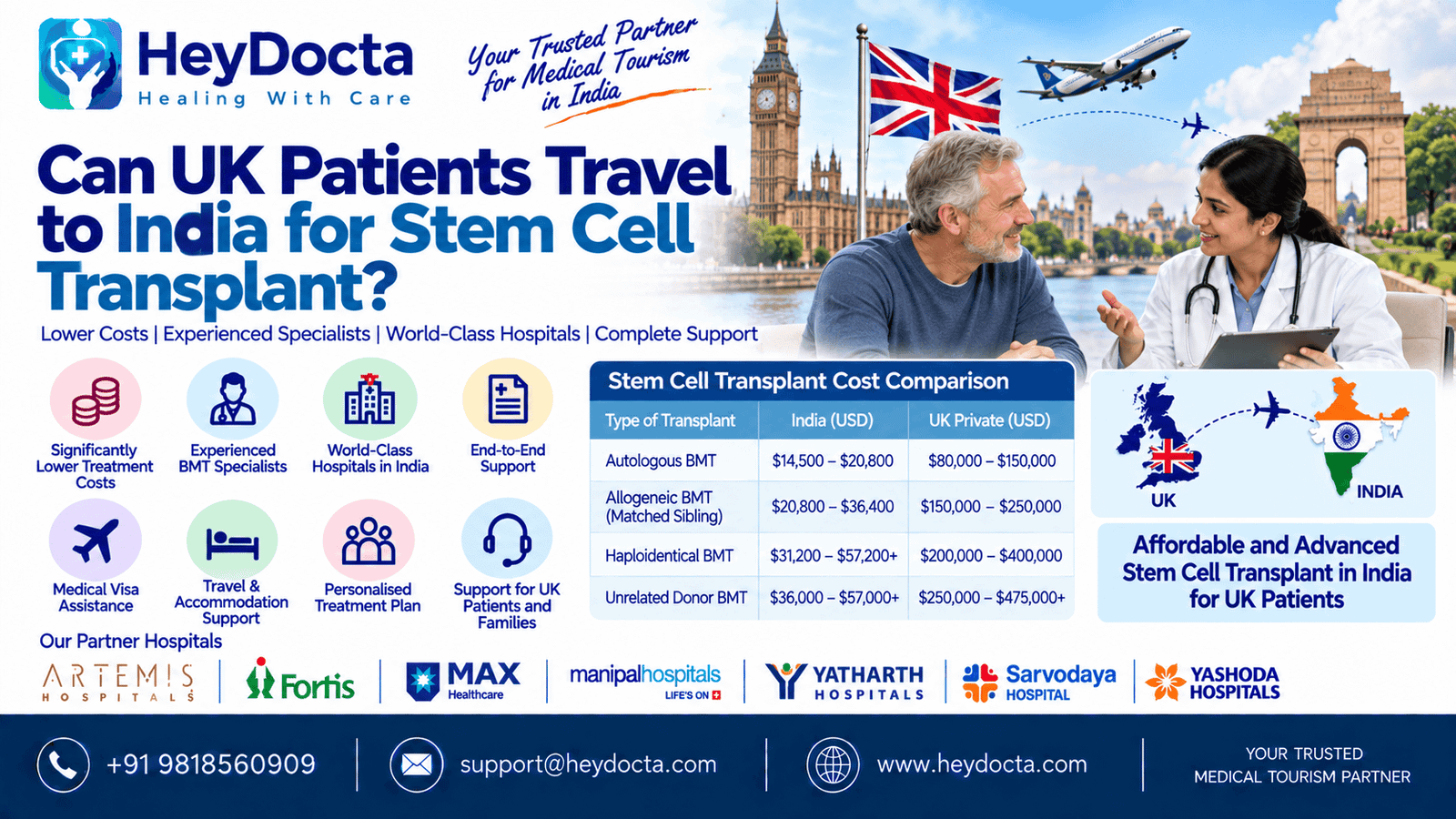
Yes, UK patients can travel to India for stem cell transplant, subject to medical suitability and the applicable Indian visa requirements. For patients from the UK who are exploring treatment abroad because of private treatment costs, waiting times, treatment preferences or the need for another specialist opinion, India can be an option to evaluate. The cost of stem cell or bone marrow transplant in India can be considerably lower than private treatment costs in the UK, although the final amount depends on the transplant type, donor requirements, medicines, hospital stay and complications.
For UK patients, the decision should consider medical quality, transplant expertise, continuity of care and the complete cost of travelling and receiving treatment abroad, not simply the headline treatment price.
Get a Free Medical Opinion: Share your medical reports with HeyDocta to coordinate a specialist review and obtain an estimated treatment plan from Indian hospitals.
Can UK Patients Get Stem Cell Transplant in India?
Yes. Eligible UK citizens can travel to India for planned medical treatment. India’s official e-Visa system includes the e-Medical Visa category, and the United Kingdom is among the countries covered by India’s e-Visa eligibility framework. The official portal states that eligible medical-visa applicants can apply online in advance and must provide the required passport information and hospital documentation.
However, receiving a medical visa does not mean that a patient is automatically suitable for transplantation. The Indian transplant team must assess the patient’s diagnosis, previous treatment, disease status, general health and donor requirements.
Why Do UK Patients Consider Stem Cell Transplant in India?
Stem cell transplantation is a complex treatment that can involve substantial medical and aftercare costs.
India has established hematology and blood-and-marrow transplant programmes in major private hospitals. Patients may also find significant differences between Indian private-hospital costs and private treatment costs in the UK.
For UK patients, however, cost should not be the only factor. The NHS advises people considering planned treatment abroad to research the medical team and facilities, understand possible complications, arrange aftercare and calculate additional travel and accommodation expenses.
What Is a Stem Cell Transplant?
A stem cell transplant, also called a hematopoietic stem cell transplant (HSCT) or bone marrow transplant, replaces damaged or diseased blood-forming stem cells with healthy stem cells.
There are two broad approaches:
- Autologous transplant: Uses the patient’s own stem cells.
- Allogeneic transplant: Uses stem cells from a donor.
Allogeneic transplantation can involve a matched sibling, another related donor, a haploidentical family donor or an unrelated donor.
The NHS explains that conditioning treatment, usually involving chemotherapy and sometimes radiotherapy, is given before transplantation. The stem cells are then infused through a vein, and the patient is monitored closely during recovery.
Conditions Treated With Stem Cell Transplant
Depending on the individual case, stem cell transplantation may be considered for conditions including:
- Leukemia
- Lymphoma
- Multiple myeloma
- Aplastic anemia
- Thalassemia
- Sickle cell disease
- Myelodysplastic syndromes
- Certain inherited blood disorders
- Selected immune-system disorders
The decision depends on the patient’s diagnosis, disease status, previous treatments, age, overall health and donor availability.
Stem Cell Transplant Cost in India for UK Patients
Current 2026 planning estimates indicate that stem cell or bone marrow transplant costs in India can vary substantially by transplant type.
| Transplant Type | Indicative Cost in India |
| Autologous BMT | USD 14,500–20,800 |
| Matched sibling allogeneic BMT | USD 20,800–36,400 |
| Haploidentical BMT | USD 31,200–57,200+ |
| Unrelated donor / complex BMT | USD 36,000–57,000+ |
These are indicative planning ranges rather than guaranteed hospital quotations. Current 2026 Indian cost data show that donor type, conditioning, hospitalisation, infection management and complications can materially change the final bill.
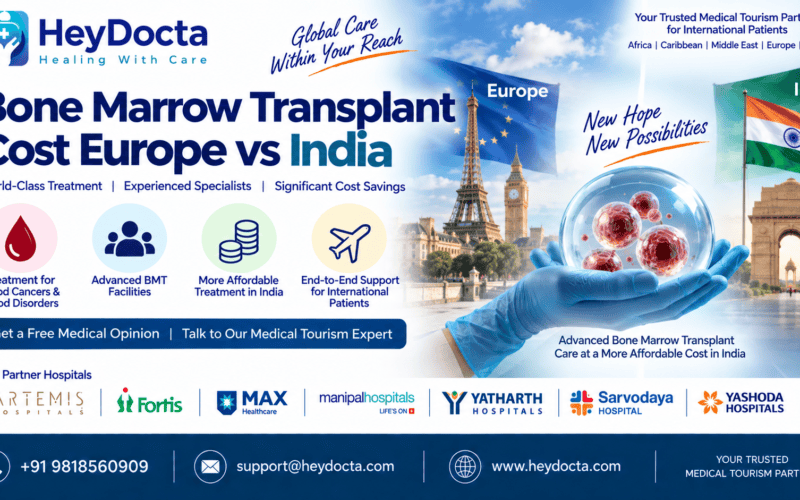
India vs UK: Stem Cell Transplant Cost Comparison
Current private-treatment estimates published in international medical-treatment guides place private BMT costs in the UK substantially above typical Indian planning ranges. One recent 2026 comparison estimates private UK treatment at approximately USD 80,000–475,000+, depending on transplant type and complexity.
| Factor | India | UK Private Treatment |
| Autologous BMT | USD 14,500–20,800 | Can be substantially higher |
| Matched allogeneic BMT | USD 20,800–36,400 | Can exceed USD 200,000 |
| Haploidentical BMT | USD 31,200–57,200+ | Can vary widely by case |
| Hospital stay | Included according to package | Depends on provider/package |
| Post-transplant medicines | May be separate | May be separate |
| Travel and accommodation | Additional | Usually not relevant for UK residents |
The UK does have NHS pathways for stem cell transplantation, so private-treatment prices should not be interpreted as the cost every UK patient would personally pay through the NHS. Patients considering self-funded treatment abroad should first discuss their situation with their UK clinical team.
The NHS also states that planned treatment outside the UK is generally not covered by a GHIC or EHIC, and treatment outside Europe does not fall under the European S2/EU Directive routes.
What Can Affect the Cost of Stem Cell Transplant in India?
The final quotation may change because of:
- Type of transplant
- Patient’s diagnosis
- Disease status
- Donor availability
- HLA matching
- Conditioning regimen
- Length of hospitalisation
- Isolation requirements
- Blood and platelet support
- Medicines
- Infection management
- ICU treatment if required
- GVHD treatment after allogeneic transplant
- Additional investigations
- Follow-up treatment
For international patients, the overall budget should also include flights, visa expenses, accommodation, food, local transportation and caregiver expenses.
Stem Cell Transplant Specialist in India
UK patients can seek an opinion from experienced BMT specialists such as Dr. Gaurav Dixit at Artemis Hospitals, Gurugram.
Artemis lists Dr. Gaurav Dixit as Head – Haematology Oncology & Bone Marrow Transplant. His listed areas include hematology, oncology, hematopoietic stem-cell transplantation and pediatric haemato-oncology. His listed transplant procedures include autologous, matched-sibling allogeneic, haploidentical and matched-unrelated donor transplantation.
The appropriate specialist should be selected according to the patient’s diagnosis, transplant type, donor situation and medical complexity.
BMT Hospitals in India for International Patients
HeyDocta can coordinate treatment enquiries with partner hospitals including:
- Artemis Hospitals
- Fortis Hospitals
- Max Hospitals
- Manipal Hospitals
- Yatharth Hospitals
- Sarvodaya Hospital
- Yashoda Hospitals
These hospitals should not be interpreted as a universal ranking. The right transplant centre depends on the patient’s medical condition and the specific expertise and facilities required.
For example, Fortis Gurugram states that its BMT programme offers autologous, allogeneic and haploidentical transplantation and has performed more than 2,500 BMTs as of June 2026.
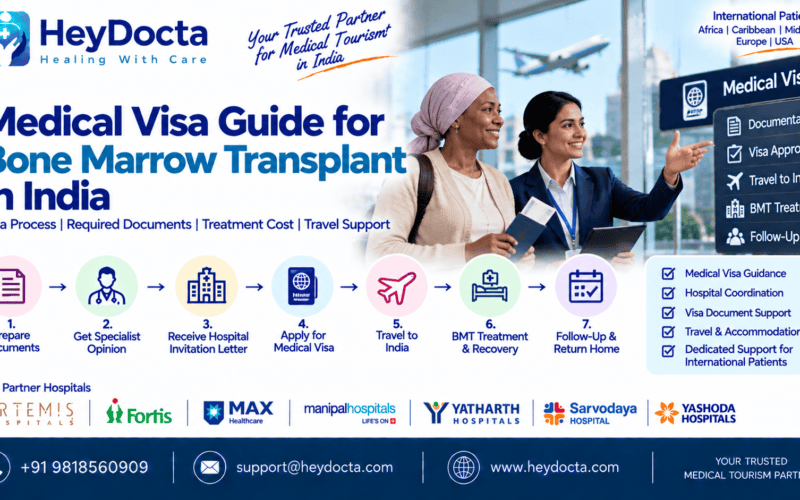
Step-by-Step Process for UK Patients
1. Share Medical Reports
Send your diagnosis, pathology, previous treatment records, blood reports, imaging and other relevant medical documents.
2. Specialist Review
A transplant specialist reviews the medical information and determines whether stem cell transplantation may be appropriate.
3. Hospital Selection
The patient can compare suitable hospitals based on transplant expertise, facilities, estimated cost and follow-up arrangements.
4. Donor Evaluation
For an allogeneic transplant, HLA testing and donor assessment are performed as required.
5. Receive the Treatment Estimate
The hospital provides a treatment plan and estimated cost based on the patient’s individual case.
6. Apply for the Indian Medical Visa
Eligible UK patients travelling for medical treatment can apply for an Indian e-Medical Visa through the official Indian e-Visa portal. The application requires the relevant passport information and hospital documentation. The current official portal states that e-Medical Visa applications can be submitted at least four days before arrival, within its specified advance-application window.
7. Travel to India
The patient travels with the passport, visa, hospital invitation/treatment documents and relevant medical records.
8. Treatment and Monitoring
The patient undergoes conditioning, stem-cell infusion and post-transplant monitoring according to the treating team’s plan.
9. Recovery and Follow-Up
The patient should remain in India for the period recommended by the transplant team before travelling back to the UK.
Talk to Our Medical Tourism Expert: HeyDocta can assist with medical reports, hospital coordination, estimated costs, visa documentation and travel planning before you travel to India.
How Long Should UK Patients Stay in India?
The required stay varies from patient to patient.
Factors include:
- Type of transplant
- Conditioning protocol
- Engraftment
- Infection risk
- Blood-count recovery
- GVHD or other complications
- Need for outpatient monitoring
The NHS notes that patients usually spend several weeks in hospital following a stem cell or bone marrow transplant and require regular follow-up after discharge. Full recovery can take much longer.
Patients should not book a fixed return flight without discussing travel with their transplant team.
Some UK transplant centres advise patients to avoid overseas travel for several months after transplantation because the immune system can remain weak and specialist care may be needed.
What Should UK Patients Ask Before Choosing India?
Before confirming treatment, ask the hospital:
- What type of transplant is recommended?
- Is my donor suitable?
- What does the treatment package include?
- What expenses are excluded?
- What happens if hospitalisation is extended?
- How are infections and complications managed?
- How long should I remain in India?
- How will follow-up be managed after returning to the UK?
- Can my UK hematologist communicate directly with the Indian transplant team?
- What medical documents will I receive for UK follow-up?
These questions can help reduce unexpected costs and improve continuity of care.
How HeyDocta Supports UK Patients
HeyDocta acts as a medical tourism facilitator for international patients travelling to India.
Our support can include:
- Medical report coordination
- Specialist consultation arrangements
- Hospital coordination
- Treatment-cost enquiries
- Medical visa assistance
- Travel planning
- Accommodation coordination
- Airport and local assistance
- Communication with hospital teams
- Follow-up coordination
HeyDocta provides this medical tourism coordination at no extra cost to patients.
FAQs About Stem Cell Transplant in India for UK Patients
1. Can UK citizens get stem cell transplant in India?
Yes. Eligible UK patients can travel to India for planned medical treatment, subject to Indian visa requirements and medical assessment.
2. How much does stem cell transplant cost in India?
Indicative 2026 costs can range from approximately USD 14,500 to USD 57,000+, depending on transplant type, donor requirements and complications.
3. Is stem cell transplant cheaper in India than private treatment in the UK?
Published 2026 private-treatment estimates indicate that UK private BMT can cost substantially more than Indian treatment, although exact costs vary by transplant type and provider.
4. Will the NHS pay for my stem cell transplant in India?
Do not assume that the NHS will fund planned BMT in India. NHS guidance states that the S2 and EU Directive routes apply to eligible treatment in specified European countries, not India. Discuss funding with your NHS clinical team before making arrangements.
5. Can a family member accompany me to India?
Eligible medical patients can have an attendant apply under India’s medical-attendant visa arrangements, subject to current visa rules and eligibility.
6. Can I return to the UK immediately after my transplant?
Usually, travel timing must be decided by the transplant team. Patients often require weeks of monitoring, and immune recovery can take considerably longer.
7. Can HeyDocta help UK patients arrange BMT in India?
Yes. HeyDocta can assist with medical reports, specialist consultations, hospital coordination, treatment-cost enquiries, visa assistance, travel planning and follow-up coordination.
Conclusion
Can UK patients travel to India for stem cell transplant? Yes. India has established transplant centres and experienced hematology teams that treat international patients. For eligible patients, Indian treatment may offer a substantially lower-cost option than private BMT in the UK.
However, the decision should not be based on cost alone. UK patients should carefully assess the transplant team’s experience, hospital facilities, donor arrangements, infection management, aftercare and the practical requirements of staying in India during recovery.
The NHS recommends discussing plans for treatment abroad with a healthcare professional, researching the overseas provider and making clear arrangements for aftercare before travelling.
Get a Free Medical Opinion: Send your medical reports to HeyDocta.com, Our team can help coordinate a specialist opinion, compare suitable partner hospitals, obtain an estimated treatment cost and assist with the medical visa and travel process.