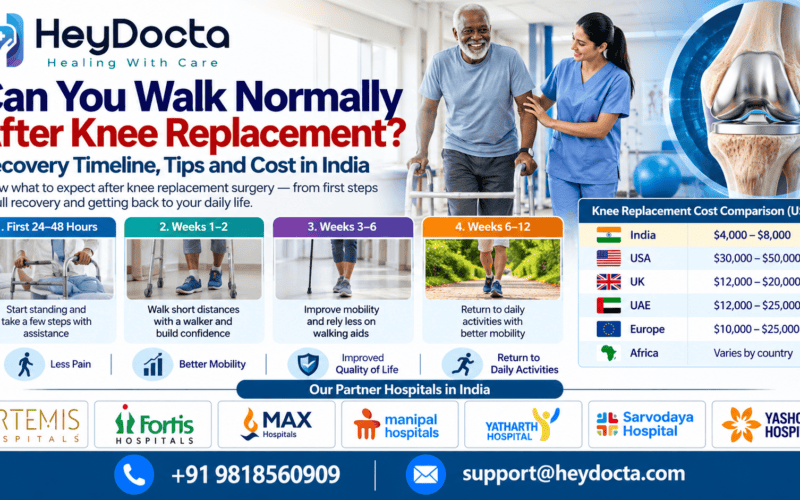
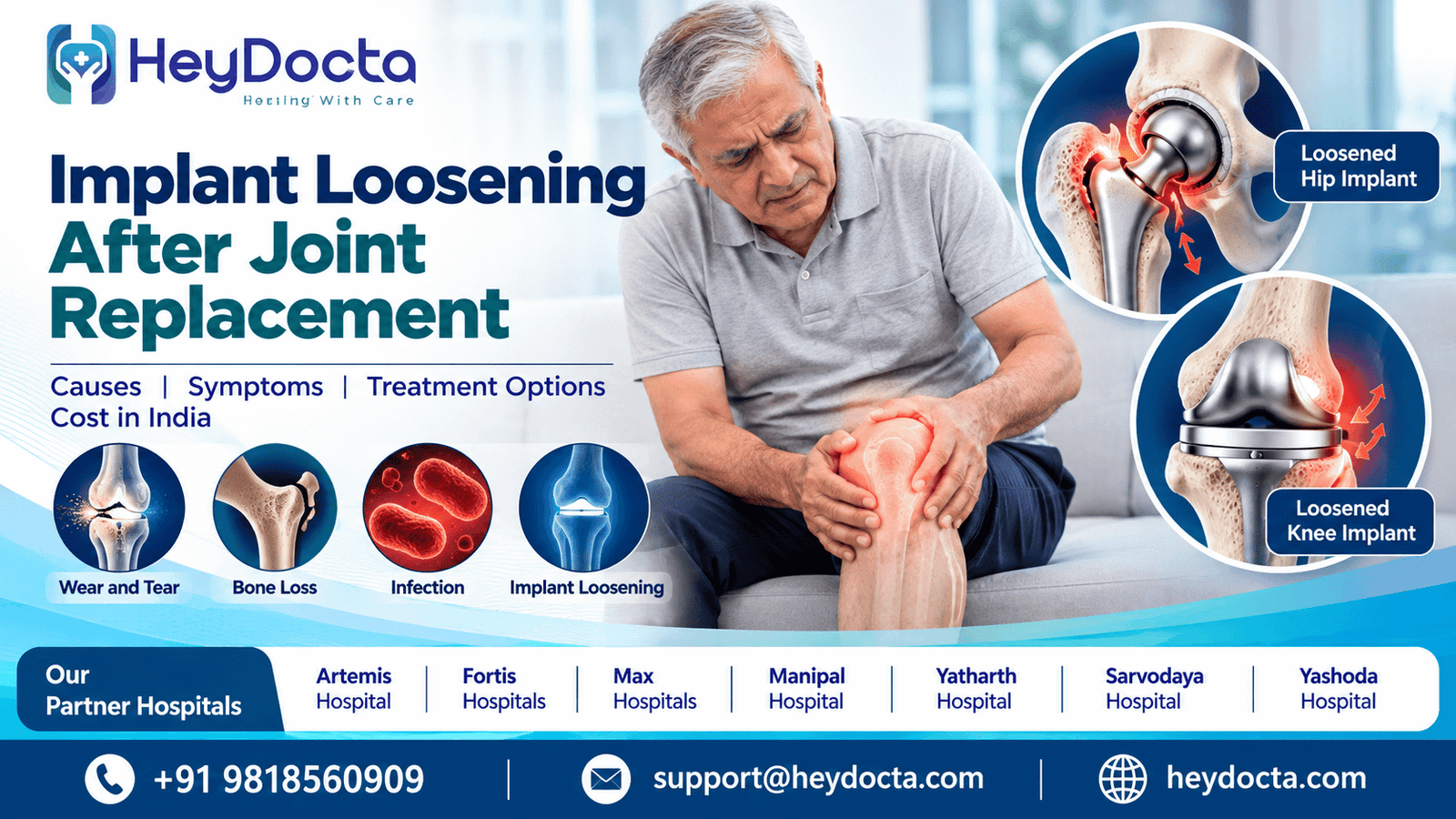
Implant loosening after joint replacement is a complication in which an artificial hip or knee component loses its secure attachment to the surrounding bone. It can cause pain, difficulty walking, reduced mobility, and the need for further treatment. For international patients experiencing these problems, understanding the causes, diagnosis, and treatment options is an important first step towards making informed decisions.
Implant loosening after joint replacement may develop gradually over time or occur alongside other complications, such as bone loss, infection, or implant wear. Depending on the severity, treatment may involve monitoring, supportive care, or revision joint replacement surgery.
For patients from Nigeria, Ghana, Kenya, Zimbabwe, Cameroon, Guyana, Jamaica, the USA, Europe, and the Middle East, India may offer access to orthopaedic specialists and comparatively affordable treatment options. However, the final cost depends on the type of implant, the extent of bone damage, and whether revision surgery is required.
HeyDocta helps international patients coordinate medical consultations, explore treatment options at partner hospitals in India, request cost estimates, and plan their medical journey.
Get a Free Medical Opinion: Visit heydocta.com to discuss your symptoms and explore suitable treatment options with support from our medical tourism team.
What Is Implant Loosening After Joint Replacement?
Joint replacement surgery involves replacing damaged joint surfaces with artificial components. In hip replacement, these components typically include a socket and a femoral stem. In knee replacement, artificial components replace the damaged joint surfaces.
These implants are designed to remain securely attached to the bone. Depending on the implant design, fixation may rely on bone cement, direct bone attachment, or a combination of methods.
Implant loosening occurs when the connection between the artificial component and the surrounding bone becomes unstable. It may affect one component or several parts of the joint replacement.
Not every painful joint replacement has a loose implant. Infection, soft-tissue problems, fractures, and pain originating elsewhere can produce similar symptoms. A specialist assessment is therefore necessary before deciding on treatment.
What Causes Implant Loosening After Hip or Knee Replacement?
Several factors can contribute to implant loosening.
1. Wear and Tear of Implant Components
Over time, artificial joint components can wear down. Particles released from bearing surfaces may trigger inflammation and bone loss around the implant, potentially causing the component to loosen.
2. Bone Loss Around the Implant
The bone surrounding an artificial joint may gradually deteriorate. This process, sometimes called osteolysis, can weaken implant fixation and reduce the support available to the artificial component.
3. Infection Around the Artificial Joint
An infection can damage surrounding tissues and interfere with the implant’s attachment to the bone. Some infections develop shortly after surgery, while others appear months or years later.
Fever, redness, swelling, warmth, wound drainage, or increasing pain may indicate infection, although symptoms can sometimes be subtle.
4. Implant Positioning and Mechanical Stress
Implant alignment, joint mechanics, bone quality, and repeated loading can influence the forces acting on a replacement joint. In some cases, abnormal mechanical stress contributes to loosening.
5. Fractures or Bone Damage
A fracture around the implant can compromise its stability. Treatment depends on the fracture pattern, bone condition, and whether the implant remains securely fixed.
6. Changes in Bone Quality
Reduced bone strength or other bone-related conditions can affect the support available to an artificial joint. The patient’s age, general health, and previous operations may also influence treatment planning.
What Are the Symptoms of a Loose Joint Replacement?
Symptoms vary depending on whether the hip or knee is affected and how much the implant has loosened.
Common warning signs include:
- Persistent or worsening pain around the replaced joint
- Pain when standing, walking, or putting weight on the leg
- Reduced walking distance or difficulty with daily activities
- A feeling that the joint is unstable
- Swelling or stiffness
- Changes in walking pattern or joint function
Hip implant loosening may cause pain around the groin, thigh, or buttock. Knee implant loosening may cause pain around the knee, particularly during weight-bearing activities.
These symptoms do not confirm implant loosening. Sudden severe pain, inability to bear weight, fever, or a hot and swollen joint requires urgent medical assessment.
How Is Implant Loosening Diagnosed?
An orthopaedic specialist evaluates symptoms, medical history, previous surgical records, and diagnostic test results.
Clinical Examination
The doctor assesses joint movement, tenderness, stability, swelling, and walking ability. Previous X-rays can be useful for comparison.
X-Rays and Other Imaging
X-rays are commonly used to identify changes around the implant, component migration, bone loss, or fractures. CT scans may provide additional information in selected cases.
Blood Tests and Joint Aspiration
If infection is suspected, blood tests may help assess inflammation. The doctor may also recommend collecting joint fluid for laboratory analysis.
Specialist Review
The findings help determine whether the implant is stable, whether infection is present, and whether revision surgery is necessary. Patients should not assume that surgery is the only treatment option.
Treatment Options for Implant Loosening After Joint Replacement in India
Treatment depends on the extent of loosening, the patient’s symptoms, the condition of the surrounding bone, and whether infection or a fracture is present.
1. Monitoring and Supportive Treatment
If an implant appears stable and symptoms are mild, the specialist may recommend monitoring, activity modification, walking aids, or other supportive measures. Physiotherapy may help address associated weakness when appropriate.
These measures cannot reliably correct a mechanically loose implant. Follow-up is important to monitor changes and prevent avoidable complications.
2. Revision Hip Replacement Surgery
Revision hip replacement involves removing and replacing some or all components of a previous artificial hip joint. The surgeon may replace the femoral stem, socket, or both, depending on the cause of loosening.
If substantial bone loss has occurred, specialised implants or bone reconstruction may be necessary.
3. Revision Knee Replacement Surgery
Revision knee replacement involves replacing the loose component or components of a previous knee implant. The procedure may require specialised revision implants, additional fixation, or reconstruction to address bone loss and restore stability.
4. Treatment for Infection-Related Loosening
When infection is responsible for implant loosening, treatment may involve antibiotics, surgical cleaning, implant removal, or revision surgery. Some patients require a two-stage procedure, with a later operation to insert a new implant after infection treatment.
The treatment plan depends on the type of infection, laboratory findings, tissue condition, and the patient’s overall health.
Implant Loosening Treatment in India: Specialist and Partner Hospitals
Patients considering treatment in India should look for an orthopaedic surgeon experienced in revision joint replacement, implant complications, and reconstruction of damaged bone.
Patients can enquire about an orthopaedic consultation with Dr Dhananjay Sabat at Yatharth Hospital through HeyDocta. Before proceeding, confirm his current clinical role, experience with revision procedures, availability, and suitability for the specific case directly with the hospital.
HeyDocta’s partner hospital network includes:
- Artemis Hospital
- Fortis Hospitals
- Max Hospitals
- Manipal Hospital
- Yatharth Hospital
- Sarvodaya Hospital
- Yashoda Hospital
The appropriate hospital depends on the patient’s diagnosis, the surgeon’s relevant experience, the availability of suitable implants, infection management facilities, rehabilitation support, and the overall treatment estimate.
Cost of Implant Loosening Treatment in India vs Other Countries
Treatment cost is a major consideration for patients travelling abroad. India may offer lower surgical and hospital expenses than many Western healthcare markets, but the final price depends on whether the patient needs diagnostic tests, conservative management, or complex revision surgery.
The following figures are illustrative budgeting estimates in US dollars for revision joint replacement, not verified hospital quotations or a like-for-like international price survey.
| Country or region | Indicative revision surgery cost |
| India | $5,000–$12,000 |
| USA | $20,000–$50,000+ |
| UK | $15,000–$30,000+ |
| Europe | $12,000–$30,000+ |
| Middle East | $10,000–$25,000+ |
| Africa, private healthcare | $6,000–$18,000+ |
Actual prices can fall outside these ranges. Costs vary by country, hospital, implant, procedure complexity, and local healthcare arrangements. Public healthcare eligibility and insurance coverage may substantially change a patient’s out-of-pocket expenses. Patients should obtain current, itemised quotations from the treating hospital.
What Factors Affect the Cost of Implant Loosening Treatment?
The total cost may depend on:
- Whether the hip or knee implant is affected
- Whether one component or the entire implant needs replacement
- The type and number of specialised revision implants
- The amount of bone loss and whether reconstruction is required
- Infection investigations and treatment
- Hospital stay, medicines, and rehabilitation
- Follow-up appointments and postoperative imaging
A straightforward revision may cost less than a complex procedure involving severe bone loss, fracture repair, or infection. Two-stage revision surgery may cost more because it can require separate operations and an extended treatment period.
How Can International Patients Reduce Uncertainty About Treatment Costs?
Before travelling, patients should request a written estimate that identifies the proposed procedure, implant costs, surgeon and anaesthesia fees, hospital charges, investigations, and expected admission duration.
They should also clarify whether infection treatment, additional investigations, extended hospitalisation, or specialised implants are included. Flights, visa fees, accommodation, local transport, and rehabilitation may be separate expenses.
Talk to a HeyDocta Medical Tourism Expert: Share your medical reports to explore a specialist opinion and request an individualised treatment estimate from our partner hospitals in India.
Why Do International Patients Consider India for Implant Loosening Treatment?
International patients may consider India because of the availability of orthopaedic services, specialist consultations, diagnostic facilities, and revision surgery options at different price points.
For patients from Africa, the Caribbean, the USA, Europe, and the Middle East, the decision should involve more than comparing advertised surgery prices.
Important considerations include:
- The treating surgeon’s experience with revision joint replacement
- Availability of suitable implants and reconstruction options
- Hospital facilities for managing complex cases and infections
- Rehabilitation and postoperative monitoring
- Transparent treatment estimates
- A practical plan for follow-up care after returning home
HeyDocta helps patients coordinate consultations with its partner hospitals, request treatment estimates, and understand the practical steps involved in travelling to India for care.
Step-by-Step Treatment Journey for International Patients
Step 1: Share Medical Records
Provide previous operation reports, implant details if available, recent X-rays, investigation results, and a description of current symptoms.
Step 2: Obtain a Specialist Opinion
The hospital’s orthopaedic team reviews the information and determines whether further imaging, blood tests, or an in-person examination is needed.
Step 3: Receive a Treatment Plan and Cost Estimate
The treating team explains the recommended approach, expected hospital stay, likely costs, and possible alternatives. The final treatment plan may change after further assessment.
Step 4: Arrange Travel and Hospital Admission
Once the medical team confirms that travel is appropriate, patients can coordinate appointments, accommodation, hospital admission, and medical visa documentation.
Step 5: Undergo Treatment and Rehabilitation
Treatment may involve monitoring, supportive care, or revision surgery. After an operation, rehabilitation is planned according to implant stability, bone condition, and the surgeon’s instructions.
Step 6: Plan Follow-Up Care
Before discharge, obtain a written medical summary, medication instructions, wound-care guidance, imaging records, and a plan for follow-up with healthcare professionals at home.
Medical Visa and Travel Assistance for International Patients
Patients travelling to India should check the current medical visa requirements applicable to their nationality and treatment arrangements. Depending on the applicable rules, documentation may include a valid passport, visa application, hospital correspondence, and relevant medical records.
HeyDocta can assist with hospital coordination, appointment scheduling, treatment estimates, and guidance on medical travel documentation. Visa approval remains the responsibility of the relevant authorities. Patients should confirm the necessary approvals before making non-refundable travel arrangements.
Recovery After Revision Joint Replacement Surgery
Recovery depends on the extent of implant loosening, the amount of bone damage, the complexity of surgery, and the patient’s general health.
After revision surgery, patients may require pain management, wound monitoring, physiotherapy, and walking aids. Some patients need to follow specific weight-bearing restrictions to protect the reconstructed joint.
Recovery may take several months, particularly when complex reconstruction or infection treatment is involved. Regular follow-up helps the medical team assess healing, mobility, and implant stability.
How Long Should International Patients Stay in India?
The treating surgeon determines the appropriate stay based on wound healing, mobility, medical stability, and the risk of complications. A straightforward revision may require several weeks of local recovery, while complex procedures or two-stage revision surgery may require a longer stay or multiple trips.
Patients should obtain medical clearance before booking their return flight. After returning home, they should continue rehabilitation with a local healthcare provider and maintain communication with their treating team in India.
Frequently Asked Questions About Implant Loosening After Joint Replacement
1. What is implant loosening after joint replacement?
Implant loosening occurs when an artificial hip or knee component loses its secure attachment to the surrounding bone. It may cause pain, instability, difficulty walking, and, in some cases, the need for revision surgery.
2. What are the symptoms of a loose hip or knee implant?
Common symptoms include worsening pain during walking, reduced mobility, joint instability, and discomfort when putting weight on the affected leg. These symptoms require medical assessment because other conditions can cause similar problems.
3. Can implant loosening be treated without surgery?
Some patients can be monitored or receive supportive treatment when the implant remains stable and there is no complication requiring surgery. However, a mechanically loose implant may require revision surgery, particularly if symptoms worsen or bone loss progresses.
4. What is the cost of revision surgery for implant loosening in India?
Illustrative budgeting estimates range from $5,000 to $12,000 for revision joint replacement, although actual costs may be higher or lower. The final amount depends on the implant, surgical complexity, hospital stay, and whether infection or bone reconstruction is involved.
5. Is revision joint replacement more complicated than the original surgery?
Revision surgery is often more complex because the surgeon may need to remove existing components, address scar tissue, reconstruct damaged bone, or treat infection. Recovery and risks vary according to the patient’s condition and the procedure required.
6. Which hospitals can international patients consider for treatment in India?
HeyDocta can help patients explore consultations through its partner network, which includes Artemis Hospital, Fortis Hospitals, Max Hospitals, Manipal Hospital, Yatharth Hospital, Sarvodaya Hospital, and Yashoda Hospital. The selected hospital should be appropriate for the specific diagnosis and treatment requirements.
7. Can international patients return home after revision surgery?
Yes, when the treating team determines that travel is medically appropriate. Patients should have discharge records, medication instructions, a follow-up plan, and arrangements for rehabilitation and urgent medical care at home.
Conclusion: Explore Affordable Implant Loosening Treatment in India
Implant loosening after joint replacement can affect mobility, independence, and quality of life. Early assessment helps identify the cause and determine whether monitoring, supportive care, or revision surgery is appropriate.
India may offer comparatively affordable treatment options for international patients, but the right decision depends on clinical suitability, the surgeon’s experience, hospital facilities, implant availability, rehabilitation services, and the total cost of treatment and travel.
HeyDocta supports patients from Nigeria, Ghana, Kenya, Zimbabwe, Cameroon, Guyana, Jamaica, the USA, Europe, and the Middle East by coordinating medical opinions, connecting them with partner hospitals, requesting treatment estimates, and helping organise their medical journey.
Get a Free Medical Opinion with HeyDocta. Visit heydocta.com or contact our team at +91 98185 60909 or support@heydocta.com to discuss your symptoms, share your medical reports, and explore suitable implant loosening treatment options in India. Our team can help you understand the next steps, compare available estimates, and plan your treatment journey with greater clarity.