Robotic knee replacement is an advanced surgical option for patients experiencing severe knee pain, stiffness and difficulty walking because of arthritis or joint damage. For international patients from Nigeria, Ghana, Kenya, Zimbabwe, Cameroon, Guyana, Jamaica, the USA, Europe and the Middle East, robotic knee replacement in India may offer access to specialist orthopaedic care at comparatively affordable private-treatment costs.
The procedure uses computer-assisted technology to help surgeons plan and perform parts of knee replacement surgery. It can assist with implant positioning and alignment, but the surgeon remains in control throughout the operation. Robotic surgery does not guarantee faster recovery, less pain or a longer-lasting implant for every patient.
This guide explains the benefits, procedure, recovery timeline and estimated robotic knee replacement cost in India compared with other countries.
Get a Free Medical Opinion : Contact HeyDocta to request a medical opinion, compare treatment estimates at partner hospitals and understand the likely expenses before planning your journey.
What Is Robotic Knee Replacement?
Robotic knee replacement is a form of total or partial knee replacement in which specialised technology assists the orthopaedic surgeon with surgical planning and selected steps of the procedure.
Knee replacement is commonly recommended for patients with advanced osteoarthritis, rheumatoid arthritis or other conditions that severely damage the joint. When medicines, physiotherapy, activity modification and other non-surgical treatments no longer provide sufficient relief, surgery may be considered.
During robotic-assisted surgery, the surgeon uses a robotic platform to help plan bone preparation and implant placement. Depending on the system, the technology may use preoperative scans or anatomical mapping and provide guidance during the operation.
The robot does not independently perform the entire surgery. The surgeon makes the clinical decisions and controls the procedure.
Benefits of Robotic Knee Replacement
Robotic-assisted knee replacement may offer several potential benefits, depending on the patient’s condition and the technology used.
1. Personalised Surgical Planning
Some robotic systems allow surgeons to develop a plan based on the patient’s knee anatomy. This can help guide decisions about implant positioning and alignment.
2. Assistance With Implant Positioning
Robotic guidance can help the surgeon carry out planned bone cuts and position implant components. The actual result depends on the surgical system, the surgeon and the patient’s anatomy.
3. Detailed Intraoperative Feedback
Certain systems provide information about knee movement, alignment or soft-tissue balance during surgery. This may help the surgeon make adjustments when clinically appropriate.
4. Potential Improvements in Surgical Precision
Robotic assistance may improve the accuracy or consistency of some technical measurements. However, greater technical precision does not automatically translate into better long-term outcomes for every patient.
5. A Structured Rehabilitation Plan
Patients generally receive a rehabilitation programme designed to restore knee movement, muscle strength and walking ability. Robotic technology does not remove the need for physiotherapy.
Is Robotic Knee Replacement Better Than Traditional Surgery?
Both robotic-assisted and traditional knee replacement can provide meaningful improvements for appropriately selected patients. Traditional surgery remains an established treatment option and may be less expensive.
The best approach depends on the severity of joint damage, knee anatomy, surgeon’s experience, available technology, expected benefits and budget. Patients should ask whether robotic assistance offers a meaningful advantage in their individual case.
Who May Need Robotic Knee Replacement?
An orthopaedic specialist may consider knee replacement when joint damage causes persistent symptoms and significantly affects everyday activities.
Possible indications include:
- Advanced osteoarthritis with substantial cartilage loss.
- Persistent knee pain despite appropriate non-surgical treatment.
- Difficulty walking, climbing stairs or standing for long periods.
- Knee stiffness that limits daily activities.
- Joint deformity or selected alignment problems.
- Significant joint damage confirmed through clinical assessment and imaging.
Robotic-assisted surgery is not suitable or necessary for everyone. The decision should be based on a medical assessment rather than the technology alone.
Robotic Knee Replacement Procedure: Step by Step
Step 1: Consultation and Medical Evaluation
The orthopaedic surgeon reviews the patient’s symptoms, medical history, medications, previous treatments and imaging. Blood tests and other investigations may be required before surgery.
Step 2: Surgical Planning
Depending on the robotic system, the surgeon uses scans or anatomical mapping to plan the procedure. The plan considers the patient’s knee anatomy and the intended implant position.
Step 3: Anaesthesia and Preparation
The procedure is performed under an appropriate anaesthetic technique. The surgical team prepares the knee and follows infection-prevention measures.
Step 4: Robotic-Assisted Surgery
The surgeon removes damaged joint surfaces and prepares the bone for the artificial implant. The robotic platform provides guidance during selected stages, while the surgeon controls the operation and makes necessary adjustments.
Step 5: Implant Placement
The artificial joint components are positioned and assessed for movement, stability and alignment. The wound is then closed, and the patient moves to postoperative monitoring.
Step 6: Early Rehabilitation
When medically appropriate, patients begin standing and walking with assistance. Physiotherapy focuses on safe movement, knee flexibility and strengthening.
Robotic Knee Replacement Cost in India
Treatment cost is an important consideration for patients travelling from Africa, the Caribbean, the Middle East, Europe and the USA. India may offer lower private-treatment costs than several high-cost healthcare markets, although the final price depends on the hospital, implant and individual medical requirements.
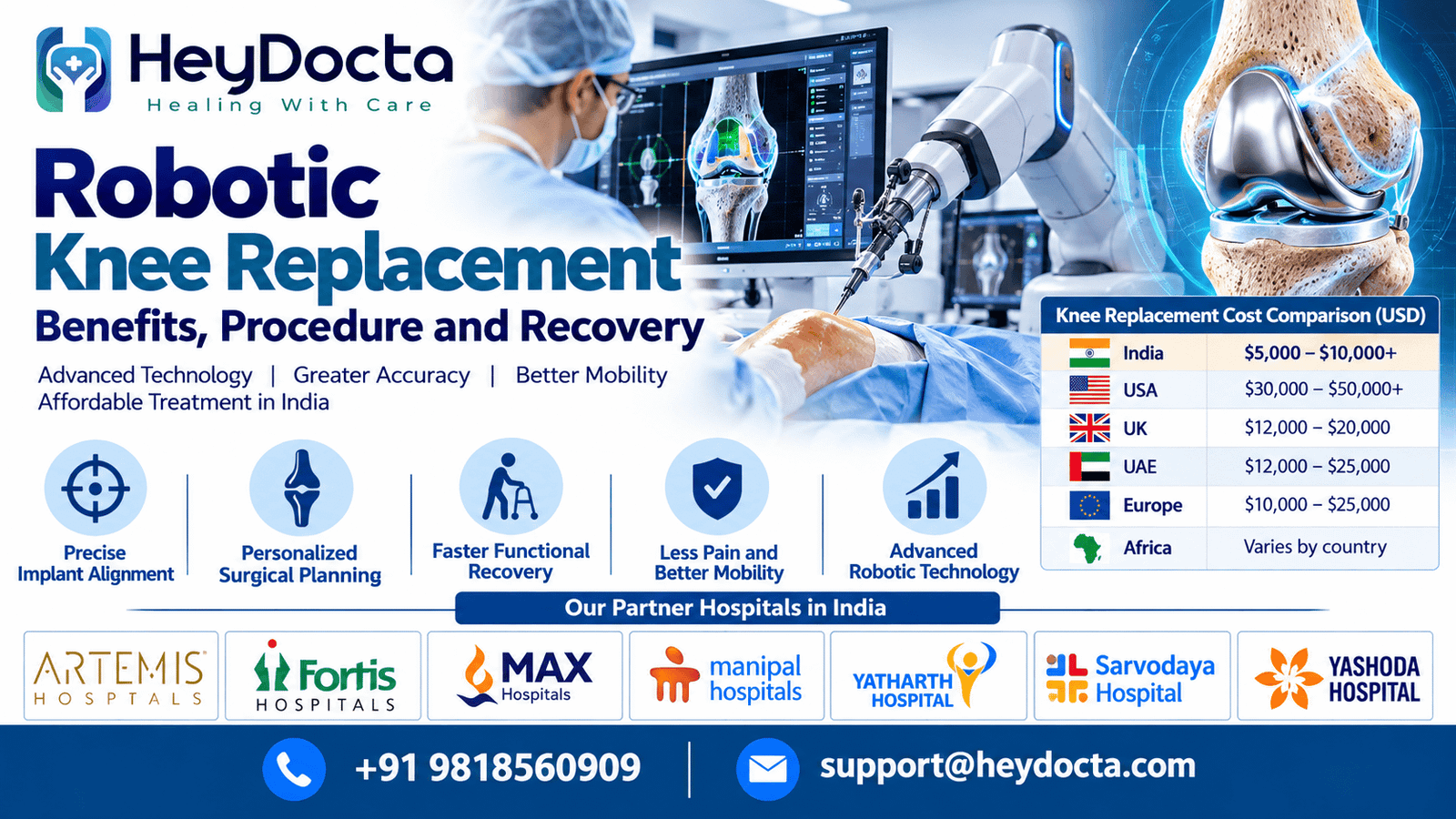
The following figures are indicative planning estimates in USD, not confirmed quotations from individual hospitals.
| Procedure or country | Estimated cost |
| Robotic knee replacement in India | $5,000–$10,000+ |
| Traditional knee replacement in India | $4,000–$8,000 |
| Robotic knee replacement in the USA | $30,000–$50,000+ |
| Private knee replacement in the UK | $12,000–$20,000 |
| Private knee replacement in the UAE | $12,000–$25,000 |
| Private knee replacement in Europe | $10,000–$25,000 |
| Knee replacement in Africa | Varies by country and hospital |
These estimates are broad budgeting ranges. They may not represent equivalent procedures or identical package inclusions. Robotic-specific prices in other countries can vary substantially, and the figures above should not be interpreted as verified robotic-surgery quotations for every region.
Public healthcare eligibility, insurance and local funding arrangements may also affect the amount a patient pays in the UK and Europe.
What Affects the Total Cost?
The final robotic knee replacement cost may depend on:
- The robotic platform and technology used.
- Implant brand, material and design.
- Surgeon, anaesthesia and operating theatre fees.
- Hospital room category and length of admission.
- Preoperative tests and treatment of existing conditions.
- Medicines and initial physiotherapy.
- Additional care if complications occur.
International patients should also budget for flights, visa expenses, accommodation, local transport, rehabilitation and follow-up care.
Before confirming surgery, request a written quotation showing what is included and excluded. Ask whether robotic technology charges, the implant, medicines, hospital stay and initial physiotherapy are part of the package.
Want to compare treatment costs? HeyDocta can help you request estimates from partner hospitals and clarify package inclusions before you make travel arrangements.
Robotic Knee Replacement Specialist and Partner Hospitals in India
Patients considering knee replacement at Yatharth Hospital can enquire about Dr. Dhananjay Sabat and his current orthopaedic and joint replacement services. Confirm his current designation, relevant experience, hospital affiliation and suitability for your condition directly with the hospital.
HeyDocta’s partner hospitals include:
- Artemis Hospitals
- Fortis Hospitals
- Max Hospitals
- Manipal Hospital
- Yatharth Hospital
- Sarvodaya Hospital
- Yashoda Hospital
The availability of robotic knee replacement systems, specific implants and individual surgeons varies by hospital. Patients should confirm which technology is currently available and whether it is appropriate for their case.
When comparing hospitals, consider the surgeon’s experience, implant options, infection-prevention practices, rehabilitation facilities, written costs and arrangements for follow-up care—not just whether robotic technology is offered.
Recovery After Robotic Knee Replacement
Recovery varies depending on age, general health, muscle strength, surgical factors and rehabilitation progress. Robotic assistance does not guarantee a shorter recovery period.
| Recovery stage | What patients may experience |
| First 1–3 days | Pain management, wound monitoring and assisted walking when appropriate |
| Weeks 1–2 | Wound review, mobility exercises and continued physiotherapy |
| Weeks 3–6 | Gradual improvement in walking, knee movement and daily activities |
| Weeks 6–12 | Continued strengthening and functional improvement |
| After 3 months | Further progress may occur over several months, depending on the patient |
These are general expectations, not a personalised recovery schedule. Some patients need more time or additional rehabilitation.
International patients should discuss the length of their stay with the treating surgeon before booking return flights. A stay of approximately 2–3 weeks may be an initial planning estimate for uncomplicated cases, but some patients need longer. The surgeon must confirm when travel is medically appropriate.
Long-haul travel after major surgery can increase the risk of blood clots. Patients should follow medical advice on travel timing and preventive measures.
Medical Visa and Travel Support for International Patients
Patients travelling to India should check the latest visa requirements for their nationality and treatment. Hospital appointments, supporting documents and travel arrangements should be coordinated before departure.
HeyDocta can assist with hospital coordination, appointment scheduling, treatment estimates and travel guidance. Patients should arrange suitable accommodation and understand their rehabilitation needs before travelling.
HeyDocta provides medical tourism facilitation without an additional facilitation charge to patients. Hospital treatment, medicines, investigations, flights, accommodation, visa fees and other third-party expenses remain separate.
Frequently Asked Questions
1. What is robotic knee replacement?
Robotic knee replacement is a surgical procedure in which a robotic platform assists the surgeon with planning and selected stages of implant placement. The surgeon remains in control of the operation.
2. Is robotic knee replacement safer than traditional surgery?
Both approaches have potential benefits and risks. The outcome depends on the patient’s condition, surgical expertise, infection-prevention practices and other clinical factors. Robotic assistance does not eliminate surgical risks.
3. How much does robotic knee replacement cost in India?
A broad planning estimate is $5,000–$10,000 or more. The actual cost depends on the hospital, implant, technology, medical needs and package inclusions.
4. Does robotic knee replacement recover faster?
Some patients may experience early functional benefits, but faster recovery is not guaranteed. Rehabilitation and individual health factors remain important.
5. How long does a robotic knee implant last?
Many modern knee replacements last 15–20 years or longer, although implant lifespan varies. Robotic assistance does not guarantee a longer-lasting implant.
6. How long should international patients stay in India?
Approximately 2–3 weeks may be an initial planning estimate after uncomplicated surgery, but the required stay varies. The treating surgeon must assess recovery and fitness to fly.
7. Does HeyDocta charge patients for coordination?
HeyDocta provides medical tourism facilitation without an additional facilitation charge to patients. Hospital, travel, visa, accommodation and other third-party expenses remain separate.
Conclusion: Is Robotic Knee Replacement in India Right for You?
Robotic knee replacement combines established joint replacement surgery with technology-assisted planning and surgical guidance. It may help surgeons achieve planned implant positioning, but it does not guarantee better outcomes for every patient. Traditional knee replacement remains a suitable and often more affordable alternative for many people.
For international patients, India may offer comparatively affordable private-treatment options, subject to the hospital, implant and individual medical requirements. Compare written quotations, discuss the expected benefits with an orthopaedic specialist and include travel, rehabilitation and follow-up costs in your budget.
Contact HeyDocta.com to request a medical opinion, compare robotic knee replacement costs at partner hospitals and plan your treatment journey in India.