If chronic back pain, spinal instability, deformity, nerve compression or a previous failed spine operation is affecting your daily life, you may be wondering whether advanced robotic technology could be used for your treatment. Who is eligible for robotic spine surgery? Generally, robotic assistance may be considered for patients who require spinal procedures involving precise planning and implant placement, such as spinal fusion, deformity correction or selected revision surgeries. However, eligibility depends on the diagnosis, spinal anatomy, overall health, imaging findings and the type of operation recommended by a spine surgeon.
For international patients from Nigeria, Ghana, Kenya, Zimbabwe, Cameroon, Guyana, Jamaica, the USA, Europe and the Middle East, India provides access to experienced spine specialists, advanced surgical technologies and comparatively affordable treatment options.
Get a Free Medical Opinion: Share your MRI, CT scans, X-rays and previous medical records with HeyDocta to understand whether robotic-assisted spine surgery may be suitable for your condition.
What Is Robotic Spine Surgery?
Robotic spine surgery is a technology-assisted approach that helps a spine surgeon plan and perform certain parts of an operation with greater precision.
Despite the name, a robot does not independently perform the surgery. The surgeon remains in control throughout the procedure. Depending on the system being used, robotic technology may help with preoperative planning, navigation and accurate positioning of surgical instruments or spinal implants.
Robotic assistance is commonly associated with procedures requiring spinal instrumentation, particularly the placement of pedicle screws during spinal fusion.
It may be used alongside:
- Minimally invasive spine surgery
- Spinal fusion
- Computer-assisted navigation
- Complex spinal reconstruction
- Deformity correction
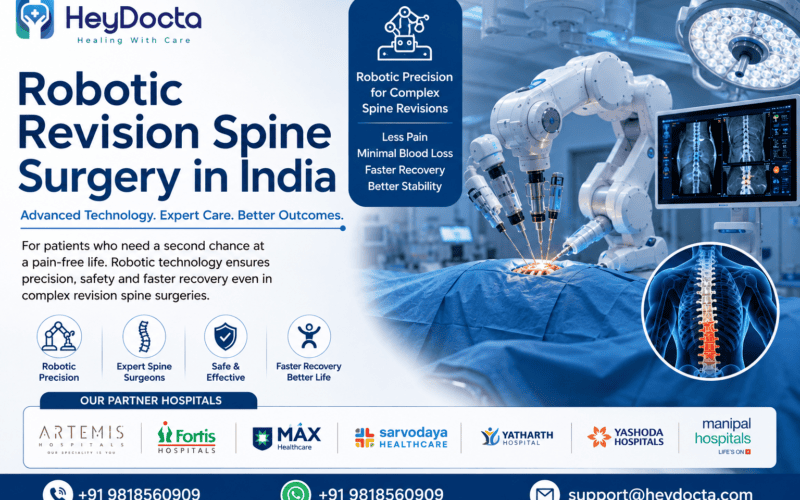
- Revision spine surgery
- Pedicle screw fixation
Not every spine procedure requires robotic assistance, and its availability differs between hospitals.
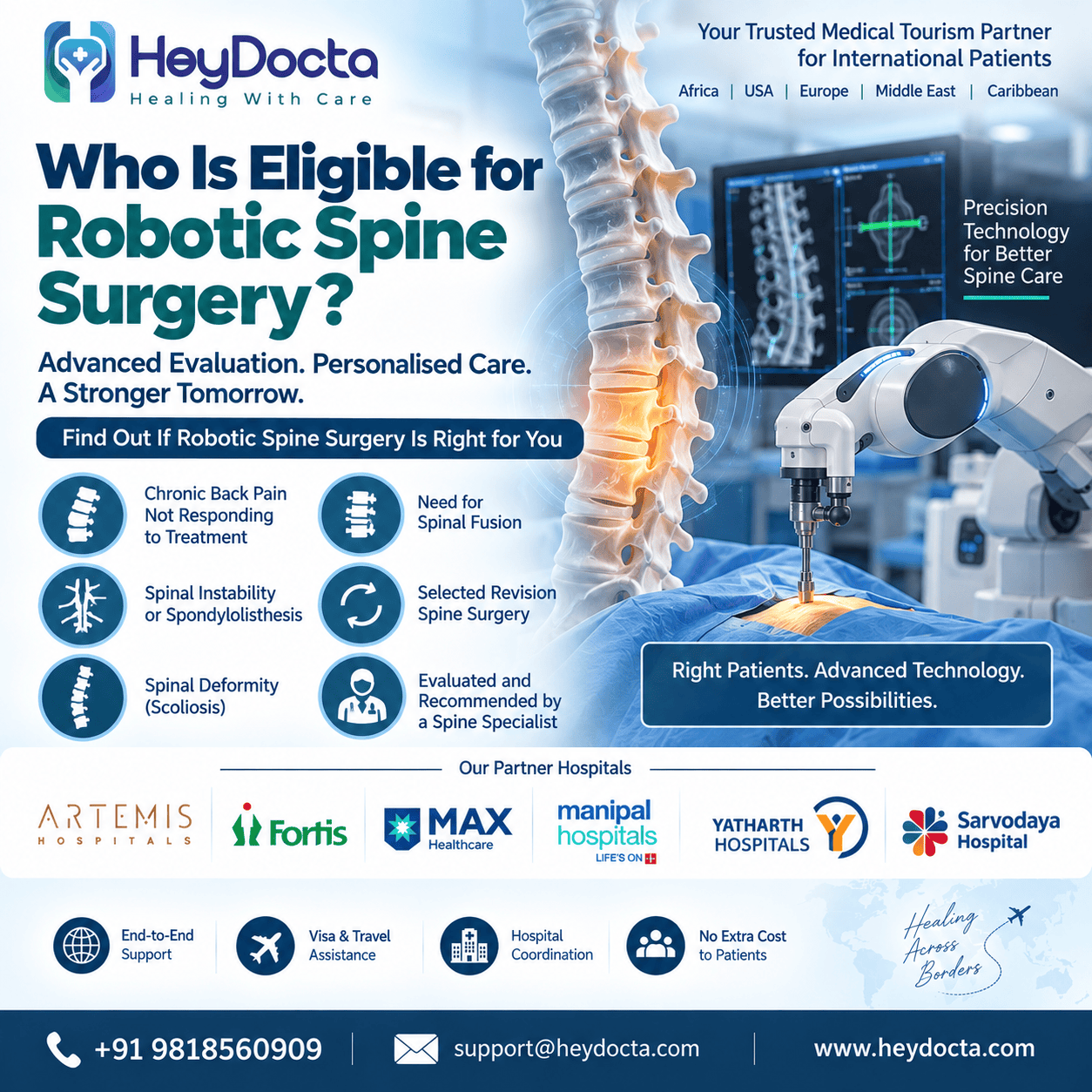
Who Is Eligible for Robotic Spine Surgery?
Eligibility is determined individually. Having back pain or a spinal condition does not automatically mean that a patient needs surgery or that robotic technology will provide additional benefit.
A spine specialist generally evaluates the patient’s symptoms, neurological findings, MRI or CT results, previous treatments, overall health and proposed operation.
Patients undergoing the following procedures or dealing with these conditions may potentially be considered.
1. Patients Requiring Spinal Fusion
Spinal fusion involves joining two or more vertebrae to improve stability in selected spinal conditions.
The procedure often requires screws, rods or other implants. Robotic guidance may assist the surgeon in planning and positioning these implants.
Spinal fusion may be considered for selected cases involving instability, degenerative disease, deformity or other conditions.
2. Patients With Degenerative Spine Conditions
Age-related changes can affect spinal discs, joints and surrounding structures.
Some patients with degenerative spinal disease develop persistent pain, instability or nerve compression that does not adequately respond to conservative treatment.
When surgery involving fixation or fusion is medically indicated, robotic assistance may be considered.
3. Patients With Spondylolisthesis
Spondylolisthesis occurs when one vertebra moves forward or backward relative to another.
Depending on its severity and symptoms, treatment can range from physiotherapy and medication to decompression and spinal fusion.
Robotic guidance may be useful when instrumentation is required.
4. Patients With Spinal Deformity
Conditions such as scoliosis and certain other spinal deformities may require complex reconstruction.
These procedures can involve placing multiple implants across several spinal levels. Robotic or navigation technology may provide additional assistance with surgical planning and implant trajectories.
5. Selected Revision Spine Surgery Patients
Revision spine surgery may be required when a patient continues to experience problems following a previous operation or develops issues such as implant failure, non-union, recurrent compression or progressive deformity.
Previous surgery can alter normal spinal anatomy, making subsequent procedures more technically challenging.
Robotic navigation may be useful in selected revision cases because it can help surgeons plan around altered anatomy.
6. Patients Requiring Minimally Invasive Spine Surgery
Some robotic systems can be combined with minimally invasive surgical techniques.
Instead of exposing a large area of the spine, surgeons may perform selected procedures through smaller surgical approaches. Robotic guidance can help identify planned implant trajectories.
Whether a minimally invasive approach is appropriate depends on the specific condition and surgical objective.
Who May Not Be Suitable for Robotic Spine Surgery?
Robotic technology is not appropriate or necessary for every patient.
A surgeon may recommend another approach when:
- Surgery itself is not medically indicated
- Conservative treatment remains appropriate
- The planned operation does not benefit meaningfully from robotic guidance
- The required robotic technology is unsuitable for the specific procedure
- A patient’s medical condition creates unacceptable surgical or anaesthetic risk
- Emergency circumstances require another surgical approach
- Imaging or anatomical factors limit the usefulness of a particular robotic platform
Age alone does not necessarily determine eligibility. Older patients may still undergo spine surgery if their overall health, bone quality and clinical condition make surgery appropriate.
Similarly, younger age does not automatically make someone a suitable candidate.
How Doctors Determine Eligibility for Robotic Spine Surgery
A detailed medical evaluation is essential before recommending surgery.
Medical History
The doctor reviews symptoms, previous treatments, medications, chronic medical conditions and previous spine operations.
Neurological Examination
Strength, sensation, reflexes, walking ability and other neurological functions may be evaluated.
MRI and CT Imaging
MRI can provide detailed information about discs, nerves and soft tissues, while CT imaging can provide important information about bone anatomy.
X-Rays
Standing or dynamic X-rays may help assess spinal alignment, instability or deformity.
Previous Treatment
Many spinal conditions are initially treated with non-surgical approaches such as physiotherapy, medication or other appropriate therapies.
Surgery is usually considered when symptoms, structural problems and clinical findings justify an operative approach.
Why International Patients Choose India for Robotic Spine Surgery
International patients increasingly consider India for complex medical and surgical treatment because of the combination of specialised doctors, modern hospitals and comparatively competitive costs.
Experienced Spine Surgeons
Indian hospitals have specialists experienced in orthopaedic spine surgery, neurosurgery, minimally invasive procedures, spinal fusion and complex reconstruction.
Advanced Technology
Selected hospitals provide robotic-assisted systems, computer navigation, advanced imaging and modern operating theatres.
Patients should confirm the exact robotic technology available at their selected hospital because not every facility uses the same platform.
Affordable Spine Treatment
Cost is particularly important for patients paying for treatment themselves.
India can offer lower treatment costs than the USA and many hospitals in Europe and the Middle East while providing access to advanced tertiary-care facilities.
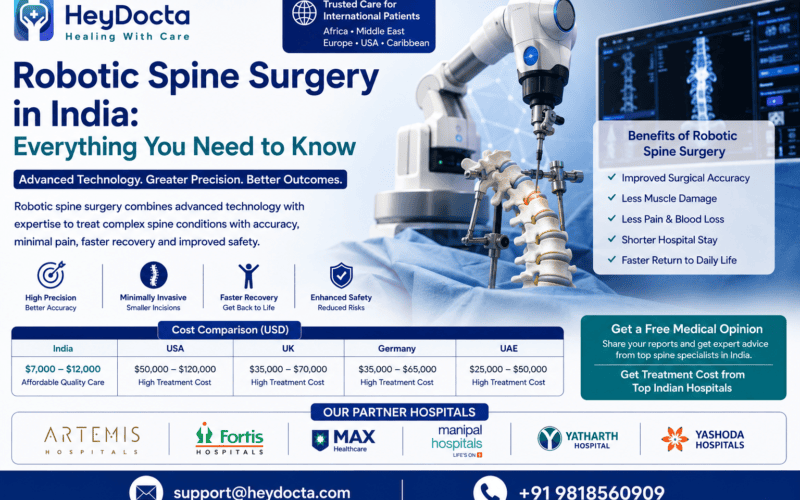
Robotic Spine Surgery Cost in India vs Other Countries
There is no single price for robotic spine surgery because the final cost depends heavily on the procedure.
The number of spinal levels, implants, hospital, surgeon, robotic technology, length of stay and complexity of the patient’s condition can all affect the final quotation.
| Country/Region | Indicative Spine Surgery Cost |
| India | USD 4,000–12,000+ |
| Middle East | USD 10,000–25,000+ |
| Europe | USD 15,000–35,000+ |
| USA | USD 25,000–70,000+ |
| Africa | Varies by country and availability |
These are broad indicative ranges rather than fixed prices or guaranteed quotations. Robotic-assisted procedures may involve additional technology or navigation charges.
Patients comparing quotations should check whether the estimate includes:
- Surgeon and anaesthetist fees
- Hospital stay
- Operating theatre charges
- Robotic or navigation charges
- Spinal implants
- Diagnostic investigations
- Medicines and consumables
- ICU care, if required
- Physiotherapy
- Follow-up consultations
The lowest quotation is not necessarily the most appropriate treatment choice. Surgical experience, hospital facilities, implant quality and postoperative support should also be considered.
Get Treatment Cost from Top Indian Hospitals: Send your medical reports to HeyDocta to request an individual treatment estimate based on your diagnosis and recommended procedure.
Leading Spine Surgeons and Hospitals in India
International patients should select their surgeon according to the specific spinal condition and procedure required.
Dr. Hitesh Garg at Artemis Hospital and Dr. Jitesh Manghwani at Max Hospital are spine specialists considered by international patients seeking advanced spine treatment in India.
A direct medical assessment is necessary before determining whether robotic-assisted surgery is appropriate.
HeyDocta’s partner hospital network includes:
- Artemis Hospital
- Fortis Hospitals
- Max Hospitals
- Manipal Hospitals
- Yatharth Hospital
- Sarvodaya Hospital
The availability of specific doctors, robotic systems and procedures should be confirmed when planning treatment.
Robotic Spine Surgery in India: Step-by-Step Process
Step 1: Share Your Medical Records
International patients can initially send MRI scans, CT scans, X-rays, medical reports and previous surgical records electronically.
Step 2: Specialist Evaluation
A spine specialist reviews the records to understand the diagnosis and determine whether further investigations or surgery may be required.
Step 3: Determine Robotic Surgery Eligibility
If surgery is recommended, the surgeon assesses whether robotic assistance offers a meaningful advantage for the planned procedure.
Step 4: Receive Treatment Plan and Cost Estimate
The patient receives information about the proposed procedure, hospital, expected hospitalisation and estimated treatment cost.
Step 5: Medical Visa and Travel Planning
Once treatment is confirmed, international patients can arrange the appropriate visa, flights and accommodation.
Step 6: Evaluation After Arrival in India
The hospital performs necessary clinical examinations, investigations and anaesthesia assessments.
The final surgical plan may change if additional medical findings emerge.
Step 7: Surgery and Hospital Recovery
The operation is performed according to the surgeon’s treatment plan. If robotic assistance is being used, the surgeon remains responsible for and in control of the procedure.
Step 8: Rehabilitation and Follow-Up
Patients receive instructions regarding walking, wound care, medication, physiotherapy and activity restrictions before discharge.
Recovery and Recommended Stay in India
Recovery after robotic-assisted spine surgery varies considerably.
A patient undergoing a single-level fusion may have a different recovery period from someone undergoing multi-level deformity correction or complex revision surgery.
International patients should plan enough time for:
- Hospital recovery
- Initial mobilisation
- Wound assessment
- Physiotherapy where required
- Follow-up consultation
- Travel clearance from the treating doctor
Patients should not book an early return flight based only on a general recovery timeline. The treating surgeon should determine when long-distance travel is medically appropriate.
Medical Visa and Travel Support for International Patients
Coordinating spine surgery from another country involves both medical and logistical planning.
HeyDocta helps international patients navigate the process with end-to-end coordination, including:
- Medical report coordination
- Specialist appointment scheduling
- Hospital selection assistance
- Treatment cost estimates
- Medical visa assistance
- Airport transfer coordination
- Accommodation assistance
- Local transportation support
- Follow-up coordination
This support can be particularly helpful for patients travelling from Nigeria, Ghana, Kenya, Zimbabwe, Cameroon and other African countries, as well as Guyana, Jamaica, the USA, Europe and the Middle East.
HeyDocta aims to provide medical tourism facilitation without an additional facilitation cost to patients, subject to the applicable service arrangement. Patients should confirm the terms for their individual case.
Frequently Asked Questions About Robotic Spine Surgery Eligibility
Who is the ideal candidate for robotic spine surgery?
Patients requiring procedures involving precise spinal instrumentation, such as selected spinal fusion, deformity correction or revision surgery, may benefit from robotic assistance. Eligibility requires assessment by a qualified spine surgeon.
Can robotic spine surgery treat a slipped disc?
A slipped or herniated disc does not automatically require robotic surgery. Many disc problems can be managed conservatively or with procedures where robotic assistance may not be necessary.
Is robotic spine surgery suitable for elderly patients?
Age alone does not determine eligibility. The surgeon considers overall health, bone quality, medical conditions, diagnosis and surgical risk before recommending treatment.
Can someone who has already undergone spine surgery have robotic surgery?
Possibly. Robotic or navigation assistance can be useful in selected revision spine procedures, particularly when previous surgery has altered the anatomy. Individual evaluation is essential.
How much does robotic spine surgery cost in India?
An indicative range for spine surgery in India may be approximately USD 4,000–12,000 or more, depending on surgical complexity, implants, hospital, technology and length of stay. A medical review is necessary for an individual quotation.
Does robotic spine surgery guarantee better results?
No. Robotic technology can assist with planning and precision, but it cannot guarantee a particular result or eliminate surgical complications. Outcomes depend on many factors, including diagnosis, surgeon expertise and the patient’s overall condition.
How can an international patient find out if they are eligible?
Patients can initially share their medical reports and imaging with an appropriate spine specialist. The surgeon can then determine whether surgery is indicated and whether robotic assistance is appropriate.
Conclusion: Are You Eligible for Robotic Spine Surgery?
There is no single answer that applies to every patient. People requiring spinal fusion, complex instrumentation, deformity correction or selected revision procedures may be potential candidates, but the decision must be based on an individual medical evaluation.
Robotic technology can support precise surgical planning and implant positioning, but it is only one part of successful spine care. The surgeon’s expertise, appropriate procedure selection, hospital infrastructure, rehabilitation and follow-up care remain equally important.
For international patients, India provides access to specialised spine care at costs that can be considerably lower than treatment in several Western countries.
Get a Free Medical Opinion from HeyDocta: If you are considering robotic spine surgery in India, share your MRI, CT scans and medical reports with HeyDocta.com, Our team can help coordinate an opinion from an appropriate spine specialist, obtain estimated treatment costs from leading Indian hospitals, and assist with hospital appointments, medical visa requirements, travel and your treatment journey in India.