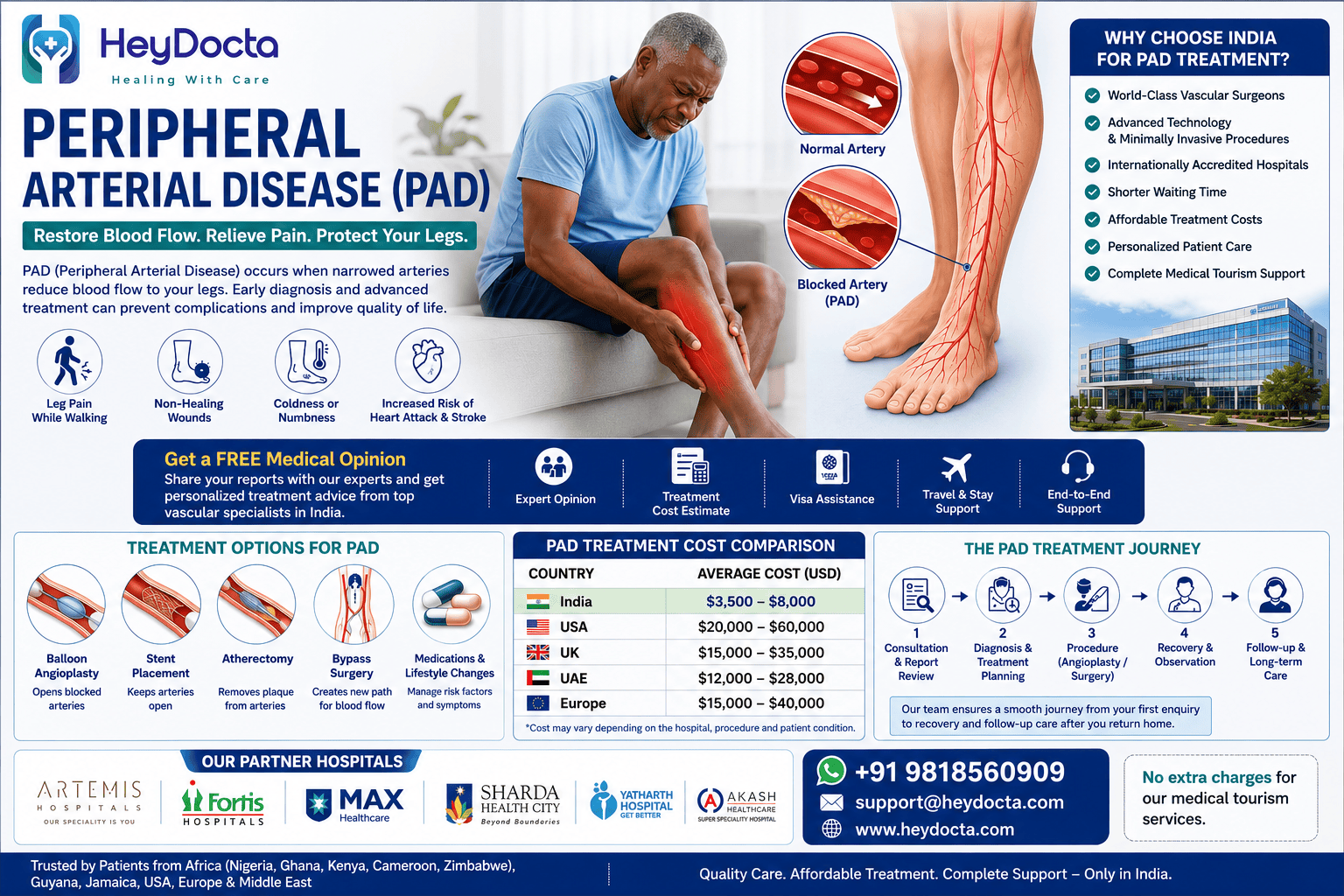
Peripheral Arterial Disease (PAD) is a serious circulatory condition that affects millions of people worldwide. It occurs when narrowed arteries reduce blood flow to the legs, leading to pain, difficulty walking, slow-healing wounds, and, in severe cases, tissue damage. Unfortunately, many patients ignore the early warning signs until complications develop.
If you are from Nigeria, Kenya, Ghana, Zimbabwe, Cameroon, Guyana, Jamaica, the USA, Europe, or the Middle East, seeking treatment in India offers access to experienced vascular surgeons, advanced technology, and affordable healthcare without compromising quality.
What Is Peripheral Arterial Disease (PAD)?
Peripheral Arterial Disease is a condition where fatty deposits (plaque) build up inside the arteries, reducing blood flow to the legs and feet. This condition is also known as peripheral artery disease.
Reduced blood circulation means the muscles and tissues receive less oxygen, causing pain and increasing the risk of ulcers, infections, and limb-threatening complications.
PAD is also an indicator of widespread atherosclerosis, meaning patients may have a higher risk of heart attack and stroke.
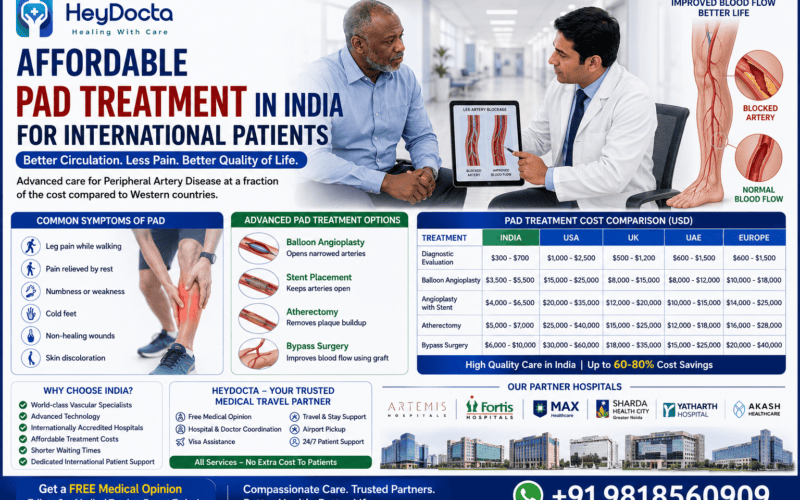
Common Symptoms of Peripheral Arterial Disease
Symptoms often develop gradually and may become more severe if left untreated.
Common signs include:
- Leg pain while walking (claudication)
- Pain that improves with rest
- Cold feet or legs
- Numbness or weakness
- Slow-healing foot wounds
- Shiny skin on the legs
- Hair loss on the legs
- Weak pulse in the feet
- Skin discoloration
- Pain at rest in advanced stages
Patients experiencing these symptoms should seek evaluation by a vascular specialist.
Causes and Risk Factors
Several medical conditions increase the risk of PAD.
These include:
- Smoking
- Diabetes
- High blood pressure
- High cholesterol
- Obesity
- Increasing age
- Family history of vascular disease
- Kidney disease
- Physical inactivity
Managing these risk factors helps reduce disease progression.
Why Early Treatment Is Important
Delaying treatment can result in serious complications such as:
- Chronic leg pain
- Non-healing ulcers
- Severe infections
- Gangrene
- Limb amputation
- Increased risk of heart attack
- Increased risk of stroke
Early diagnosis allows doctors to improve circulation before permanent damage occurs.
Why International Patients Choose India for PAD Treatment
India has become one of the preferred destinations for vascular treatment because of its combination of medical expertise and affordability.
International patients benefit from:
- Experienced vascular surgeons
- Modern catheterization laboratories
- Advanced minimally invasive procedures
- Internationally accredited hospitals
- Short waiting periods
- English-speaking healthcare teams
- Affordable treatment packages
- Complete medical tourism support
Thousands of patients from Africa, the Middle East, Europe, the USA, and the Caribbean travel to India each year for vascular procedures.
The team at heydocta.com helps international patients compare hospitals, receive treatment estimates, arrange appointments, and plan their medical journey in India with complete support.
How Peripheral Arterial Disease Is Diagnosed
Doctors evaluate PAD using several tests.
These include:
- Medical history
- Physical examination
- Ankle-Brachial Index (ABI)
- Doppler Ultrasound
- CT Angiography
- MR Angiography
- Digital Subtraction Angiography (DSA)
- Blood tests
These investigations help determine the severity and location of arterial blockage.
Peripheral Arterial Disease Treatment Options in India
Treatment depends on the stage of disease and overall health.
Lifestyle Changes
Patients are advised to:
- Stop smoking
- Control diabetes
- Maintain healthy blood pressure
- Exercise regularly
- Follow a heart-healthy diet
Medications
Doctors may prescribe medicines to:
- Reduce blood clotting
- Lower cholesterol
- Improve blood circulation
- Manage blood pressure
Medication recommendations depend on each patient’s condition.
Balloon Angioplasty
A small balloon is inserted into the blocked artery and inflated to improve blood flow.
Benefits include:
- Minimally invasive
- Small incision
- Short hospital stay
- Faster recovery
Peripheral Artery Stenting
A metal stent is placed inside the artery to keep it open after angioplasty.
This helps maintain long-term blood flow.
Atherectomy
Special devices remove plaque from the artery, improving circulation without extensive surgery in selected patients.
Bypass Surgery
For severe blockages, surgeons create an alternative pathway around the blocked artery using a vein or synthetic graft.
This restores blood flow to the affected limb.
PAD Treatment Cost Comparison
| Country | Average Cost |
|---|---|
| India | USD 3,500–8,000 |
| USA | USD 20,000–60,000 |
| UK | USD 15,000–35,000 |
| UAE | USD 12,000–28,000 |
| Europe | USD 15,000–40,000 |
Actual treatment costs depend on:
- Diagnostic tests
- Procedure performed
- Hospital category
- Length of stay
- Medical condition
Many international patients choose India because they receive high-quality care at significantly lower costs.
Leading Hospitals in India
heydocta.com partners with renowned multispecialty hospitals, including:
- Artemis Hospital
- Fortis Hospitals
- Max Hospitals
- Sharda Health City
- Yatharth Hospital
- Akash Healthcare
Hospital recommendations are based on the patient’s diagnosis, medical history, and treatment requirements.
Experienced Vascular Surgeons in India
India is home to highly experienced vascular surgeons, Dr Bishwarup purkaystha having 12years 0f experience to perform advanced minimally invasive and open vascular procedures.
Your treating specialist will recommend the most appropriate treatment after reviewing your imaging studies and clinical condition.
Treatment Journey for International Patients
Step 1: Online Medical Consultation
Share your reports and symptoms with the medical team.
Step 2: Expert Review
Leading vascular specialists evaluate your case and recommend treatment.
Step 3: Receive Cost Estimate
Get transparent quotations from leading hospitals.
Step 4: Medical Visa Support
heydocta.com assists with invitation letters and medical visa guidance.
Step 5: Travel to India
Airport pickup, accommodation assistance, and hospital coordination are arranged.
Step 6: Diagnostic Evaluation
Further imaging is performed if required.
Step 7: Treatment
Most minimally invasive procedures require only a short hospital stay.
Step 8: Recovery and Follow-Up
Patients receive discharge instructions, medications, and follow-up plans before returning home.
Recovery After PAD Treatment
Recovery depends on the type of procedure performed.
Many patients who undergo angioplasty or stenting resume normal activities within a few days.
Bypass surgery generally requires a longer recovery period.
Lifestyle modifications remain essential after treatment to reduce the risk of future arterial disease.
How Long Should International Patients Stay in India?
Typical stay durations include:
- Consultation and evaluation: 1–2 days
- Angioplasty or stenting: 5–7 days
- Bypass surgery: 10–14 days
Your surgeon will advise the appropriate stay based on your treatment plan.
Medical Visa and Travel Support
heydocta.com offers complete assistance throughout your medical journey.
Services include:
- Free medical opinion
- Hospital selection
- Appointment scheduling
- Medical visa guidance
- Airport pickup
- Accommodation support
- Language assistance
- Follow-up coordination after returning home
These services are provided without additional facilitator charges.
Frequently Asked Questions
What is Peripheral Arterial Disease?
Peripheral Arterial Disease is a condition in which narrowed arteries reduce blood flow to the legs due to plaque buildup.
Is PAD a serious condition?
Yes. Without treatment, PAD can lead to ulcers, infections, gangrene, limb loss, and an increased risk of heart attack and stroke.
Can PAD be treated without surgery?
Many patients benefit from lifestyle changes, medications, and minimally invasive procedures. Surgery is recommended for advanced disease when necessary.
Is angioplasty better than bypass surgery?
The best treatment depends on the location, severity, and length of the arterial blockage. Your vascular surgeon will recommend the most suitable option.
Why do international patients choose India?
India offers experienced vascular specialists, modern hospitals, advanced technology, shorter waiting times, and affordable treatment costs.
How long does recovery take after angioplasty?
Many patients return to light daily activities within a few days, although complete recovery varies based on individual health.
Can PAD return after treatment?
Treatment improves blood flow, but managing diabetes, cholesterol, smoking, blood pressure, and lifestyle is important to reduce the risk of future disease.
Conclusion
Peripheral Arterial Disease is a progressive condition that should not be ignored. Early diagnosis and timely treatment help restore blood flow, relieve symptoms, improve mobility, and reduce the risk of serious complications. India offers advanced vascular care at internationally recognized hospitals with experienced specialists and significantly lower treatment costs than many other countries.
Whether you require medical therapy, angioplasty, stenting, or bypass surgery, heydocta.com connects you with trusted hospitals including Artemis Hospital, Fortis Hospitals, Max Hospitals, Sharda Health City, Yatharth Hospital, and Akash Healthcare while providing complete medical tourism support throughout your journey.
Get Treatment Cost from Top Indian Hospitals
If you are considering Peripheral Arterial Disease treatment in India, contact heydocta.com today Get Free Medical Opinion. Our team will help you compare hospitals, connect with experienced vascular surgeons, obtain transparent treatment cost estimates, and arrange medical visas, travel, accommodation, and follow-up care. We provide end-to-end support at no additional cost, helping international patients access high-quality vascular treatment with confidence.