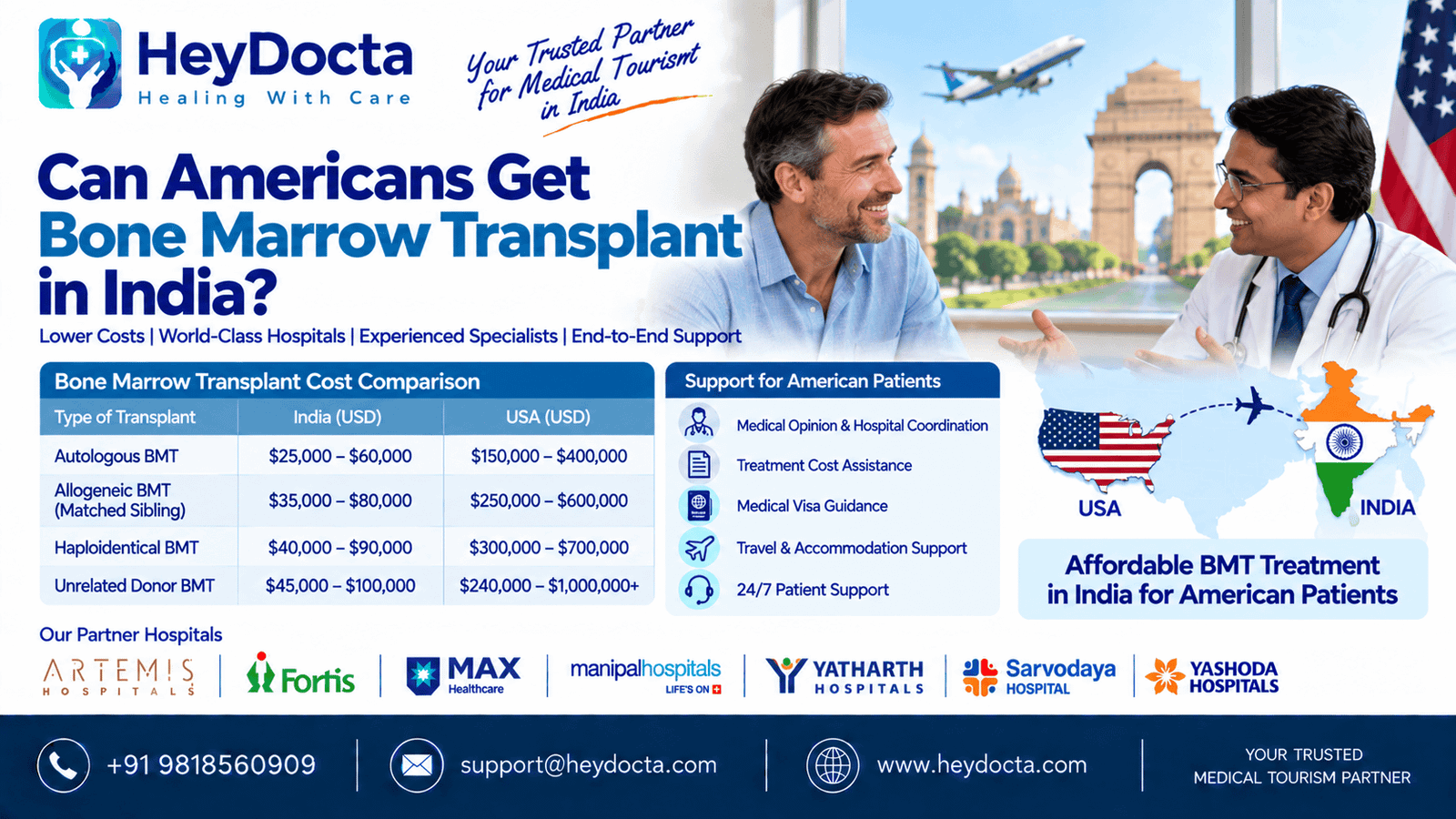
Yes, Americans can get a bone marrow transplant in India, provided they are medically suitable for the procedure and meet India’s medical-visa and immigration requirements. For U.S. patients facing high transplant costs, long waiting periods, insurance limitations or the need for another medical opinion, India can be an option worth evaluating. The overall cost of bone marrow transplant in India can be substantially lower than U.S. costs, although the final price depends on transplant type, donor availability, medicines, hospital stay and complications.
For an American patient, the decision should be based on medical suitability, transplant expertise, continuity of care and the complete cost of treatment rather than price alone.
Get a Free Medical Opinion: Share your medical reports with HeyDocta and receive assistance in coordinating a specialist opinion and estimated treatment cost from Indian hospitals.
Can U.S. Citizens Get Bone Marrow Transplant in India?
Yes. International patients, including eligible U.S. citizens, can travel to India for medical treatment. India’s official e-Visa system includes an e-Medical Visa category, and the current official portal specifically lists the USA among eligible countries. Applicants for an e-Medical Visa need a passport meeting the stated validity requirements and a letter from the Indian hospital indicating the proposed or tentative admission/treatment date.
The medical team must first review the patient’s diagnosis, previous treatments, general health and transplant requirements. A visa does not itself mean that a patient is medically suitable for transplantation.
Why Do Americans Consider BMT Treatment in India?
Bone marrow transplantation is a complex and expensive treatment. The U.S. Health Resources and Services Administration states that an unrelated bone marrow or cord-blood transplant in the United States can cost USD 240,000 to more than USD 1 million, including the transplant and up to six months of care. Donor-search costs can also range from USD 10,000 to more than USD 50,000 in some situations.
India offers another treatment destination with established hematology and BMT programs. Depending on the case, international patients may find Indian treatment costs considerably lower than U.S. charges.
However, patients should compare complete treatment plans rather than simply comparing advertised package prices.
What Conditions May Require Bone Marrow Transplant?
A bone marrow transplant, also called hematopoietic stem cell transplantation, may be considered for selected patients with conditions such as:
- Leukemia
- Lymphoma
- Multiple myeloma
- Aplastic anemia
- Thalassemia
- Sickle cell disease
- Certain inherited blood disorders
- Some immune-system disorders
The suitability of transplantation depends on the individual diagnosis, disease status, previous treatment, age, general health and transplant risk.
Types of Bone Marrow Transplant Available in India
Autologous Bone Marrow Transplant
The patient’s own stem cells are collected and stored before intensive treatment and then returned to the patient.
Because there is no donor search, this can be less complex from a donor-management perspective.
Current 2026 international treatment data place the Indian cost at approximately USD 25,560–59,510, depending on the hospital and case.
Allogeneic Bone Marrow Transplant
Allogeneic transplantation uses stem cells from another person. The donor may be a matched sibling, another related donor, a haploidentical family donor or an unrelated donor.
This can involve additional HLA testing, donor evaluation and more intensive post-transplant monitoring.
Current 2026 treatment data show approximately USD 34,660–81,380 for allogeneic BMT in India, although individual quotations can differ significantly.
Bone Marrow Transplant Cost in India vs USA
| Treatment | India – Indicative Cost | USA – Indicative Cost |
| Autologous BMT | USD 25,560–59,510 | Generally lower than unrelated allogeneic BMT |
| Allogeneic BMT | USD 34,660–81,380 | USD 240,000–1,000,000+ for unrelated transplant and up to 6 months of care |
| Donor search | Depends on donor pathway | USD 10,000–50,000+ may apply |
| Additional complications | Extra | Can substantially increase total cost |
Indian figures are based on current international treatment-price data and are indicative rather than guaranteed quotations. The U.S. figure comes from the U.S. Department of Health and Human Services’ HRSA information for unrelated bone marrow or cord-blood transplantation.
The difference can be substantial, but American patients should also budget for flights, accommodation, visa expenses, caregiver costs and follow-up care.
What Is Included in the BMT Cost in India?
The hospital quotation may include some or most of the following:
- Specialist consultation
- Pre-transplant investigations
- HLA and donor testing
- Conditioning treatment
- Stem-cell collection
- Stem-cell infusion
- Hospitalisation
- Isolation-room care
- Blood and platelet support
- Medicines during admission
- Laboratory monitoring
- Initial post-transplant care
Always request an itemised quotation and ask which services are excluded.
Additional costs may arise from prolonged hospitalisation, infections, ICU care, GVHD, additional medicines, investigations or other complications.
BMT Specialist in India
American patients can seek a specialist opinion from experienced Indian BMT physicians such as Dr. Gaurav Dixit at Artemis Hospitals,Gurugram.
Artemis lists Dr. Gaurav Dixit as Head – Haematology Oncology & Bone Marrow Transplant. The hospital’s BMT programme covers malignant and non-malignant blood disorders and lists autologous, allogeneic and other stem-cell transplantation services.
The choice of specialist should depend on the patient’s disease, transplant type, donor situation and medical complexity.
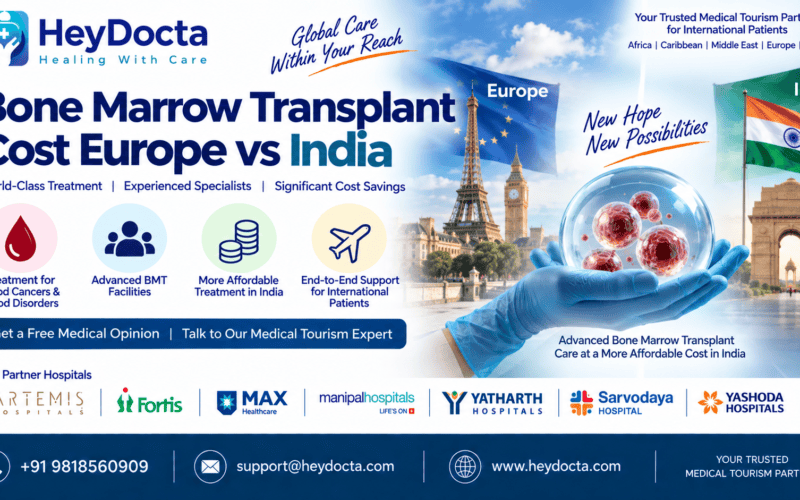
BMT Hospitals in India for American Patients
International patients can explore BMT programs at hospitals such as:
- Artemis Hospitals
- Fortis Hospitals
- Max Hospitals
- Manipal Hospitals
- Yatharth Hospitals
- Sarvodaya Hospital
- Yashoda Hospitals
These should not be viewed as a universal ranking. The appropriate hospital depends on the patient’s diagnosis, transplant type, donor availability, age, previous treatment and the experience of the treating team.
For example, Fortis Gurugram reported more than 2,500 BMT procedures by June 2026 and lists adult and pediatric BMT specialists including Dr. Rahul Bhargava and Dr. Vikas Dua.
Step-by-Step Process for Americans Getting BMT in India
Step 1: Send Medical Records
The patient shares pathology reports, diagnosis, previous treatment records, blood tests, imaging and other relevant medical documents.
Step 2: Specialist Medical Review
A BMT specialist reviews the records and determines whether transplantation may be appropriate.
Step 3: Select the Treatment Centre
The patient can compare hospitals based on transplant expertise, facilities, estimated costs and follow-up arrangements.
Step 4: Donor Evaluation
For allogeneic BMT, the appropriate donor pathway and HLA compatibility requirements are evaluated.
Step 5: Receive a Treatment Estimate
The hospital provides a proposed treatment plan and estimated cost based on the patient’s individual case.
Step 6: Apply for the Indian Medical Visa
Eligible U.S. citizens can apply for an Indian e-Medical Visa. The official Indian e-Visa portal states that the application requires a hospital letter containing the tentative admission or treatment date. Applications can be submitted within the official advance-application window.
Step 7: Travel to India
The patient travels to India with the required medical documents, passport, visa and hospital information.
Step 8: Complete Treatment and Recovery
The patient undergoes the transplant and remains under specialist monitoring until the treating team considers discharge appropriate.
Step 9: Continue Follow-Up
Post-transplant monitoring is essential. The patient and Indian medical team should establish a follow-up plan before returning to the United States.
Talk to Our Medical Tourism Expert: HeyDocta can coordinate your medical reports, hospital consultation, estimated treatment cost and travel planning before you travel to India.
How Long Does an American Patient Need to Stay in India?
The duration varies considerably.
It can depend on:
- Type of BMT
- Disease being treated
- Conditioning regimen
- Engraftment
- Infection risk
- Complications
- Overall recovery
- Follow-up requirements
Patients should not book a fixed return flight based only on an estimated hospital stay. The treating BMT team should confirm when travel is medically appropriate.
American patients may also need accommodation close to the hospital after discharge for outpatient monitoring.
What About U.S. Health Insurance?
Before travelling, American patients should contact their insurance provider and ask specifically whether planned medical treatment outside the United States is covered.
Questions to ask include:
- Is overseas BMT covered?
- Is pre-authorization required?
- Are complications abroad covered?
- Is emergency treatment abroad covered?
- Are donor-related expenses covered?
- Will post-transplant treatment in the U.S. be covered after returning?
- Are medications obtained in India covered?
Do not assume that U.S. insurance will reimburse overseas treatment. Obtain written confirmation from the insurer whenever possible.
How HeyDocta Supports American Patients
HeyDocta acts as a medical tourism facilitator for international patients travelling to India.
Our support can include:
- Medical report coordination
- Specialist consultation
- Hospital coordination
- Treatment-cost enquiries
- Medical visa assistance
- Travel planning
- Accommodation coordination
- Airport and local assistance
- Communication with hospital teams
- Follow-up coordination
HeyDocta’s medical tourism coordination is provided at no extra cost to patients.
The patient’s medical treatment, final quotation and clinical decisions remain with the treating hospital and medical team.
FAQs About Bone Marrow Transplant in India for Americans
1. Can an American citizen get a bone marrow transplant in India?
Yes. U.S. citizens can seek medical treatment in India, subject to medical suitability and applicable Indian visa and immigration requirements. The official e-Visa portal lists the USA among eligible countries for e-Visa services.
2. How much does BMT cost in India for an American?
Current 2026 treatment data indicate approximately USD 25,560–59,510 for autologous BMT and USD 34,660–81,380 for allogeneic BMT in India. Actual hospital quotations vary by patient and treatment complexity.
3. How much does bone marrow transplant cost in the USA?
HRSA states that an unrelated bone marrow or cord-blood transplant can cost USD 240,000 to more than USD 1 million, including the transplant and up to six months of care.
4. Do American patients need a medical visa for India?
Eligible U.S. patients travelling specifically for medical treatment can apply for an Indian e-Medical Visa. The official application requires a letter from the Indian hospital containing the tentative admission or treatment date.
5. Can a family member travel with the patient?
India provides an e-Medical Attendant Visa category for eligible accompanying attendants. The official visa rules should be checked before travel because eligibility and documentation requirements can change.
6. Can the patient continue follow-up in the USA?
In many cases, patients can coordinate follow-up with a U.S. hematologist after returning, but this should be planned with the Indian transplant team before travel. Medical records, discharge summaries and treatment information should be transferred to the U.S. physician.
7. Is India suitable for every American BMT patient?
No. BMT suitability is individual. The diagnosis, disease status, age, organ function, previous treatment, donor availability and transplant risks must be evaluated by a qualified transplant team.
Conclusion
Can Americans get bone marrow transplant in India? Yes. India has established BMT programmes and accepts eligible international patients, including patients from the United States. For some American patients, the major attraction is the potential difference in treatment cost: current Indian estimates are in the tens of thousands of U.S. dollars, while HRSA reports that unrelated BMT in the United States can reach hundreds of thousands of dollars or more.
However, cost should not be the only consideration. Patients should compare specialist expertise, transplant facilities, donor arrangements, infection-control systems, post-transplant monitoring, travel requirements and continuity of care.
Get Treatment Cost from Top Indian Hospitals: Contact HeyDocta.com with your medical reports to explore BMT treatment options in India. Our team can help coordinate a specialist opinion, hospital quotation, medical visa assistance, travel arrangements and ongoing support throughout your treatment journey.