
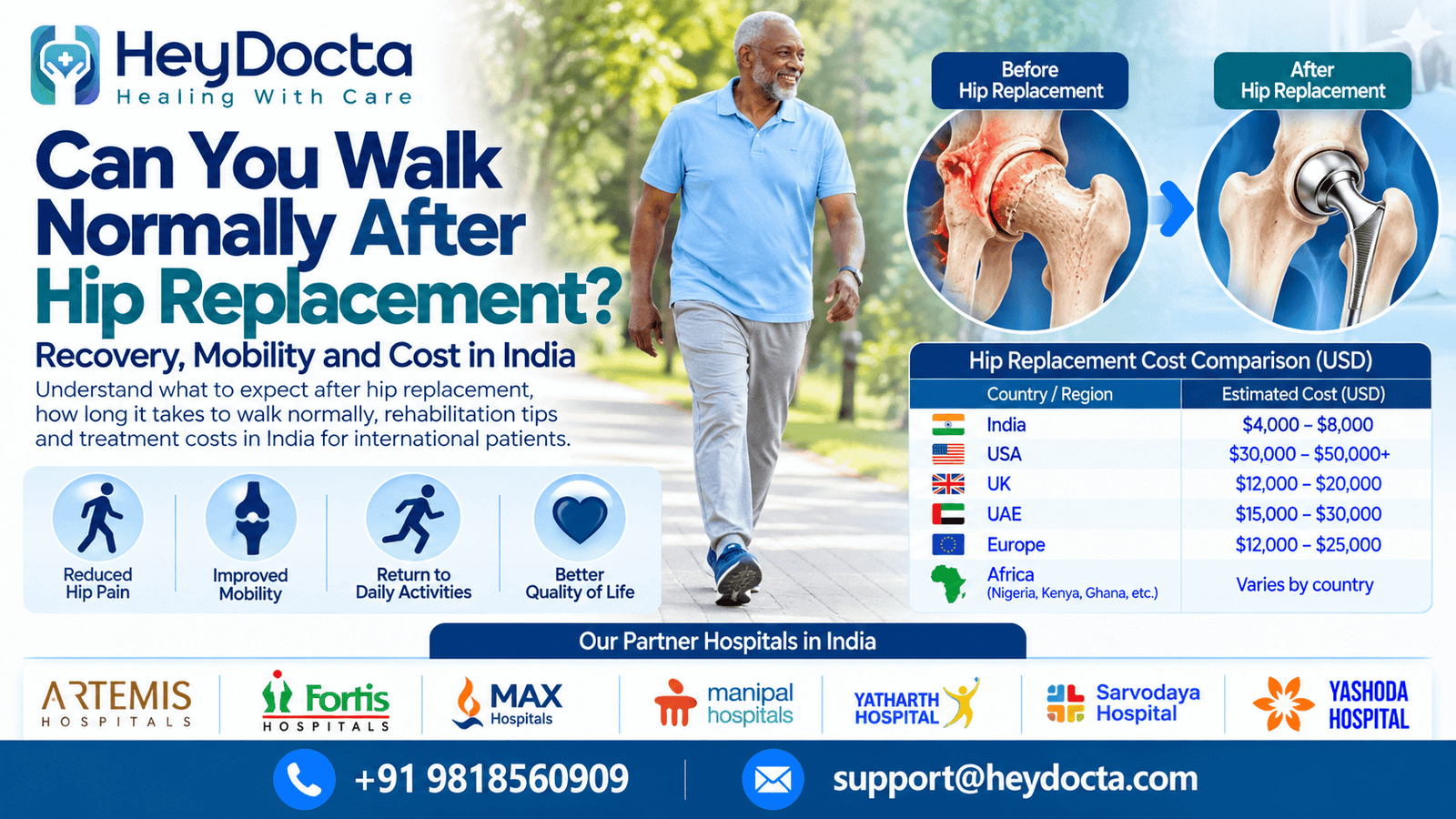
Can you walk normally after hip replacement? For many patients, the answer is yes, although recovery takes time and results vary depending on age, muscle strength, general health, the condition of the hip before surgery and commitment to rehabilitation. Hip replacement surgery is designed to reduce pain and improve movement, making everyday activities such as walking, standing and climbing stairs easier for many people.
For international patients from Nigeria, Ghana, Kenya, Zimbabwe, Cameroon, the USA, Europe and the Middle East, India may offer access to orthopaedic treatment at a lower overall treatment cost than many high-cost healthcare markets. However, patients should compare the complete treatment package, rehabilitation, accommodation and travel expenses before deciding.
Get a Free Medical Opinion: Contact HeyDocta for help coordinating a medical opinion, hospital appointments, treatment estimates and travel arrangements. There is no extra charge for HeyDocta’s facilitation service; hospital fees and other third-party expenses still apply.
Can You Walk Normally After Hip Replacement Surgery?
Most patients gradually regain the ability to walk more comfortably after hip replacement. However, “walking normally” means different things to different people. Some patients return to a steady, natural walking pattern, while others may continue to have a mild limp, stiffness or reduced endurance.
The main goals of hip replacement are to relieve pain, improve joint function and support greater independence. The outcome depends on several factors:
- Condition before surgery: Severe arthritis, long-standing pain and muscle weakness can affect recovery.
- Surgical procedure: The approach used and the condition of the surrounding tissues may influence early mobility.
- Overall health: Diabetes, heart disease, obesity and other conditions may affect healing and rehabilitation.
- Physiotherapy: Following a personalised exercise and walking programme helps rebuild strength and balance.
- Implant and surgical factors: Implant positioning, stability and complications can influence function.
Some patients walk with a frame or crutches soon after surgery. Progress is gradual, and walking aids should be reduced only when the treating team considers it safe.
Hip Replacement Recovery Timeline: When Can You Walk Normally?
Recovery varies, but the following timeline gives a general idea of what many patients may experience.
| Time after surgery | Typical mobility progress |
| First 1–3 days | Many patients begin standing and walking short distances with assistance, if medically appropriate. |
| Weeks 1–2 | Walking indoors with a walker or crutches; practising safe transfers and basic exercises. |
| Weeks 3–6 | Gradual improvement in walking distance, balance and daily activities. |
| Weeks 6–12 | Many patients develop a more comfortable walking pattern and may need less support. |
| 3–6 months | Continued improvement in strength, endurance and confidence; some patients take longer. |
These are general estimates, not guaranteed milestones. Patients with complex surgery, significant muscle weakness or other medical conditions may need additional recovery time.
What Helps You Walk Normally Again?
A successful recovery requires more than the operation itself. Your orthopaedic surgeon and physiotherapist may recommend:
- Walking regularly for short, manageable periods.
- Performing prescribed strengthening and mobility exercises.
- Using a walker, crutches or cane until balance and strength improve.
- Following instructions about weight-bearing and hip precautions.
- Keeping the surgical wound clean and attending follow-up appointments.
- Maintaining a balanced diet and managing conditions such as diabetes.
Do not push through severe pain or increase activity too quickly. Your rehabilitation plan should reflect your individual progress.
Why Do Some Patients Have Difficulty Walking After Hip Replacement?
Although hip replacement often improves mobility, some patients may experience difficulties during recovery. Understanding the possible causes can help patients know when to seek medical advice.
1. Muscle Weakness
The muscles around the hip may be weak after months or years of reduced movement. Physiotherapy helps rebuild strength and improve walking stability.
2. Limping or Uneven Walking
A limp may occur because of muscle weakness, pain, leg-length differences or habits developed before surgery. A physiotherapist can assess walking technique and recommend appropriate exercises.
3. Pain and Stiffness
Some pain and stiffness are expected during early recovery. Persistent or worsening symptoms should be evaluated by the treating surgeon.
4. Balance Problems
Older patients or those who have been inactive for a long time may need additional balance training and walking support.
5. Surgical or Medical Complications
Infection, blood clots, dislocation, fractures or implant-related problems can affect mobility. Sudden severe pain, new inability to bear weight, fever, wound drainage or significant swelling requires prompt medical assessment. Chest pain or sudden breathlessness requires emergency care.
Hip Replacement Options Available in India
The type of surgery recommended depends on the extent of joint damage, age, bone quality, activity level and overall health.
- Total hip replacement: The damaged ball and socket are replaced with artificial components. It is commonly used for advanced arthritis and other severe hip conditions.
- Partial hip replacement: Only the ball portion is replaced. It is generally used for selected fractures rather than routine treatment of advanced arthritis.
- Cemented or uncemented hip replacement: The implant may be fixed using bone cement or designed to allow bone to grow onto its surface. The choice depends on the patient’s bone quality and clinical needs.
- Robotic-assisted hip replacement: Technology may help the surgical team with planning and implant positioning in selected cases. It does not guarantee better results for every patient.
Orthopaedic Specialist in India
Dr. Dhananjay Sabat at Yatharth Hospital is a specialist to discuss when exploring orthopaedic care through HeyDocta. Patients should confirm his current designation, hip replacement experience, availability and suitability for their specific case directly with the hospital before making travel arrangements.
HeyDocta can help international patients coordinate medical records, consultations and treatment estimates with its partner hospitals, including Artemis Hospital, Fortis Hospitals, Max Hospitals, Manipal Hospital, Yatharth Hospital, Sarvodaya Hospital and Yashoda Hospital.
Hip Replacement Cost in India vs Other Countries
For international patients, affordability is an important consideration. Hip replacement costs vary according to the implant, surgical technique, hospital, length of stay, medical complexity and rehabilitation requirements.
India may offer lower treatment costs than many high-cost healthcare markets. However, patients should compare equivalent procedures and confirm exactly what each quotation includes.
The following figures are illustrative planning ranges in USD, not verified quotations from individual hospitals. Actual prices can vary considerably by location, implant and patient needs.
| Country or region | Indicative total cost for one hip replacement |
| India | $4,000–$8,000 |
| USA | $30,000–$50,000+ |
| UK private treatment | $12,000–$20,000 |
| UAE | $15,000–$30,000 |
| Selected African private healthcare markets | $5,000–$15,000+ |
These estimates are not a like-for-like price survey. Costs in African countries and other regions vary widely, and insurance coverage, public healthcare access and hospital billing arrangements can change what a patient actually pays.
What Determines the Cost of Hip Replacement in India?
The final price may depend on:
- The type and brand of implant.
- Whether one or both hips require surgery.
- The surgeon’s fees and hospital category.
- Pre-operative investigations and specialist consultations.
- The number of hospital days and medications required.
- Physiotherapy and post-operative follow-up.
- Whether complications or additional medical care arise.
For international patients, also budget for flights, accommodation, local transport, meals, visa expenses and a possible extended stay.
Want a personalised cost estimate? HeyDocta can help coordinate quotations from partner hospitals and clarify what is included in each package. The facilitation service carries no extra charge to patients; hospital treatment and other third-party expenses are separate.
How International Patients Can Arrange Hip Replacement in India
A structured process can make treatment planning easier for patients travelling from Africa, the Middle East, Europe or the USA.
- Share medical records: Provide recent X-rays, MRI or CT scans if available, medical history, current medicines and previous treatment details.
- Arrange a medical opinion: The orthopaedic team reviews the information and may request further investigations before recommending surgery.
- Compare treatment quotations: Check the proposed implant, hospital stay, surgeon fees, medicines, rehabilitation and exclusions.
- Arrange travel and visa requirements: Confirm the appropriate Indian visa category and current documentation requirements through official Indian government channels. Medical visas may require supporting documents from the treating hospital.
- Complete pre-operative assessment: The hospital checks fitness for surgery and discusses risks, anaesthesia and rehabilitation.
- Undergo surgery and begin rehabilitation: Walking and exercises begin when the treating team considers them safe.
- Plan follow-up care: Obtain discharge summaries, implant details, medication instructions and a rehabilitation plan to share with a clinician at home.
HeyDocta can assist with hospital coordination, appointment planning, travel guidance and communication with the treating team. Visa approval and medical outcomes remain the responsibility of the relevant authorities and healthcare professionals.
How Long Should You Stay in India After Hip Replacement?
The required stay depends on recovery, the surgeon’s advice and the patient’s fitness to travel. Some patients leave hospital after a few days, but international visitors usually need additional time for wound review, rehabilitation and travel clearance.
Before booking return flights, ask the surgeon how long you should remain in India and whether you need in-person follow-up. Long flights after major joint surgery may increase the risk of blood clots, so travel timing, movement during the flight and any preventive medication should be discussed with the treating team.
Do not travel until the treating team confirms that it is medically appropriate.
Frequently Asked Questions
1. Can you walk normally after hip replacement?
Many patients regain a comfortable, steady walking pattern after rehabilitation. The time required depends on muscle strength, pre-existing joint damage, general health and whether complications occur.
2. How long does it take to walk without a walker after hip replacement?
Some patients progress to a cane or walk independently within several weeks, while others need support for longer. Stop using a walking aid only when your surgeon or physiotherapist confirms it is safe.
3. Will I still limp after hip replacement?
A limp may persist temporarily because of muscle weakness, pain or an altered walking pattern. Persistent limping should be assessed to identify the cause and determine whether additional rehabilitation is needed.
4. Is hip replacement affordable in India?
India may be less expensive than the USA, UK and UAE for many patients. The actual saving depends on the hospital package, implant, rehabilitation, travel, accommodation and any additional medical care required.
5. Can I climb stairs after hip replacement?
Many patients can gradually return to stair climbing with appropriate instruction and support. Follow your physiotherapist’s technique and avoid stairs independently until you are confident and cleared to do so.
6. How long does a hip replacement last?
Many modern hip replacements function for 15–20 years or longer, although implant longevity varies. Activity, implant design, bone health, wear and other factors can influence whether revision surgery is eventually needed.
7. When should I contact my doctor after hip replacement?
Seek urgent medical advice for fever, wound drainage, worsening pain, significant swelling or new difficulty bearing weight. Sudden chest pain or breathlessness requires emergency care.
Conclusion: Regaining Mobility After Hip Replacement
So, can you walk normally after hip replacement? Many patients can return to comfortable walking and everyday activities, but recovery is individual and requires appropriate rehabilitation, follow-up and realistic expectations. Choosing the right procedure and understanding the complete treatment cost are important parts of planning.
For international patients considering hip replacement in India, HeyDocta.com can help coordinate medical opinions, compare treatment estimates from partner hospitals and organise treatment-related travel support. Contact HeyDocta to discuss your medical records and request a personalised treatment estimate before making your travel decision.