
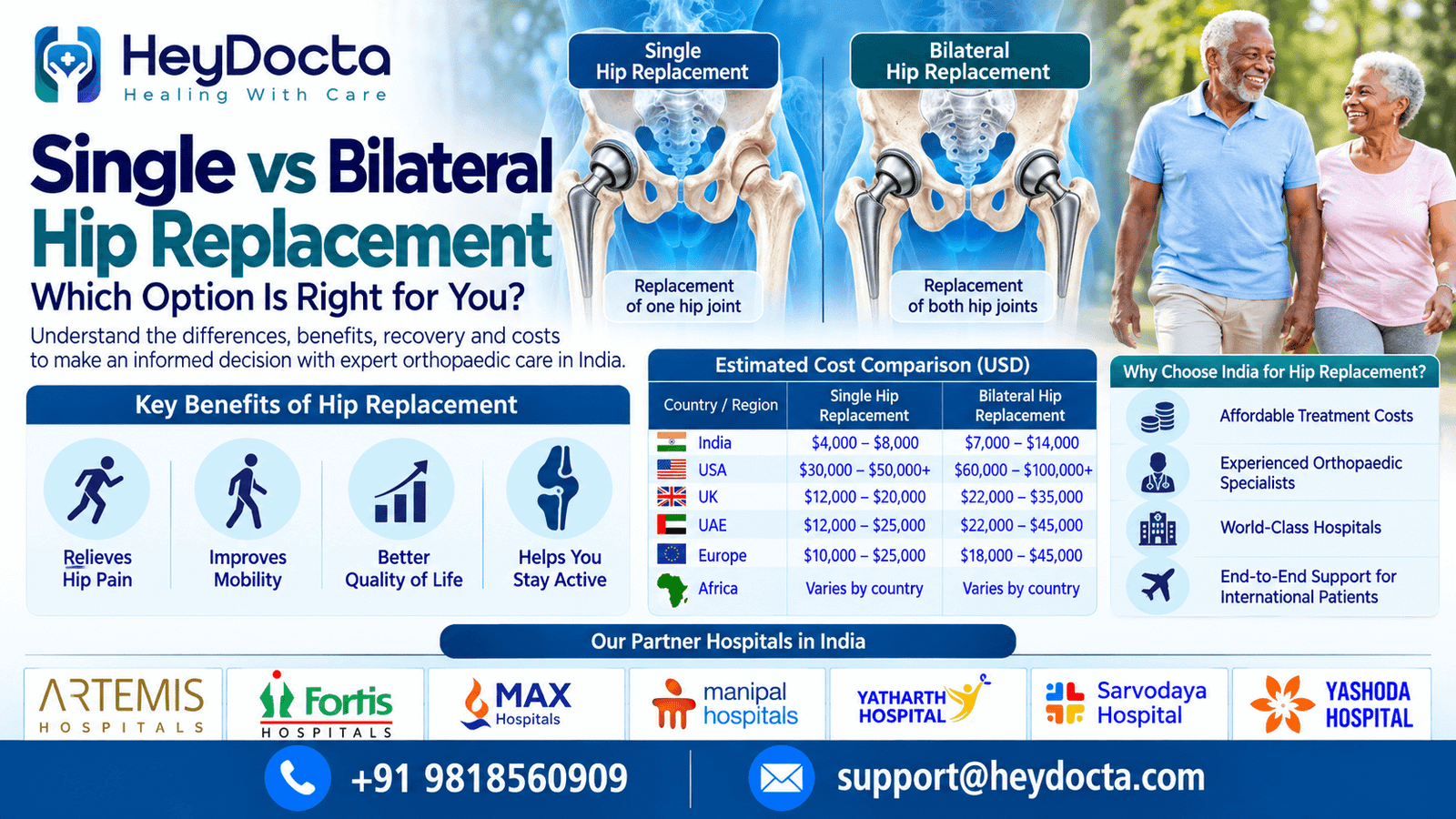
Hip pain can make everyday activities such as walking, climbing stairs, sleeping and sitting uncomfortable. For people with severe arthritis or damage to both hip joints, hip replacement surgery may help reduce pain and improve mobility. Understanding single vs bilateral hip replacement is important when deciding whether to replace one hip or both hips, especially for international patients comparing treatment costs in India, the USA, the UK, the Middle East and Africa.
India offers orthopaedic treatment options at different price points, allowing patients to compare hospital facilities, implant choices and rehabilitation plans. The right approach depends on the severity of joint damage, overall health and the orthopaedic surgeon’s assessment.
Get a Free Medical Opinion : Contact HeyDocta for help coordinating a medical opinion, hospital consultation and an individualised treatment estimate.
What Is the Difference Between Single and Bilateral Hip Replacement?
Hip replacement surgery involves removing damaged parts of the hip joint and replacing them with artificial components. The choice between single and bilateral hip replacement depends primarily on whether one or both hips require surgery.
Single Hip Replacement
Single hip replacement, also called unilateral hip replacement, involves replacing only one hip joint. It may be recommended when arthritis, a fracture, avascular necrosis or another condition has significantly damaged one hip while the other remains reasonably functional.
Potential benefits include:
- Surgery on only the affected hip.
- A smaller overall surgical burden than replacing both hips during the same operation.
- Rehabilitation focused on one operated joint.
- A lower initial treatment cost compared with bilateral replacement.
Bilateral Hip Replacement
Bilateral hip replacement involves replacing both hip joints. It can be performed in two ways:
- Simultaneous bilateral hip replacement: Both hips are replaced during one surgical session.
- Staged bilateral hip replacement: Each hip is replaced in a separate operation, with recovery time between procedures.
Simultaneous surgery may reduce the number of hospital admissions and anaesthetic episodes. However, it places greater demands on the patient’s body and may increase certain risks, including blood loss and medical complications. Staged surgery may be more appropriate for patients with specific health conditions or a higher surgical risk.
When Do You Need Single or Bilateral Hip Replacement?
The decision depends on symptoms, imaging results and how much joint damage affects daily life.
A surgeon may consider single hip replacement when:
- Pain is mainly limited to one hip.
- X-rays show significant damage in one joint.
- The other hip does not have symptoms severe enough to justify surgery.
- The patient can walk and function reasonably well using the unaffected hip.
Bilateral hip replacement may be considered when:
- Both hips have advanced osteoarthritis.
- Pain affects both sides and significantly limits walking.
- Both joints show substantial structural damage.
- Non-surgical treatments no longer provide adequate relief.
Not everyone with arthritis needs surgery. Exercise, physiotherapy, weight management, medication and walking aids may help manage symptoms in some patients. An orthopaedic specialist can explain whether surgery is appropriate.
Single vs Bilateral Hip Replacement: Cost Comparison
The cost of hip replacement varies according to the hospital, surgeon, implant brand, room category, medical complexity, length of stay and rehabilitation requirements. Bilateral surgery generally costs more than unilateral surgery, but simultaneous replacement may cost less than two separate operations because some hospital and anaesthesia expenses are shared.
Estimated Hip Replacement Costs by Country
The following figures are broad planning estimates in USD, not verified quotations from individual hospitals. Actual costs can fall outside these ranges.
| Country or region | Single hip replacement | Bilateral hip replacement |
| India | $4,000–$8,000 | $7,000–$14,000 |
| USA | $30,000–$50,000+ | $60,000–$100,000+ |
| UK (private treatment) | $12,000–$20,000 | $22,000–$35,000 |
| UAE | $12,000–$25,000 | $22,000–$45,000 |
| Europe (varies by country) | $10,000–$25,000 | $18,000–$45,000 |
| African countries (varies by country) | Obtain a local quotation | Obtain a local quotation |
These are indicative ranges for initial budgeting. They are not directly comparable across every country because treatment packages, insurance arrangements, implants and included services differ.
Why Is Hip Replacement Often More Affordable in India?
India may offer lower treatment prices than many private healthcare markets because of differences in operating costs, hospital pricing and healthcare delivery models. International patients can compare several partner hospitals and request estimates based on their medical reports.
The final quotation should clarify whether it includes:
- Surgeon and anaesthesia fees.
- Hip implants and other surgical materials.
- Hospital room and nursing charges.
- Pre-operative tests and imaging.
- Medicines and blood products, if required.
- Physiotherapy and rehabilitation.
- Follow-up consultations and additional treatment if complications occur.
Flights, accommodation, meals, local transport and extended stays may be extra. Ask whether the estimate covers one hip or both hips and whether bilateral surgery is planned as a simultaneous or staged procedure.
Why International Patients Consider India for Hip Replacement
Patients travelling from Nigeria, Ghana, Kenya, Zimbabwe, Cameroon, the USA, Europe and the Middle East may consider India for several reasons.
Cost planning: Patients can request itemised estimates and compare treatment packages before travelling.
Orthopaedic care options: Hospitals offer orthopaedic assessment, joint replacement procedures, imaging and rehabilitation services, depending on their facilities.
Implant choices: Surgeons may recommend different implant materials and fixation methods based on age, bone quality, activity level and clinical needs.
Coordinated patient support: HeyDocta helps international patients coordinate medical records, hospital appointments, treatment estimates and travel-related arrangements.
Hip Replacement Options and Specialist Consultation in India
Hip replacement can involve different implant designs and surgical techniques. Conventional hip replacement and computer-assisted or robotic-assisted approaches may be available depending on the hospital and surgeon.
Robotic assistance may support surgical planning and implant positioning in selected cases, but it does not guarantee better outcomes for every patient. The most suitable approach depends on the surgeon’s assessment and available technology.
Patients may consult Dr Dhananjay Sabat at Yatharth Hospital regarding their orthopaedic treatment options. Suitability for single or bilateral replacement should be confirmed through a clinical assessment, review of imaging and discussion of medical history.
HeyDocta’s partner hospitals include:
- Artemis Hospital
- Fortis Hospitals
- Max Hospitals
- Manipal Hospital
- Yatharth Hospital
- Sarvodaya Hospital
- Yashoda Hospital
Availability of specific surgeons, robotic systems, implant brands and simultaneous bilateral procedures should be confirmed directly with the selected hospital.
Need help comparing treatment options? Share your available medical reports with HeyDocta to request a specialist opinion and an itemised estimate for one or both hips.
What Happens During Hip Replacement Surgery?
The treatment process generally follows these steps:
- Medical assessment: The surgeon reviews symptoms, medical history, medications and imaging.
- Pre-operative evaluation: Blood tests, heart assessment and other investigations help determine whether surgery is safe.
- Treatment planning: The team discusses implant selection, surgical technique, anaesthesia and whether bilateral surgery is appropriate.
- Surgery: Damaged joint surfaces are replaced with artificial components.
- Hospital recovery: The medical team monitors pain, wound healing, blood counts and mobility.
- Rehabilitation: Physiotherapy begins as advised, often with assisted standing and walking.
- Follow-up: The surgeon checks healing, movement, implant function and progress.
Recovery After Single vs Bilateral Hip Replacement
Recovery varies according to age, general health, surgical technique, muscle strength and complications.
After single hip replacement, many patients begin standing or walking with assistance within a day, when medically appropriate. Basic daily activities may become easier over the following weeks, although full recovery can take several months.
After simultaneous bilateral hip replacement, rehabilitation may be more demanding because both hips require healing. Patients may need more assistance with transfers, walking and personal care initially. Staged surgery creates two separate recovery periods, but allows the first hip to recover before the second operation.
Patients travelling internationally should plan for a sufficient stay in India for wound review, rehabilitation and medical clearance before flying. The treating team should advise when air travel is safe, particularly because recent major surgery can increase the risk of blood clots.
Medical Visa and Travel Support for International Patients
International patients should obtain the appropriate Indian medical visa or other permitted travel authorisation based on their nationality and circumstances. Requirements can vary, so confirm current rules through official Indian government channels.
Before travelling, patients should arrange:
- Recent X-rays and other relevant reports.
- A list of medicines and existing medical conditions.
- A preliminary treatment estimate and appointment confirmation.
- Accommodation and transport near the hospital.
- A recovery plan and follow-up arrangements for returning home.
HeyDocta can assist with hospital coordination, appointment planning, treatment estimates and travel-related guidance. Its facilitation support is offered without an additional patient facilitation fee; hospital treatment, travel and other third-party expenses remain payable as applicable.
Frequently Asked Questions
1. Is bilateral hip replacement more expensive than single hip replacement?
Yes, bilateral replacement usually costs more because two joints are treated. However, simultaneous surgery may cost less than two separate operations because certain hospital and anaesthesia costs can be shared.
2. Is it better to replace both hips at once or separately?
Neither approach is best for everyone. Simultaneous surgery may suit carefully selected patients in good general health, while staged surgery may be safer for those with certain medical conditions or higher surgical risk.
3. How long does recovery take after bilateral hip replacement?
Initial mobility often begins soon after surgery under supervision. Recovery can take several months, and bilateral surgery may require more assistance during the early rehabilitation period.
4. Can I walk normally after hip replacement?
Many patients improve their walking ability and experience less pain, but outcomes vary. Muscle weakness, balance, other joint problems and medical conditions can affect the result.
5. How much does bilateral hip replacement cost in India?
A broad planning estimate is approximately $7,000–$14,000 for both hips. The final amount depends on the hospital, implants, surgical plan, medical complexity and what the package includes.
6. Can international patients arrange hip replacement through HeyDocta?
Yes. HeyDocta can help coordinate medical opinions, hospital consultations, treatment estimates and travel-related arrangements for eligible international patients.
7. What should I send to get a hip replacement estimate?
Provide recent hip X-rays or other imaging, medical reports, a list of current medicines and a brief description of symptoms. The hospital may request further tests before confirming the treatment plan and cost.
Conclusion: Choosing the Right Hip Replacement Plan
The choice between single vs bilateral hip replacement depends on the condition of each hip, symptom severity, general health and the risks and benefits of surgery. India may offer cost advantages for international patients, but the safest and most appropriate plan should come before price alone.
Contact HeyDocta.com to request a medical opinion and compare treatment estimates from partner hospitals in India. The team can help coordinate consultations, hospital arrangements and travel guidance so you can make an informed decision about your hip replacement journey.