Knee replacement surgery can help reduce pain and improve mobility for people with severe arthritis. However, some patients experience problems during recovery, such as swelling, stiffness, persistent pain, difficulty bending the knee, or infection. Understanding the common problems after knee replacement and how they are managed can help patients recognise warning signs, seek timely medical care, and plan their recovery.
For international patients from Nigeria, Ghana, Kenya, Zimbabwe, Cameroon, Guyana, the USA, Europe, and the Middle East, the cost of managing complications is also an important consideration. India offers access to orthopaedic evaluation, rehabilitation, and revision surgery through established hospitals, with costs that may be lower than in many high-income countries. Actual expenses depend on the problem, its severity, and the treatment required.
Get a Free Medical Opinion : Contact HeyDocta for help coordinating a medical opinion, hospital appointments, estimated treatment costs, and travel arrangements. HeyDocta’s facilitation support is provided without an additional service fee to patients; hospital treatment, medicines, travel, and accommodation are separate expenses.
1. Why Do Problems Occur After Knee Replacement?
During knee replacement surgery, damaged joint surfaces are replaced with artificial components. Recovery involves healing, pain management, and physiotherapy. Some discomfort, swelling, and stiffness are expected initially, but persistent or worsening symptoms need medical assessment.
Problems may occur because of inflammation, limited movement, infection, blood clots, implant-related issues, or other medical conditions. Not every symptom means the implant has failed, and many early recovery problems can be managed without another operation.
2. Common Problems After Knee Replacement and Their Treatment
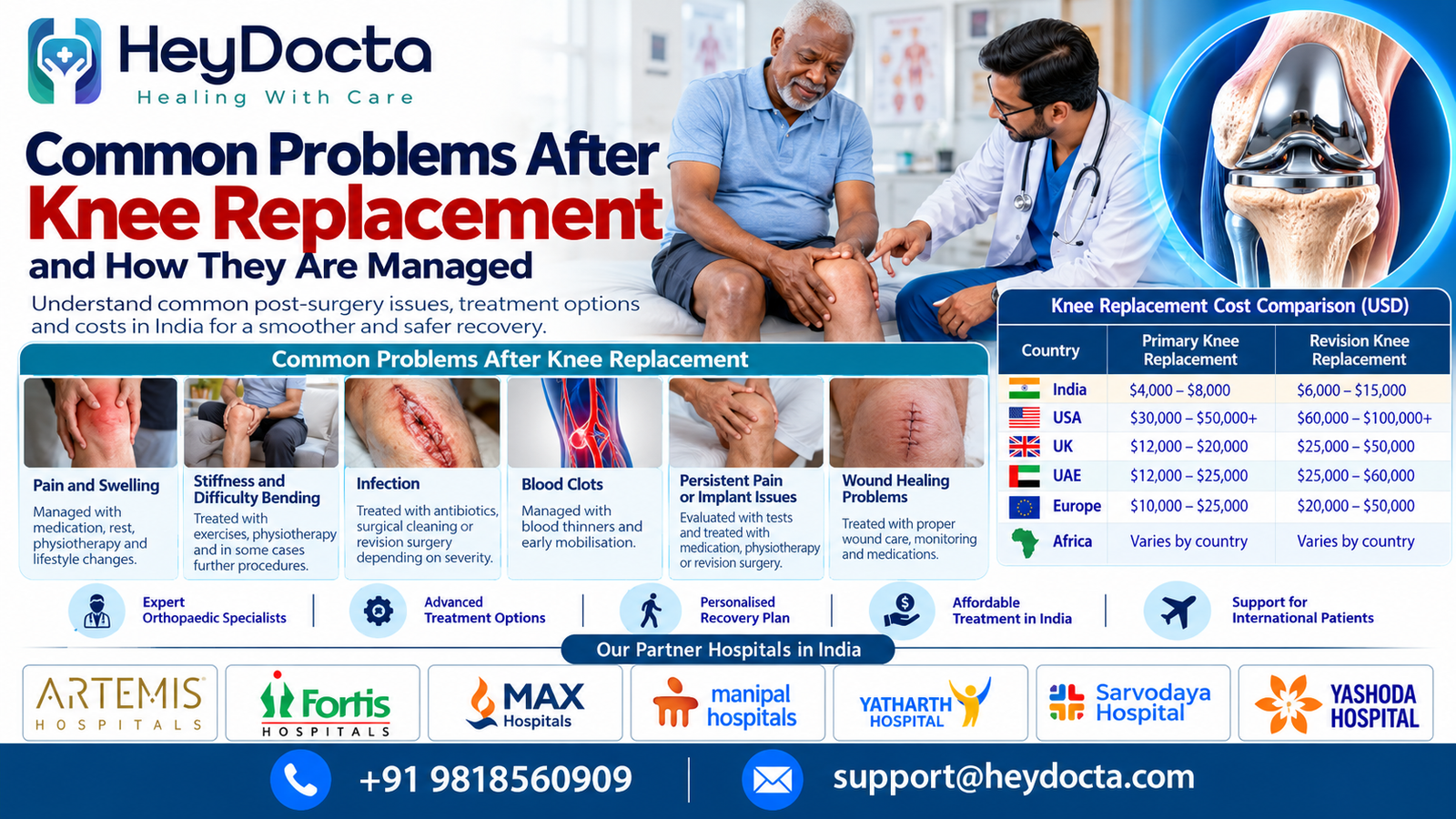
Pain and Swelling
Pain and swelling are common during the first few weeks after surgery. They usually improve gradually with appropriate medication, elevation, cold therapy when advised, and prescribed exercises.
If pain increases unexpectedly, persists beyond the expected recovery period, or interferes significantly with movement, the surgeon may recommend an examination and imaging or other investigations.
Knee Stiffness and Difficulty Bending
Some patients struggle to bend or fully straighten the knee after surgery. Stiffness can develop because of swelling, scar tissue, inadequate movement, or other underlying issues.
Treatment may include supervised physiotherapy, range-of-motion exercises, pain control, and a structured rehabilitation programme. In selected cases, a surgeon may recommend manipulation under anaesthesia or another procedure if significant stiffness persists.
Infection Around the Artificial Joint
Infection is a serious complication that may occur soon after surgery or, occasionally, months or years later. Warning signs include increasing pain, redness, warmth, drainage from the wound, fever, or worsening swelling.
Management depends on the timing and severity of the infection. It may involve blood tests, joint-fluid analysis, antibiotics, surgical cleaning, or revision surgery. Some infections require more than one operation and a prolonged course of treatment.
Blood Clots
Blood clots can develop in the deep veins of the leg after knee replacement. Symptoms may include new calf pain, tenderness, or one-sided leg swelling.
Doctors may prescribe blood-thinning medication, encourage safe movement, and recommend other preventive measures based on the patient’s risk. Sudden breathlessness, chest pain, coughing up blood, or fainting may indicate a pulmonary embolism and require emergency medical care.
Persistent Pain or Implant Problems
Ongoing pain can result from several causes, including infection, implant loosening, instability, alignment problems, or pain originating outside the knee.
Doctors may use X-rays, blood tests, joint-fluid testing, or other investigations to identify the cause. Treatment ranges from medication and physiotherapy to revision knee replacement when clinically necessary.
Wound Healing Problems
Some patients experience delayed wound healing, wound leakage, or skin irritation. The surgical team should assess these problems promptly, particularly if there is drainage, spreading redness, or fever. Patients should not apply unprescribed creams or change wound care instructions without consulting their healthcare team.
3. Knee Replacement Complications: Treatment Options and Costs in India
The cost of treating a problem after knee replacement varies significantly. A physiotherapy programme is less expensive than treatment for a deep infection or revision surgery. The following figures are broad planning estimates in USD, not confirmed hospital quotations.
| Treatment or service in India | Indicative cost |
| Orthopaedic consultation and basic assessment | $20–$100 |
| X-rays and selected diagnostic tests | $30–$300 |
| Physiotherapy sessions | $10–$40 per session |
| Additional investigations for suspected infection | $100–$700 or more |
| Treatment of a significant joint infection | $2,000–$10,000 or more |
| Revision knee replacement | $6,000–$15,000 or more |
These estimates may exclude extended hospitalisation, intensive care, specialised implants, prolonged antibiotics, and additional procedures. Costs can be substantially higher in complex cases.
Knee Replacement Cost Comparison: India vs Other Countries
For context, indicative prices for a primary total knee replacement are often discussed within the following broad ranges. These are planning estimates, not directly comparable treatment packages or quotations for complication management.
| Country or region | Indicative primary knee replacement cost |
| India | $4,000–$8,000 |
| USA | $30,000–$50,000 or more |
| UK | $12,000–$20,000 |
| UAE | $12,000–$25,000 |
| Europe | $10,000–$25,000 |
| Africa | Varies considerably by country and hospital |
The figures vary according to hospital type, implant brand, insurance coverage, and what the package includes. Public healthcare costs and private self-pay prices may also differ substantially.
For international patients, the overall budget should include medical evaluation, investigations, treatment, medication, physiotherapy, accommodation, flights, and any required companion expenses. HeyDocta can help patients request an itemised estimate from a partner hospital before travelling.
4. Orthopaedic Specialists and Partner Hospitals in India
Patients experiencing problems after knee replacement should be evaluated by an orthopaedic surgeon with relevant experience in joint replacement and revision procedures. The appropriate specialist depends on the suspected complication and the patient’s medical history.
Dr. Dhananjay Sabat at Yatharth Hospital can be considered as a starting point for an orthopaedic consultation, subject to confirmation of his current role, relevant expertise, and availability for the specific case.
HeyDocta can help coordinate enquiries with its partner hospitals:
- Yatharth Hospital
- Artemis Hospital
- Fortis Hospitals
- Max Hospitals
- Manipal Hospital
- Sarvodaya Hospital
- Yashoda Hospital
The treating team should determine whether the patient needs routine follow-up, additional investigations, infection management, or revision surgery. Hospital choice should be based on the clinical requirement, specialist availability, facilities, and a transparent written estimate.
5. How International Patients Can Arrange Treatment in India
The process generally involves the following steps:
- Share medical records: Provide the original surgery report, implant details, recent X-rays, medication list, and current symptoms.
- Obtain a medical opinion: The specialist reviews the records and advises whether an in-person examination or further tests are required.
- Request a written estimate: Confirm the likely treatment, hospital stay, investigations, medicines, and exclusions.
- Arrange travel: Confirm the appointment and travel suitability before booking flights. Patients with suspected infection or blood clots may need urgent local assessment instead of travelling.
- Complete evaluation and treatment: The hospital conducts the necessary investigations and recommends an individualised management plan.
- Plan rehabilitation and follow-up: Arrange physiotherapy, discharge instructions, medication, and remote follow-up where appropriate.
HeyDocta can assist with hospital coordination, appointment scheduling, medical travel guidance, and visa documentation support. Visa approval remains the responsibility of the relevant authorities.
6. Recovery and Follow-Up Care
Recovery depends on the complication and the treatment required. Mild swelling or stiffness may improve over weeks with appropriate rehabilitation, while infection treatment or revision surgery can require months of recovery.
Patients should follow their surgeon’s instructions on wound care, medicines, weight-bearing, and physiotherapy. International patients should discuss the safe timing of return travel with their treating team, particularly after major surgery or when blood-clot risk remains elevated.
Seek urgent medical attention for fever with worsening knee pain, wound drainage, rapidly increasing swelling, or severe calf pain. Sudden breathlessness or chest pain is an emergency.
7. Frequently Asked Questions
1. Is pain normal after knee replacement surgery?
Some pain is expected during recovery and should generally improve over time. Severe, increasing, or persistent pain needs medical evaluation to identify the cause.
2. Can stiffness after knee replacement be treated without surgery?
Yes. Many cases improve with physiotherapy, swelling management, and prescribed exercises. Persistent stiffness may require additional treatment, depending on its cause.
3. How much does it cost to treat knee replacement complications in India?
Costs range from relatively modest expenses for consultations and physiotherapy to several thousand dollars for infection treatment or revision surgery. The final estimate depends on the diagnosis and treatment plan.
4. Does a knee replacement infection always require implant removal?
No. Management depends on the infection’s timing, severity, the condition of the implant, and the patient’s health. Some cases may be treated with surgery and antibiotics while retaining components; others require implant exchange or staged revision.
5. Can I travel to India for revision knee replacement?
Some international patients can travel for revision surgery after medical review and travel planning. However, urgent complications should be assessed locally, and travel should only proceed when the treating team considers it safe.
6. Which hospitals can international patients contact through HeyDocta?
HeyDocta can help coordinate enquiries with Artemis Hospital, Fortis Hospitals, Max Hospitals, Manipal Hospital, Yatharth Hospital, Sarvodaya Hospital, and Yashoda Hospital, subject to specialist availability and suitability for the case.
7. Does HeyDocta charge patients for medical tourism assistance?
HeyDocta’s facilitation service is offered without an additional service fee to patients. Hospital charges, medical procedures, medicines, flights, accommodation, and other third-party expenses are separate.
Conclusion
Problems after knee replacement can range from temporary stiffness and swelling to serious complications requiring specialised treatment. Early assessment, appropriate rehabilitation, and a clear follow-up plan help patients understand their options and avoid unnecessary delays.
India may offer a more affordable option for selected orthopaedic treatments compared with many high-cost healthcare markets, but the right choice depends on the diagnosis, expected outcomes, specialist expertise, and total treatment budget.
Contact HeyDocta.com to request a medical opinion and an itemised treatment estimate from a suitable partner hospital in India. Our team can help coordinate hospital appointments, medical documentation, travel guidance, and follow-up planning for patients from Africa, the Middle East, the USA, Europe, and the Caribbean.