How long does a knee replacement last? This is one of the most common questions patients ask before undergoing total knee replacement surgery. For international patients from Nigeria, Ghana, Kenya, Zimbabwe, Cameroon, Guyana, Jamaica, the USA, Europe and the Middle East, understanding implant lifespan, long-term outcomes and treatment costs is essential when planning surgery abroad.
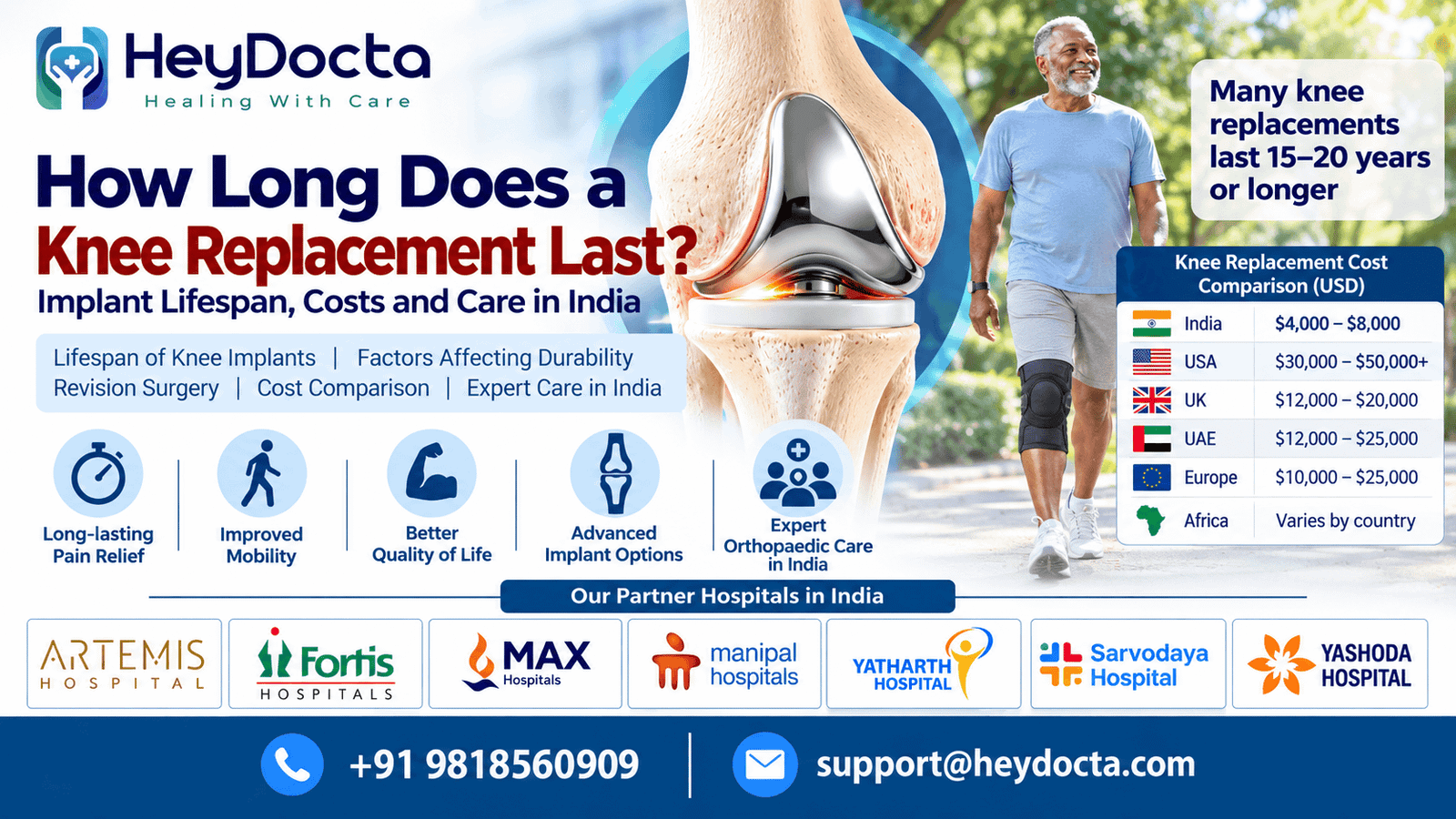
Modern knee replacements are designed to provide long-term pain relief and improve mobility. Many implants last 15–20 years or longer, although their lifespan varies according to the implant, surgical technique, activity levels, body weight, overall health and other individual factors. No implant can be guaranteed to last for a specific number of years.
India may be an option for patients seeking comparatively affordable knee replacement surgery. However, the overall decision should consider the surgeon’s experience, implant quality, rehabilitation, follow-up care and travel expenses.
Get a Free Medical Opinion : Contact HeyDocta to request a medical opinion, compare treatment estimates at partner hospitals and understand the expected costs before travelling.
How Long Does a Knee Replacement Usually Last?
A knee replacement often lasts 15–20 years or longer. Long-term research shows that many modern knee replacements continue functioning well for 20 years, although results differ between patients and implant types.
The lifespan of a knee implant depends on several factors:
- The design, material and quality of the implant.
- The accuracy of implant positioning and surgical technique.
- Body weight and the forces placed on the knee.
- Activity levels and repeated high-impact movements.
- Bone health, muscle strength and joint stability.
- Infections, injuries or other medical complications.
Some implants may last longer than 20 years, while others may require revision surgery earlier. Patients should discuss the expected lifespan of their proposed implant with their orthopaedic surgeon.
What Happens as a Knee Replacement Ages?
A knee implant does not usually stop working suddenly simply because it reaches a certain age. Instead, changes may develop gradually.
Wear and Tear
Artificial joint surfaces experience repeated movement over many years. Wear can release tiny particles that may contribute to inflammation and loosening around the implant.
Implant Loosening
The implant may gradually lose its secure attachment to the bone. This can cause pain, instability or difficulty walking and may require further investigation.
Infection
An infection around a knee replacement can occur soon after surgery or, less commonly, years later. Some infections require prolonged treatment or additional surgery.
Bone Loss or Instability
Changes in the surrounding bone, ligament function or implant position can affect stability and movement.
Implant Damage or Fracture
A serious fall or accident can damage the implant or cause a fracture in the bone around it. Such injuries need prompt medical assessment.
Persistent or new knee pain after replacement should not automatically be attributed to normal ageing. An orthopaedic specialist can assess the cause and recommend appropriate treatment.
Factors That Affect How Long a Knee Replacement Lasts
1. Implant Quality and Design
Knee implants are made from combinations of metal, durable plastic and other materials. Different designs suit different clinical situations. Your surgeon should explain the recommended implant, its intended use and the evidence supporting its expected durability.
2. Surgical Technique
Correct implant positioning, alignment and soft-tissue balance are important for joint function. The surgeon’s assessment and operative technique contribute to the overall result.
3. Body Weight
Higher body weight can increase the load placed on the knee during walking and other activities. Weight management, where appropriate, may help reduce stress on the joint and support general health.
4. Activity Levels
Regular low-impact activities such as walking, swimming and stationary cycling may be suitable after recovery, depending on medical advice. Repeated high-impact activities and heavy loading may increase wear or injury risk and should be discussed with the surgeon.
5. Rehabilitation and Muscle Strength
Physiotherapy helps improve movement, balance and muscle strength. Strong supporting muscles and good movement patterns can help patients use the joint more safely.
6. General Health and Medical Conditions
Conditions affecting bone health, circulation, immunity or wound healing may influence recovery and long-term implant care. Follow-up appointments help identify problems early.
Can a Knee Replacement Last 25 or 30 Years?
Yes, some knee replacements may continue functioning for 25 years or longer, but this cannot be guaranteed. Long-term survival depends on the implant, patient characteristics, surgical factors and the definition of implant failure used in research.
Patients should be cautious of claims that a particular implant will definitely last 30 years. Ask your surgeon about published long-term evidence for the proposed implant and how well it suits your age, activity level and medical condition.
Younger patients may have a greater lifetime chance of needing revision surgery because they are likely to use the implant for more years. However, age alone does not determine whether surgery is appropriate.
Knee Replacement Cost in India vs Other Countries
Cost is an important consideration for international patients, especially when planning treatment and follow-up care abroad. India may offer lower private-treatment costs than several high-cost healthcare markets, but patients should compare similar procedures and package inclusions.
The following figures are indicative planning estimates in USD, not live market quotations or guaranteed prices.
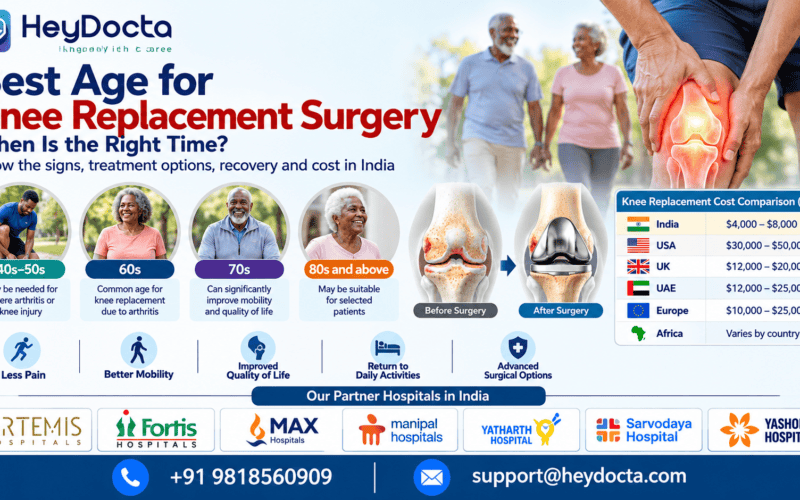
| Country or region | Estimated total knee replacement cost |
| India | $4,000–$8,000 |
| USA | $30,000–$50,000 or more |
| UK, private treatment | $12,000–$20,000 |
| UAE, private treatment | $12,000–$25,000 |
| Europe, private treatment | $10,000–$25,000 |
| Africa | Varies by country and hospital |
Prices vary according to hospital, implant, surgeon’s fees, length of stay, medical complexity and rehabilitation services. Public healthcare eligibility and insurance can significantly change the amount a patient pays in the UK, Europe and other regions.
What Does the Knee Replacement Package Include?
A hospital package may include:
- Surgeon and anaesthesia fees.
- The specified knee implant.
- Operating theatre charges.
- A defined hospital stay.
- Routine tests and medicines during admission.
- Initial physiotherapy.
Some services may be charged separately, including premium implants, extended hospital stays, intensive care, treatment of complications, outpatient physiotherapy and follow-up investigations.
International patients should also budget for flights, visa expenses, accommodation, local transport and any additional recovery days. Request a written quotation showing what is included and excluded before confirming treatment.
Want to compare your options? HeyDocta can help you request estimates from partner hospitals and clarify package details. Final prices must be confirmed by the treating hospital after reviewing your medical records.
Knee Replacement Options and Specialist Care in India
Total knee replacement replaces the damaged joint surfaces when severe arthritis or other joint damage causes substantial pain and functional limitations. Partial knee replacement may be suitable when damage is limited to one compartment of the knee.
Robotic-assisted surgery is available in some centres and may assist with surgical planning and execution. It is not necessary for every patient, and it does not guarantee a longer-lasting implant or better outcome.
Patients considering knee replacement at Yatharth Hospital can enquire about Dr. Dhananjay Sabat and his current orthopaedic and joint replacement services. Before choosing a surgeon, confirm the doctor’s current designation, relevant experience, hospital affiliation and suitability for your case.
HeyDocta’s partner hospitals include Artemis Hospitals, Fortis Hospitals, Max Hospitals, Manipal Hospital, Yatharth Hospital, Sarvodaya Hospital and Yashoda Hospital. Confirm the availability of the required procedure, surgeon and implant directly with the selected hospital.
How to Help Your Knee Replacement Last Longer
Although no method can guarantee a specific implant lifespan, several steps can support long-term joint health.
- Attend scheduled orthopaedic follow-up appointments.
- Maintain a healthy weight where appropriate.
- Follow prescribed strengthening and mobility exercises.
- Choose suitable low-impact physical activities.
- Use walking aids if recommended for safety.
- Seek medical advice for new pain, swelling, instability or reduced movement.
- Tell healthcare professionals about your knee implant before relevant procedures or investigations.
Do not ignore persistent pain, even if the surgery was performed many years ago. Early assessment may help identify treatable problems.
What If a Knee Replacement Needs Revision Surgery?
Revision knee replacement involves removing, replacing or modifying some or all of the original implant components. It may be considered when an implant becomes loose, wears significantly, becomes infected or fails for another reason.
Revision surgery can be more complex than the original operation and may require specialised implants, additional bone reconstruction and a longer rehabilitation period.
Costs vary widely depending on the reason for revision and the complexity of the procedure. Patients should request an individual assessment and written estimate rather than relying on standard primary knee replacement prices.
Treatment Process for International Patients
Step 1: Share Your Medical Reports
Provide recent knee X-rays, previous treatment records, details of existing medical conditions and information about any previous joint surgery.
Step 2: Obtain a Medical Opinion
The orthopaedic team reviews your records and advises whether knee replacement or another treatment may be appropriate. An in-person examination may still be necessary.
Step 3: Confirm the Implant and Cost
Ask about the implant model, package inclusions, hospital stay, rehabilitation and possible additional charges.
Step 4: Arrange Your Visa and Travel
Check current Indian visa requirements for your nationality and treatment. Confirm appointment dates with the hospital before booking travel and accommodation.
Step 5: Plan Recovery and Follow-Up
Obtain your discharge summary, implant details, rehabilitation plan and follow-up instructions before returning home. Arrange follow-up with a local healthcare professional when appropriate.
Medical Visa, Recovery and Follow-Up Care
Recovery after total knee replacement often involves several weeks of structured rehabilitation, with further improvements over months. Patients travelling to India should plan sufficient time for wound review, mobility assessment and medical clearance before flying home.
Long-haul travel after major surgery can increase the risk of blood clots. Your surgeon should advise when it is safe to fly and whether preventive measures are required.
HeyDocta can assist with hospital coordination, appointment scheduling, treatment estimates and travel guidance. Visa approval remains the responsibility of the relevant authorities.
HeyDocta provides medical tourism facilitation without an additional facilitation charge to patients. Hospital treatment, medicines, investigations, flights, accommodation, visa fees and other third-party expenses are separate.
Frequently Asked Questions
1. How many years does a knee replacement last?
Many knee replacements last 15–20 years or longer. Some function well for 25 years or more, but the lifespan varies and cannot be guaranteed.
2. Does a knee replacement need to be replaced after 20 years?
Not necessarily. If the implant remains stable and functions well without significant symptoms, revision surgery may not be needed simply because 20 years have passed.
3. Can exercise damage a knee replacement?
Appropriate low-impact exercise is generally encouraged after recovery. High-impact activities or heavy loading may increase wear or injury risk, so patients should follow their surgeon’s guidance.
4. How much does knee replacement cost in India?
A broad planning estimate for primary total knee replacement is $4,000–$8,000. The actual cost depends on the hospital, implant, procedure and services included.
5. Is knee replacement in India cheaper than in the USA or UK?
Private knee replacement is often less expensive in India than in the USA or UK. Patients should compare written quotations and include travel, accommodation, rehabilitation and follow-up costs.
6. What are the signs that a knee replacement may be failing?
Persistent or increasing pain, swelling, instability, reduced movement or difficulty bearing weight can indicate a problem. These symptoms require assessment by an orthopaedic specialist.
7. Does HeyDocta charge patients for treatment coordination?
HeyDocta provides medical tourism facilitation without an additional facilitation charge to patients. Hospital, travel, visa, accommodation and other third-party expenses remain separate.
Conclusion: Plan for Long-Term Knee Health
A knee replacement can provide long-lasting improvement in pain and mobility for many patients. Modern implants often last 15–20 years or longer, but their durability depends on individual and surgical factors. Regular follow-up, suitable exercise, weight management and timely assessment of new symptoms can help patients protect their joint health.
For international patients, India may offer a comparatively affordable treatment option when the full cost of surgery, travel, rehabilitation and follow-up care is considered.
Contact HeyDocta.com to request a medical opinion, compare estimated knee replacement costs at partner hospitals and plan your treatment journey in India.