Recovery after total knee replacement is an important concern for patients planning knee surgery in India. Understanding the recovery timeline, rehabilitation requirements and expected expenses can help international patients from Nigeria, Ghana, Kenya, Zimbabwe, Cameroon, Guyana, Jamaica, the USA, Europe and the Middle East prepare for treatment with greater confidence.
Most patients begin standing and walking with assistance soon after surgery, when medically appropriate. However, complete recovery takes time and varies according to age, general health, muscle strength, surgical factors and commitment to physiotherapy. Many patients gradually improve over 6–12 weeks, while strength, endurance and overall function may continue improving for 6–12 months.
For patients travelling abroad, recovery planning also involves hospital stay, accommodation, rehabilitation costs and medical clearance before flying home.
Get a Free Medical Opinion : Contact HeyDocta to request a medical opinion, compare treatment estimates from partner hospitals and plan your recovery and travel arrangements.
What Happens After Total Knee Replacement Surgery?
Total knee replacement, also called total knee arthroplasty, involves replacing damaged joint surfaces with artificial components. It is commonly performed for severe osteoarthritis and other conditions that cause significant knee pain and mobility problems.
After surgery, the medical team focuses on pain control, wound care, safe movement, prevention of complications and physiotherapy. Patients are usually encouraged to begin moving early under professional supervision.
Recovery is not the same for everyone. Some patients progress quickly, while others need additional time because of pre-existing health conditions, stiffness, pain or reduced muscle strength.
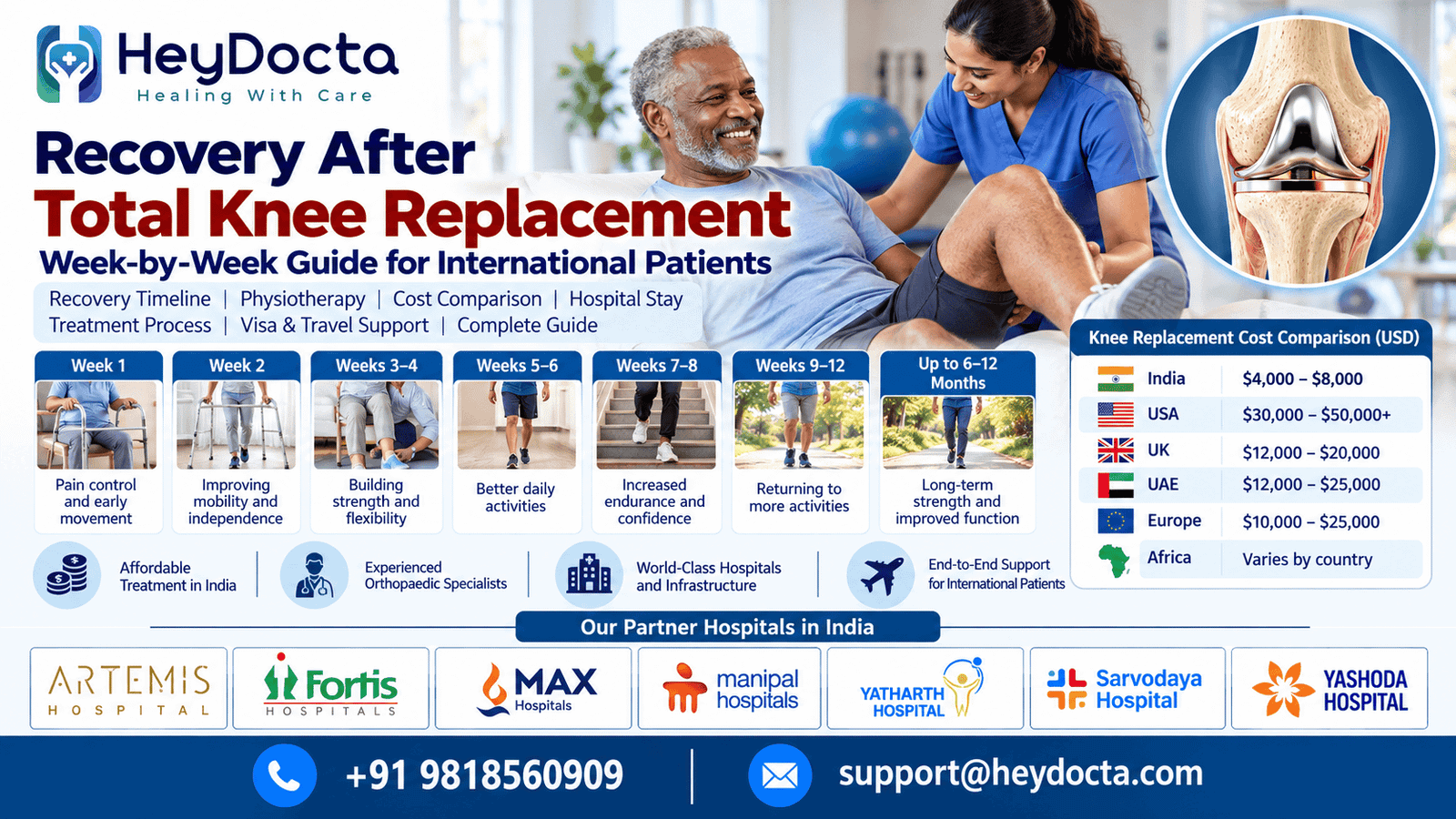
Recovery After Total Knee Replacement: Week-by-Week Timeline
The following timeline is a general guide. Your surgeon and physiotherapist should tailor the rehabilitation plan to your condition and progress.
Week 1: Pain Management and Early Movement
The first week focuses on safe movement, wound care and beginning rehabilitation.
Patients may:
- Stand and walk short distances with a walker or other walking aid.
- Perform prescribed ankle movements and gentle knee exercises.
- Practise bending and straightening the knee under guidance.
- Receive medication to manage pain and reduce complication risks.
- Learn how to get in and out of bed and use the bathroom safely.
Swelling, bruising, stiffness and discomfort are common during this stage. Follow the discharge instructions for wound care and medication. Do not force knee movements beyond the prescribed limits.
Week 2: Improving Mobility and Independence
During the second week, many patients work towards greater independence with daily activities.
Recovery goals may include:
- Walking more regularly with an appropriate aid.
- Continuing prescribed strengthening and range-of-motion exercises.
- Managing basic personal care safely.
- Attending physiotherapy as advised.
- Monitoring the surgical wound for signs of infection.
Some patients have their wound or dressing reviewed during this period. Follow the hospital’s instructions regarding bathing, dressing changes and follow-up appointments.
Weeks 3–4: Building Strength and Flexibility
During weeks three and four, patients may notice gradual improvements in walking and knee movement.
Rehabilitation often focuses on:
- Increasing walking distance gradually.
- Improving knee bending and straightening.
- Strengthening the thigh and surrounding muscles.
- Practising safe transfers and stair use when appropriate.
- Reducing reliance on walking aids when the physiotherapist considers it safe.
Swelling and stiffness may continue, especially after exercise. Progress should be gradual, and pain or swelling that suddenly worsens should be assessed.
Weeks 5–6: Improving Daily Activities
By weeks five and six, many patients can manage more routine activities, although their progress varies.
Possible goals include walking more comfortably, improving balance, increasing exercise tolerance and performing daily tasks with less assistance.
Some patients may reduce their use of walking aids, but others still need them. Do not stop using an aid simply because a particular number of weeks has passed. Your mobility, balance and safety should guide that decision.
Weeks 7–8: Continuing Functional Recovery
During weeks seven and eight, rehabilitation may focus on improving endurance, strength and confidence with everyday movement.
Patients may work towards:
- Longer walks on safe, level surfaces.
- Better control when sitting down and standing up.
- Gradual improvement in stair climbing.
- Continued knee flexibility and muscle strengthening.
- Resuming selected activities with medical approval.
High-impact exercise and strenuous activities should generally be avoided until the treating team advises otherwise.
Weeks 9–12: Returning to More Activities
Many patients experience meaningful improvements in mobility during this period. Daily activities may become easier, and walking endurance may increase.
Physiotherapy may continue to address muscle weakness, stiffness, balance and walking technique. Some patients still experience swelling, discomfort or difficulty with particular movements.
Recovery should be judged by safe, steady progress rather than a fixed deadline.
Three to Six Months: Strength and Endurance
Over the next few months, patients may continue building muscle strength, balance and stamina. The knee can feel more natural during everyday activities as rehabilitation progresses.
Some patients resume more of their usual routine, depending on their health, occupation and surgeon’s advice. Persistent pain, instability or significant stiffness should be discussed with the treating specialist.
Six to Twelve Months: Longer-Term Recovery
Improvements can continue for 6–12 months or longer. The final result depends on several factors, including preoperative mobility, general health, rehabilitation and surgical factors.
Continue any recommended strengthening programme and attend follow-up appointments, even when daily movement has improved.
Why Is Physiotherapy Important After Knee Replacement?
Physiotherapy is a key part of recovery after total knee replacement. Surgery replaces damaged joint surfaces, but rehabilitation helps restore strength, movement, balance and confidence.
A rehabilitation plan may include:
- Gentle range-of-motion exercises.
- Quadriceps and other leg-muscle strengthening.
- Walking practice with appropriate support.
- Balance and functional movement training.
- Guidance on stairs and daily activities.
Patients should follow the exercise programme provided by their clinical team. Doing too much too soon can aggravate pain and swelling, while avoiding movement entirely can delay progress.
Recovery After Knee Replacement in India: Cost Considerations
International patients should consider the total cost of surgery and recovery rather than comparing hospital charges alone.
The following are indicative private-treatment planning estimates in USD. They are not verified quotations from individual hospitals.
| Expense | Indicative cost |
| Total knee replacement surgery in India | $4,000–$8,000 |
| Additional physiotherapy after discharge | Varies by number of sessions and provider |
| Accommodation during recovery | Varies by location and length of stay |
| Flights and local transport | Depends on origin and travel dates |
| Follow-up consultations or investigations | Depends on the treatment plan |
The surgery package may include initial physiotherapy and a specified hospital stay, but outpatient rehabilitation and extended accommodation may cost extra. Ask the hospital for a written breakdown of inclusions and exclusions.
Knee Replacement Cost in India vs Other Countries
| Country or region | Indicative total knee replacement cost |
| India | $4,000–$8,000 |
| USA | $30,000–$50,000 or more |
| UK, private treatment | $12,000–$20,000 |
| UAE, private treatment | $12,000–$25,000 |
| Europe, private treatment | $10,000–$25,000 |
| Africa | Varies by country and hospital |
These broad estimates are for budgeting only. Actual prices depend on the provider, implant, insurance coverage, hospital stay and services included. Public healthcare eligibility can also affect patient costs in the UK and Europe.
Need help estimating your total budget? HeyDocta can help you request treatment estimates from partner hospitals and clarify what may be included. Remember to budget separately for travel, accommodation, visa expenses and any additional rehabilitation.
Knee Replacement Specialists and Partner Hospitals in India
Patients considering knee replacement at Yatharth Hospital can enquire about Dr. Dhananjay Sabat and his current orthopaedic and joint replacement services. Confirm his current designation, relevant surgical experience, hospital affiliation and suitability for your case before making a decision.
HeyDocta’s partner hospital network includes:
- Artemis Hospitals
- Fortis Hospitals
- Max Hospitals
- Manipal Hospital
- Yatharth Hospital
- Sarvodaya Hospital
- Yashoda Hospital
The availability of specific surgeons, implants, rehabilitation services and treatment packages must be confirmed with the relevant hospital.
How Long Should International Patients Stay in India?
Many international patients use approximately 2–3 weeks as an initial planning estimate after uncomplicated knee replacement, but some need a longer stay. The appropriate duration depends on wound healing, mobility, pain control, medical conditions and access to follow-up care.
Before leaving India, patients should have:
- A discharge summary and operative details.
- Implant information, where applicable.
- Medication and wound-care instructions.
- A home exercise and physiotherapy plan.
- A follow-up schedule and contact details for the treating team.
- Medical clearance for air travel.
Do not book a return flight based only on the expected hospital discharge date. Long-haul travel after major surgery can increase the risk of blood clots, so discuss travel timing, movement during the flight and any preventive measures with your surgeon.
Medical Visa and Travel Support
Patients travelling to India should verify the current visa requirements for their nationality with official authorities and the treating hospital. Supporting hospital documents may be needed, depending on eligibility and the applicable visa rules.
HeyDocta can assist with hospital coordination, appointment scheduling, treatment estimates and travel guidance. Visa approval remains the responsibility of the relevant authorities.
HeyDocta provides medical tourism facilitation without an additional facilitation charge to patients. Hospital treatment, medicines, investigations, flights, accommodation, visa fees and other third-party expenses are separate.
Warning Signs During Recovery
Contact your medical team promptly if you develop increasing redness or drainage from the wound, worsening pain or swelling, fever, or a sudden decline in movement.
Seek emergency medical care for sudden shortness of breath, chest pain or other symptoms that may indicate a blood clot or serious complication. Sudden calf swelling or pain also needs urgent medical assessment.
Do not adjust prescribed medicines or stop blood-thinning medication without medical advice.
Frequently Asked Questions
1. How long does recovery after total knee replacement take?
Many patients make substantial progress over 6–12 weeks, but recovery can continue for 6–12 months or longer. The timeline depends on health, rehabilitation and surgical factors.
2. When can I walk after knee replacement surgery?
Many patients begin standing and walking with assistance within the first day after surgery, when medically appropriate. The distance and level of support depend on individual progress.
3. How long should I stay in India after knee replacement?
Approximately 2–3 weeks is a common initial planning estimate, but some patients need longer. Your surgeon should confirm when it is safe to travel.
4. Is physiotherapy necessary after knee replacement?
Yes, physiotherapy is generally an essential part of recovery. It helps improve movement, muscle strength, balance and walking ability.
5. How much does knee replacement cost in India?
A broad planning estimate for total knee replacement is $4,000–$8,000. The final cost depends on the hospital, implant, procedure and package inclusions.
6. When can I return to work after knee replacement?
The timing depends on your job, recovery and surgeon’s advice. Desk-based work may be possible earlier than jobs requiring prolonged standing, climbing or physical labour.
7. Does HeyDocta charge patients for coordination?
HeyDocta provides medical tourism facilitation without an additional facilitation charge to patients. Hospital, travel, visa, accommodation and other third-party expenses remain separate.
Conclusion: Plan Your Knee Replacement Recovery with Confidence
Recovery after total knee replacement is gradual, with progress often occurring over several weeks and continuing for months. Following your surgeon’s instructions, attending physiotherapy, monitoring warning signs and arranging follow-up care are essential parts of recovery.
For international patients, planning ahead also means comparing treatment costs, allowing enough time in India and confirming fitness to fly before travelling home.
Contact HeyDocta.com to request a medical opinion, compare estimated knee replacement costs at partner hospitals and plan your treatment and recovery journey in India.