Preparing for knee replacement surgery is an important step towards reducing severe knee pain and improving mobility. Whether you are planning a total knee replacement, partial knee replacement or bilateral knee replacement, proper preparation can help you understand the procedure, manage potential risks and make recovery more organised. For international patients from Nigeria, Ghana, Kenya, Zimbabwe, Cameroon, Guyana, Jamaica, the USA, Europe and the Middle East, planning treatment in India also involves comparing costs, arranging medical records, organising travel and preparing for rehabilitation.
India is considered by many international patients because private hospital treatment may be more affordable than in several other countries. However, the right hospital, surgeon, implant and recovery plan matter as much as the price.
Get a Free Medical Opinion : Contact HeyDocta to request a medical opinion, compare estimates from partner hospitals and coordinate your treatment journey.
Why Is Preparation Important Before Knee Replacement Surgery?
Knee replacement surgery involves replacing damaged joint surfaces with artificial components to reduce pain and improve function. It is commonly considered for advanced osteoarthritis when non-surgical treatments no longer provide sufficient relief.
Preparing in advance can help patients:
- Identify and manage medical conditions that could affect surgery.
- Review medicines and reduce avoidable surgical risks.
- Improve strength and mobility before the operation, where possible.
- Arrange help with walking, bathing and daily activities after discharge.
- Understand the expected treatment cost and rehabilitation plan.
- Organise travel and accommodation if travelling from another country.
Preparation does not eliminate all risks, and every patient’s plan should be individualised by their treating team.
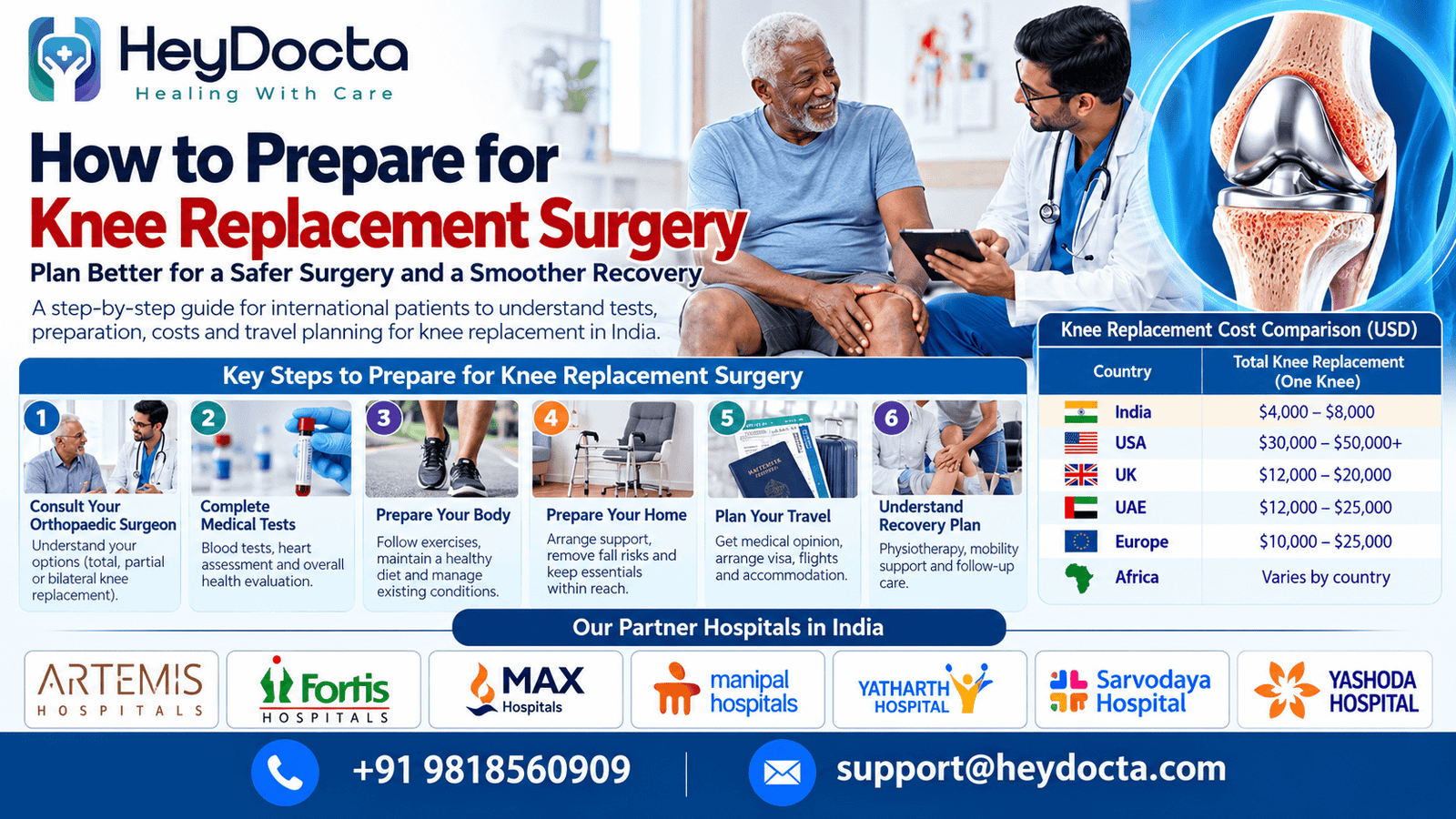
1. Consult an Orthopaedic Surgeon and Understand Your Options
The first step is to obtain an assessment from an experienced orthopaedic surgeon. The specialist will review your symptoms, examine your knee and assess X-rays or other investigations when required.
Depending on the condition of your knee, your surgeon may discuss:
Total knee replacement: Replaces the damaged joint surfaces when arthritis affects multiple areas of the knee.
Partial knee replacement: Replaces only the damaged compartment when the remaining joint structures meet the criteria for this procedure.
Bilateral knee replacement: Treats both knees, either during one operation or in separate stages, depending on suitability.
Ask your surgeon about the expected benefits, possible complications, implant options, length of hospital stay and rehabilitation requirements. If you are considering robotic-assisted surgery, ask whether it is appropriate for your condition and how much it adds to the total cost.
2. Complete Preoperative Medical Tests
Before surgery, your healthcare team will assess whether you are medically fit for the procedure. The tests required depend on your age, health history and hospital protocol.
Common assessments may include:
- Blood tests to check blood counts, kidney function and other relevant parameters.
- Blood sugar testing, particularly for patients with diabetes.
- Electrocardiogram or other cardiac assessment when indicated.
- Blood pressure and general health evaluation.
- Review of previous operations, allergies and current medicines.
- Additional tests or specialist consultations based on medical history.
Inform your doctor about heart disease, diabetes, high blood pressure, kidney problems, previous blood clots, smoking and any recent infection. Existing conditions may need better control before elective surgery.
Do not start or stop medicines without medical advice. Blood thinners, diabetes medicines, supplements and certain pain medicines may require specific instructions before surgery.
3. Prepare Your Body Before Surgery
Preoperative preparation can help you enter surgery in the best possible condition.
Follow a Suitable Exercise Plan
Your physiotherapist may recommend gentle exercises to strengthen the thigh and hip muscles, improve flexibility and maintain safe movement. Suitable exercises depend on your pain level and mobility.
Do not force painful movements or begin strenuous exercise without professional guidance.
Maintain a Balanced Diet
Eat a balanced diet with adequate protein, vegetables, fruit and other nutrients. Good nutrition supports healing. If you have anaemia, nutritional deficiencies or poorly controlled diabetes, your healthcare team may recommend treatment before surgery.
Stop Smoking and Discuss Alcohol Use
Smoking can impair wound healing and increase complications. Ask your healthcare team for support with stopping smoking before surgery. Discuss alcohol use honestly, especially if you drink heavily, because sudden withdrawal can also be dangerous and may require medical support.
Manage Your Weight Where Appropriate
If excess weight is affecting your health, your doctor may discuss safe weight management. Avoid crash diets immediately before surgery, as adequate nutrition is important for recovery.
4. Prepare Your Home and Recovery Support
You may need temporary assistance after knee replacement, particularly during the first few weeks.
Before surgery:
- Remove loose rugs, clutter and trip hazards.
- Arrange a stable chair with armrests.
- Keep frequently used items within easy reach.
- Install bathroom grab bars or other recommended supports.
- Arrange help with shopping, meals and household tasks.
- Ask your physiotherapist whether you need a walker or other mobility aid.
Discuss stairs, sleeping arrangements and bathroom access with your rehabilitation team. Planning ahead can make the first days at home more manageable.
5. Understand Knee Replacement Surgery Costs in India vs Other Countries
Treatment affordability is a major consideration for international patients. The total price depends on the hospital, surgeon, implant, procedure, room category, medical complexity and rehabilitation services.
The following are indicative private-treatment planning ranges in USD, not guaranteed quotations or verified package prices from individual hospitals.
| Country | Estimated total knee replacement cost |
| India | $4,000–$8,000 |
| USA | $30,000–$50,000+ |
| UK, private treatment | $12,000–$20,000 |
| UAE, private treatment | $12,000–$25,000 |
| Europe, private treatment | $10,000–$25,000 |
Costs vary considerably by provider and country. These figures may not include identical implants, hospital stays, rehabilitation or follow-up services. Public healthcare eligibility and insurance can also affect the amount a patient pays.
What Can Increase the Cost?
Your final estimate may depend on:
- Total versus partial knee replacement.
- One knee versus both knees.
- Conventional versus robotic-assisted surgery.
- Implant type and manufacturer.
- Surgeon, anaesthesia and operating theatre charges.
- Preoperative tests, medicines and additional hospital days.
- Physiotherapy, rehabilitation and treatment of complications.
For bilateral knee replacement, ask for separate estimates for simultaneous and staged surgery. Simultaneous surgery may reduce some duplicated admission expenses, but it can involve more demanding early recovery and is not suitable for everyone.
Budget for Expenses Beyond the Hospital Package
International patients should also consider:
- Return flights and visa fees.
- Accommodation before and after admission.
- Meals and local transport.
- Additional physiotherapy or rehabilitation.
- A companion’s travel and living expenses, if needed.
- Follow-up appointments and unexpected medical costs.
Want to compare treatment estimates? HeyDocta can help you coordinate enquiries with its partner hospitals and clarify package inclusions and exclusions before you travel.
6. Choose Your Hospital and Orthopaedic Specialist Carefully
Patients considering treatment at Yatharth Hospital can enquire about Dr. Dhananjay Sabat and the hospital’s current knee replacement services. Confirm his current designation, availability, relevant experience and suitability for your case directly with the hospital.
HeyDocta’s partner hospitals include:
- Artemis Hospitals
- Fortis Hospitals
- Max Hospitals
- Manipal Hospital
- Yatharth Hospital
- Sarvodaya Hospital
- Yashoda Hospital
Before making a decision, ask about the surgeon’s experience with your procedure, implant options, infection-prevention practices, physiotherapy services, expected hospital stay and postoperative follow-up arrangements.
Request a written treatment estimate with clear details of what is included and what may cost extra.
7. Prepare Your Medical Records and Travel Documents
International patients should send their reports to the hospital before finalising travel. Useful documents include:
- Recent knee X-rays and other relevant scans.
- Medical history and previous treatment records.
- Current medication list and known allergies.
- Recent test results, if available.
- Passport and documents required for the relevant Indian visa.
The hospital may request further tests after reviewing your records. Check current visa requirements through official Indian government channels and obtain the required hospital documentation.
Plan your arrival with sufficient time for preoperative assessment. Do not travel for surgery until the hospital has reviewed your case and confirmed the appointment and treatment plan.
HeyDocta can assist with hospital coordination, appointment scheduling, treatment estimates and travel guidance. Its medical tourism facilitation is provided without an additional facilitation charge to patients; hospital treatment, medicines, investigations, travel, visa, accommodation and other third-party expenses remain separate.
8. Know What to Expect on Surgery Day and During Recovery
Follow the hospital’s instructions about fasting, bathing, medicines and arrival time. Tell the team if you develop a fever, skin infection or another new health problem before surgery.
After the operation, your medical team will monitor pain, the surgical wound and your general condition. Physiotherapy and assisted walking often begin early when medically appropriate.
Recovery continues over several weeks and months. You may need a walker or other support initially, followed by exercises to improve knee movement, balance and strength. Follow your surgeon’s advice on wound care, medicines, blood clot prevention and activity.
International patients should not book their return flight based on a fixed timeline. The treating team must confirm when it is safe to travel, and you should have a clear plan for follow-up care at home.
Frequently Asked Questions
1. How many days before knee replacement should I start preparing?
Preparation begins as soon as surgery is being considered. Medical assessments, medicine reviews, exercise planning and arrangements at home may take several weeks, depending on your health and the hospital’s requirements.
2. Can I eat before knee replacement surgery?
Hospitals usually provide fasting instructions before anaesthesia. Follow the exact instructions from your surgical team, including guidance about drinking fluids and taking regular medicines.
3. Should I stop blood thinners before surgery?
Do not stop them on your own. Your surgeon and prescribing doctor will determine whether they need to be paused, adjusted or managed in another way.
4. How much does knee replacement cost in India?
A broad planning estimate for total knee replacement is $4,000–$8,000. Your actual cost depends on the hospital, implant, procedure and package inclusions.
5. How long should I stay in India after knee replacement?
The required stay depends on your recovery, wound condition, mobility and the surgeon’s assessment. Ask your treating team to advise on a safe travel timeline before booking your return flight.
6. Can international patients arrange knee replacement through HeyDocta?
Yes. HeyDocta can help coordinate hospital enquiries, medical appointments, treatment estimates and travel guidance for eligible international patients.
Conclusion
Preparing for knee replacement involves more than scheduling an operation. Medical assessment, medicine review, physical preparation, home support, cost planning and rehabilitation arrangements all contribute to a more organised treatment journey.
For international patients, India may offer comparatively affordable private knee replacement options, but the right decision should balance cost with clinical suitability, hospital services and follow-up care.
Contact HeyDocta.com to request a medical opinion, compare knee replacement estimates from partner hospitals and plan your treatment journey in India.