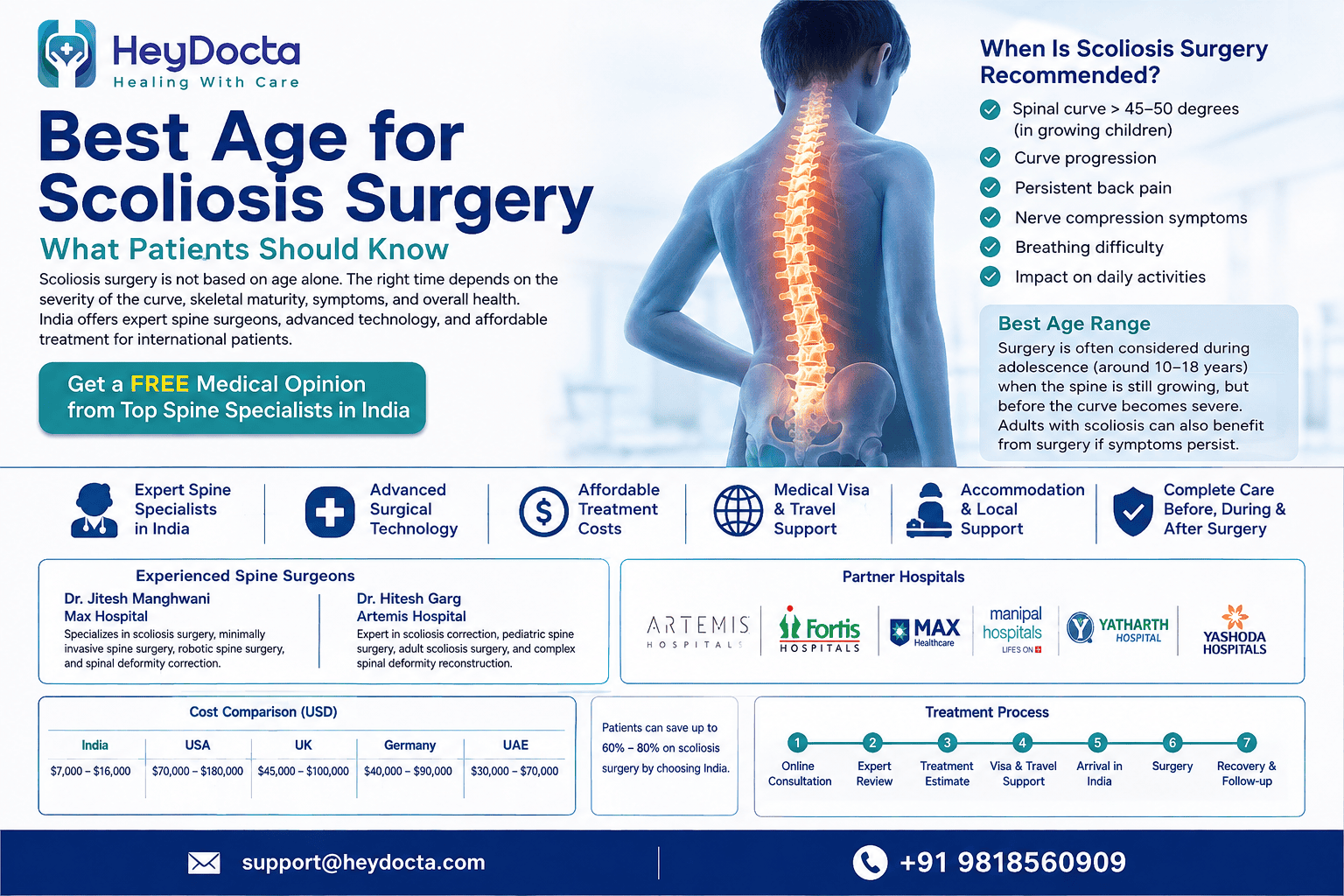
A scoliosis diagnosis often raises an important question for patients and families: When is the best age for scoliosis surgery? The answer depends on several factors, including the severity of the spinal curve, age, skeletal maturity, symptoms, and overall health. Surgery is not based on age alone. Instead, spine specialists carefully evaluate each patient to determine the right time for treatment. For international patients seeking expert scoliosis care, India offers experienced spine surgeons, advanced surgical technology, internationally accredited hospitals, and treatment costs that are significantly lower than those in many Western countries.
If you or your child has been diagnosed with scoliosis, heydocta.com can connect you with leading spine specialists in India for a personalized treatment plan, second opinion, and transparent treatment cost estimate without additional coordination charges.
Understanding Scoliosis
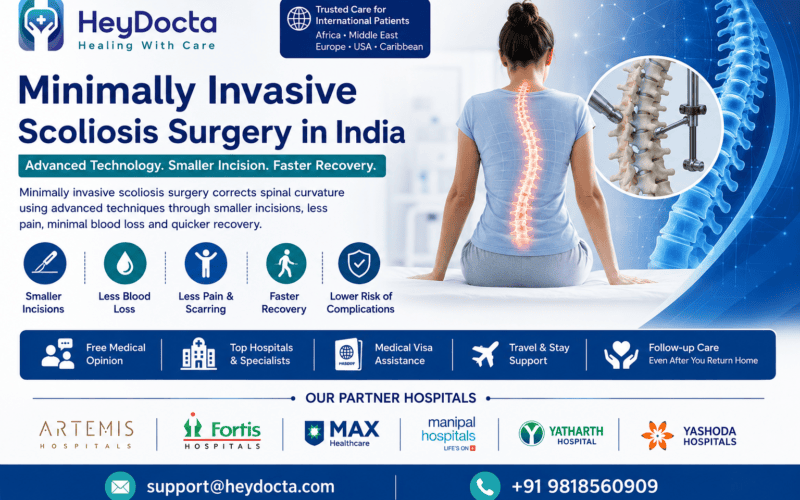
Scoliosis is an abnormal sideways curvature of the spine that may develop during childhood, adolescence, or adulthood. Mild scoliosis often requires regular observation, while moderate and severe curves may need bracing or surgery depending on the patient’s condition.
The most common types include:
- Adolescent Idiopathic Scoliosis
- Congenital Scoliosis
- Neuromuscular Scoliosis
- Adult Degenerative Scoliosis
Early diagnosis helps doctors determine the most appropriate treatment plan before the spinal curve progresses.
What Is the Best Age for Scoliosis Surgery?
There is no single “perfect” age for scoliosis surgery. Instead, surgeons recommend surgery based on:
- Degree of spinal curvature
- Curve progression
- Skeletal maturity
- Presence of pain
- Lung function
- Neurological symptoms
- Impact on daily life
In many adolescents with idiopathic scoliosis, surgery is often considered after significant growth has occurred but before severe deformity develops. Adults may also benefit from surgery if scoliosis causes persistent pain, nerve compression, or difficulty walking.
When Is Scoliosis Surgery Recommended?
Surgery may be advised when:
- The spinal curve continues to worsen despite bracing
- Cobb angle is generally greater than 45–50 degrees in growing adolescents (based on specialist evaluation)
- Severe pain limits daily activities
- Nerve compression causes weakness or numbness
- Walking becomes difficult
- Breathing is affected due to severe spinal deformity
- Non-surgical treatment is no longer effective
Every patient requires an individualized assessment before surgery is recommended.
Why International Patients Choose India
Patients from Nigeria, Kenya, Ghana, Zimbabwe, Cameroon, Guyana, Jamaica, Europe, the USA, and the Middle East travel to India because of:
- Highly experienced spine surgeons
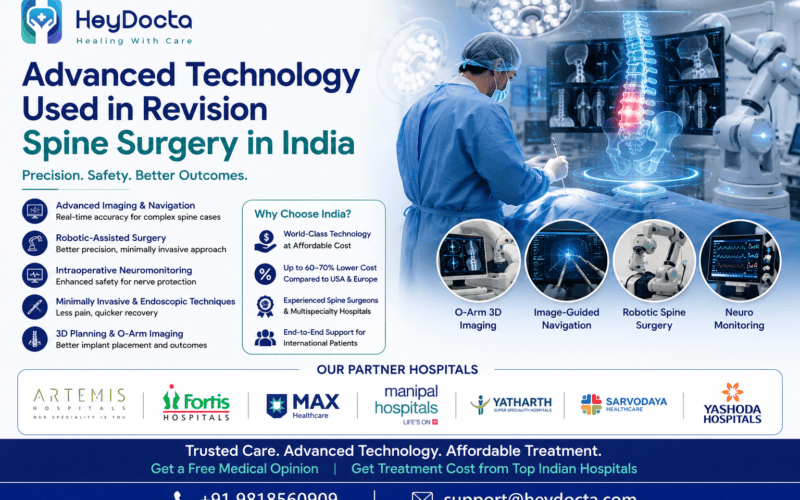
- Modern spinal navigation systems
- Robotic-assisted spine surgery
- Minimally invasive techniques where appropriate
- Internationally accredited hospitals
- Affordable treatment costs
- Short waiting periods
- Dedicated international patient departments
HeyDocta provides complete support throughout the treatment journey.
Talk to Our Medical Tourism Expert
Share your X-rays, MRI scans, CT scans, and medical reports with heydocta.com for an expert opinion from leading spine specialists in India.
Treatment Options Available in India
Treatment depends on the patient’s age, spinal curve, symptoms, and overall health.
Observation
Patients with mild scoliosis require regular follow-up and imaging.
Physiotherapy
Specialized exercises help improve posture, flexibility, and muscle strength.
Bracing
Bracing is commonly recommended for growing children with moderate scoliosis to reduce the risk of curve progression.
Scoliosis Surgery
When surgery becomes necessary, treatment options include:
- Posterior Spinal Fusion
- Anterior Spinal Fusion
- Instrumented Spinal Correction
- Robotic-Assisted Spine Surgery
- Minimally Invasive Spine Surgery in selected cases
- Complex Spinal Deformity Correction
The procedure is selected according to the patient’s spinal condition.
Experienced Spine Specialists in India
International patients may consult experienced scoliosis surgeons including:
Dr. Jitesh Manghwani – Max Hospital
Dr. Jitesh Manghwani at Max Hospital specializes in scoliosis surgery, robotic spine surgery, minimally invasive spine surgery, spinal deformity correction, revision spine surgery, and complex spinal reconstruction.
Dr. Hitesh Garg – Artemis Hospital
Dr. Hitesh Garg at Artemis Hospital is experienced in scoliosis correction, pediatric spine surgery, minimally invasive spine surgery, adult scoliosis treatment, and spinal deformity surgery.
Partner Hospitals
HeyDocta coordinates treatment with leading hospitals including:
- Artemis Hospital
- Fortis Hospitals
- Max Hospitals
- Manipal Hospital
- Yatharth Hospital
- Yashoda Hospital
These hospitals offer:
- Dedicated spine centers
- Advanced diagnostic imaging
- Modern operating theatres
- Intensive care facilities
- Rehabilitation services
- International patient support
Scoliosis Surgery Cost in India
Treatment costs vary according to the complexity of surgery.
| Treatment | Estimated Cost (USD) |
|---|---|
| Specialist Consultation | $30–$100 |
| MRI & Diagnostic Imaging | $150–$500 |
| Scoliosis Surgery | $7,000–$16,000 |
| Rehabilitation | $500–$1,500 |
Factors affecting cost include:
- Severity of scoliosis
- Number of spinal levels treated
- Implant requirements
- Hospital category
- Length of hospital stay
Cost Comparison: India vs Other Countries
| Country | Average Cost (USD) |
|---|---|
| India | $7,000–$16,000 |
| USA | $70,000–$180,000 |
| UK | $45,000–$100,000 |
| Germany | $40,000–$90,000 |
| UAE | $30,000–$70,000 |
International patients often save 60% to 80% by choosing India without compromising access to advanced spine care.
Treatment Journey for International Patients
Step 1: Online Medical Review
Patients send:
- MRI scans
- X-rays
- CT scans (if available)
- Medical records
Step 2: Specialist Consultation
The spine surgeon reviews the reports and prepares an individualized treatment plan.
Step 3: Treatment Estimate
Patients receive:
- Personalized treatment recommendation
- Transparent cost estimate
- Hospital options
- Expected recovery timeline
Step 4: Medical Visa Assistance
HeyDocta provides support with:
- Medical visa documentation
- Invitation letters
- Travel planning
Step 5: Arrival in India
Services include:
- Airport pickup
- Hospital admission
- Preoperative evaluation
Step 6: Surgery
The procedure is performed using advanced spinal correction techniques.
Step 7: Rehabilitation
Patients receive supervised physiotherapy and continue follow-up after returning home.
Recovery After Scoliosis Surgery
Recovery depends on age, surgical complexity, and overall health.
| Recovery Stage | Typical Timeline |
|---|---|
| Hospital Stay | 5–7 days |
| Walking | 1–3 days after surgery |
| Return to School or Office | 6–12 weeks |
| Light Physical Activities | 2–3 months |
| Full Recovery | 6–12 months |
Following the rehabilitation program is important for improving mobility and long-term outcomes.
Medical Visa and Travel Support
HeyDocta assists international patients with:
- Hospital coordination
- Medical visa guidance
- Airport transfers
- Hotel accommodation
- Local transportation
- Interpreter services
- Online follow-up care
Patients receive continuous support before, during, and after treatment.
Why Choose HeyDocta?
International patients choose HeyDocta because we provide:
- Free medical opinion
- Expert second opinions
- Transparent treatment cost estimates
- Hospital coordination
- Medical visa assistance
- Travel planning
- Accommodation support
- Follow-up coordination
- No additional coordination charges
Frequently Asked Questions
Is there a perfect age for scoliosis surgery?
No. Surgery is recommended based on spinal curvature, progression, symptoms, skeletal maturity, and overall health rather than age alone.
Can adults undergo scoliosis surgery?
Yes. Adults with severe pain, progressive spinal deformity, or nerve compression may benefit from scoliosis surgery after specialist evaluation.
Is scoliosis surgery safe for teenagers?
When performed by experienced spine surgeons, scoliosis surgery is a well-established procedure. The risks and benefits should be discussed with the treating specialist.
How long should international patients stay in India?
Most patients remain in India for approximately three to four weeks, depending on surgery and rehabilitation needs.
What reports should I send before traveling?
You should provide MRI scans, X-rays, CT scans if available, previous treatment records, and your medical history.
Can scoliosis return after surgery?
The goal of surgery is to correct and stabilize the spine. Your surgeon will explain the expected long-term outcomes and the importance of follow-up care.
Does HeyDocta charge for treatment coordination?
No. HeyDocta provides hospital coordination, medical opinions, visa assistance, and travel support without additional coordination charges.
Conclusion
The best age for scoliosis surgery depends on the individual patient’s condition rather than a specific number. Timely evaluation by an experienced spine specialist helps determine whether observation, bracing, or surgery is the most appropriate option. India offers internationally recognized spine centers, skilled surgeons, advanced surgical technology, and affordable treatment, making it one of the leading destinations for scoliosis care for international patients.
If you or your child has scoliosis and would like an expert opinion, contact heydocta.com today for a Free Medical Opinion. We work with trusted partner hospitals, including Artemis Hospital, Fortis Hospitals, Max Hospitals, Manipal Hospital, Yatharth Hospital, and Yashoda Hospital, to provide high-quality and affordable scoliosis treatment. Our dedicated medical tourism team offers end-to-end support with hospital selection, specialist appointments, transparent treatment costs, medical visa assistance, travel arrangements, accommodation, and follow-up care, helping international patients access advanced scoliosis treatment in India with confidence.