For families considering treatment abroad, bone marrow transplant success stories from international patients can provide valuable insight into what the medical journey may look like. Patients from countries such as Nigeria, Ghana, Kenya, Tanzania, Oman, the UAE and other regions have travelled to India for bone marrow and stem cell transplantation. However, every transplant is different, and another patient’s outcome cannot predict an individual’s result.
Published hospital records provide examples of international patients receiving BMT-related treatment in India. Some Hospitals has reported treating patients from Oman, Tanzania, UAE, Mauritius, Bangladesh and Sri Lanka among more than 1,500 patients treated through its BMT units.
Get a Free Medical Opinion: Share your medical reports with HeyDocta to explore whether BMT in India may be appropriate for your condition and receive assistance with specialist consultation, hospital coordination and estimated treatment costs.
Why International Patients Consider India for Bone Marrow Transplant
Bone marrow transplantation, also called haematopoietic stem cell transplantation (HSCT), is used for selected blood cancers and serious blood disorders. Depending on the condition, transplantation may involve the patient’s own stem cells or cells from a donor.
International patients may consider India because of:
- Specialised BMT and haematology centres
- Experienced transplant teams
- Autologous and allogeneic transplant options
- Access to donor-matching services
- International-patient departments
- Potentially lower treatment costs than some Western countries
- Availability of accommodation and travel support around major hospitals
The decision should always be based on the patient’s diagnosis, disease status, donor availability, overall health and specialist assessment.
What Do “Success Stories” Really Mean in BMT?
A successful transplant does not simply mean that the stem cells were infused successfully.
Doctors may assess several outcomes, including:
- Successful engraftment
- Recovery of blood-cell production
- Control of the underlying disease
- Absence or management of major complications
- Infection control
- Recovery of immune function
- Long-term disease status
- Quality of life and functional recovery
NCI explains that outcomes depend on factors such as the type and stage of cancer, whether the patient’s own stem cells can be used, donor availability, other treatments and the patient’s ability to tolerate intensive therapy.
Therefore, patients should be cautious about websites that present a single success percentage as a guarantee.
Documented International Patient Experience: Kenya
One publicly documented example comes from Artemis Hospitals.
In 2019, Artemis reported treating a 35-year-old nurse from Kenya with chronic myeloid leukemia (CML) in blast crisis. She had already received two cycles of chemotherapy in Kenya before being referred to Artemis for bone marrow transplantation.
Artemis reported that its team proceeded with total marrow irradiation-based conditioning before transplantation.
This example demonstrates how an international BMT journey may involve treatment in the patient’s home country followed by referral to a specialised Indian centre for transplantation.
It also highlights an important point: international patients do not always arrive in India at the beginning of their illness. Some travel after receiving previous chemotherapy or other treatment in their home country.
International Patients Treated at Artemis BMT Units
Artemis Hospitals has also reported that more than 1,500 patients had been treated at its BMT units, including patients from foreign countries such as Oman, Bangladesh, Sri Lanka, Tanzania, Dubai/UAE and Mauritius.
This is useful context for international patients because it demonstrates that medical travel for BMT to India is not limited to patients from one geographic region.
However, this historical hospital milestone should not be interpreted as a guarantee that every international patient will have a successful outcome.
International BMT Care
At Artemis Hospitals, Gurugram, Dr. Gaurav Dixit is listed as Head – Haematology Oncology & Bone Marrow Transplant , with expertise in BMT, haematopoietic stem cell transplantation, haematology, oncology and paediatric haemato-oncology. His profile lists autologous, matched-sibling allogeneic, haploidentical and matched-unrelated donor transplantation among his procedures.
His profile also states that he performed the bone marrow transplant in Kenya in October 2022, successfully.
For patients from Kenya and other African countries, this is particularly relevant because it illustrates the involvement of Indian BMT expertise in developing transplant capability outside India.
Types of Bone Marrow Transplant Used in India
Autologous Transplant
The patient’s own stem cells are collected and stored before intensive treatment and then returned to the patient.
This approach is commonly used for selected diseases such as multiple myeloma and some lymphomas.
Allogeneic Transplant
Stem cells come from another person, usually a suitably matched donor.
Possible donors include:
- Matched sibling
- Haploidentical family donor
- Matched unrelated donor
The choice depends on the disease, patient’s condition and donor availability.
Haploidentical Transplant
A haploidentical transplant uses a partially matched family donor. This can expand donor options when a fully matched sibling is unavailable.
The treating transplant team determines whether this approach is appropriate.
What Can Affect BMT Success?
A patient’s outcome can be influenced by many factors.
Disease-Related Factors
The underlying disease, stage, response to previous treatment and disease status before transplant can affect the expected outcome.
Patient-Related Factors
Age, general health, organ function, infections and other medical conditions can influence transplant eligibility and recovery.
Donor Factors
For allogeneic transplantation, donor matching and donor availability are important considerations.
Treatment-Related Factors
Conditioning therapy, transplant type, infection prevention and management of complications can all affect recovery.
NCI notes that allogeneic transplantation also carries the risk of graft-versus-host disease (GVHD), in which donor immune cells attack tissues in the recipient.
Recovery After Bone Marrow Transplant
BMT recovery is a long process.
The initial hospital period may last several weeks. The NHS notes that patients generally require close monitoring after transplantation and that full recovery can take up to a year.
Recovery may involve:
- Frequent blood tests
- Infection prevention
- Medicines
- Blood or platelet transfusions when required
- Nutrition support
- Management of side effects
- Monitoring for GVHD after allogeneic transplant
- Regular specialist follow-up
Patients should therefore plan financially and logistically for a longer stay in India when recommended by the transplant team.
Bone Marrow Transplant Cost in India
Cost is an important reason international patients compare India with other treatment destinations.
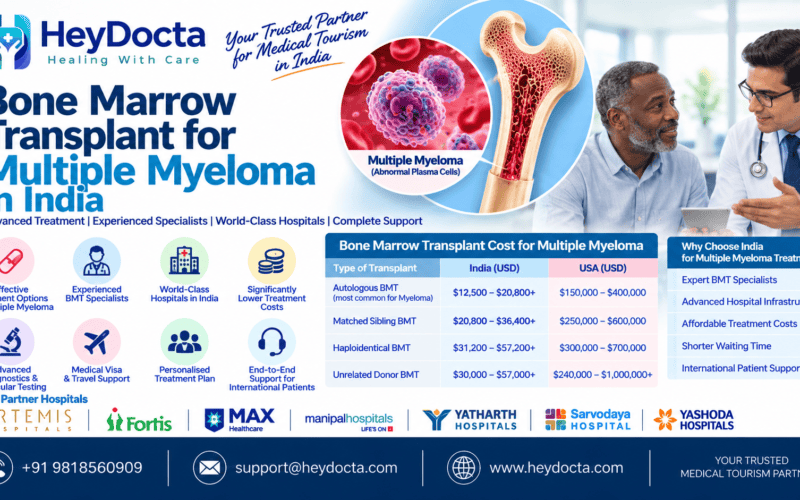
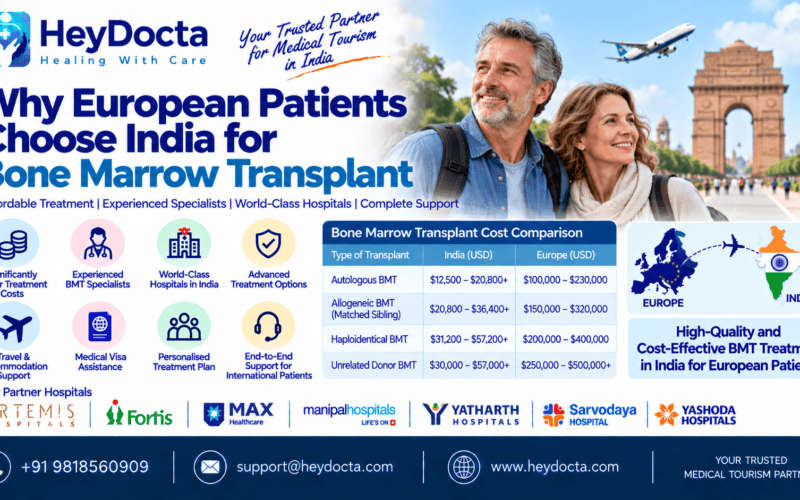
Some Hospitals currently publishes a general BMT cost range of USD15000 to 31000 in India and states that costs vary according to hospital, location, room type and complications.
The final cost may increase depending on:
- Transplant type
- Donor testing
- Conditioning therapy
- Hospital stay
- Medicines
- Blood products
- ICU treatment
- Infections
- GVHD
- Other complications
- Follow-up requirements
India vs USA: Cost Perspective
The U.S. Health Resources and Services Administration states that an unrelated bone marrow or cord blood transplant in the USA can range from USD 240,000 to more than USD 1 million, including the transplant and up to six months of care. Donor-search costs may be additional.
| Factor | India | USA |
| General BMT planning range | USD15000–31000* | USD 240,000–1M+* |
| Donor costs | Depends on donor type | May be additional |
| Hospital stay | Depends on recovery | Depends on recovery |
| Complication costs | Additional if required | Can substantially increase total cost |
| International travel | Additional | Not applicable for US residents |
Figures are indicative and not directly comparable because the services included can differ.
Talk to Our Medical Tourism Expert: HeyDocta can help coordinate your reports with partner hospitals and obtain a hospital-based treatment estimate for financial planning.
Hospitals International Patients May Consider
International patients can explore BMT services at specialised hospitals such as:
- Artemis Hospital
- Fortis Hospitals
- Max Hospitals
- Manipal Hospital
- Yatharth Hospital
- Sarvodaya Hospital
- Yashoda Hospital
The appropriate hospital should be selected according to the patient’s diagnosis, transplant type, specialist expertise, infrastructure, donor requirements and follow-up plan.
Step-by-Step International BMT Journey
1. Share Medical Records
Send previous treatment records, blood tests, imaging, biopsy reports and current medications.
2. Obtain Specialist Opinion
A transplant specialist assesses the diagnosis and determines whether BMT may be appropriate.
3. Discuss Donor and Transplant Type
The medical team evaluates autologous, matched sibling, haploidentical or unrelated-donor options where relevant.
4. Receive a Treatment Estimate
Request an itemised hospital quotation covering expected treatment expenses.
5. Arrange Medical Visa and Travel
International patients can prepare the required medical visa documentation and travel arrangements.
6. Complete Pre-Transplant Assessment
The patient undergoes investigations to determine whether they are fit for transplantation. Pre-transplant testing can include blood tests and assessments of organs such as the heart, lungs, liver and kidneys.
7. Undergo Transplant and Recovery
The patient receives conditioning therapy followed by stem-cell infusion and close monitoring.
8. Continue Follow-Up
After discharge, frequent follow-up remains important, particularly during the early recovery period.
Medical Visa and Travel Support
International patients may require support with:
- Hospital invitation or treatment letter
- Medical visa documentation
- Flights
- Accommodation
- Airport transfers
- Local transportation
- Attendant arrangements
- Follow-up coordination
HeyDocta can help coordinate these medical-tourism requirements alongside hospital communication.
HeyDocta acts as a medical tourism facilitator and does not add a separate service fee to the patient’s hospital treatment cost.
What International Patients Can Learn from These Stories
The documented experiences of international BMT patients show several important lessons:
- Patients can travel to India after receiving treatment in their home country.
- Complex transplant cases may require specialised multidisciplinary care.
- BMT treatment involves much more than the transplant procedure itself.
- Recovery and follow-up need to be planned before travelling.
- Treatment costs should include a contingency for complications.
- Individual outcomes vary and should never be guaranteed based on another patient’s experience.
FAQs About Bone Marrow Transplant Success Stories
1. Are there international patients who have received BMT in India?
Yes. Many Hospitals has reported treating BMT patients from countries including Oman, Tanzania, UAE, Mauritius, Bangladesh and Sri Lanka.
2. Can international patients from Africa receive BMT in India?
International patients may be eligible for BMT in India depending on their diagnosis, medical condition, transplant requirements and specialist assessment.
3. Is BMT successful for every patient?
No. Outcomes vary according to the disease, disease status, transplant type, donor match, patient health and complications.
4. How much does BMT cost in India?
Some Hospitals currently publishes a general range of USD15000–31000, although individual costs can vary considerably.
5. How long should international patients stay in India?
The required stay depends on the transplant and recovery. Patients may need several weeks of hospital care followed by outpatient monitoring. Full recovery can take considerably longer.
6. Can HeyDocta help international BMT patients?
Yes. HeyDocta can assist with medical report coordination, specialist consultation, hospital coordination, cost estimates, visa and travel assistance, accommodation and follow-up planning.
Conclusion
Bone marrow transplant success stories from international patients demonstrate that patients from different countries have travelled to India for complex blood-disorder and cancer treatments. Publicly documented examples include patients from Oman, Tanzania, UAE, Mauritius, Bangladesh and Sri Lanka, while Artemis Hospitals’ Dr. Gaurav Dixit reports performing the BMT in Kenya in October 2022.
These experiences can provide reassurance, but they should not be treated as guarantees. BMT is an intensive treatment, and outcomes depend on the patient’s diagnosis, disease status, donor match, overall health, transplant type and response to treatment.
Get a Free Medical Opinion from HeyDocta: Share your medical reports with heydocta.com to explore BMT treatment options in India, coordinate with transplant specialists and hospitals, understand estimated treatment costs and receive assistance with medical visa, travel, accommodation and follow-up arrangements.