Diabetes significantly increases the risk of blocked leg arteries, also known as Peripheral Artery Disease (PAD). Reduced blood flow to the legs can lead to severe pain, non-healing foot ulcers, infections, and in advanced cases, amputation. Many patients mistake early symptoms for normal aging or diabetic nerve problems, delaying treatment until serious complications develop.
The encouraging news is that early diagnosis and advanced vascular treatment in India help restore blood circulation, preserve the affected limb, and improve quality of life. India offers internationally recognized vascular care, experienced specialists, and modern minimally invasive procedures at a much lower cost than many other countries.
If you are traveling from Nigeria, Kenya, Ghana, Cameroon, Zimbabwe, Guyana, Jamaica, the Middle East, Europe, or the USA, India provides excellent treatment options with comprehensive support for international patients.
What Is Peripheral Artery Disease (PAD)?
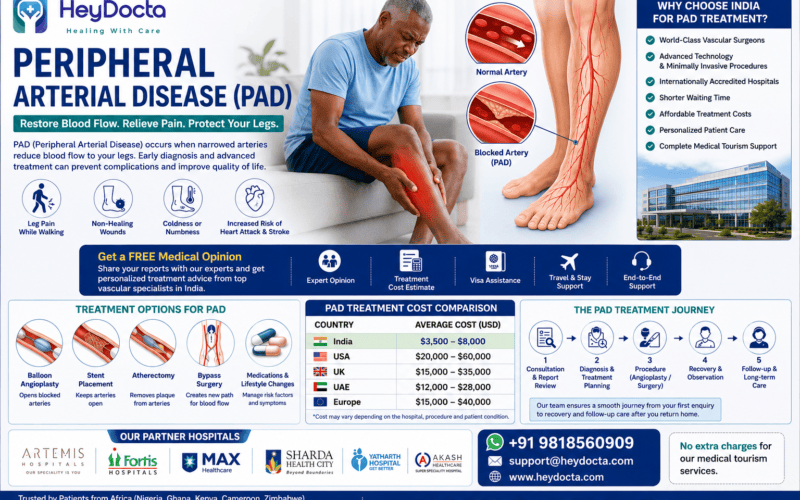
Peripheral Artery Disease is a condition where fatty deposits build up inside the arteries, reducing blood flow to the legs and feet. People with diabetes develop PAD more frequently because long-term high blood sugar damages blood vessels and accelerates plaque formation.
When circulation decreases, even a small cut or blister on the foot may become a chronic wound that struggles to heal. Without timely treatment, severe infection or tissue death can occur.
Why Diabetes Increases the Risk of Blocked Leg Arteries
Diabetes affects both blood vessels and nerves.
It can:
- Damage artery walls
- Accelerate plaque buildup
- Reduce blood circulation
- Delay wound healing
- Increase infection risk
- Reduce sensation in the feet
- Hide early warning signs due to diabetic neuropathy
This combination makes regular foot examinations extremely important.
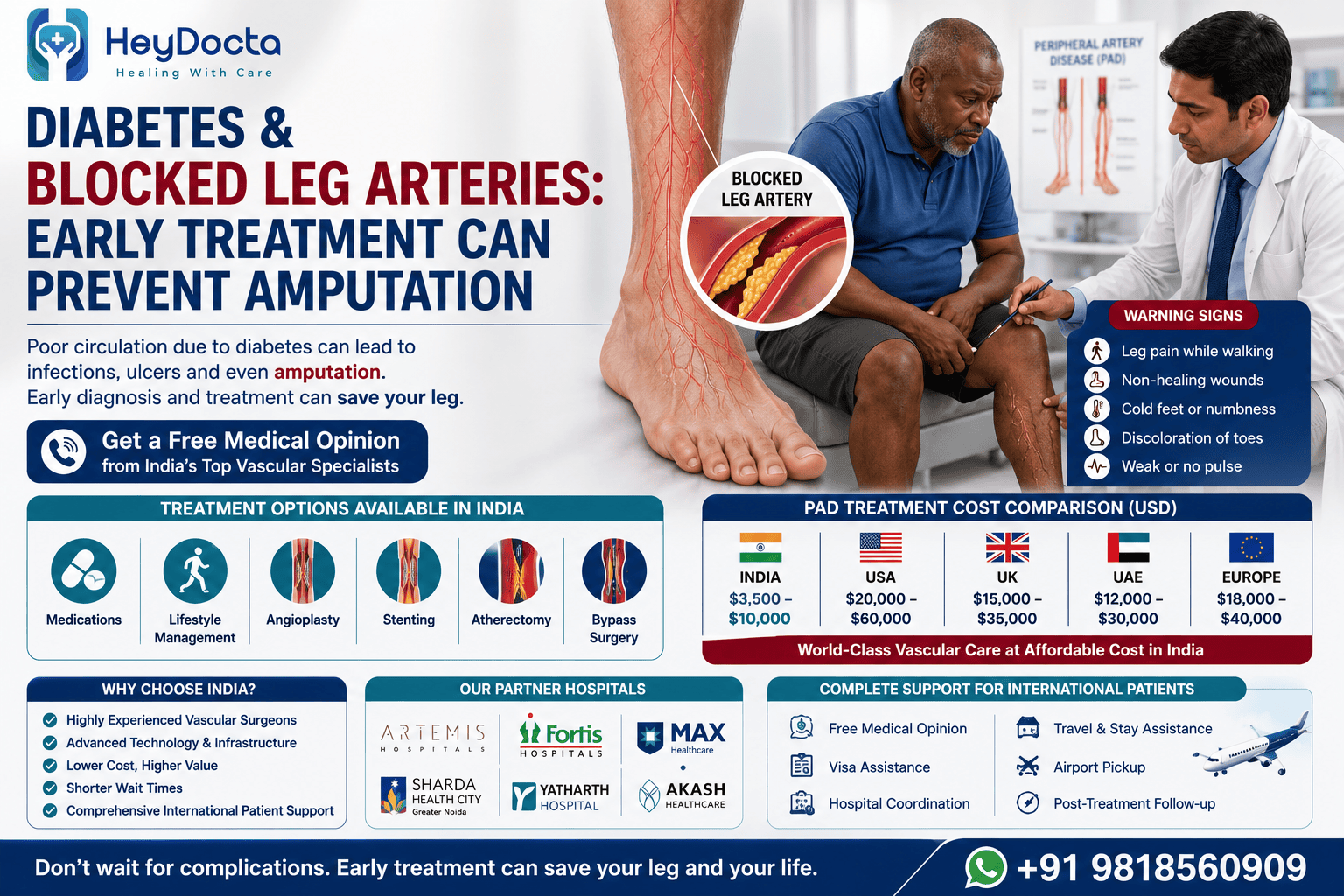
Warning Signs You Should Never Ignore
Seek medical evaluation if you notice:
- Pain while walking
- Leg cramps after short distances
- Cold feet
- Numbness or tingling
- Foot ulcers that do not heal
- Black or discolored toes
- Weak foot pulses
- Shiny skin on the legs
- Hair loss on the legs
- Pain even while resting
Prompt diagnosis can help prevent permanent tissue damage.
Why Early Treatment Can Prevent Amputation
Early vascular treatment restores blood flow before tissues become permanently damaged.
Benefits of early intervention include:
- Better wound healing
- Reduced pain
- Lower infection risk
- Improved walking ability
- Reduced chance of gangrene
- Lower risk of limb amputation
Although treatment cannot reverse all damage, restoring circulation often improves healing and helps preserve the limb.
Why International Patients Choose India
India has become a preferred destination for PAD treatment because of its combination of advanced technology, experienced vascular surgeons, and affordable healthcare.
Patients benefit from:
- Modern vascular centers
- Highly trained vascular surgeons
- Advanced imaging facilities
- Minimally invasive procedures
- Short waiting times
- International patient services
- Affordable treatment packages
- Excellent post-treatment care
HeyDocta simplifies every stage of your treatment journey, from hospital selection to recovery planning.
Treatment Options Available in India
Treatment depends on the severity of blockage and overall health.
Lifestyle and Diabetes Management
Patients are advised to:
- Control blood sugar
- Stop smoking
- Walk regularly
- Maintain healthy cholesterol
- Control blood pressure
- Follow a balanced diet
Medications
Doctors may prescribe medications to:
- Improve circulation
- Reduce blood clot formation
- Lower cholesterol
- Control blood pressure
- Protect cardiovascular health
Balloon Angioplasty
A catheter with a balloon opens narrowed arteries and restores blood flow.
Advantages include:
- Small puncture instead of large incision
- Faster recovery
- Less pain
- Short hospital stay
Peripheral Artery Stenting
A vascular stent helps keep the artery open after angioplasty.
Atherectomy
Special devices remove plaque from inside blocked arteries before angioplasty.
Peripheral Artery Bypass Surgery
Severely blocked arteries may require bypass surgery using a natural vein or synthetic graft.
Step-by-Step Treatment Process
| Step | Process |
|---|---|
| Consultation | Medical history and physical examination |
| Diagnostics | Doppler Ultrasound, CT Angiography, MR Angiography or Digital Angiography |
| Treatment Planning | Individualized treatment plan |
| Procedure | Angioplasty, stenting, atherectomy or bypass surgery |
| Hospital Stay | Usually 1–7 days depending on the procedure |
| Recovery | Walking rehabilitation and diabetes management |
| Follow-up | Medication review and lifestyle guidance |
Cost of PAD Treatment in India
India provides high-quality vascular treatment at significantly lower costs.
| Treatment | Average Cost (USD) |
|---|---|
| Diagnostic Evaluation | $300–$700 |
| Balloon Angioplasty | $3,500–$5,500 |
| Angioplasty with Stent | $4,000–$6,500 |
| Atherectomy | $5,000–$7,000 |
| Peripheral Artery Bypass Surgery | $6,000–$10,000 |
Actual treatment costs depend on disease severity, hospital, implants, and medical condition.
PAD Treatment Cost Comparison
| Country | Average Cost (USD) |
|---|---|
| India | $3,500–$10,000 |
| USA | $20,000–$60,000 |
| UK | $15,000–$35,000 |
| UAE | $12,000–$30,000 |
| Europe | $18,000–$40,000 |
Many international patients save between 50% and 80% compared with treatment costs in Western countries while receiving care at internationally recognized hospitals.
Talk to Our Medical Tourism Expert today for a personalized treatment estimate and hospital comparison.
Leading Hospitals in India for PAD Treatment
HeyDocta partners with leading multi-specialty hospitals known for advanced vascular care, including:
- Artemis Hospital
- Fortis Hospitals
- Max Hospitals
- Sharda Health City
- Yatharth Hospital
- Akash Healthcare
These hospitals provide advanced vascular imaging, hybrid operating rooms, intensive care support, diabetic foot care, and dedicated international patient departments.
Leading Vascular Surgeon in India
One of India’s experienced vascular specialists is Dr. Bishwarup Purkayastha, who has extensive expertise in managing Peripheral Artery Disease, diabetic foot complications, and minimally invasive vascular interventions.
Treatment recommendations are always based on an individual clinical evaluation.
Medical Visa and Travel Support
HeyDocta provides complete assistance for international patients, including:
- Free medical opinion
- Medical record review
- Hospital appointment scheduling
- Cost estimates
- Medical visa guidance
- Invitation letters
- Airport pickup
- Hotel booking assistance
- Interpreter services
- Follow-up coordination
Patients receive these facilitation services without additional charges.
Recovery After PAD Treatment
Recovery depends on the chosen procedure.
After Angioplasty
- Hospital stay: 1–2 days
- Walking begins within 24 hours
- Return to daily activities in about one week
After Bypass Surgery
- Hospital stay: 5–7 days
- Recovery period: 4–8 weeks
- Regular vascular follow-up required
Patients should continue:
- Blood sugar control
- Daily walking
- Foot inspections
- Healthy diet
- Smoking cessation
- Medication adherence
Why Choose HeyDocta?
HeyDocta.com supports international patients throughout their medical journey by offering:
- Free medical opinions
- Hospital comparison
- Transparent treatment costs
- Appointment coordination
- Visa assistance
- Accommodation support
- Airport transfers
- Dedicated patient coordinators
- Remote follow-up after returning home
- No extra service charges
Frequently Asked Questions
Can diabetes cause blocked leg arteries?
Yes. Long-term diabetes damages blood vessels and significantly increases the risk of Peripheral Artery Disease.
Can PAD be treated without surgery?
Early PAD is often managed with lifestyle changes and medications. Advanced disease may require angioplasty or bypass surgery.
Can blocked leg arteries heal on their own?
No. PAD generally requires medical management, and advanced blockages often need vascular intervention.
How long should I stay in India?
Most international patients stay 7–14 days for angioplasty and about 2–3 weeks after bypass surgery, depending on recovery.
Is angioplasty safe for diabetic patients?
Many diabetic patients undergo successful angioplasty. The treating vascular specialist will determine the most appropriate option based on the patient’s overall condition.
Can early treatment prevent amputation?
In many cases, restoring blood flow before irreversible tissue damage develops can significantly reduce the risk of amputation, though outcomes vary depending on disease severity and overall health.
Conclusion
Blocked leg arteries are a serious complication of diabetes, but early diagnosis and timely treatment can help restore circulation, improve wound healing, reduce pain, and lower the risk of limb loss. India combines experienced vascular specialists, advanced treatment options, and affordable healthcare, making it a trusted destination for international patients seeking PAD treatment.
If you or a loved one has diabetes with leg pain, poor circulation, or a non-healing foot wound, do not delay evaluation.
Get a Free Medical Opinion from leading vascular specialists through HeyDocta today. Our team helps you compare top hospitals, receive transparent treatment cost estimates, coordinate appointments with experienced specialists, arrange medical visas and travel, and provide end-to-end support throughout your treatment journey in India—at no additional cost.