Joint pain, stiffness and difficulty walking can affect everyday life, especially when caused by cartilage damage, early arthritis, sports injuries or joint deformities. Many patients assume that joint replacement is the only long-term solution. However, depending on the condition and the extent of joint damage, joint preservation surgery may help protect the natural joint and delay or sometimes avoid joint replacement.
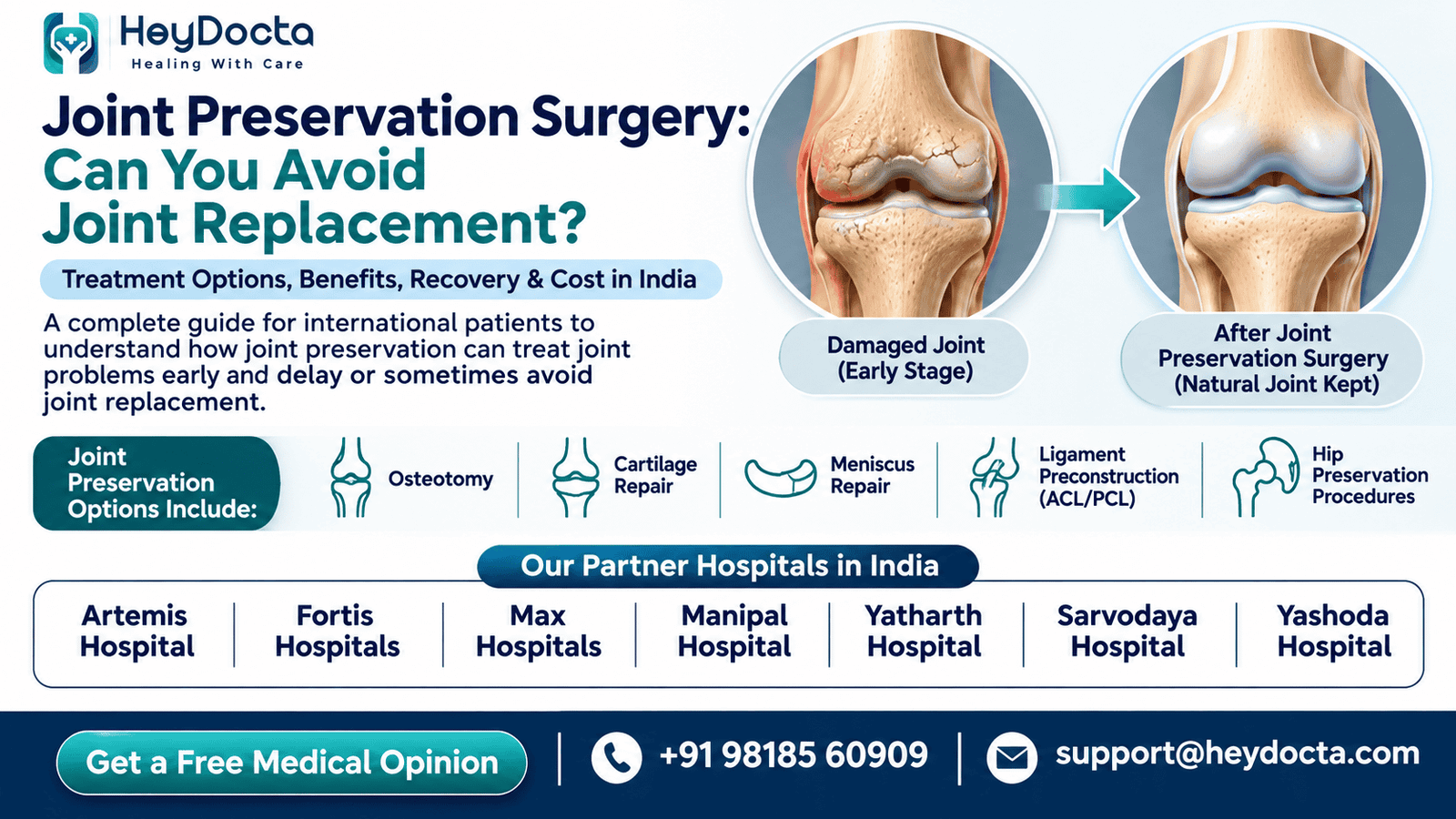
Joint preservation focuses on treating the underlying problem while retaining as much of the patient’s natural bone, cartilage and joint structure as possible. Options may include cartilage repair, corrective bone surgery, ligament reconstruction and other procedures. The right treatment depends on the patient’s age, activity level, joint condition and medical assessment.
For international patients from Nigeria, Ghana, Zimbabwe, Cameroon, Kenya, Guyana, Jamaica, the USA, Europe and the Middle East, India offers access to a range of orthopaedic treatments and specialist consultations.
Get a Free Medical Opinion: Share your medical reports and scans with HeyDocta to understand which joint preservation options may be suitable and request a treatment estimate from a partner hospital in India.
What Is Joint Preservation Surgery?
Joint preservation surgery refers to procedures designed to maintain the natural joint rather than replace it with an artificial implant. It is commonly considered when damage is limited or when a correctable problem is placing excessive stress on the joint.
The main goals are to:
- Reduce pain and improve joint function.
- Correct abnormal joint alignment.
- Repair or manage selected cartilage and ligament injuries.
- Reduce uneven pressure on damaged joint surfaces.
- Delay the need for joint replacement when clinically appropriate.
Joint preservation does not mean every damaged joint can be saved. If arthritis is advanced and the cartilage is extensively worn, joint replacement may provide a more suitable option.
Who May Benefit from Joint Preservation Treatment?
A specialist may consider joint preservation for patients with:
- Early-stage knee or hip osteoarthritis.
- Localised cartilage damage.
- Meniscus injuries or selected ligament problems.
- Joint misalignment, such as certain forms of bow legs or knock knees.
- Selected sports-related joint injuries.
- Early hip conditions where preserving the natural joint is still possible.
Age alone does not determine suitability. The amount of cartilage damage, bone quality, joint alignment, symptoms and overall health are important factors.
Types of Joint Preservation Procedures Available in India
The treatment plan depends on the affected joint and the underlying problem.
1. Osteotomy
Osteotomy involves cutting and repositioning a bone to correct alignment. In selected knee patients, it can shift weight away from the more damaged part of the joint. It may be considered for younger or active patients with specific patterns of knee arthritis and suitable joint condition.
2. Cartilage Repair and Restoration
Cartilage procedures aim to treat selected areas of damaged joint cartilage. Depending on the injury, options may include microfracture, cartilage grafting or other cartilage restoration techniques. Not every technique is suitable for widespread arthritis.
3. Meniscus Repair
The meniscus is a cartilage structure in the knee that helps distribute load and absorb shock. When an appropriate tear is present, repair may help preserve meniscal tissue rather than remove it.
4. Ligament Reconstruction
Ligament injuries, such as an anterior cruciate ligament (ACL) tear, can cause instability. Reconstruction may restore stability and help protect the joint from further injury, although it cannot guarantee prevention of future arthritis.
5. Hip Preservation Procedures
Selected patients with conditions such as femoroacetabular impingement or certain early-stage hip disorders may be assessed for procedures that improve joint mechanics or address structural problems. Advanced hip arthritis may require a different treatment approach.
Joint Preservation Surgery vs Joint Replacement
| Feature | Joint Preservation | Joint Replacement |
| Main aim | Preserve the natural joint | Replace damaged joint surfaces |
| Natural bone and cartilage | Preserved where possible | Damaged surfaces are replaced |
| Suitable stage | Selected early or localised damage | Often considered for advanced joint damage |
| Procedures | Osteotomy, cartilage repair, ligament or meniscus surgery | Total or partial joint replacement |
| Recovery | Depends on the procedure; may involve protected weight-bearing | Requires rehabilitation after implant surgery |
| Long-term outcome | Depends on the underlying condition and healing | Depends on implant, health and rehabilitation |
The best choice is based on clinical findings, not simply on a preference to avoid an implant.
Joint Preservation Surgery Cost in India vs Other Countries
The cost of joint preservation surgery varies considerably because it is not one single procedure. An osteotomy, cartilage restoration procedure, meniscus repair and hip preservation surgery can have very different costs.
The following figures are indicative planning ranges in USD, not confirmed hospital quotations or standard national tariffs. They are broad estimates for budgeting and should be replaced with a written, procedure-specific quotation after medical review.
| Country | Indicative Cost Range (USD) |
| India | $2,500–$8,000 |
| USA | $8,000–$25,000 |
| UK | $6,000–$18,000 |
| Germany | $7,000–$20,000 |
| Singapore | $6,000–$18,000 |
Important: These broad ranges are intended only for initial comparison. The actual cost may be lower or higher depending on the procedure, hospital, surgeon, implant or graft requirements, investigations, length of stay and rehabilitation. Complex cartilage restoration or combined procedures may cost more. Patients should compare quotations for the same procedure and inclusions.
What Does the Treatment Cost Include?
A hospital estimate may include:
- Surgeon and anaesthesia fees.
- Operation theatre and hospital charges.
- Routine investigations and imaging.
- Medicines and consumables during admission.
- Initial physiotherapy.
Additional expenses may include advanced imaging, specialised grafts or implants, extended hospitalisation, rehabilitation after discharge, accommodation, flights and personal expenses. Ask the hospital for a written breakdown before travelling.
Specialist and Partner Hospitals in India
Joint preservation requires an orthopaedic assessment to identify the cause of pain and determine whether the joint can be preserved safely. The specialist may review X-rays, MRI scans, alignment, cartilage condition and previous treatment.
Patients can enquire about an orthopaedic consultation with Dr. Dhananjay Sabat at Yatharth Hospital. The hospital should confirm his current availability and whether the specific joint preservation procedure required is within his current practice.
HeyDocta can help international patients coordinate consultations and seek treatment estimates from its partner hospitals:
- Artemis Hospital
- Fortis Hospitals
- Max Hospitals
- Manipal Hospital
- Yatharth Hospital
- Sarvodaya Hospital
- Yashoda Hospital
The appropriate hospital and surgeon depend on the patient’s diagnosis, required procedure and clinical suitability.
How to Arrange Joint Preservation Treatment in India
International patients can generally follow these steps:
- Share medical records: Send recent X-rays, MRI scans, reports, medical history and details of previous treatment.
- Specialist review: The orthopaedic team reviews the records and advises whether further tests or an in-person examination are required.
- Treatment recommendation: The specialist discusses suitable options, including non-surgical care, joint preservation or replacement if necessary.
- Cost estimate: Request a written estimate covering the proposed procedure, hospital stay and expected additional expenses.
- Travel planning: Once the treatment plan is agreed, arrange the medical visa, flights and accommodation.
- Treatment and rehabilitation: Attend the hospital for treatment and follow the surgeon’s rehabilitation instructions.
Talk to a HeyDocta Medical Tourism Expert: HeyDocta can coordinate medical record sharing, hospital appointments and cost estimates so that patients can plan their treatment journey with greater clarity.
Medical Visa and Travel Support
International patients travelling to India for orthopaedic treatment should check the latest medical visa requirements applicable to their nationality. Depending on the case, supporting documents may include a passport, medical reports, a hospital appointment or invitation letter and other documents requested by the relevant Indian authorities.
HeyDocta assists patients with hospital coordination and guidance for medical travel, including appointment planning, accommodation and airport transfer arrangements. Visa approval remains subject to the relevant authorities.
Recovery and Length of Stay in India
Recovery depends on the procedure performed and the patient’s general health. Some arthroscopic procedures may allow earlier movement, while osteotomy and cartilage restoration procedures can require a longer period of protected weight-bearing and rehabilitation.
Patients may need to plan for:
- Initial hospital admission and post-operative monitoring.
- Follow-up examination before returning home.
- Physiotherapy and a home rehabilitation plan.
- Further reviews, which may be arranged remotely when clinically appropriate.
The treating surgeon should advise how long the patient should remain in India before travelling. Do not book return flights until the medical team confirms that travel is appropriate.
Frequently Asked Questions
1. Can joint preservation surgery help me avoid knee replacement?
It may help selected patients, particularly when damage is limited and the underlying problem can be treated. It cannot guarantee that knee replacement will never be needed.
2. Is joint preservation surgery suitable for older patients?
Age is only one consideration. Joint condition, cartilage damage, bone quality, general health and activity level are also important.
3. Which procedures are used for joint preservation?
Options include osteotomy, cartilage repair, meniscus repair, ligament reconstruction and selected hip preservation procedures.
4. Is joint preservation surgery cheaper than joint replacement?
It may cost less in some cases, but this depends on the procedure and the patient’s condition. Complex cartilage procedures or multiple treatments can be expensive. A personalised estimate is necessary.
5. How long does recovery take?
Recovery varies by procedure. Arthroscopic treatment, osteotomy and cartilage restoration have different rehabilitation requirements. The surgeon will provide an individual recovery plan.
6. Can international patients travel to India for joint preservation treatment?
Yes. International patients can seek specialist assessment at Indian hospitals. They should share their medical records in advance and obtain a treatment recommendation and cost estimate before travelling.
7. What if my joint damage is too advanced for preservation?
If the joint is severely damaged, joint replacement may be more appropriate. The orthopaedic specialist will explain the benefits and limitations of the available options.
Conclusion: Explore Joint Preservation Options Before Joint Replacement
Joint preservation surgery may be an option for patients with selected cartilage injuries, early arthritis, ligament problems or joint alignment issues. The aim is to protect the natural joint where possible, improve function and potentially delay joint replacement. However, treatment suitability depends on a detailed orthopaedic assessment, and preservation procedures are not appropriate for every patient.
India offers a range of orthopaedic treatment options for international patients seeking specialist care and cost estimates. HeyDocta supports patients through medical record review coordination, partner hospital appointments, treatment estimates, travel guidance and follow-up coordination. There is no additional HeyDocta facilitation fee for patients; hospital, doctor, investigation, treatment, travel and accommodation charges are separate.
Get a Free Medical Opinion with HeyDocta. Visit heydocta.com or contact +91 98185 60909 and support@heydocta.com to discuss your reports and explore joint preservation treatment options in India.