Knee replacement for severe osteoarthritis can help patients reduce persistent knee pain, improve mobility and return to everyday activities when other treatments no longer provide sufficient relief. Severe osteoarthritis can make walking, climbing stairs, standing for long periods and sleeping comfortably increasingly difficult. For international patients from Nigeria, Ghana, Kenya, Zimbabwe, Cameroon, Guyana, Jamaica, the USA, Europe and the Middle East, India may offer access to specialist orthopaedic care at comparatively affordable prices.
The decision to undergo knee replacement depends on the severity of joint damage, symptoms, overall health and response to non-surgical treatments. This guide explains when surgery may be appropriate, available procedures, estimated treatment costs in India compared with other countries, recovery expectations and how international patients can plan their treatment journey.
Get a Free Medical Opinion : Contact HeyDocta to request a medical opinion, compare estimates from partner hospitals and understand the expected treatment and travel expenses.
What Is Severe Osteoarthritis of the Knee?
Osteoarthritis is a degenerative joint condition in which the protective cartilage covering the ends of bones gradually breaks down. In the knee, this can cause pain, stiffness, swelling and reduced movement.
In severe osteoarthritis, cartilage loss may be extensive, and the bones can come closer together. Bone spurs, joint deformity and inflammation may also develop. Symptoms can affect one knee or both knees.
Common symptoms include:
- Persistent knee pain during walking or standing.
- Pain that interferes with sleep or daily activities.
- Stiffness after resting or waking up.
- Swelling and tenderness around the joint.
- Difficulty bending or fully straightening the knee.
- Reduced walking distance and increasing dependence on support.
Doctors assess symptoms, physical examination findings and X-rays to determine the extent of joint damage. The severity of symptoms does not always correspond exactly to the X-ray findings, so treatment decisions should consider both imaging and how the condition affects daily life.
When Is Knee Replacement Necessary for Severe Osteoarthritis?
Knee replacement may be recommended when severe osteoarthritis causes substantial pain and disability despite appropriate non-surgical treatment.
Before recommending surgery, an orthopaedic specialist may consider:
- Whether pain limits normal activities.
- Whether medicines, physiotherapy or other conservative treatments have provided enough relief.
- The extent and location of cartilage damage.
- Knee alignment, stability and range of movement.
- Other medical conditions that could affect surgical risk or recovery.
Non-surgical treatments may include exercise-based physiotherapy, weight management where appropriate, pain-relieving medicines and selected injections. These options may help manage symptoms, but they cannot restore severely damaged cartilage.
Knee replacement is not automatically necessary because of age or an X-ray result. The decision should be made with an orthopaedic specialist after discussing potential benefits, risks and alternatives.
Types of Knee Replacement Surgery
The procedure depends on which parts of the knee are affected and the patient’s individual condition.
Total Knee Replacement
Total knee replacement involves replacing the damaged joint surfaces of the femur and tibia with artificial components. The surgeon may also treat the underside of the kneecap when clinically appropriate.
It is commonly considered when osteoarthritis affects multiple compartments of the knee and causes significant pain and functional limitations.
Partial Knee Replacement
Partial knee replacement replaces only the damaged compartment of the knee. It may be suitable when arthritis is limited to one area, the ligaments function adequately and other eligibility criteria are met.
Not every patient with severe osteoarthritis is suitable for a partial replacement.
Robotic-Assisted Knee Replacement
Robotic-assisted systems help surgeons plan and perform selected parts of the procedure using detailed anatomical information and surgical guidance. The surgeon remains responsible for the operation.
Robotic assistance may support surgical planning and implant positioning, but it is not suitable or necessary for every patient and does not guarantee better results. Patients should compare its additional cost with the expected benefits in their individual case.
Why International Patients Consider India for Knee Replacement
India is a destination considered by international patients seeking orthopaedic treatment for several reasons.
Comparatively affordable treatment: Private hospital treatment may cost less than in the USA and several other high-cost healthcare markets. The actual savings depend on the procedure, implant and package inclusions.
Access to orthopaedic specialists: Patients can seek assessments from specialists who treat knee arthritis and perform joint replacement procedures.
Different treatment options: Depending on the hospital and clinical requirements, options may include conventional, computer-assisted or robotic-assisted knee replacement.
Rehabilitation support: Physiotherapy is an essential part of recovery. Patients should confirm what rehabilitation services are available before choosing a hospital.
International patient coordination: HeyDocta can help patients coordinate appointments, request treatment estimates, understand hospital requirements and plan travel arrangements.
Affordability should not be the only selection criterion. Patients should also assess surgeon experience, hospital quality, infection-prevention practices, rehabilitation access and arrangements for complications or follow-up care.
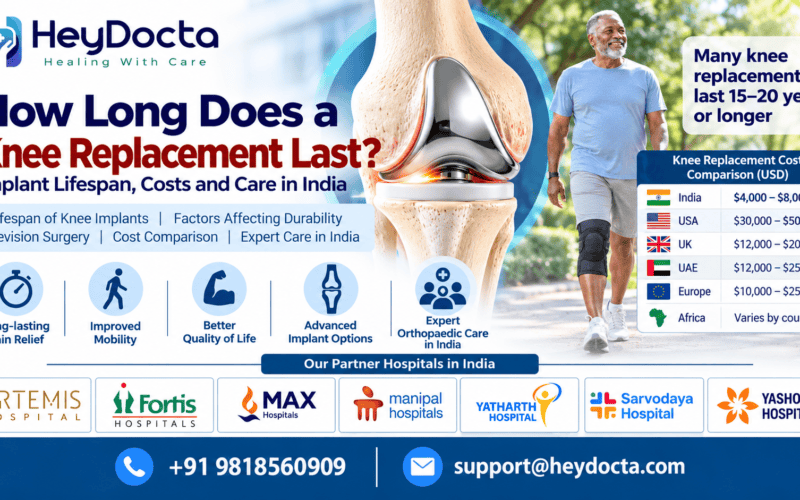
Knee Replacement Cost in India vs Other Countries
The cost of knee replacement for severe osteoarthritis varies according to the hospital, surgeon, implant, surgical technique, room category, length of admission and medical complexity.
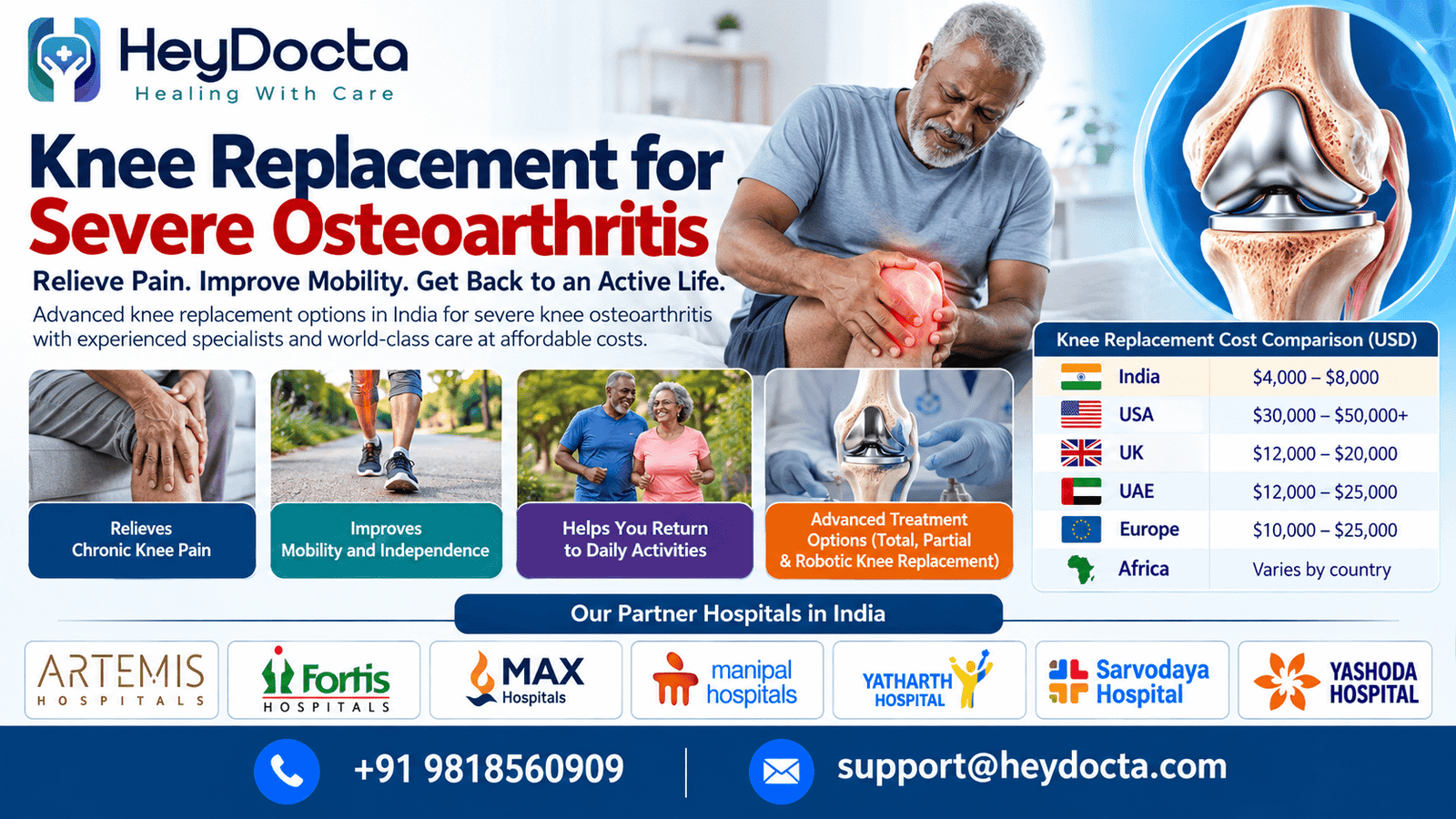
The following table provides broad indicative planning estimates in USD, not confirmed quotations from specific hospitals.
| Country | Estimated total knee replacement cost |
| India | $4,000–$8,000 |
| USA | $30,000–$50,000+ |
| UK, private treatment | $12,000–$20,000 |
| UAE, private treatment | $12,000–$25,000 |
| Europe, private treatment | $10,000–$25,000 |
| African countries | Varies considerably by country and hospital |
These ranges are for initial budgeting only. They may not reflect identical implants, hospital stays, rehabilitation services or insurance arrangements. Costs in African countries and European healthcare systems vary substantially; public healthcare eligibility and insurance can also affect the patient’s actual expenses.
What Affects the Cost of Knee Replacement in India?
The final estimate may depend on:
- Total versus partial knee replacement.
- Conventional versus robotic-assisted surgery.
- Implant type and manufacturer.
- Surgeon, anaesthesia and operating theatre fees.
- Hospital room category and admission duration.
- Preoperative tests, medicines and postoperative monitoring.
- Physiotherapy and rehabilitation requirements.
- Existing medical conditions or complications.
Robotic-assisted surgery may cost more than conventional surgery because of technology-related expenses and the hospital’s package structure.
What Should International Patients Include in Their Budget?
The hospital package may not cover every expense. Ask for a written estimate that identifies inclusions and exclusions, including:
- Surgeon and anaesthesia fees.
- Implant and hospital charges.
- Investigations and medicines.
- Initial physiotherapy.
- Additional inpatient days, if required.
Patients should also budget for flights, visa fees, accommodation, meals, local transport, additional rehabilitation and follow-up appointments. The treating team should confirm when it is safe to travel home after surgery.
Want to compare treatment costs? HeyDocta can help you request estimates from partner hospitals and clarify what each quotation includes before you make travel arrangements.
Orthopaedic Specialist and Partner Hospitals in India
Patients considering knee replacement at Yatharth Hospital can enquire about Dr. Dhananjay Sabat and the hospital’s current joint replacement services. Confirm his current designation, experience, availability and suitability for your case directly with the hospital.
HeyDocta’s partner hospital network includes:
- Artemis Hospitals
- Fortis Hospitals
- Max Hospitals
- Manipal Hospital
- Yatharth Hospital
- Sarvodaya Hospital
- Yashoda Hospital
Services, implant options and robotic systems vary between hospitals. Patients should confirm the availability of the required procedure and obtain an individual treatment plan before travelling.
When comparing hospitals, ask about the surgeon’s experience with your specific condition, infection-prevention measures, rehabilitation facilities, implant warranty terms where applicable and postoperative follow-up arrangements.
Treatment Process for International Patients
Step 1: Share Medical Reports
Send recent knee X-rays, medical history, current medication details and records of previous treatment. The specialist may request additional investigations.
Step 2: Obtain a Specialist Opinion
The orthopaedic team reviews the available information and discusses whether knee replacement is appropriate. A physical examination may be necessary before the final recommendation.
Step 3: Compare Written Estimates
Review the proposed procedure, implant, admission duration, rehabilitation plan, package inclusions and possible additional charges.
Step 4: Arrange Visa and Travel
Check the current Indian visa requirements for your nationality. Obtain the required hospital documents and plan travel only after the hospital confirms the appointment and treatment schedule.
Step 5: Undergo Surgery and Rehabilitation
After surgery, the healthcare team monitors recovery and begins mobilisation and physiotherapy when appropriate. Follow instructions for medication, wound care and activity.
Step 6: Plan Follow-Up Care
Before returning home, collect your discharge summary, implant details, medication list, exercise programme and follow-up instructions. Arrange local medical support for continued rehabilitation.
HeyDocta can assist with hospital coordination, appointments, treatment estimates and travel guidance. Its medical tourism facilitation is provided without an additional facilitation charge to patients; hospital fees, investigations, medicines, travel, accommodation, visa costs and other third-party expenses remain separate.
Recovery After Knee Replacement for Severe Osteoarthritis
Recovery varies according to the patient’s health, muscle strength before surgery, procedure and rehabilitation progress.
Many patients begin walking with assistance within the first day or two when medically appropriate. During the first few weeks, the focus is on safe walking, managing swelling, improving knee movement and strengthening the muscles.
Over the following weeks and months, many patients gradually improve their walking distance and independence. Full recovery can take several months, and some stiffness, swelling or discomfort may persist.
Follow your surgeon’s and physiotherapist’s instructions. Seek urgent medical assessment for symptoms such as sudden shortness of breath, chest pain or significant calf swelling, which may indicate a serious complication.
Frequently Asked Questions
1. Can severe osteoarthritis be treated without knee replacement?
Yes. Physiotherapy, activity modification, weight management where appropriate and medicines may help manage symptoms. Knee replacement may be considered when these measures no longer provide sufficient relief.
2. Is knee replacement effective for severe osteoarthritis?
Many patients experience substantial pain relief and improved function, but results vary. Surgery has risks, and the outcome depends on the patient’s condition, procedure and rehabilitation.
3. How much does knee replacement cost in India?
A broad planning estimate for total knee replacement is $4,000–$8,000. The actual cost depends on the hospital, implant, procedure and package inclusions.
4. Is robotic knee replacement better than conventional surgery?
Robotic assistance can help with surgical planning and implant positioning, but it does not guarantee superior results. Suitability and additional costs should be discussed with the surgeon.
5. How long should international patients stay in India?
Some patients may need approximately two to three weeks or longer after surgery before travelling, depending on recovery and the treating surgeon’s assessment. There is no single safe departure date for everyone.
6. Can both knees be replaced at the same time?
In selected patients, simultaneous bilateral knee replacement may be considered. It can involve greater rehabilitation demands and may not be appropriate for people with certain health risks. The surgeon must assess individual suitability.
7. Does HeyDocta charge patients for medical tourism support?
HeyDocta provides medical tourism facilitation without an additional facilitation charge to patients. Treatment, travel, visa, accommodation and other third-party expenses are separate.
Conclusion: Explore Knee Replacement Options in India
Severe osteoarthritis can significantly affect independence and quality of life. When non-surgical treatments no longer provide enough relief, knee replacement may be an option worth discussing with an orthopaedic specialist.
India may offer comparatively affordable treatment for international patients, but a safe and informed decision requires more than comparing headline prices. Consider the procedure, surgeon, implant, rehabilitation, travel requirements and follow-up care together.
Contact HeyDocta.com to request a medical opinion, compare knee replacement estimates from partner hospitals and plan your treatment journey in India.