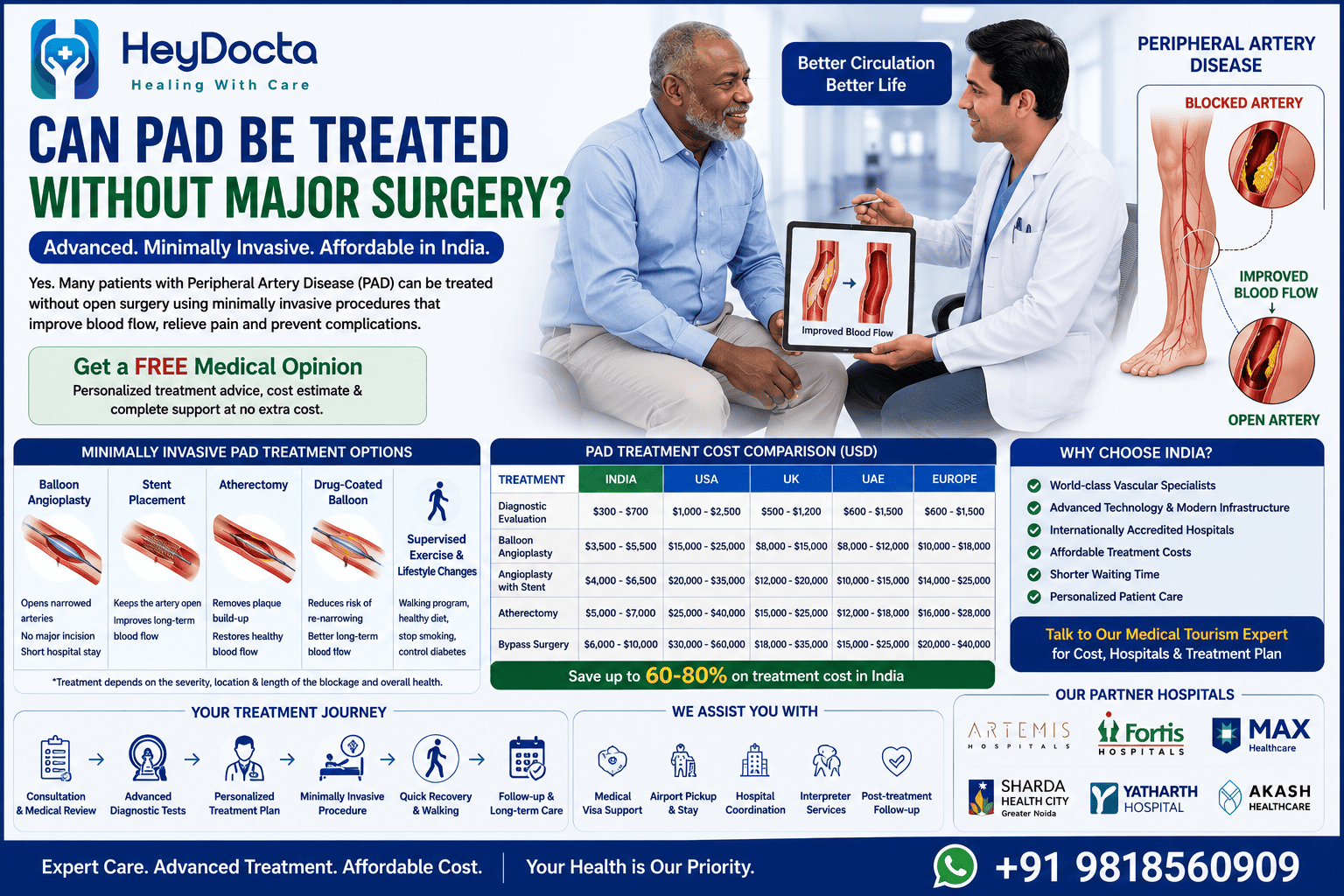
Peripheral Artery Disease (PAD) affects millions of people worldwide and is one of the leading causes of leg pain, poor circulation, and non-healing foot wounds. Many patients fear they will need major surgery after being diagnosed with PAD. Fortunately, advances in vascular medicine mean that many people can now be treated with minimally invasive procedures that restore blood flow without open surgery.
For international patients from Nigeria, Kenya, Ghana, Cameroon, Zimbabwe, Guyana, Jamaica, the Middle East, Europe, and the USA, India offers advanced PAD treatment using the latest minimally invasive techniques at a fraction of the cost compared to many Western countries.
What Is Peripheral Artery Disease (PAD)?
Peripheral Artery Disease occurs when fatty deposits (plaque) narrow or block the arteries that carry blood to the legs. Reduced blood flow causes pain, muscle weakness, slow-healing wounds, and, in severe cases, tissue damage.
Without treatment, advanced PAD may lead to Critical Limb Ischemia (CLI), gangrene, or limb amputation.
Early diagnosis allows doctors to treat many patients before major surgery becomes necessary.
Symptoms of PAD
Common symptoms include:
- Leg pain while walking (claudication)
- Pain that improves with rest
- Cold feet or legs
- Numbness or weakness
- Slow-healing wounds
- Foot ulcers
- Skin discoloration
- Weak pulses in the feet
- Pain while resting
- Blackened toes in advanced disease
Anyone experiencing these symptoms should seek evaluation by a vascular specialist.
Can PAD Be Treated Without Major Surgery?
Yes. Many patients diagnosed in the early or moderate stages of PAD can be treated without open bypass surgery.
The most appropriate treatment depends on:
- Location of the blockage
- Length of the blocked artery
- Severity of symptoms
- Overall health
- Diabetes status
- Blood vessel condition
A vascular specialist will recommend the best option after reviewing imaging studies.
Non-Surgical and Minimally Invasive PAD Treatments
Lifestyle Modification
Patients with mild PAD often improve with:
- Supervised walking programs
- Smoking cessation
- Healthy diet
- Diabetes management
- Blood pressure control
- Weight reduction
- Cholesterol management
Lifestyle improvements remain important even after vascular procedures.
Medications
Doctors may prescribe medicines to:
- Improve blood circulation
- Reduce blood clot formation
- Lower cholesterol
- Control blood pressure
- Reduce cardiovascular risk
Balloon Angioplasty
Balloon angioplasty is one of the most common minimally invasive PAD treatments.
A catheter carrying a small balloon is inserted into the narrowed artery. The balloon expands and restores blood flow.
Benefits include:
- No large incision
- Local anesthesia
- Minimal discomfort
- Short hospital stay
- Faster recovery
Stent Placement
Following angioplasty, a stent may be placed to keep the artery open and improve long-term blood flow.
Atherectomy
Atherectomy removes plaque using specialized devices before angioplasty, making it useful for selected patients with heavily calcified arteries.
Drug-Coated Balloon Therapy
Some patients benefit from drug-coated balloons that help reduce the risk of artery narrowing after angioplasty.
When Is Major Surgery Still Needed?
Although minimally invasive treatment is effective for many patients, bypass surgery remains the best option in certain situations.
Your vascular surgeon may recommend surgery if you have:
- Long arterial blockages
- Multiple blocked arteries
- Failed previous angioplasty
- Critical Limb Ischemia
- Severe tissue damage
- Complex arterial disease
Treatment recommendations should always be individualized.
Why International Patients Choose India
India is recognized globally for advanced vascular care because it combines experienced specialists, modern hospitals, and affordable healthcare.
Advantages include:
- Highly experienced vascular surgeons
- Advanced catheterization laboratories
- Modern hybrid operating rooms
- Latest minimally invasive technology
- Internationally accredited hospitals
- Dedicated international patient departments
- Affordable treatment packages
- Short waiting times
HeyDocta coordinates the entire treatment journey, making medical travel simple and stress-free.
Step-by-Step Treatment Process
| Step | Process |
|---|---|
| Consultation | Medical history and physical examination |
| Diagnostic Tests | Doppler Ultrasound, CT Angiography, MR Angiography or Digital Angiography |
| Treatment Planning | Personalized treatment recommendation |
| Procedure | Angioplasty, stenting, atherectomy or bypass surgery if required |
| Hospital Stay | Usually 1–5 days |
| Recovery | Walking rehabilitation and medications |
| Follow-up | Lifestyle counseling and online consultations |
Cost of PAD Treatment in India
India offers advanced vascular treatment at affordable prices.
| Treatment | Average Cost (USD) |
|---|---|
| Diagnostic Evaluation | $300–$700 |
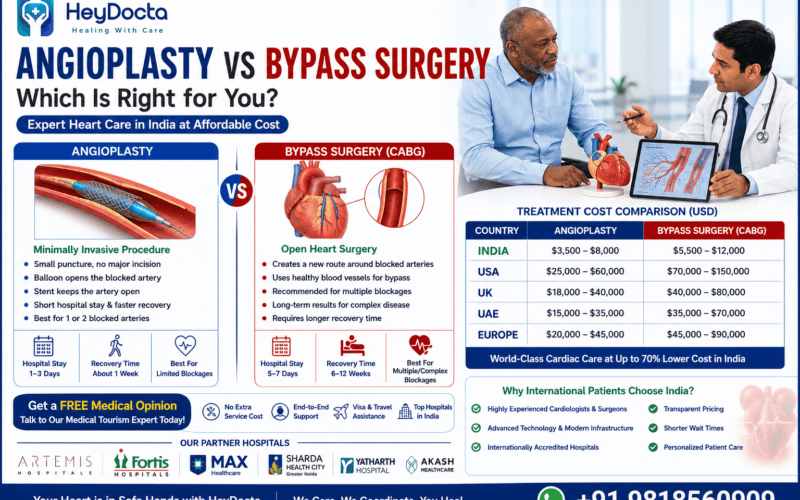
| Balloon Angioplasty | $3,500–$5,500 |
| Angioplasty with Stent | $4,000–$6,500 |
| Atherectomy | $5,000–$7,000 |
| Peripheral Artery Bypass Surgery | $6,000–$10,000 |
Treatment costs vary depending on disease severity, hospital, implants, and individual medical needs.
Cost Comparison: India vs Other Countries
| Country | Average Cost (USD) |
|---|---|
| India | $3,500–$10,000 |
| USA | $20,000–$60,000 |
| UK | $15,000–$35,000 |
| UAE | $12,000–$30,000 |
| Europe | $18,000–$40,000 |
Patients traveling to India often save between 50% and 80% while receiving treatment at internationally recognized hospitals.
Leading Hospitals for PAD Treatment in India
HeyDocta partners with leading hospitals known for excellence in vascular care, including:
- Artemis Hospital
- Fortis Hospitals
- Max Hospitals
- Sharda Health City
- Yatharth Hospital
- Akash Healthcare
These hospitals provide advanced diagnostics, minimally invasive vascular procedures, intensive care services, and dedicated international patient support.
Experienced Vascular Specialist in India
Patients seeking advanced PAD treatment can consult Dr. Bishwarup Purkayastha, an experienced vascular specialist with expertise in minimally invasive vascular interventions and Peripheral Artery Disease management.
The most appropriate treatment plan is determined after a complete medical evaluation.
Medical Visa and Travel Support
HeyDocta.com assists international patients with:
- Free medical opinion
- Hospital comparison
- Treatment cost estimates
- Medical visa guidance
- Invitation letters
- Airport pickup
- Hotel arrangements
- Interpreter support
- Appointment scheduling
- Online follow-up after returning home
These coordination services are provided without additional charges.
Recovery After Minimally Invasive PAD Treatment
Recovery is generally faster than open surgery.
Most patients experience:
After Angioplasty
- Hospital stay: 1–2 days
- Walking within 24 hours
- Return to normal activities in about one week
After Bypass Surgery
- Hospital stay: 5–7 days
- Recovery period: 4–8 weeks
Doctors also recommend:
- Daily walking
- Blood sugar control
- Healthy diet
- Smoking cessation
- Cholesterol management
- Medication adherence
Why Choose HeyDocta?
HeyDocta.com supports international patients through every stage of treatment.
Services include:
- Free medical opinion
- Hospital comparison
- Transparent pricing
- Appointment coordination
- Visa assistance
- Accommodation support
- Airport transfers
- Dedicated patient coordinators
- Post-treatment follow-up
- No additional service charges
Frequently Asked Questions
Can PAD always be treated without surgery?
No. Many patients benefit from minimally invasive treatments, but severe or complex disease may require bypass surgery.
Is angioplasty painful?
Angioplasty is usually performed under local anesthesia and most patients experience minimal discomfort.
How long should I stay in India?
Most patients stay 7–14 days after angioplasty and approximately 2–3 weeks after bypass surgery, depending on recovery.
Is minimally invasive treatment as effective as surgery?
For carefully selected patients, minimally invasive procedures provide excellent outcomes. Your vascular specialist will recommend the most appropriate treatment based on your condition.
Will PAD return after treatment?
PAD can recur if risk factors such as smoking, diabetes, and high cholesterol are not controlled. Long-term follow-up and lifestyle changes are important.
Does HeyDocta charge patients for coordination services?
No. HeyDocta provides medical opinions, hospital coordination, visa guidance, and patient support without additional service charges.
Conclusion
Peripheral Artery Disease no longer means every patient needs major surgery. Thanks to advances in vascular medicine, many people can be successfully treated with minimally invasive procedures such as angioplasty, stenting, or atherectomy. Early diagnosis is the key to preserving blood flow, relieving symptoms, and reducing the risk of serious complications.
India has become a trusted destination for international patients seeking affordable PAD treatment because of its experienced specialists, modern hospitals, advanced technology, and cost-effective care.
Get a Free Medical Opinion from leading vascular specialists through HeyDocta today. Our team will help you compare top hospitals, receive personalized treatment recommendations and transparent cost estimates, coordinate appointments, arrange medical visas and travel, and provide end-to-end support throughout your treatment journey in India—all at no additional cost.