Understanding the survival rates of blood cancer by type can help patients and families make informed treatment decisions. Blood cancer outcomes vary widely depending on the exact diagnosis, stage, age, genetics, overall health, and access to timely treatment. Many patients from Nigeria, Kenya, Jamaica, Guyana, the Middle East, Europe, and the United States choose India for advanced treatment at lower costs than many countries.
At heydocta.com, we help international patients compare hospitals, receive expert opinions, understand treatment options, and arrange travel support with no extra cost to patients.
Get a Free Medical Opinion from top blood cancer specialists in India today.
What Is Blood Cancer?
Blood cancer affects the blood, bone marrow, or lymphatic system. The three major categories are:
- Leukemia – starts in blood-forming tissues and bone marrow
- Lymphoma – starts in the lymphatic system
- Multiple Myeloma – starts in plasma cells in bone marrow
Each type has several subtypes, and survival rates can differ significantly.
Important Note About Survival Rates
Survival statistics are averages based on past groups of patients. They do not predict an individual patient’s future. Newer treatments, earlier diagnosis, targeted therapy, immunotherapy, and better supportive care continue to improve outcomes.
Factors that may influence results include:
- Age and general health
- Stage or disease burden
- Genetic markers
- Response to treatment
- Infection control and supportive care
- Access to specialists
Survival Rates of Blood Cancer by Type
Leukemia Survival Rates
Leukemia includes acute and chronic forms.
- Acute Lymphoblastic Leukemia (ALL): Often has strong outcomes in children and many adults with modern treatment.
- Acute Myeloid Leukemia (AML): Outcomes vary by age and genetics.
- Chronic Lymphocytic Leukemia (CLL): Many patients live for years with monitoring or treatment.
- Chronic Myeloid Leukemia (CML): Targeted medicines have greatly improved long-term survival.
Lymphoma Survival Rates
Lymphoma is commonly divided into Hodgkin and Non-Hodgkin types.
- Hodgkin Lymphoma: Often highly treatable, especially when diagnosed early.
- Non-Hodgkin Lymphoma: Outcomes depend on subtype; some grow slowly while others need urgent treatment.
Multiple Myeloma Survival Rates
Modern medicines, transplant strategies, and maintenance therapies have improved survival for many patients. Outcomes depend on kidney function, stage, genetics, and response to therapy.
General Outcome Comparison Table
| Blood Cancer Type | Typical Outcome Trend |
|---|---|
| Acute Leukemia | Variable, often urgent treatment needed |
| Chronic Leukemia | Many patients manage disease long-term |
| Hodgkin Lymphoma | Often favorable with treatment |
| Non-Hodgkin Lymphoma | Depends on subtype |
| Multiple Myeloma | Improving outcomes with modern therapies |
This table is general educational guidance, not a prediction for any individual patient.
Why International Patients Choose India for Blood Cancer Treatment
Patients from Ghana, Zimbabwe, Cameroon, Nigeria, Europe, and the Middle East often choose India for affordability and access to specialists.
Benefits include:
- Experienced hematologists and oncologists
- Modern cancer centers
- Bone marrow transplant units
- Targeted therapy and immunotherapy access
- Lower costs than USA, Europe, and many Middle East countries
- English-speaking support teams
- Faster appointments in many cases
Trusted Hospitals in India
heydocta.com helps patients connect with reputed hospitals including:
- Artemis Hospital
- Fortis Hospitals
- Max Hospitals
- Sharda Healthcity
- Yatharth Hospital
- Akash Healthcare
Treatment Options Available in India
Depending on diagnosis, doctors may recommend:
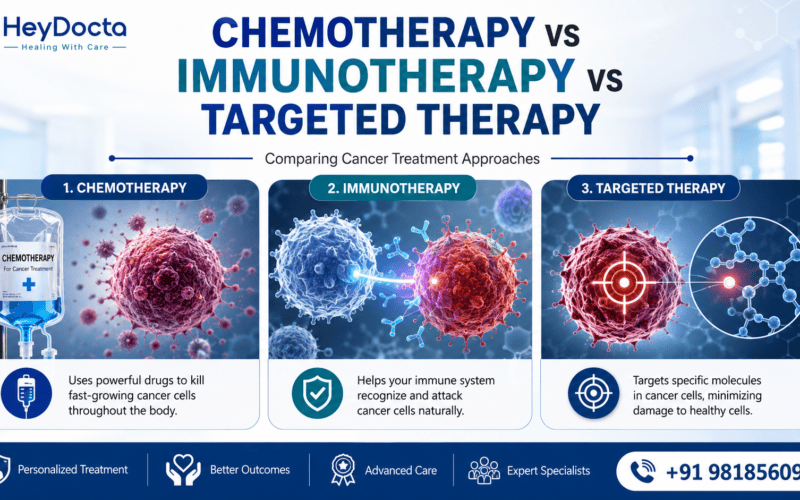
- Chemotherapy
- Targeted therapy
- Immunotherapy
- Radiation therapy
- Bone marrow / stem cell transplant
- Precision medicine
- Supportive care for infections, anemia, and nutrition
Talk to Our Medical Tourism Expert to understand suitable treatment options and hospital choices.
Cost Comparison: India vs Other Countries
One major reason patients seek treatment in India is cost savings.
| Treatment Type | India | Europe | USA | Middle East |
|---|---|---|---|---|
| Specialist Consultation | USD 30–80 | USD 150–400 | USD 250–700 | USD 150–500 |
| Diagnostic Workup | USD 300–1,500 | USD 1,500–6,000 | USD 2,500–10,000 | USD 1,500–6,000 |
| Chemotherapy Cycle | USD 800–2,500 | USD 4,000–10,000 | USD 6,000–15,000 | USD 3,500–8,000 |
| Targeted Therapy Monthly | USD 1,500–4,500 | USD 5,000–12,000 | USD 8,000–18,000 | USD 4,000–10,000 |
| Bone Marrow Transplant | USD 18,000–35,000 | USD 70,000–150,000 | USD 150,000–400,000 | USD 60,000–140,000 |
Estimated costs vary depending on disease type, medicines, complications, and hospital category.
Step-by-Step Treatment Journey in India
Step 1: Share Reports
Send blood tests, scans, biopsy, and previous treatment records.
Step 2: Specialist Review
Receive expert opinions and estimated costs.
Step 3: Choose Hospital
Select hospital, doctor, city, and travel dates.
Step 4: Visa Support
Get help with invitation letters and medical visa guidance.
Step 5: Begin Treatment
Consultation, tests, and therapy begin.
Step 6: Recovery and Follow-Up
Discharge planning and online follow-up after returning home.
Get Treatment Cost from Top Indian Hospitals before making travel decisions.
Recovery, Stay Duration and Follow-Up Care
| Treatment | Typical Stay in India |
|---|---|
| Diagnostic Evaluation | 5–10 days |
| Chemotherapy | 1–3 weeks |
| Radiation Therapy | 3–6 weeks |
| Bone Marrow Transplant | 6–12 weeks |
Many follow-up appointments may continue online.
Medical Visa and Travel Support
heydocta.com assists with:
- Hospital invitation letters
- Appointment scheduling
- Cost estimate letters
- Visa guidance
- Accommodation support
- Airport pickup guidance
- Interpreter support if needed
Frequently Asked Questions
1. Which blood cancer has the best survival rate?
This depends on subtype and stage. Some Hodgkin lymphomas and chronic leukemias often have favorable long-term outcomes.
2. Can blood cancer survival improve with treatment?
Yes, modern therapies, early diagnosis, and specialist care can improve outcomes.
3. Is every blood cancer life-threatening?
Some types are aggressive, while others may be slow-growing and manageable for years.
4. Is India affordable for blood cancer treatment?
Yes, India often offers significantly lower costs than the USA, Europe, or some Middle East countries.
5. Can I get a second opinion before travel?
Yes, heydocta.com can arrange specialist review based on your reports.
6. How long should I stay in India?
Stay depends on treatment type and patient recovery.
7. Does heydocta.com charge extra fees?
heydocta.com focuses on transparent patient coordination and support.
Conclusion
Understanding the survival rates of blood cancer by type helps patients ask informed questions and plan treatment wisely. Outcomes vary widely, but modern medicine has improved results across leukemia, lymphoma, and multiple myeloma. India offers experienced specialists, advanced hospitals, and significantly lower treatment costs for international patients.
If you or a loved one is considering affordable blood cancer treatment abroad, heydocta.com can support you with hospital selection, expert opinions, visa help, and complete treatment coordination.
Contact heydocta.com today to Get a Free Medical Opinion and personalized treatment cost estimate from top Indian hospitals.