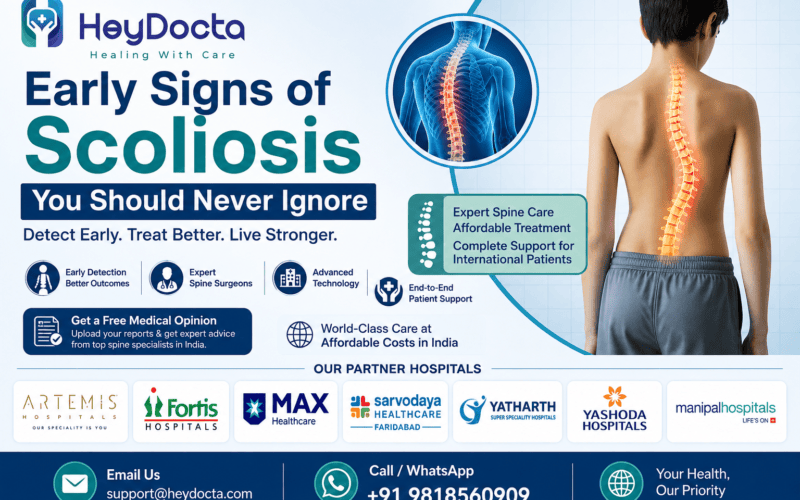
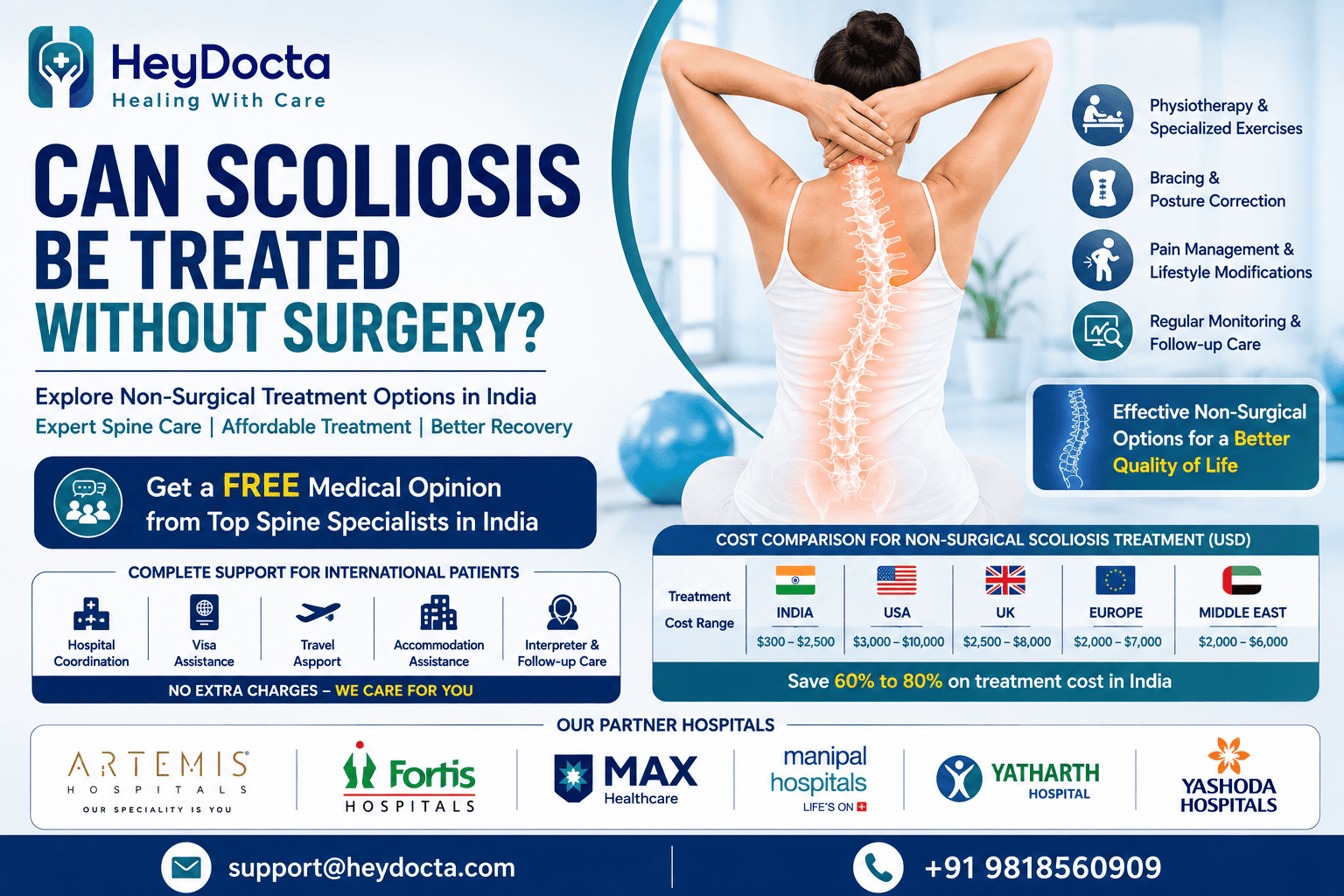
Scoliosis is a condition in which the spine curves sideways, affecting children, teenagers, and adults. Many patients worry that a scoliosis diagnosis automatically means surgery. Fortunately, this is not true. In many cases, especially when the spinal curve is mild or moderate, scoliosis can be managed successfully without surgery through physiotherapy, specialized exercises, bracing, pain management, and regular monitoring. However, severe or progressive curves may require surgical correction. India has become one of the leading destinations for scoliosis treatment because of its experienced spine specialists, advanced technology, internationally accredited hospitals, and affordable treatment costs. Patients from Nigeria, Kenya, Ghana, Zimbabwe, Cameroon, Guyana, Jamaica, Europe, the USA, and the Middle East travel to India for high-quality scoliosis care at significantly lower costs.
If you have been diagnosed with scoliosis or have been advised surgery, heydocta.com can connect you with experienced spine specialists in India for a second opinion, personalized treatment plan, and transparent treatment cost estimate at no additional coordination cost.
What Is Scoliosis?
Scoliosis is an abnormal sideways curvature of the spine that usually develops during childhood or adolescence but can also occur in adults due to age-related spinal degeneration.
The condition ranges from mild spinal curves requiring observation to severe deformities that affect posture, walking, breathing, and daily activities.
Can Scoliosis Be Treated Without Surgery?
Yes. Many patients with scoliosis do not require surgery. Non-surgical treatment focuses on relieving symptoms, improving posture, strengthening muscles, slowing curve progression, and maintaining quality of life.
The choice of treatment depends on:
- Age
- Degree of spinal curvature
- Symptoms
- Skeletal maturity
- Overall health
- Risk of progression
A spine specialist evaluates each patient individually before recommending treatment.
Who Is a Good Candidate for Non-Surgical Treatment?
Non-surgical management is commonly recommended for:
- Mild scoliosis
- Moderate scoliosis without rapid progression
- Patients with minimal pain
- Adults with stable spinal curves
- Children whose curve can be monitored
- Patients who are not suitable candidates for surgery
Patients with severe spinal deformity, progressive curves, or significant nerve compression may require surgical treatment.
Why International Patients Choose India
India is a preferred destination for scoliosis treatment because of:
- Experienced spine surgeons
- Advanced diagnostic facilities
- Modern rehabilitation programs
- Internationally accredited hospitals
- Affordable treatment packages
- Minimal waiting periods
- Dedicated international patient services
HeyDocta supports international patients throughout their medical journey, from online consultation to post-treatment follow-up.
Talk to Our Medical Tourism Expert
Upload your X-rays, MRI scans, and medical reports to heydocta.com to receive a personalized treatment recommendation from experienced spine specialists in India.
Non-Surgical Treatment Options for Scoliosis
Regular Observation
Patients with mild scoliosis may only require regular clinical examinations and X-rays to monitor spinal curvature.
Physiotherapy
Specialized physiotherapy helps:
- Improve posture
- Increase flexibility
- Strengthen back muscles
- Improve spinal balance
- Reduce discomfort
Schroth Method
The Schroth Method is a specialized exercise program designed specifically for scoliosis patients. It focuses on posture correction, breathing techniques, and muscle strengthening.
Bracing
Bracing is often recommended for growing children and adolescents with moderate scoliosis to help reduce the risk of curve progression.
Pain Management
Adults experiencing back pain may benefit from:
- Anti-inflammatory medications
- Muscle relaxants
- Heat therapy
- Activity modification
Lifestyle Modifications
Maintaining a healthy weight, staying active, and practicing proper posture may help improve overall spinal health.
When Is Surgery Recommended?
Although many patients respond well to conservative treatment, surgery may be recommended if:
- The spinal curve continues to worsen
- Severe pain limits daily activities
- Nerve compression develops
- Walking becomes difficult
- Breathing is affected
- Non-surgical treatment no longer controls symptoms
Surgery is considered only after careful evaluation by a spine specialist.
Leading Spine Specialists in India
Patients seeking scoliosis treatment in India may consult experienced specialists including:
Dr. Jitesh Manghwani – Max Hospital
Dr. Jitesh Manghwani, Max Super Speciality Hospital, Shalimar Bagh, specializes in scoliosis treatment, spinal deformity correction, minimally invasive spine surgery, robotic spine surgery, revision spine surgery, and complex spinal disorders.
Dr. Hitesh Garg – Artemis Hospital
Dr. Hitesh Garg, Artemis Hospital, Gurugram, has extensive experience in scoliosis surgery, spinal deformity correction, minimally invasive spine surgery, pediatric spine surgery, and complex spinal reconstruction.
Partner Hospitals
HeyDocta coordinates treatment with leading hospitals including:
- Artemis Hospital
- Fortis Hospitals
- Max Hospitals
- Manipal Hospital
- Yatharth Hospital
- Yashoda Hospital
These hospitals provide:
- Dedicated spine centers
- Advanced imaging
- Modern rehabilitation units
- International patient departments
- Comprehensive post-treatment care
Cost of Non-Surgical Scoliosis Treatment in India
Conservative treatment is considerably more affordable than surgery.
| Treatment | Estimated Cost (USD) |
|---|---|
| Specialist Consultation | $30–$100 |
| MRI/X-rays | $150–$500 |
| Physiotherapy Program | $300–$1,000 |
| Custom Brace | $500–$1,500 |
| Pain Management | $100–$500 |
Actual costs depend on the treatment plan and duration of care.
Cost Comparison: India vs Other Countries
| Country | Average Cost (USD) |
|---|---|
| India | $300–$2,500 |
| USA | $3,000–$10,000 |
| UK | $2,500–$8,000 |
| Germany | $2,000–$7,000 |
| UAE | $2,000–$6,000 |
Patients choosing India often save 60% to 80% while receiving care at internationally recognized hospitals.
Treatment Journey for International Patients
Step 1: Online Medical Review
Patients share:
- X-rays
- MRI scans
- Medical history
- Previous treatment reports
Step 2: Specialist Evaluation
A spine specialist reviews the reports and recommends conservative treatment or surgery if required.
Step 3: Treatment Planning
Patients receive:
- Personalized treatment plan
- Cost estimate
- Hospital recommendation
- Expected duration of stay
Step 4: Medical Visa Assistance
HeyDocta assists with:
- Invitation letters
- Medical visa guidance
- Travel planning
Step 5: Arrival in India
Services include:
- Airport pickup
- Hospital appointments
- Diagnostic evaluation
Step 6: Rehabilitation
Patients begin physiotherapy, exercises, or other recommended treatments under specialist supervision.
Step 7: Follow-Up
HeyDocta coordinates online follow-up consultations after patients return home.
Recovery and Follow-Up
Recovery from non-surgical treatment depends on the individual’s condition.
Typical expectations include:
| Recovery Stage | Timeline |
|---|---|
| Initial Improvement | 4–8 weeks |
| Physiotherapy Program | 2–6 months |
| Regular Monitoring | Every 6–12 months |
| Long-Term Management | Ongoing as advised |
Patients should follow their specialist’s recommendations and attend scheduled follow-up appointments.
Medical Visa and Travel Support
HeyDocta provides complete assistance with:
- Hospital appointments
- Medical visa guidance
- Accommodation arrangements
- Airport transfers
- Local transportation
- Interpreter services when required
- Online follow-up after returning home
Why Choose HeyDocta?
International patients trust HeyDocta because we provide:
- Free medical opinion
- Second opinion from experienced spine specialists
- Transparent treatment cost estimates
- Hospital coordination
- Medical visa assistance
- Travel planning
- Accommodation support
- Follow-up coordination
- No additional coordination charges
Our goal is to make world-class scoliosis care accessible and affordable for international patients.
Frequently Asked Questions
Can scoliosis improve without surgery?
Many patients successfully manage scoliosis with physiotherapy, exercises, bracing, and regular monitoring. The treatment plan depends on the severity of the curve and the patient’s age.
Can adults avoid scoliosis surgery?
Yes. Many adults with mild or stable scoliosis manage their condition with conservative treatment and regular follow-up.
Does physiotherapy straighten the spine?
Physiotherapy improves posture, flexibility, muscle strength, and function. It may help manage symptoms, but it does not completely correct structural scoliosis.
How often should scoliosis be monitored?
Your spine specialist will recommend follow-up intervals based on your age, curve severity, and risk of progression. Many patients require periodic imaging every 6 to 12 months.
Is bracing effective for adults?
Bracing is most commonly used in children and adolescents. In adults, it may help reduce pain or improve support in selected cases.
How long should international patients stay in India?
Patients undergoing non-surgical treatment usually stay for one to two weeks, depending on their evaluation and rehabilitation program.
Does HeyDocta charge patients for treatment coordination?
No. HeyDocta provides hospital coordination, medical opinions, visa assistance, and travel support without additional coordination charges.
Conclusion
A scoliosis diagnosis does not always mean surgery. Many patients achieve symptom relief and maintain an active lifestyle through physiotherapy, bracing, specialized exercises, and regular medical supervision. Surgery is generally reserved for severe or progressive spinal curves that significantly affect function or quality of life. India offers experienced spine specialists, internationally recognized hospitals, advanced rehabilitation services, and affordable treatment, making it an excellent choice for international patients seeking comprehensive scoliosis care.
If you or your loved one has scoliosis, contact heydocta.com today for a Free Medical Opinion and personalized treatment plan. We work with trusted partner hospitals, including Artemis Hospital, Fortis Hospitals, Max Hospitals, Manipal Hospital, Yatharth Hospital, and Yashoda Hospital, to provide affordable, high-quality scoliosis treatment. Our medical tourism team offers end-to-end support with hospital selection, specialist appointments, medical visa assistance, travel arrangements, accommodation, and follow-up care, helping international patients receive expert spine treatment in India without additional coordination charges.