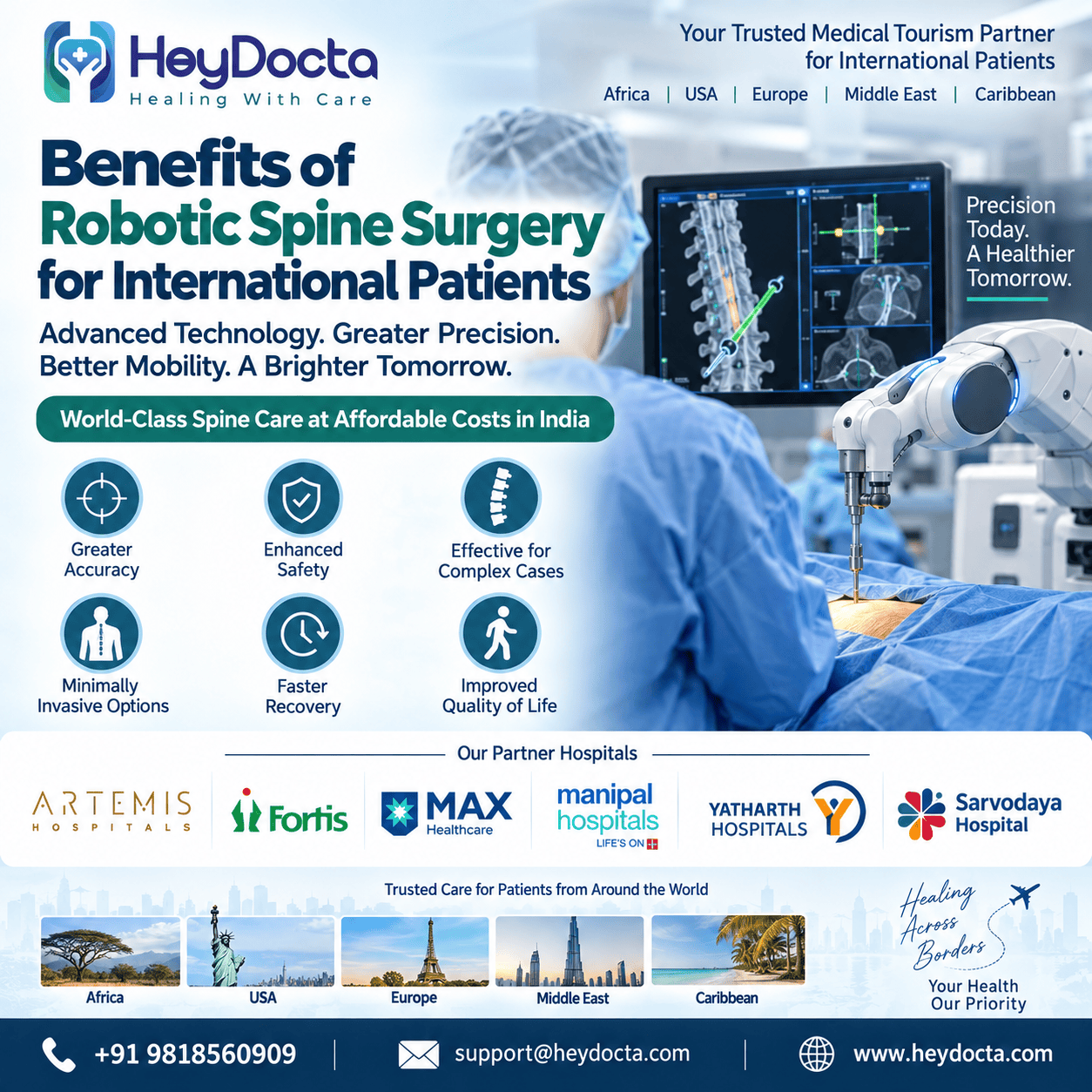
For international patients dealing with persistent back pain, spinal instability, deformity or conditions requiring spinal fusion, choosing the right surgical approach and hospital can be challenging. Robotic spine surgery combines advanced imaging, computer-assisted planning and robotic or navigation technology with the expertise of a trained spine surgeon. For patients travelling from Nigeria, Ghana, Kenya, Zimbabwe, Cameroon, Guyana, Jamaica, the USA, Europe and the Middle East, India offers access to experienced spine specialists, modern hospitals and comparatively affordable treatment. Robotic assistance may provide benefits such as precise surgical planning, accurate implant placement and improved guidance during selected spine procedures. However, whether robotic surgery is appropriate depends on the patient’s diagnosis, anatomy and surgeon’s assessment.
Get a Free Medical Opinion: Share your MRI, CT scans and previous medical records with HeyDocta to receive guidance on suitable treatment options and hospitals in India.
What Is Robotic Spine Surgery?
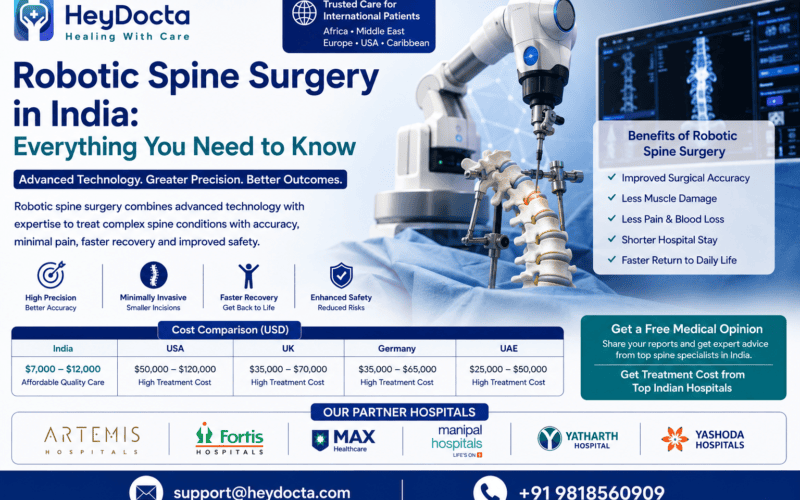
Robotic spine surgery is a technology-assisted approach used during certain spinal procedures. It does not mean that a robot independently performs the operation. Instead, the spine surgeon controls the procedure while robotic systems and computer navigation provide additional planning and positioning assistance.
Before surgery, medical imaging such as CT or MRI scans may be used to create a detailed surgical plan. During the procedure, the technology can help the surgeon follow planned trajectories for instruments and implants.
Robotic-assisted technology may be considered for procedures including:
- Spinal fusion
- Lumbar spine surgery
- Thoracic spine procedures
- Deformity correction
- Scoliosis surgery
- Pedicle screw fixation
- Complex spinal reconstruction
- Selected revision spine surgeries
The technology available and its suitability vary between hospitals and patients.
Why Are International Patients Considering Robotic Spine Surgery?
Travelling to another country for spine surgery involves important decisions about safety, surgeon expertise, technology, cost and recovery. Robotic assistance can be attractive because it supports detailed surgical planning and may improve the precision of implant positioning in appropriate procedures.
For international patients, the potential advantages include:
- Advanced preoperative planning
- Computer-assisted surgical guidance
- Precise implant positioning
- Assistance with complex spinal anatomy
- Potentially less reliance on freehand estimation
- Access to modern surgical infrastructure
- Treatment at a comparatively affordable cost in India
It is important to remember that robotic technology is an additional surgical tool. It does not guarantee a complication-free procedure or a particular outcome.
Key Benefits of Robotic Spine Surgery
1. More Precise Surgical Planning
Robotic systems can integrate detailed patient imaging into the surgical planning process. This allows the surgeon to assess spinal anatomy and plan implant positioning before the operation.
Detailed planning can be particularly valuable in complex cases, including spinal deformity or previous spine surgery.
2. Accurate Implant Placement
Certain spine procedures involve placing screws close to nerves, the spinal cord and other important structures. Robotic and navigation systems can help surgeons follow a preplanned trajectory.
Accurate implant placement is one of the important reasons robotic assistance is used in spinal fusion and other instrumented procedures.
3. Assistance in Complex Cases
Patients with unusual anatomy, spinal deformities or previous surgery may present additional technical challenges. Computer-assisted navigation and robotic guidance can provide the surgeon with additional information during the procedure.
For international patients seeking treatment for complex or revision spine conditions, this technology may be considered as part of a broader treatment plan.
4. Improved Surgical Workflow
Robotic planning can allow some aspects of the procedure to be mapped out before surgery. This can help the surgical team prepare instruments and implants according to the planned procedure.
The actual benefits vary depending on the type of surgery and technology used.
5. Potentially Lower Risk of Implant-Positioning Problems
Improved guidance and navigation may help reduce errors associated with implant positioning in appropriately selected cases. However, robotic surgery does not remove the possibility of complications.
Patients should discuss potential risks, benefits and alternatives with their surgeon before making a treatment decision.
6. Better Use of Advanced Imaging and Navigation
Modern robotic spine systems can work alongside imaging and navigation technologies. This provides the surgeon with detailed information about spinal anatomy during different stages of the operation.
Such technology can be particularly useful when conventional anatomical landmarks are difficult to interpret.
Who May Benefit From Robotic Spine Surgery?
Robotic assistance is not necessary for every spine patient. A surgeon may consider it for patients requiring procedures such as:
- Spinal fusion with instrumentation
- Degenerative spine surgery requiring fixation
- Scoliosis or spinal deformity correction
- Complex reconstruction
- Certain revision surgeries
- Procedures where accurate implant positioning is particularly important
The final decision depends on the patient’s medical history, imaging, bone quality, spinal anatomy, previous operations and planned procedure.
Why Choose India for Robotic Spine Surgery?
India is an increasingly considered destination for international medical treatment because patients can access specialised doctors and advanced hospitals at comparatively competitive costs.
For international spine patients, India offers several potential advantages.
Experienced Spine Specialists
Leading Indian hospitals have specialists in orthopaedic spine surgery and neurosurgery who manage degenerative, traumatic, deformity and complex spinal conditions.
Advanced Hospital Infrastructure
Major hospitals may provide robotic navigation, intraoperative imaging, advanced diagnostic facilities, intensive care and rehabilitation services. The availability of specific robotic systems should always be confirmed with the selected hospital.
Affordable Treatment
The cost of spine surgery in India can be considerably lower than in the USA and many European and Middle Eastern countries. This can make India an attractive option for patients who are seeking quality medical care while managing their healthcare budget.
International Patient Services
International patients can also receive assistance with hospital coordination, medical documentation, appointments, accommodation, transportation and medical visa processes.
Leading Spine Surgeons and Partner Hospitals in India
Selecting a surgeon should be based on the patient’s diagnosis, required procedure and the surgeon’s relevant experience rather than technology alone.
Dr. Hitesh Garg at Artemis Hospital and Dr. Jitesh Manghwani at Max Hospital are among the spine specialists considered by international patients seeking advanced spine care in India. A specialist consultation is essential to determine whether robotic assistance is suitable for an individual patient.
HeyDocta works with partner hospitals including:
- Artemis Hospital
- Fortis Hospitals
- Max Hospitals
- Manipal Hospitals
- Yatharth Hospital
- Sarvodaya Hospital
Availability of robotic spine surgery, robotic platforms, surgical techniques and individual specialists can differ between hospitals.
Robotic Spine Surgery Cost in India vs Other Countries
Affordability is one of the major reasons international patients consider India for spine treatment. However, there is no single fixed price for robotic spine surgery.
The total cost depends on the surgical procedure, number of spinal levels, implants, hospital category, surgeon fees, diagnostic tests, robotic/navigation technology and length of hospitalisation.
Indicative international cost ranges are shown below:
| Country/Region | Approximate Spine Surgery Cost |
| India | USD 4,000–12,000+ |
| Middle East | USD 10,000–25,000+ |
| Europe | USD 15,000–35,000+ |
| USA | USD 25,000–70,000+ |
| Africa | Varies significantly by country and procedure |
These figures are broad estimates and should not be treated as a personalised quotation. Robotic-assisted surgery may cost more than conventional surgery in some hospitals because of technology, navigation and equipment charges.
For an international patient, a complete treatment quotation should ideally clarify:
- Surgeon fees
- Hospitalisation
- Operating room charges
- Robotic/navigation charges
- Implants
- Medicines
- Diagnostic investigations
- ICU charges, if required
- Follow-up consultations
- Expected hospital stay
Get Treatment Cost From Top Indian Hospitals: HeyDocta can coordinate with suitable partner hospitals and help international patients understand estimated treatment costs after reviewing their medical records.
How International Patients Can Plan Robotic Spine Surgery in India
Step 1: Share Medical Reports
Send MRI, CT scans, X-rays, previous surgical reports and relevant medical records for preliminary review.
Step 2: Obtain a Specialist Opinion
A spine surgeon reviews the available information and determines the likely treatment approach.
Step 3: Select the Hospital and Treatment Plan
Based on the medical recommendation, patients can compare appropriate hospitals, surgeons, treatment options and estimated costs.
Step 4: Arrange the Medical Visa
International patients can proceed with the appropriate Indian medical visa process according to current government requirements.
Step 5: Travel to India
HeyDocta can assist with hospital appointment scheduling, accommodation and local transportation arrangements.
Step 6: Preoperative Assessment
After arrival, the patient undergoes necessary examinations and investigations before surgery.
Step 7: Robotic-Assisted Procedure
The surgeon performs the operation using robotic guidance or navigation when clinically appropriate. The surgeon remains in control of the procedure.
Step 8: Recovery and Follow-Up
After surgery, the patient receives postoperative monitoring, pain management, mobilisation instructions and rehabilitation guidance.
Recovery and Length of Stay in India
Recovery depends on the type and complexity of the procedure. A patient undergoing a straightforward spinal operation may have a different recovery timeline from someone undergoing complex reconstruction or revision surgery.
Patients may need:
- Several days of hospital care
- Postoperative imaging or examinations
- Physiotherapy
- Wound care
- Medication management
- Activity restrictions
- Follow-up consultations
International patients should not schedule their return flight solely according to a standard timeline. The treating surgeon should confirm when the patient is medically fit to travel.
Medical Visa and Travel Support With HeyDocta
Planning surgery from another country can involve many logistical challenges. HeyDocta aims to simplify the medical tourism journey by providing end-to-end coordination.
Support can include:
- Medical record coordination
- Specialist consultation scheduling
- Hospital coordination
- Treatment cost estimates
- Medical visa assistance
- Airport transfer coordination
- Accommodation assistance
- Local transportation support
- Post-treatment follow-up coordination
HeyDocta’s medical tourism facilitation is designed to help patients travelling from Africa, the USA, Europe, the Middle East and the Caribbean navigate their treatment journey in India. Patients should independently verify applicable visa and travel requirements before travelling.
Frequently Asked Questions About Robotic Spine Surgery
Is robotic spine surgery better than conventional spine surgery?
Robotic technology can provide additional planning and navigation assistance during selected procedures. It is not automatically better for every patient. The most appropriate technique depends on the patient’s condition and the surgeon’s recommendation.
Is robotic spine surgery performed entirely by a robot?
No. The surgeon performs and controls the operation. Robotic technology provides assistance with planning, navigation and positioning depending on the system being used.
Is robotic spine surgery safe?
Robotic assistance may improve precision in selected procedures, particularly implant placement. However, all spine surgery carries potential risks. Patients should discuss individual risks and benefits with their surgeon.
How much does robotic spine surgery cost in India?
An indicative cost can range from approximately USD 4,000 to USD 12,000 or more, depending on the procedure, implants, hospital and technology used. A personalised quotation requires medical evaluation.
How long should an international patient stay in India?
The duration varies according to the operation and recovery. Patients may need several days in hospital and additional time for postoperative assessment before returning home. The surgeon should provide individual travel guidance.
Can patients from Africa, Europe, the USA and the Middle East receive robotic spine surgery in India?
Yes, international patients can seek spine treatment in India. The availability of robotic surgery depends on the selected hospital, surgeon and procedure.
Does HeyDocta charge patients an additional facilitation fee?
HeyDocta aims to provide medical tourism coordination without an additional facilitation cost to patients, subject to the applicable service arrangement. Patients should confirm the terms before proceeding.
Conclusion: Is Robotic Spine Surgery in India Right for You?
The benefits of robotic spine surgery for international patients include advanced surgical planning, computer-assisted navigation and greater precision in selected procedures. India combines access to experienced spine specialists and modern hospital infrastructure with comparatively affordable treatment costs, making it an option worth considering for patients travelling internationally.
However, robotic technology should not be the only factor when selecting treatment. Surgeon expertise, hospital quality, diagnosis, surgical technique, implants, postoperative care and the patient’s individual medical needs are equally important.
HeyDocta helps international patients compare suitable treatment options and coordinate their medical journey in India.
Get a Free Medical Opinion from HeyDocta.com today and Share your medical reports today and let our medical tourism team help you connect with suitable spine specialists and partner hospitals in India. Get guidance on treatment options, estimated costs, hospital coordination, medical visa assistance and travel arrangements.