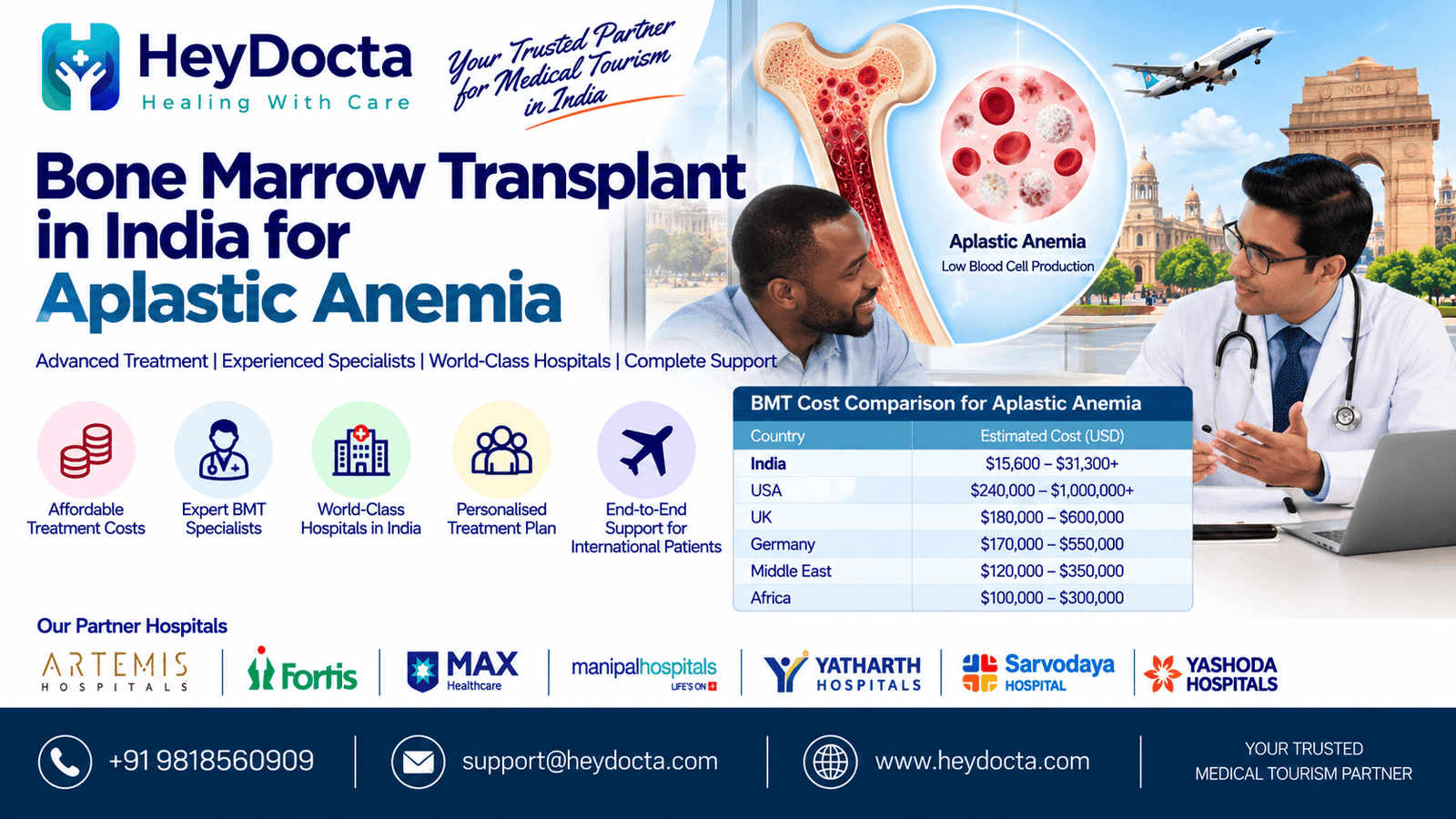
Bone marrow transplant in India for aplastic anemia is an important treatment option for selected patients with severe or very severe aplastic anemia, particularly when a suitable donor is available. Aplastic anemia is a serious bone marrow failure disorder in which the bone marrow does not produce enough blood cells. For international patients from Africa, the Middle East, Europe, the USA and other regions, India can provide access to specialised hematology and transplant centres, while treatment costs may be lower than in many Western countries.
However, BMT is not automatically the right treatment for every patient. The decision depends on age, disease severity, donor availability, previous treatment, overall health and specialist assessment.
Get a Free Medical Opinion: Share your medical records with HeyDocta to coordinate a specialist review, understand possible treatment options and receive an estimated treatment cost from Indian hospitals.
What Is Aplastic Anemia?
Aplastic anemia is a condition in which the bone marrow becomes unable to produce adequate numbers of red blood cells, white blood cells and platelets. This can lead to:
- Severe fatigue and weakness
- Frequent or serious infections
- Easy bruising
- Bleeding or prolonged bleeding
- Low blood counts
- Shortness of breath
Stem cell transplantation is one of the established treatment approaches for aplastic anemia. The National Cancer Institute lists stem cell transplantation among treatments used for aplastic anemia and other blood disorders.
When Is Bone Marrow Transplant Recommended for Aplastic Anemia?
Treatment depends on whether the patient has severe or very severe disease and whether an appropriate donor is available.
The 2026 American Society of Hematology guidelines recommend considering hematopoietic cell transplantation for younger patients with severe or very severe aplastic anemia when a suitable matched donor is available. For older patients or those without an appropriate donor, immunosuppressive therapy may be considered depending on the clinical situation.
Therefore, patients should not decide on transplantation based only on cost or availability in another country. A specialist should first review the diagnosis and treatment history.
Why International Patients Consider India for Aplastic Anemia Treatment
Patients from Nigeria, Kenya, Ghana, Zimbabwe, Cameroon, Guyana, Jamaica, the Middle East, Europe and the USA may explore India for several reasons:
- Access to specialised BMT and hematology teams
- Multiple transplant approaches
- Availability of donor and HLA testing
- Modern transplant infrastructure at major private hospitals
- Potentially lower treatment costs
- International patient coordination
- Medical visa and travel assistance
- Accommodation and local travel support
- Follow-up coordination after treatment
Cost can be an important factor, but patients should compare the complete treatment package rather than looking only at the initial transplant price.
Bone Marrow Transplant Options for Aplastic Anemia
Matched Sibling Donor Transplant
A matched sibling may be considered an appropriate donor for selected patients with severe aplastic anemia. HLA testing is performed to determine compatibility.
Matched Unrelated Donor Transplant
When a suitable family donor is unavailable, a search may be performed through donor registries. The availability of a suitable donor can affect the treatment timeline.
Haploidentical Transplant
A partially matched family donor may be considered in selected patients when a fully matched donor is unavailable. This approach can expand donor options, but suitability must be determined by the transplant team.
Immunosuppressive Therapy
Not every aplastic anemia patient needs a transplant. Immunosuppressive treatment may be recommended in some patients, particularly when transplantation is not appropriate or a suitable donor is unavailable. The 2026 ASH guidelines specifically address both transplantation and immunosuppressive treatment strategies.
BMT in India for Aplastic Anemia
International patients seeking specialist evaluation can consult experienced hematology and BMT teams in India.
Dr. Gaurav Dixit, Head – Haematology Oncology & Bone Marrow Transplant at Artemis Hospitals, Gurugram, specialises in BMT, hematopoietic stem cell transplantation, hematology and oncology. His official profile lists aplastic anemia among his areas of expertise and includes matched-sibling, haploidentical and matched-unrelated donor transplantation among his procedures.
Artemis Hospitals’ BMT division lists treatment for both malignant and non-malignant blood disorders, including aplastic anemia, thalassemia, sickle cell disease and other bone marrow disorders.
Patients should select a specialist based on the patient’s specific diagnosis, transplant requirements, donor situation and medical assessment rather than online rankings.
Bone Marrow Transplant Cost in India for Aplastic Anemia
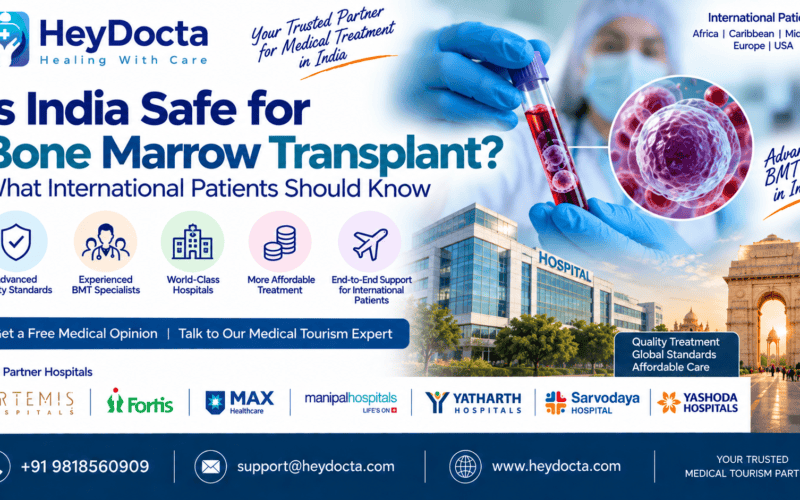
Affordability is one of the major reasons international patients explore BMT in India.
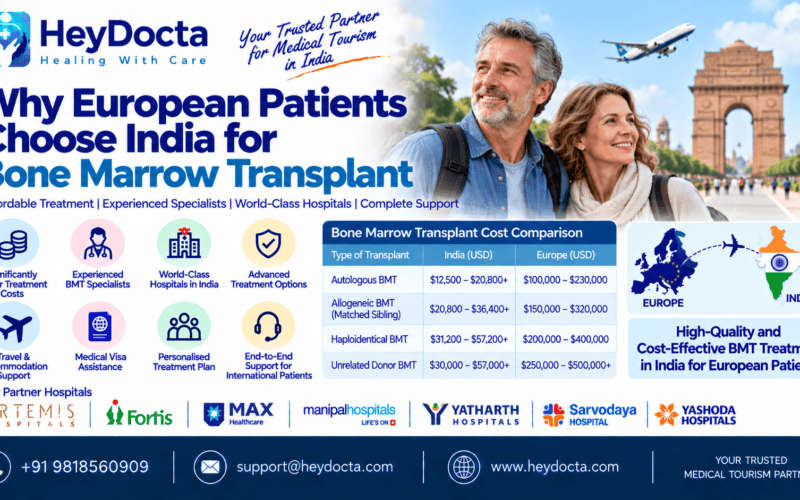
Some Hospitals currently gives a general BMT cost range in India of approximately USD15,700 to USD31,500 with the actual cost varying according to the hospital, location, room type and complications.
However, aplastic anemia transplant costs can vary because the treatment may involve donor testing, conditioning, prolonged hospitalisation, blood products, medicines and infection management.
Indicative Cost Comparison
| Treatment / Location | Approximate Cost |
| BMT in India – general range | USD 15,600–31,300+ |
| Matched sibling BMT in India | Hospital-specific |
| Haploidentical BMT in India | Hospital-specific |
| Unrelated donor BMT in India | Hospital-specific and donor-dependent |
| Unrelated donor BMT in USA | USD 240,000 to over USD 1 million* |
The U.S. Health Resources and Services Administration states that an unrelated bone marrow or cord blood transplant can cost approximately USD 240,000 to more than USD 1 million, including the transplant and up to six months of care. Donor-search costs may add approximately USD 10,000 to more than USD 50,000 in some cases.
These figures are not directly comparable package-for-package. Insurance coverage and the extent of post-transplant care can significantly affect what a patient personally pays in the USA.
Talk to a Medical Tourism Expert: HeyDocta can help you compare an Indian hospital estimate with your current treatment costs and understand what is included in the proposed BMT package.
What Can Affect the Cost of Aplastic Anemia BMT?
The final cost may depend on:
- Type of transplant
- Donor availability
- HLA matching
- Donor testing and collection
- Conditioning therapy
- Hospitalisation duration
- Isolation facilities
- Blood and platelet transfusions
- Medicines
- Laboratory investigations
- Infection treatment
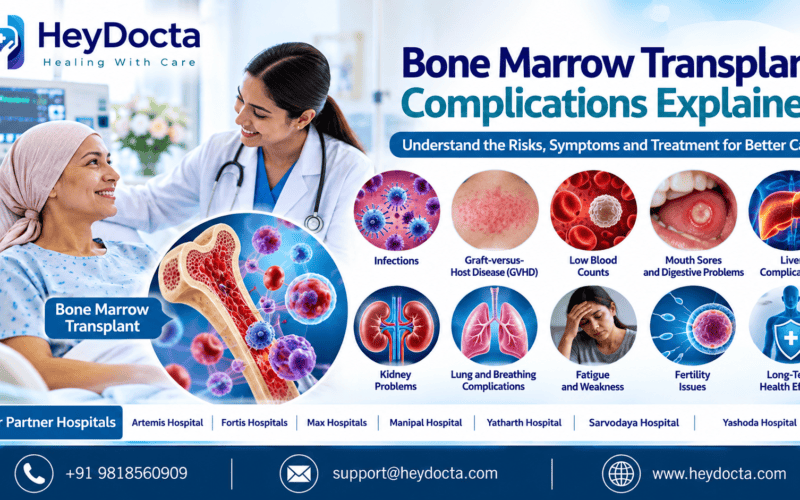
- Graft-versus-host disease management
- ICU requirements, if needed
- Follow-up consultations
- Additional complications
For international patients, accommodation, flights, local transportation and caregiver expenses should also be included in the overall travel budget.
Partner Hospitals for BMT Through HeyDocta
Depending on medical suitability and hospital availability, HeyDocta can coordinate enquiries with partner hospitals including:
- Artemis Hospitals
- Fortis Hospitals
- Max Hospitals
- Manipal Hospitals
- Yatharth Hospitals
- Sarvodaya Hospital
- Yashoda Hospitals
The appropriate hospital depends on the patient’s diagnosis, age, donor situation, treatment history and specialist recommendation.
Bone Marrow Transplant Process in India for International Patients
Step 1: Medical Records Review
Patients send their diagnosis reports, complete blood counts, bone marrow biopsy reports, previous treatment details, HLA results and other relevant medical records.
Step 2: Specialist Opinion
A hematologist/BMT specialist reviews the case and determines whether transplantation or another treatment approach should be considered.
Step 3: Donor and HLA Assessment
If transplantation is appropriate, the medical team evaluates available family donors and determines whether an unrelated donor search may be necessary.
Step 4: Cost and Treatment Planning
The hospital provides a treatment plan and indicative cost estimate based on the patient’s individual situation.
Step 5: Medical Visa
Eligible international patients can apply for an Indian e-Medical Visa. The official Indian e-Visa portal requires a hospital letter containing information such as the proposed admission/treatment date and patient details.
The official portal currently states that eligible applicants for e-Medical and e-Medical Attendant visas can apply online at least four days before arrival, with an application window of up to 120 days.
Step 6: Treatment and Transplant
The patient undergoes the required investigations, conditioning and stem cell transplantation according to the specialist’s treatment plan.
Step 7: Recovery and Follow-Up
The patient remains under close medical observation during engraftment and early recovery. Follow-up continues after discharge.
How Long Should International Patients Stay in India?
Aplastic anemia BMT usually requires a significant period of hospital-based treatment and monitoring. The exact duration depends on:
- Patient’s medical condition
- Type of transplant
- Donor type
- Engraftment
- Infection risk
- Blood-count recovery
- Complications
International patients should avoid booking a fixed return flight too early. The treating team should determine when the patient is medically ready to travel.
Recovery After Bone Marrow Transplant
Recovery does not end when the patient leaves the hospital. Follow-up may include:
- Regular blood tests
- Medicines
- Infection monitoring
- Blood-count monitoring
- Nutritional support
- Monitoring for graft-versus-host disease after allogeneic transplantation
- Specialist consultations
- Long-term follow-up
Patients should follow their transplant team’s instructions regarding food safety, infection prevention, activity and travel.
How HeyDocta Supports International Aplastic Anemia Patients
HeyDocta helps international patients navigate the medical tourism process from the initial enquiry through treatment planning.
Support can include:
- Medical opinion coordination
- Hospital coordination
- Specialist appointment scheduling
- Treatment cost estimates
- Medical visa assistance
- Airport and local travel support
- Accommodation assistance
- Attendant coordination
- Follow-up communication
HeyDocta acts as a medical tourism facilitator and does not charge patients an additional service fee for its facilitation services, subject to the specific hospital and travel arrangements.
Frequently Asked Questions
Can aplastic anemia be treated with bone marrow transplant in India?
Yes. Hematopoietic stem cell transplantation is an established treatment option for selected patients with aplastic anemia. Whether it is appropriate depends on disease severity, age, donor availability and other medical factors.
Is bone marrow transplant the only treatment for aplastic anemia?
No. Depending on the patient’s condition and donor availability, doctors may consider immunosuppressive therapy or other treatment strategies.
How much does BMT for aplastic anemia cost in India?
A general BMT estimate in India is around USD15,700–31,500 although the actual cost for aplastic anemia can be higher or lower depending on the transplant type, donor requirements, hospital stay and complications.
Is BMT cheaper in India than the USA?
Indian BMT treatment can be substantially less expensive than U.S. treatment. HRSA reports that an unrelated U.S. transplant can cost USD 240,000 to more than USD 1 million including transplant and up to six months of care.
Can a patient without a matched sibling donor receive a transplant?
Potentially, yes. Depending on the clinical situation, a transplant team may consider a matched unrelated donor or haploidentical family donor. The appropriate option requires specialist assessment.
Can international patients travel to India for aplastic anemia treatment?
Eligible international patients can travel to India for planned medical treatment, subject to current visa and medical requirements. An Indian hospital letter is required for the e-Medical Visa application.
Can HeyDocta help international patients with BMT treatment?
Yes. HeyDocta can coordinate medical opinions, hospitals, specialists, cost estimates, visa assistance, accommodation and travel-related support.
Conclusion
Bone marrow transplant in India for aplastic anemia can be considered by international patients seeking specialised transplant care and potentially lower treatment costs. India has BMT centres offering different transplant approaches, including matched sibling, haploidentical and matched unrelated donor transplantation.
However, the decision to undergo BMT should always be based on a detailed medical evaluation. Disease severity, age, donor availability, previous treatment and overall health are critical factors. Cost is important, but it should be evaluated alongside transplant expertise, infection-control infrastructure, supportive care and long-term follow-up.
Get a Free Medical Opinion and BMT Cost Estimate: Contact HeyDocta.com to share your medical records, coordinate with suitable Indian BMT specialists and hospitals, understand your treatment options and plan your medical journey to India.