Hip replacement in younger patients is becoming an important treatment consideration for people experiencing severe hip pain, stiffness and difficulty walking before the age of 50 or 60. Although hip replacement is often associated with older adults, younger people may also need surgery because of advanced arthritis, hip dysplasia, avascular necrosis (loss of blood supply to the bone) or previous hip injuries.
For international patients from Nigeria, Ghana, Kenya, Zimbabwe, Cameroon, Guyana, Jamaica, the USA, Europe and the Middle East, India may provide access to orthopaedic specialists and a range of treatment options at comparatively affordable prices. However, younger patients need to consider implant durability, activity levels, the possibility of future revision surgery and the total cost of treatment.
Get a Free Medical Opinion : HeyDocta can help coordinate medical opinions, hospital appointments, treatment estimates and travel arrangements. HeyDocta’s facilitation service has no extra charge for patients; hospital treatment, travel and other third-party expenses are separate.
What Is Hip Replacement in Younger Patients?
Hip replacement, also called hip arthroplasty, is a surgical procedure in which damaged parts of the hip joint are replaced with artificial components. In total hip replacement, the damaged ball at the top of the thigh bone and the socket in the pelvis are replaced.
For younger adults, surgery is generally considered when hip damage causes substantial pain or limits daily activities and non-surgical treatments no longer provide sufficient relief. Age alone does not determine whether someone is suitable for surgery.
Common Reasons Younger Adults Need Hip Replacement
Younger patients may develop severe hip problems because of several conditions:
- Avascular necrosis: Reduced blood supply damages the bone at the top of the thigh bone. In advanced cases, the bone may collapse and the joint may deteriorate.
- Hip dysplasia: The hip socket does not develop normally, which can lead to abnormal joint loading and early arthritis.
- Early-onset osteoarthritis: Cartilage gradually wears away, causing pain, stiffness and reduced movement.
- Inflammatory arthritis: Conditions such as rheumatoid arthritis can damage the hip joint.
- Previous injury: A fracture or serious hip injury may lead to joint damage or post-traumatic arthritis.
The correct treatment depends on the underlying condition, the extent of joint damage, bone quality, symptoms and the patient’s overall health.
When Should a Younger Patient Consider Hip Replacement?
Hip replacement may be appropriate when hip pain significantly affects walking, sleeping, working, exercising or other everyday activities. Common warning signs include persistent groin or hip pain, stiffness after resting, difficulty putting on shoes or socks, and reduced walking distance.
Before recommending surgery, an orthopaedic specialist may assess the patient’s medical history, physical movement, X-rays and, when needed, MRI or other investigations.
Non-surgical options may include physiotherapy, activity modification, weight management when appropriate, walking aids and medication prescribed by a clinician. Some younger patients with early-stage avascular necrosis or selected structural problems may be candidates for joint-preserving procedures instead of immediate replacement.
Hip replacement should not be recommended based on age or an X-ray alone. The decision should reflect symptoms, imaging findings, expected benefits and the alternatives available.
Benefits and Challenges of Hip Replacement at a Younger Age
Potential Benefits
For appropriately selected patients, hip replacement may:
- Reduce pain caused by severe joint damage.
- Improve walking and everyday mobility.
- Make sitting, standing and routine activities more manageable.
- Improve sleep when pain has been disturbing rest.
- Support a return to suitable work and recreational activities after recovery.
The amount of improvement varies, and surgery cannot guarantee complete pain relief or a return to every previous activity.
Important Considerations for Younger Patients
Younger adults often have a longer expected lifespan and may place greater demands on their artificial joint. This makes implant choice, surgical planning and long-term follow-up especially important.
Potential concerns include implant wear, loosening, dislocation, infection, fracture and the possibility of revision surgery later in life. Higher-impact activities may increase implant stress, so patients should discuss suitable long-term exercise with their surgeon.
Hip Replacement Options Available in India
The surgical approach depends on the diagnosis and the condition of the hip.
1. Total Hip Replacement
The damaged ball and socket are replaced with artificial components. This is commonly considered for advanced arthritis, severe joint damage and some cases of avascular necrosis.
2. Partial Hip Replacement
Only the ball portion of the joint is replaced. It is generally used for selected hip fractures and is not the usual option for younger patients with advanced arthritis.
3. Joint-Preserving Procedures
When damage is detected early, selected patients may benefit from procedures designed to preserve the natural joint. For example, certain patients with avascular necrosis may be considered for core decompression before the bone collapses. These treatments are not suitable for every stage of disease.
4. Implant Selection
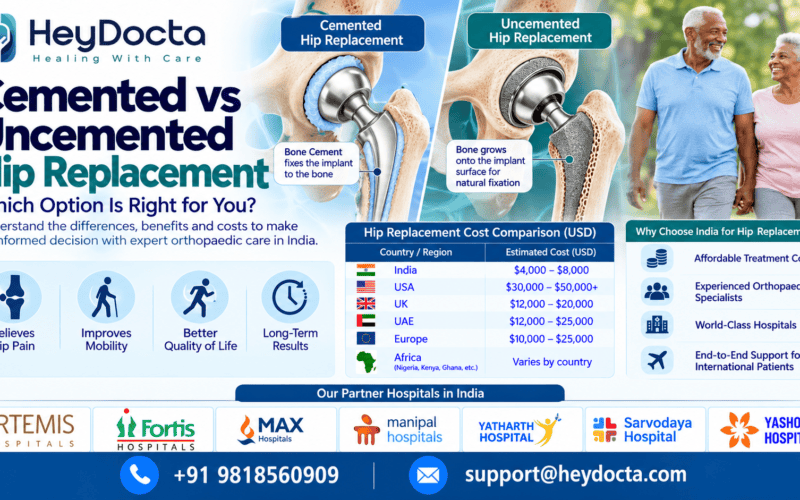
Hip replacement implants use different combinations of materials, including metal, ceramic and highly cross-linked polyethylene. The most suitable combination depends on age, bone quality, activity level, anatomy and the surgeon’s assessment. No implant type is best for every patient.
Orthopaedic Consultation at Partner Hospitals in India
HeyDocta can help patients explore orthopaedic consultations and treatment estimates through its partner hospitals: Artemis Hospital, Fortis Hospitals, Max Hospitals, Manipal Hospital, Yatharth Hospital, Sarvodaya Hospital and Yashoda Hospital.
Dr. Dhananjay Sabat at Yatharth Hospital is a specialist the user has requested to feature for this topic. Patients should confirm his current designation, experience with hip replacement in younger adults, availability and suitability for their condition directly with the hospital before making a treatment decision.
The choice of surgeon should be based on relevant experience, a clear explanation of treatment alternatives, implant planning, complication management and arrangements for long-term follow-up.
Hip Replacement Cost in India Compared With Other Countries
Cost is a major consideration for international patients, particularly younger adults who may need long-term monitoring or future revision surgery. India may offer lower initial treatment costs than several high-cost healthcare markets, but quotations should be compared carefully.
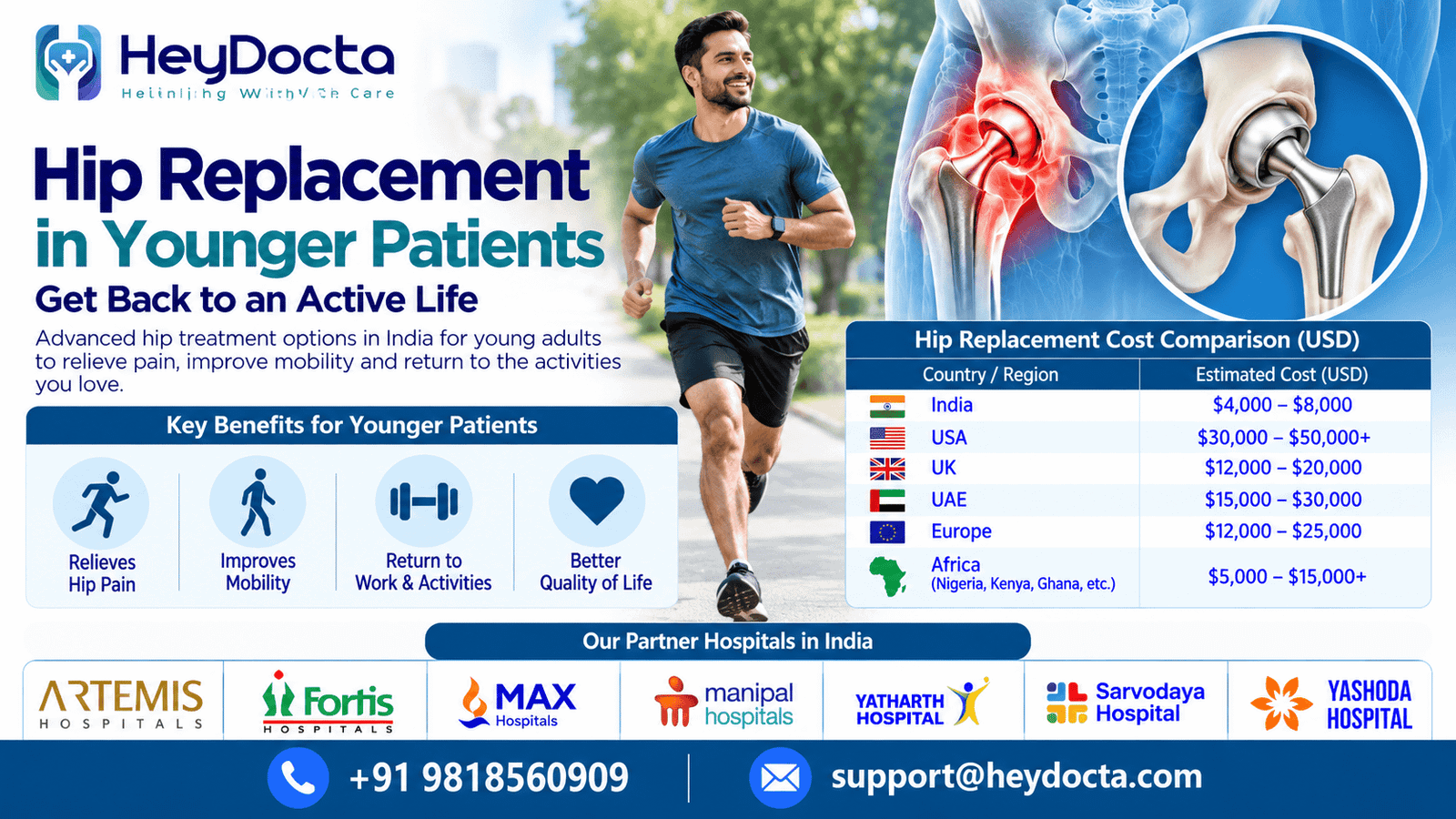
The following figures are illustrative planning ranges in USD, not verified hospital quotations or guaranteed package prices. Actual prices vary by hospital, implant, procedure complexity and what the package includes.
| Country or region | Illustrative cost for one hip replacement |
| India | $4,000–$8,000 |
| USA | $30,000–$50,000+ |
| UK, private treatment | $12,000–$20,000 |
| UAE | $15,000–$30,000 |
| Selected African private healthcare markets | $5,000–$15,000+ |
These ranges are not a like-for-like price survey. Costs and coverage differ between countries, hospitals and insurance systems. Patients should obtain current written quotations before deciding.
What Affects the Cost of Hip Replacement?
The final price may depend on:
- The implant brand, materials and design.
- The surgeon’s and anaesthetist’s fees.
- Hospital category and length of stay.
- Pre-operative tests and medical clearances.
- Medication, rehabilitation and follow-up visits.
- Whether additional procedures or treatment for complications are required.
International patients should also budget for flights, accommodation, local transport, visa expenses and an appropriate recovery period in India.
Request a personalised estimate: HeyDocta can help coordinate hospital quotations and clarify inclusions and exclusions. There is no extra charge for HeyDocta’s facilitation service, but hospital and travel expenses remain payable separately.
Why International Patients Consider India for Hip Replacement
Patients may consider India for access to orthopaedic assessment, different implant options and treatment estimates that fit their budgets. The most important factors are not cost alone, but also the quality of clinical evaluation, the surgeon’s experience, infection-control practices, rehabilitation and continuity of care.
For patients travelling from Africa, the Middle East, Europe, Guyana or Jamaica, it is helpful to arrange an initial medical-record review before booking travel. This can help establish whether further tests are required and whether the patient is likely to be medically suitable for surgery.
Step-by-Step Treatment Process for International Patients
- Share medical records: Provide recent X-rays or scans, medical history, current medication and details of previous treatment.
- Obtain a specialist opinion: The orthopaedic team reviews the case and recommends further investigations or treatment options.
- Compare written quotations: Confirm the implant, hospital stay, surgeon fees, rehabilitation and exclusions.
- Arrange travel and visa documentation: Follow current official Indian visa requirements and the hospital’s documentation process.
- Complete pre-operative assessment: The clinical team evaluates fitness for surgery, discusses risks and explains the recovery plan.
- Undergo treatment and rehabilitation: Mobilisation and physiotherapy begin when medically appropriate.
- Plan follow-up at home: Obtain the discharge summary, implant details, medication plan and rehabilitation instructions for the treating clinician in your home country.
HeyDocta can assist with hospital coordination, appointment planning and travel guidance. Medical decisions, visa approvals and surgical outcomes remain with the relevant professionals and authorities.
Recovery After Hip Replacement in Younger Patients
Recovery varies according to the patient’s health, the condition of the hip before surgery and the rehabilitation plan. Many patients begin walking with assistance soon after surgery when the clinical team considers it safe. Progress toward independent walking and routine activities occurs gradually over the following weeks and months.
Younger patients should not assume that being physically fit means recovery will automatically be faster. Follow the prescribed exercises, use walking aids as directed, attend follow-up appointments and avoid activities that the surgeon has not cleared.
Before returning to work, driving, sports or long-distance travel, ask the treating team for individual guidance. Patients travelling internationally should also confirm how long they need to remain near the hospital before flying home.
Frequently Asked Questions
1. Can a 30- or 40-year-old have hip replacement?
Yes. A younger adult may be considered for hip replacement when severe joint damage causes significant symptoms and other suitable treatments are unlikely to provide adequate relief. Age alone is not the deciding factor.
2. How long does a hip replacement last in younger patients?
Many modern hip replacements function for 15–20 years or longer, but longevity varies. Younger patients may place greater demands on the implant, and some may require revision surgery during their lifetime.
3. Is hip replacement safe for younger adults?
Hip replacement is an established procedure, but it carries risks, including infection, blood clots, dislocation, fracture and implant wear. The surgeon should explain individual risks and expected benefits.
4. Can younger patients play sports after hip replacement?
Many patients can return to low-impact activities, such as walking, swimming and cycling, when cleared by their care team. High-impact sports require individual assessment because they may increase stress on the implant.
5. Is hip replacement affordable in India?
India may have lower initial treatment costs than the USA, UK and UAE. Patients should compare complete written quotations and include travel, accommodation, rehabilitation and follow-up costs.
6. Can avascular necrosis be treated without hip replacement?
Sometimes. If avascular necrosis is identified early and the bone has not collapsed, joint-preserving procedures may be considered. Advanced disease may require hip replacement. An orthopaedic specialist must assess the stage and extent of damage.
7. Will I need another hip replacement later?
Not every younger patient needs revision surgery, but the possibility is important to discuss. Implant wear, loosening, infection and other complications may lead to further surgery in some patients.
Conclusion: Planning Hip Replacement at a Younger Age
Hip replacement in younger patients can be an option for severe hip damage when pain and limited movement substantially affect quality of life. The decision requires careful evaluation of alternatives, implant durability, activity expectations, recovery needs and the possibility of future revision surgery.
For international patients considering treatment in India, HeyDocta.com can help coordinate medical opinions, compare treatment estimates from partner hospitals and organise treatment-related travel support. Contact HeyDocta to discuss your medical records and request a personalised estimate before making your decision.