For international patients considering a bone marrow transplant in India, one of the most important questions is: What is the success rate of bone marrow transplant in India? The answer depends on the disease, patient’s age and health, transplant type, donor match, disease status and complications. There is no single success percentage that applies to every patient.
India has established haematology and bone marrow transplant centres offering autologous, matched-donor, haploidentical and unrelated-donor transplants. For patients from Nigeria, Ghana, Kenya, Guyana, Jamaica, the Middle East, Europe and other regions, treatment planning also involves cost, travel, visa, accommodation and follow-up.
Get a Free Medical Opinion: Share your medical reports with HeyDocta to understand whether bone marrow transplantation may be appropriate, the expected treatment pathway and an indicative hospital cost.
What Is the Success Rate of Bone Marrow Transplant in India in 2026?
The term “success rate” can mean different things. Doctors may discuss:
- Overall survival
- Disease-free or relapse-free survival
- Successful stem-cell engraftment
- Complete remission
- Treatment-related mortality
- Long-term disease control
These outcomes are not interchangeable.
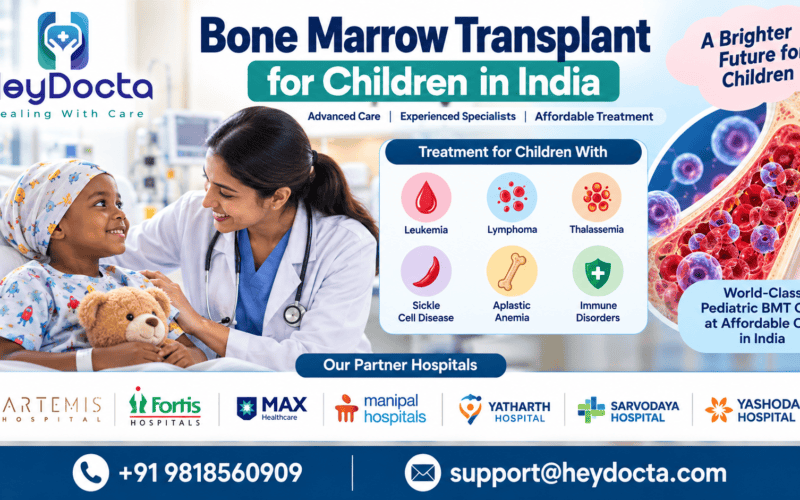
In 2025 Fortis study of 100 children with sickle cell disease treated with stem-cell transplantation between 2015 and 2024 reported overall survival of nearly 87%. The reported outcomes were 96% for matched-sibling donor transplants and 78% for haploidentical family-donor transplants. These figures apply specifically to that patient group and study.
This illustrates why an individual medical assessment is more meaningful than using one national percentage.
What Factors Affect BMT Success in India?
Several factors can influence the outcome of a bone marrow or stem-cell transplant.
1. Type of disease
BMT may be used for conditions including leukemia, lymphoma, multiple myeloma, aplastic anemia, thalassemia and sickle cell disease. The expected outcome differs considerably between diseases.
2. Disease status before transplant
A patient undergoing transplant while the disease is well controlled or in remission may have a different prognosis from someone with active or refractory disease.
3. Patient age and overall health
Age, infections, organ function, previous treatments and other medical conditions can affect transplant-related risks. NCI notes that factors such as disease stage, ability to tolerate conditioning treatment and other serious health problems are considered when determining whether transplantation is appropriate.
4. Donor compatibility
For allogeneic transplantation, HLA matching is an important part of donor selection. Donors may be matched siblings, unrelated donors or partially matched family members.
5. Infection prevention and supportive care
BMT temporarily weakens the immune system. Infection monitoring, blood support, nutrition, intensive nursing and management of complications are important parts of transplant care.
Bone Marrow Transplant Options Available in India
Indian transplant centres commonly provide several approaches:
| Transplant type | Stem-cell source | General use |
| Autologous BMT | Patient’s own cells | Selected cancers such as multiple myeloma and lymphoma |
| Matched sibling allogeneic | Related donor | Selected blood cancers and marrow disorders |
| Matched unrelated donor | Unrelated compatible donor | When a suitable family donor is unavailable |
| Haploidentical transplant | Half-matched family donor | Useful when a fully matched donor is unavailable |
The appropriate transplant depends on the diagnosis, disease status, donor availability and medical assessment.
Bone Marrow Transplant Specialist in India
International patients may seek consultation with experienced haematology and BMT specialists.
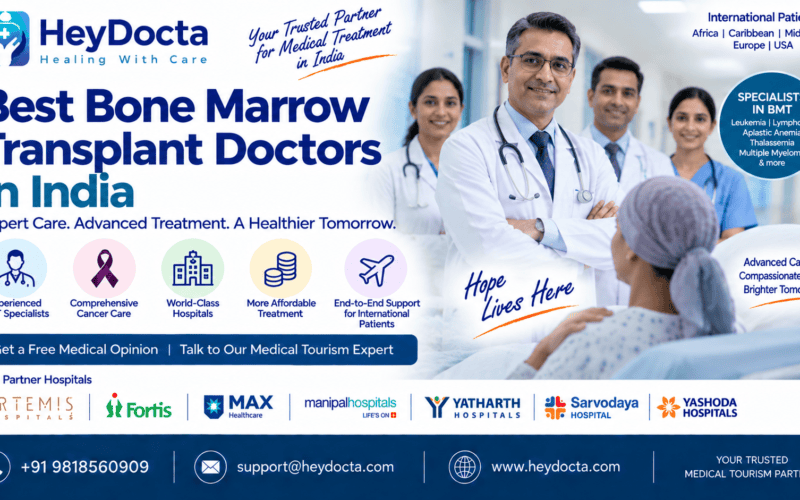
Dr. Gaurav Dixit, Head – Haematology Oncology & Bone Marrow Transplant at Artemis Hospitals, Gurugram, specialises in BMT, haematopoietic stem-cell transplantation, haematology and oncology. His listed procedures include autologous, matched-sibling allogeneic, haploidentical and matched-unrelated donor transplantation.
His areas of expertise include leukemia, myeloma, lymphoma, aplastic anemia, thalassemia and sickle cell disease. Artemis also lists dedicated BMT facilities and infection-control infrastructure for transplant patients.
Other major Indian hospitals also have specialist haematology and BMT teams. Options for international patients can include Artemis Hospitals, Fortis Hospitals, Max Hospitals, Manipal Hospitals, Yatharth Hospital, Sarvodaya Hospital and Yashoda Hospital. The appropriate centre should be selected based on the patient’s diagnosis, transplant type, donor requirements and treating team’s expertise.
Bone Marrow Transplant Cost in India in 2026
Cost is an important consideration for international families. Apollo Hospitals currently gives a general BMT range of USD15,700–31,500, while other 2026 international-patient estimates show broader ranges depending on transplant type and complexity.
For planning purposes:
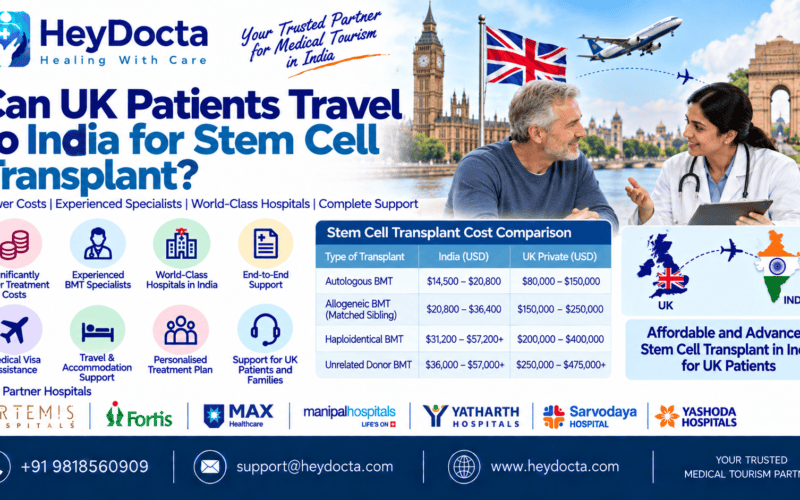
| BMT type | Approx. India cost in 2026 |
| Autologous | USD 12,500–30,000 |
| Matched allogeneic | USD 20,800–55,000 |
| Haploidentical | USD 26,000–66,000 |
| Unrelated donor | USD 28,000–62,000+ |
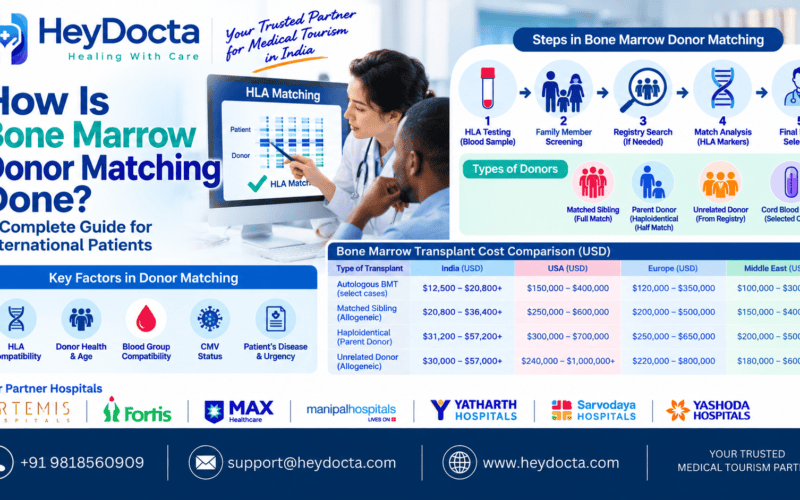
These are indicative ranges, not hospital quotations. Donor testing, registry searches, medicines, ICU care, infections, GVHD, longer hospitalisation and follow-up can increase the final bill.
India vs Other Countries
For allogeneic BMT, 2026 treatment-market estimates from MedCasts place India at approximately USD 34,660–81,380, compared with USD 80,510–174,900 in the UAE and USD 150,180–327,900 in Germany. These figures are indicative and vary by hospital and patient complexity.
In the United States, the U.S. HRSA states that an unrelated bone marrow or cord-blood transplant can cost USD 240,000 to more than USD 1 million, including the transplant and up to six months of care.
The comparison shows why many international patients investigate India, but the headline price should never be the only factor. The treatment plan, transplant expertise, infection-control facilities, donor pathway and post-transplant care should also be considered.
Talk to Our Medical Tourism Expert: HeyDocta can help international patients request medical opinions, coordinate with partner hospitals and understand the expected treatment and cost requirements before travelling.
Bone Marrow Transplant Process in India
The journey generally follows these steps:
- Medical report review – Previous reports, diagnosis and treatment history are evaluated.
- Specialist consultation – A haematologist/BMT specialist determines whether transplantation is appropriate.
- Donor and HLA testing – Required for allogeneic transplantation.
- Pre-transplant evaluation – Blood tests, imaging and organ-function assessments may be performed.
- Conditioning treatment – Chemotherapy, with or without radiation, prepares the body for transplantation.
- Stem-cell infusion – Healthy stem cells are infused through an IV.
- Engraftment and monitoring – Blood counts and complications are closely monitored.
- Discharge and follow-up – Continued medicines, infection precautions and specialist monitoring are required.
NCI explains that immune recovery can take several months after autologous transplantation and one to two years after allogeneic or syngeneic transplantation.
Medical Visa and Travel Support for International Patients
International patients travelling to India may need:
- Medical visa documentation
- Hospital invitation or treatment letter
- Airport and local transportation
- Accommodation near the hospital
- Caregiver arrangements
- Local coordination during treatment
- Follow-up communication with the hospital
HeyDocta helps coordinate these practical requirements along with hospital communication and medical documentation. There is no extra charge to patients for HeyDocta’s medical tourism coordination service; hospital and treatment expenses remain separate and are confirmed by the hospital.
Recovery and Follow-Up After BMT
Recovery does not end when the patient leaves the hospital. Patients may require:
- Regular blood tests
- Medicines and infection prevention
- Nutritional guidance
- Monitoring for graft-versus-host disease after allogeneic transplantation
- Monitoring for relapse
- Gradual return to normal activities
- Continued communication with the transplant team
The length of stay in India depends on the transplant type, engraftment, complications and the treating doctor’s recommendation.
FAQs About Bone Marrow Transplant Success Rate in India
1. What is the success rate of bone marrow transplant in India in 2026?
There is no single success rate for all BMT patients. Outcomes vary according to disease, age, transplant type, donor match, disease status and complications.
2. Is bone marrow transplant successful for leukemia?
BMT can be an important treatment option for selected leukemia patients. The expected outcome depends strongly on the leukemia type, risk category, remission status and patient-specific factors.
3. Does a matched sibling donor improve transplant outcomes?
A close HLA match is an important factor in allogeneic transplantation. However, donor selection involves several clinical considerations and does not guarantee a particular outcome.
4. How much does BMT cost in India in 2026?
Indicative international-patient estimates range from roughly USD 12,500 to USD 66,000+, depending on the transplant type and complexity. A hospital provides the final estimate after reviewing the patient’s medical condition.
5. How long should international patients stay in India?
The required stay varies. Conditioning, transplant, engraftment and early monitoring can require several weeks, with additional time if complications occur.
6. Can HeyDocta arrange treatment in India?
Yes. HeyDocta can coordinate medical opinions, hospital communication, treatment estimates, travel and visa-related assistance, accommodation guidance and follow-up coordination for international patients.
Conclusion
The success rate of bone marrow transplant in India cannot be represented by one number. Published Indian studies show that outcomes can vary substantially according to the disease and patient group, while modern transplant programmes provide multiple donor and treatment options.
For international patients, India can also offer a wide range of transplant services at treatment costs that are often considerably below U.S. and some other international private-care estimates. However, the right treatment plan should always be based on an individual medical assessment rather than cost or success-rate figures alone.
Ready to explore BMT treatment in India? Contact HeyDocta.com for a Free Medical Opinion, hospital coordination, indicative treatment cost and end-to-end assistance for your medical journey to India.