Bone marrow transplant can be a life-saving treatment for serious blood disorders and cancers, but many patients and families worry about the risks and complications involved. If you are considering treatment abroad, understanding the possible side effects, safety measures, recovery needs, and total cost is essential. Patients from Nigeria, Kenya, Jamaica, Guyana, the Middle East, Europe, and the USA often choose India for bone marrow transplant because of advanced hospitals, experienced specialists, and significantly lower treatment costs.
Get a Free Medical Opinion from heydocta.com and understand your treatment options, risks, and expected cost from top Indian hospitals.
Understanding Bone Marrow Transplant
A bone marrow transplant, also called a stem cell transplant, replaces unhealthy bone marrow with healthy stem cells. It may be recommended for:
- Leukemia
- Lymphoma
- Multiple myeloma
- Aplastic anemia
- Thalassemia
- Sickle cell disease
- Certain immune disorders
The transplant can be:
Autologous Transplant
Uses the patient’s own stem cells.
Allogeneic Transplant
Uses stem cells from a matched donor.
Haploidentical Transplant
Uses a half-matched donor, often a family member.
While this treatment can offer important medical benefits, it also carries risks that patients should understand before making decisions.
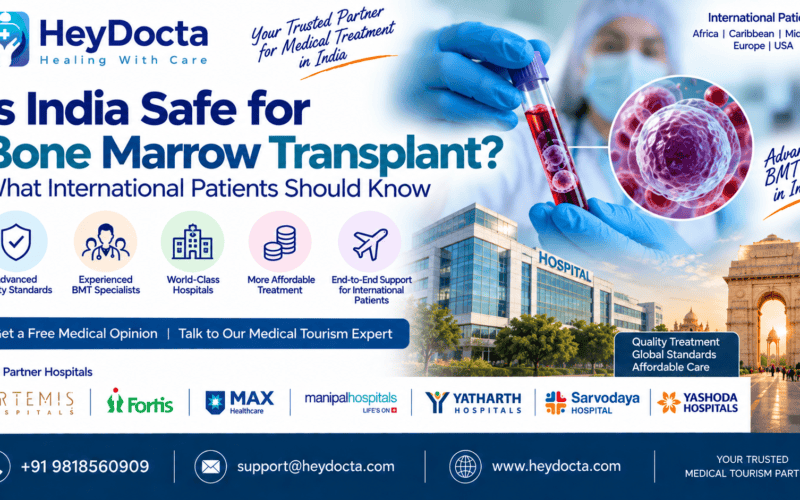
Why International Patients Choose India for Bone Marrow Transplant
Patients from Africa, Europe, the Gulf region, and the Caribbean often travel to India because of:
Affordable Costs
Bone marrow transplant in India can cost far less than in the USA, UK, UAE, or Europe.
Experienced Specialists
Indian transplant doctors manage complex adult and pediatric cases regularly.
Advanced Infrastructure
Top hospitals offer infection-controlled transplant units, ICU backup, and multidisciplinary care.
Faster Access
Many international patients receive quicker consultations and scheduling.
Full Travel Support
heydocta.com helps with:
- Hospital coordination
- Cost estimates
- Medical visa support
- Accommodation guidance
- Travel planning
- Follow-up care assistance
Talk to Our Medical Tourism Expert for personalized transplant guidance today.
Risks and Complications of Bone Marrow Transplant
Every medical procedure carries some risk. Bone marrow transplant is a highly specialized treatment, so careful monitoring is required.
1. Infection Risk
After transplant, the immune system becomes weak for a period of time. Patients are more vulnerable to:
- Bacterial infections
- Viral infections
- Fungal infections
Hospitals reduce this risk with sterile rooms, medicines, and monitoring.
2. Graft-versus-Host Disease (GVHD)
This can happen after donor transplants when donor cells attack the patient’s body.
Commonly affected areas:
- Skin
- Liver
- Intestines
Doctors use medicines to prevent or control GVHD.
3. Bleeding Problems
Low platelet counts after transplant may increase bleeding risk until bone marrow recovers.
4. Organ Complications
Some patients may develop complications involving:
- Liver
- Kidneys
- Lungs
- Heart
This is why pre-transplant testing is important.
5. Graft Failure
Sometimes donor stem cells may not grow properly or may fail to establish in the bone marrow.
6. Fertility Issues
Some chemotherapy or radiation used before transplant may affect fertility. Patients may discuss fertility preservation before treatment.
7. Relapse of Original Disease
In some conditions, the original disease may return after transplant.
Important Note
Not every patient experiences these complications. Risks vary based on age, disease type, donor match, and overall health.
How Indian Hospitals Reduce Bone Marrow Transplant Risks
Leading Indian hospitals use modern protocols to improve safety:
- Pre-transplant health screening
- Advanced donor matching
- HEPA-filter transplant rooms
- Strict infection control
- Intensive monitoring
- 24/7 specialist teams
- Post-transplant follow-up programs
Cost Comparison: India vs Other Countries
For many families, affordability is a major concern.
| Country | Estimated Bone Marrow Transplant Cost (USD) |
|---|---|
| India | $18,000 – $45,000 |
| UAE | $80,000 – $150,000 |
| UK | $120,000 – $250,000 |
| USA | $250,000 – $500,000+ |
| Europe | $100,000 – $220,000 |
Final cost depends on:
- Type of transplant
- Donor source
- Length of hospital stay
- ICU needs
- Medicines
- Complications requiring extra care
India remains one of the most affordable destinations for quality transplant treatment.
Best Hospitals in India for Bone Marrow Transplant
heydocta.com works with reputed hospitals such as:
- Artemis Hospital
- Fortis Hospitals
- Max Hospitals
- Sharda Healthcity
- Yatharth Hospital
- Akash Healthcare
Hospital choice depends on medical condition, budget, donor availability, and specialist recommendation.
Step-by-Step Treatment Process for International Patients
Step 1: Share Medical Reports
Send biopsy reports, scans, blood tests, and treatment history.
Step 2: Specialist Review
Receive opinions from Indian transplant specialists.
Step 3: Treatment Plan & Cost Estimate
Choose hospital options that match your budget and medical needs.
Step 4: Visa & Travel Planning
Get support for medical visa documents and travel arrangements.
Step 5: Arrival in India
Airport pickup and accommodation support can be arranged.
Step 6: Transplant & Monitoring
Patient undergoes conditioning treatment, transplant, and recovery monitoring.
Step 7: Follow-Up Care
Regular blood tests and doctor consultations continue after discharge.
Get Treatment Cost from Top Indian Hospitals through heydocta.com with no extra cost to patients.
Recovery and Stay Duration in India
Recommended stay may vary:
- Autologous transplant: 6 to 10 weeks
- Allogeneic transplant: 3 to 6 months or longer
- Pediatric cases: Depends on condition and recovery progress
Doctors advise travel only when infection risk is lower and blood counts are stable.
How heydocta.com Supports International Patients
heydocta.com is a trusted medical tourism facilitator offering:
- End-to-end treatment coordination
- Multiple hospital options
- Transparent cost guidance
- Visa assistance
- Language and travel support
- Follow-up coordination after returning home
Frequently Asked Questions
1. Is bone marrow transplant risky?
Yes, it is a major treatment with potential complications, but modern hospitals use strict safety protocols to reduce risks.
2. What is the most common complication after transplant?
Infection risk is common because immunity becomes weak temporarily.
3. Can GVHD be treated?
Many cases can be managed with medicines and close specialist monitoring.
4. Why is India cheaper for bone marrow transplant?
Lower operating costs, efficient healthcare systems, and strong medical expertise help reduce total costs.
5. Is India safe for foreign patients?
Many Indian hospitals have international patient departments, advanced transplant units, and experienced doctors.
6. How long should I stay in India after transplant?
This depends on transplant type and recovery. Many patients stay several weeks to months.
7. Does heydocta.com charge extra fees?
heydocta.com focuses on helping patients access treatment and support services. Final terms depend on required services.
Conclusion
Understanding the risks and complications of bone marrow transplant helps patients make informed decisions with confidence. While complications are possible, experienced specialists, modern facilities, and structured follow-up care significantly improve patient safety. For international patients, India offers advanced treatment at a much more affordable cost than many Western and Gulf countries.
heydocta.com is your trusted partner for bone marrow transplant treatment in India. We assist with hospital selection, expert opinions, cost estimates, visa support, travel planning, and complete coordination with no extra cost to patients. Contact heydocta.com today to Get a Free Medical Opinion and start your treatment journey with confidence.