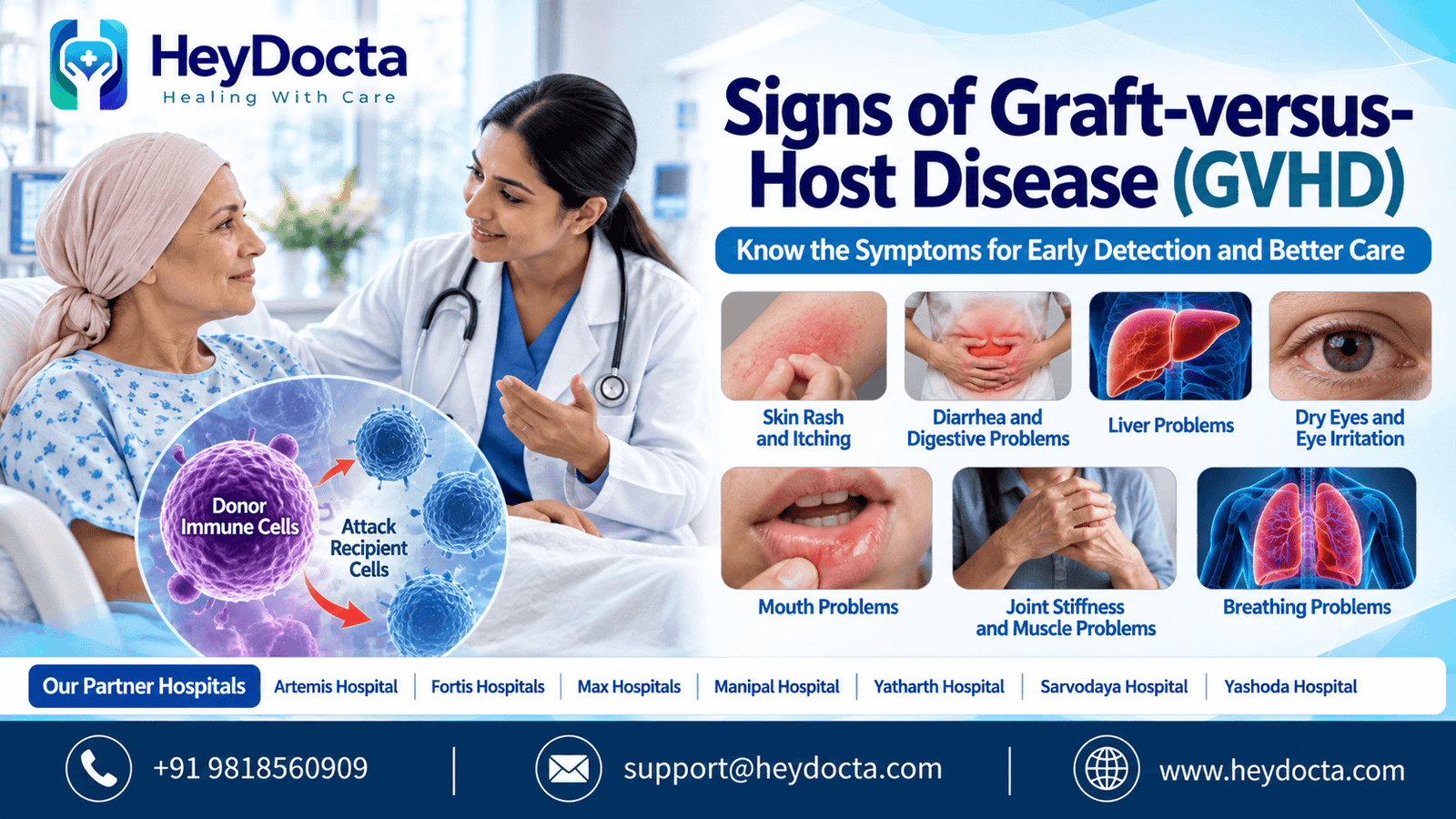
Signs of Graft-versus-Host Disease (GVHD) can appear after an allogeneic bone marrow or stem cell transplant when immune cells from the donor recognize the patient’s tissues as foreign and attack them. GVHD can affect the skin, liver, digestive system, eyes, mouth and other organs. It may develop during the first few months after transplant or later as chronic GVHD.
Recognising possible symptoms early is important because several GVHD symptoms can resemble infections, medication side effects or other complications. Patients should report new or worsening symptoms to their transplant team rather than trying to diagnose GVHD themselves.
Planning a bone marrow transplant or GVHD evaluation in India? Contact HeyDocta to Get free medical opinion, hospital coordination and treatment-cost guidance.
What Is Graft-versus-Host Disease?
GVHD is a complication that can occur after an allogeneic stem cell or bone marrow transplant, where the stem cells come from another person.
The donated immune cells, particularly T cells, may recognise the recipient’s tissues as different and mount an immune response against them. GVHD can affect several organs, including the skin, liver, intestines, eyes, mouth, lungs, joints and other tissues.
GVHD is generally discussed as:
- Acute GVHD: commonly develops during the first few months after transplant.
- Chronic GVHD: can develop later and may affect multiple organs.
- Overlap or late-onset presentations: the timing and clinical features do not always fit a simple 100-day division.
Modern transplant medicine does not rely only on whether symptoms occur before or after Day 100. Doctors consider the actual clinical features when diagnosing GVHD.
What Are the Signs of Graft-versus-Host Disease?
The symptoms depend on which organs are affected and how severe the condition is.
1. Skin Rash and Itching
Skin changes are among the most recognisable signs of GVHD.
Possible symptoms include:
- Red or blotchy rash
- Itching
- Dry skin
- Skin sensitivity
- Changes in skin colour or texture
- Skin thickening in some forms of chronic GVHD
- Sores or peeling in more severe cases
Acute GVHD commonly involves a skin rash, while chronic GVHD can produce changes in skin texture, pigmentation and elasticity.
2. Diarrhea and Digestive Problems
Gastrointestinal GVHD can cause:
- Watery diarrhea
- Abdominal cramps
- Nausea
- Vomiting
- Loss of appetite
- Weight loss
- Difficulty eating
Severe or persistent diarrhea after an allogeneic transplant requires prompt medical assessment because infection, medication effects and other conditions can cause similar symptoms.
3. Liver Symptoms
GVHD affecting the liver may not always produce obvious symptoms initially. Blood tests can identify abnormal liver function or elevated bilirubin.
Possible signs include:
- Yellowing of the skin or eyes
- Dark urine
- Abdominal discomfort
- Abnormal liver blood tests
Jaundice after transplant should be reported promptly to the treating team.
4. Dry Eyes and Eye Irritation
Chronic GVHD can affect the eyes and may cause:
- Dry or gritty eyes
- Burning
- Redness
- Eye discomfort
- Sensitivity to light
- Excessive watering
NCI identifies new dry, gritty or painful eyes as important manifestations of chronic GVHD.
5. Mouth Problems
GVHD can affect the mouth and salivary glands.
Possible symptoms include:
- Dry mouth
- Mouth ulcers
- Pain while eating
- Sensitivity to spicy or acidic foods
- Changes in taste
- White or lacy patches
- Difficulty opening the mouth in some chronic cases
These symptoms may affect nutrition and hydration, making early treatment and dietary support important.
6. Joint Stiffness and Muscle Problems
Chronic GVHD can affect connective tissues, joints and muscles.
Patients may experience:
- Joint stiffness
- Reduced range of movement
- Muscle weakness
- Tight or hardened skin
- Difficulty moving arms or legs
Physical therapy may be incorporated into management when appropriate.
7. Lung Symptoms
Chronic GVHD can sometimes affect the lungs.
Possible symptoms include:
- Persistent cough
- Shortness of breath
- Wheezing
- Reduced exercise tolerance
Breathing symptoms after transplant should always be assessed because infection and other transplant complications can also cause them.
Acute vs Chronic GVHD Symptoms
| Feature | Acute GVHD | Chronic GVHD |
| Typical timing | Often within first few months | Often develops later |
| Skin | Rash, redness, itching | Dryness, rash, thickening or texture changes |
| Digestive system | Diarrhea, nausea, vomiting | Nausea, diarrhea, weight loss may occur |
| Liver | Elevated bilirubin, jaundice | Liver involvement can occur |
| Eyes | Less typical | Dry, gritty or painful eyes |
| Mouth | May be affected | Dry mouth, ulcers and other changes |
| Joints | Less typical | Stiffness and reduced movement |
| Lungs | Less typical | Breathing problems can occur |
The timing and symptoms can overlap, so diagnosis requires assessment by the transplant team.
When Should You Contact Your Doctor?
After an allogeneic transplant, patients should report new or worsening symptoms promptly.
Seek medical advice if you develop:
- A new or rapidly spreading rash
- Persistent or severe diarrhea
- Repeated vomiting
- Yellow skin or eyes
- New mouth ulcers
- Severe dry eyes
- Difficulty swallowing
- Unexplained weight loss
- New breathing difficulties
- Significant joint stiffness
- Fever or other signs of infection
A fever or breathing difficulty can represent an urgent medical problem and should not automatically be assumed to be GVHD. The NHS advises transplant patients to contact their care team promptly for high temperature or symptoms suggesting infection.
How Is GVHD Diagnosed?
There is no single test that diagnoses every case of GVHD.
Doctors may use:
- Medical history
- Physical examination
- Blood tests
- Liver-function tests
- Stool testing
- Imaging
- Lung-function testing
- Eye examination
- Specialist assessment
- Biopsy in selected cases
This evaluation is important because GVHD can resemble infection, drug reactions and other transplant complications. NCI notes that alternative causes such as infection, medication effects and malignancy may need to be excluded when assessing chronic GVHD.
How Is GVHD Treated?
Treatment depends on whether GVHD is acute or chronic, which organs are affected and how severe the disease is.
Treatment may include:
- Corticosteroids
- Immunosuppressive medicines
- Topical treatments for selected skin, eye or mouth symptoms
- Targeted therapies for certain patients
- Extracorporeal photopheresis in selected cases
- Supportive treatment for affected organs
- Nutritional support
- Physiotherapy and rehabilitation
NCI identifies corticosteroids as an important treatment for GVHD, while additional therapies may be considered when the disease does not respond adequately to initial treatment.
Treatment must be individualised because immunosuppressive therapy can increase susceptibility to infections.
GVHD Treatment in India
India has specialised hematology and bone marrow transplant centres that manage allogeneic transplantation and complications such as GVHD.
HeyDocta’s partner hospital network includes:
- Artemis Hospital
- Fortis Hospitals
- Max Hospitals
- Manipal Hospital
- Yatharth Hospital
- Sarvodaya Hospital
- Yashoda Hospital
At Artemis Hospitals, Dr. Gaurav Dixit is listed as Head – Haematology Oncology & Bone Marrow Transplant (Unit II). His listed expertise includes BMT, hematopoietic stem cell transplantation, hematology, oncology and paediatric haemato-oncology & BMT. His transplant procedures include matched sibling allogeneic, haploidentical and matched unrelated donor transplantation.
Artemis also describes BMT infrastructure that includes infection-control policies, positive-pressure and HEPA-filtered rooms.
Talk to HeyDocta for a medical opinion and assistance coordinating BMT or GVHD care in India.
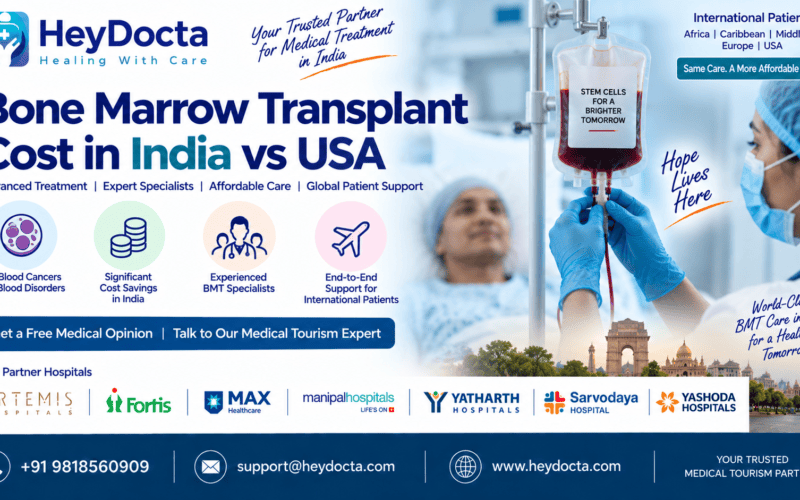
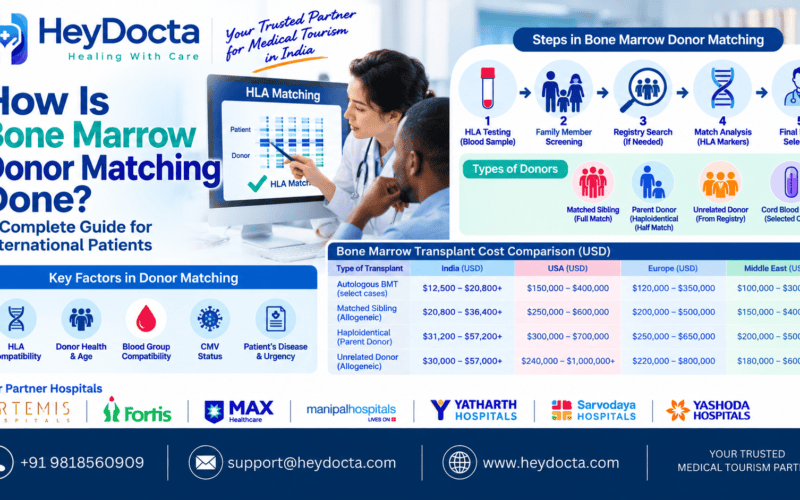
Bone Marrow Transplant and GVHD Treatment Cost in India vs Other Countries
GVHD may increase the overall cost of transplant care because patients may require additional medicines, investigations, hospitalisation and long-term follow-up.
Some Hospitals currently lists a general BMT cost range of approximately USD15000 to 31000 in India, with the actual cost varying according to hospital, location, room category and complications.
For comparison, the U.S. Health Resources and Services Administration states that an unrelated bone marrow or cord blood transplant can cost approximately USD 240,000 to more than USD 1 million, including the transplant and up to six months of care. Donor-search costs may add USD 10,000 to more than USD 50,000 in some situations.
| Cost Factor | India | USA |
| General BMT cost | Approx. USD 15000–31000 * | USD 240,000–1 million+* for unrelated transplant and up to 6 months care |
| GVHD medicines | Patient-specific | Patient-specific |
| Hospitalisation | Depends on complications | May be substantial |
| Investigations | Depends on clinical needs | Depends on clinical needs |
| Long-term follow-up | Patient-specific | Patient-specific |
Published indicative ranges, not individual quotations. Actual costs vary by transplant type, donor, medicines, complications, hospital stay and follow-up requirements. Direct international comparisons can also be misleading because treatment packages include different services.
Step-by-Step GVHD Care Journey in India
Step 1: Medical Record Review
The transplant team reviews the patient’s diagnosis, transplant type, donor information, medicines and current symptoms.
Step 2: Specialist Assessment
Doctors assess the skin, liver, gastrointestinal system and other potentially affected organs.
Step 3: Diagnostic Testing
Blood tests, imaging, stool tests, organ-specific assessments or biopsy may be performed when necessary.
Step 4: Treatment Planning
The medical team determines whether symptoms are consistent with GVHD and develops an individualised treatment plan.
Step 5: Monitoring
Patients may require frequent follow-up to monitor GVHD activity, treatment response, infections and medication side effects.
Step 6: Long-Term Follow-Up
Chronic GVHD can require extended monitoring. Patients returning to Nigeria, Kenya, Ghana, Cameroon, Guyana, Jamaica, Europe, the Middle East or the USA may need coordinated follow-up between the Indian transplant centre and their local doctors.
Medical Visa and Travel Support
International patients travelling to India for BMT or GVHD-related care need appropriate medical documentation. India’s official e-Visa information states that an e-Medical Visa application requires a passport bio page and a letter from the Indian hospital containing the suggested or tentative admission date.
HeyDocta can assist with:
- Medical opinion coordination
- Hospital appointment coordination
- Treatment-cost estimates
- Medical visa documentation support
- Travel and accommodation coordination
- Airport assistance
- Communication with the hospital
- Follow-up coordination
HeyDocta acts as a medical tourism facilitator and does not replace the treating medical team. HeyDocta does not add a separate service fee to the patient’s hospital treatment cost.
FAQs About Signs of GVHD
1. What are the first signs of GVHD?
Common early signs can include a new skin rash, diarrhea, nausea, vomiting or abnormal liver tests. However, symptoms can have other causes and require medical assessment.
2. Can GVHD occur after an autologous transplant?
Classic GVHD is associated with an allogeneic transplant, where stem cells come from a donor. It is not the typical complication of an autologous transplant using the patient’s own cells.
3. Is GVHD curable?
GVHD can sometimes be controlled or enter remission, but outcomes vary widely. Some patients require prolonged treatment and monitoring. The treating transplant specialist should explain the individual prognosis.
4. How long after BMT can GVHD occur?
GVHD can develop during the first few months after an allogeneic transplant or later. Chronic GVHD commonly appears months after transplant, but the timing can vary.
5. Can GVHD cause diarrhea?
Yes. Diarrhea is a recognised gastrointestinal manifestation of acute GVHD, but infections and medicines can cause similar symptoms. Persistent diarrhea requires prompt evaluation.
6. Can GVHD affect the eyes?
Yes. Chronic GVHD can cause dry, gritty or painful eyes and sensitivity to light.
7. Can GVHD be treated in India?
Yes. Specialised BMT and hematology centres in India manage allogeneic transplant complications, including GVHD. Treatment depends on the type and severity of GVHD and the organs involved.
Conclusion
Recognising the signs of Graft-versus-Host Disease (GVHD) is an important part of recovery after an allogeneic bone marrow or stem cell transplant. Skin rashes, diarrhea, liver abnormalities, mouth problems, dry eyes, joint stiffness and breathing changes can all require medical assessment.
GVHD can resemble infection or medication side effects, so patients should not self-diagnose or change their medicines without medical advice. Early communication with the transplant team allows appropriate investigation and treatment.
For international patients considering BMT or GVHD care in India, HeyDocta can help coordinate medical opinions, partner hospitals, specialist appointments, treatment-cost information, visa assistance, travel arrangements and follow-up support.
Ready to discuss BMT or GVHD care in India? Contact HeyDocta.com for a free medical opinion, treatment-cost guidance and end-to-end medical tourism support.