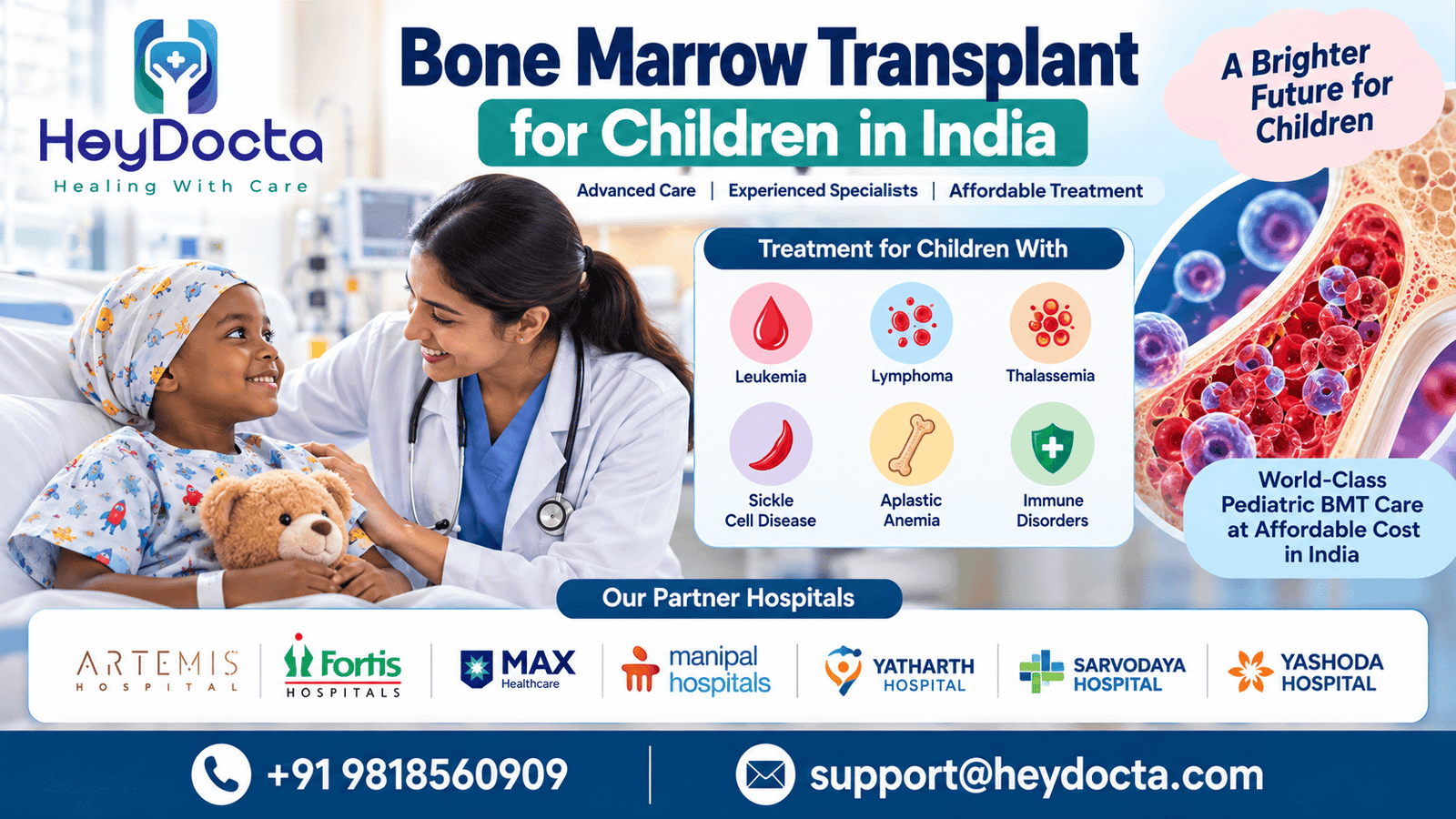
Bone marrow transplant for children in India can be an important treatment option for selected children with blood cancers, inherited blood disorders, bone-marrow failure and certain immune-system disorders. For families travelling from Nigeria, Ghana, Kenya, Zimbabwe, Cameroon, Guyana, Jamaica, the Middle East, Europe or the USA, India can offer specialised paediatric haematology and transplant services at potentially lower costs than many Western healthcare systems.
A child’s BMT journey is different from an adult transplant. Families need to consider the child’s diagnosis, donor availability, transplant type, infection-control facilities, paediatric intensive care, medicines, hospital stay and long-term follow-up.
Get a Free Medical Opinion: HeyDocta can coordinate medical records with partner hospitals, help obtain a specialist opinion and provide an estimated treatment plan and cost before travel.
What Is Bone Marrow Transplant for Children?
A bone marrow transplant, also called a stem cell transplant or hematopoietic stem cell transplant (HSCT), replaces damaged or diseased blood-forming stem cells with healthy stem cells. Depending on the condition, the cells may come from the child or from a suitable donor.
In children, BMT may be considered for selected conditions such as:
- Acute lymphoblastic leukemia (ALL)
- Acute myeloid leukemia (AML)
- Certain lymphomas
- Thalassemia
- Sickle cell disease
- Aplastic anemia
- Congenital bone-marrow failure syndromes
- Severe immune deficiencies
- Selected inherited or metabolic disorders
The decision depends on the child’s exact diagnosis, disease status, previous treatment, overall health and availability of an appropriate donor.
Why Do International Families Consider India for Pediatric BMT?
Families travelling from Africa, the Middle East, Europe and the USA may consider India because of:
- Specialised paediatric hematology services
- Bone marrow transplant programmes
- Access to donor and HLA testing
- Multidisciplinary medical teams
- Paediatric intensive care support
- International patient services
- Potentially lower treatment costs than the USA and some European private-care pathways
However, cost should not be the only deciding factor. For a child undergoing BMT, transplant expertise, infection prevention, emergency support and long-term follow-up are equally important.
Pediatric Bone Marrow Transplant Specialists in India
A paediatric BMT programme should involve specialists experienced in childhood blood disorders and transplant medicine.
Dr. Gaurav Dixit, Head – Haematology Oncology & Bone Marrow Transplant at Artemis Hospitals, Gurugram, lists paediatric haemato-oncology and BMT among his specialties. His profile also lists experience with autologous, matched sibling allogeneic, haploidentical and matched unrelated donor transplantation.
Artemis Hospitals’ paediatric haemato-oncology and BMT service includes specialists from paediatric haematology, oncology and transplant care, with services including chemotherapy, bone marrow examination and transplantation, as well as paediatric intensive-care support.
The right specialist should be selected according to the child’s diagnosis and treatment requirements rather than simply by reputation or cost.
Types of Bone Marrow Transplant for Children
Autologous Transplant
The child’s own stem cells are collected and stored before intensive treatment and then returned to the child.
Allogeneic Transplant
Stem cells come from another person. The donor may be a matched sibling, another family member or an unrelated donor.
Haploidentical Transplant
A partially matched family donor may be used when a fully matched donor is unavailable and the child’s medical team considers this approach appropriate.
Matched Unrelated Donor Transplant
A suitable unrelated donor may be identified through donor registries when there is no appropriate family donor.
HLA testing is an important part of donor selection. In general, closer HLA matching can improve the likelihood of successful donor-cell acceptance.
Bone Marrow Transplant Cost for Children in India
Treatment cost is a major concern for international families. However, paediatric BMT costs vary considerably according to the transplant type, diagnosis, donor requirements, medicines, hospital stay and complications.
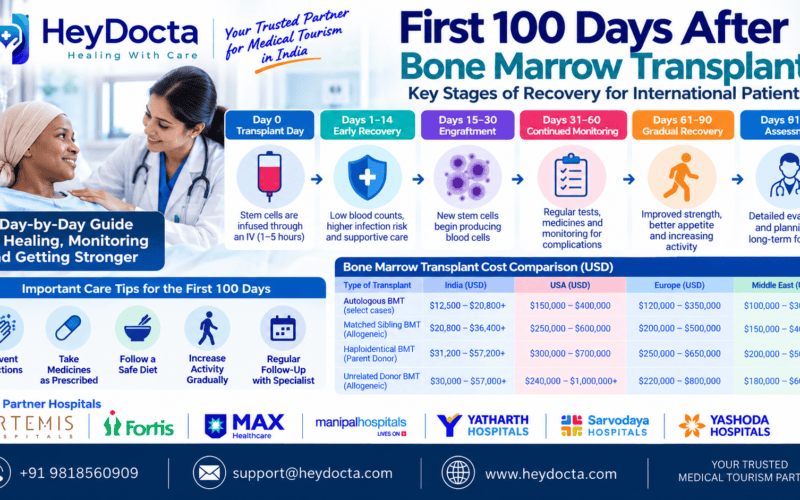
A commonly published planning range for BMT in India is approximately USD 15000–31000 or more, although a child’s final package can be outside this range depending on individual circumstances.
For an international family, the complete budget may also include:
- Pre-transplant investigations
- HLA and donor testing
- Conditioning therapy
- Stem-cell collection
- Hospitalisation
- Medicines
- Blood and platelet transfusions
- Central-line care
- ICU treatment if required
- Infection management
- Follow-up investigations
- Accommodation outside the hospital
- Flights and local transportation
Therefore, families should request a written, child-specific estimate rather than relying on a general online price.
India vs USA: Pediatric BMT Cost Comparison
The difference in healthcare costs can be significant.
| Location | Indicative Cost | Important Considerations |
| India | USD 15000–31000+ | Varies by transplant type, hospital and complications |
| USA | US$240,000 to over US$1 million for an unrelated transplant and up to 6 months of care | Insurance, donor search and additional care affect total cost |
| Europe | Varies considerably | Public/private healthcare systems and eligibility affect patient costs |
The U.S. Health Resources and Services Administration reports that an unrelated bone marrow or cord blood transplant can cost US$240,000 to more than US$1 million, including the transplant and up to six months of care. Donor-search costs can also be significant.
This illustrates why international families often compare India with their home-country treatment costs. However, the comparison should always be based on the complete treatment pathway, not just the transplant procedure.
What Is Included in a Pediatric BMT Treatment Plan?
Before travelling to India, parents should ask the hospital for a detailed estimate covering:
- Diagnosis confirmation
- Pre-transplant testing
- HLA testing
- Donor evaluation
- Conditioning therapy
- Stem-cell collection
- Transplant procedure
- Hospital room
- Medicines
- Blood products
- Infection monitoring
- ICU support if required
- Post-transplant investigations
- Follow-up consultations
This helps families avoid unexpected expenses.
Need help comparing pediatric BMT options in India? HeyDocta can coordinate your child’s medical records with suitable partner hospitals and help you understand treatment plans and estimated costs before travel.
How Does Pediatric Bone Marrow Transplant Work?
Step 1: Medical Record Review
Parents share the child’s diagnosis, blood reports, bone marrow reports, genetic tests, imaging and previous treatment records.
Step 2: Specialist Consultation
A paediatric hematologist/transplant specialist evaluates the child’s condition and determines whether transplantation is appropriate.
Step 3: Donor and HLA Evaluation
If an allogeneic transplant is planned, potential family donors can undergo HLA testing.
Step 4: Pre-Transplant Assessment
Children undergo investigations to determine whether they are medically fit for transplantation. These can include blood tests, heart and lung assessments, imaging and sometimes a bone marrow biopsy.
Step 5: Conditioning Therapy
Chemotherapy, with or without radiation depending on the treatment protocol, is given before the transplant. This prepares the body to receive the new stem cells.
Step 6: Stem-Cell Infusion
The stem cells are infused through a central venous line. The transplant itself is generally similar to a blood transfusion rather than an operation.
Step 7: Engraftment and Monitoring
The medical team monitors blood counts, infections, nutrition and other complications while the new cells begin producing healthy blood cells.
Recovery After Pediatric BMT
Recovery is gradual. Children may need to remain in hospital for several weeks while their immune system and blood counts recover. The NHS notes that full recovery after a stem cell or bone marrow transplant can take up to a year, with frequent follow-up appointments during recovery.
For children, follow-up may also involve monitoring:
- Growth and development
- Nutrition
- Immunisation requirements
- School reintegration
- Organ function
- Hormonal development
- Infection risk
- Graft-versus-host disease after donor transplantation
Long-term monitoring is particularly important because childhood transplant survivors can experience late effects involving growth, bones, organs and other systems.
Pediatric BMT Hospitals for International Patients in India
HeyDocta coordinates international patients with its partner hospitals, including:
- Artemis Hospital
- Fortis Hospitals
- Max Hospitals
- Manipal Hospital
- Yatharth Hospital
- Sarvodaya Hospital
- Yashoda Hospital
Hospital selection should be based on the child’s medical condition, paediatric transplant expertise, donor facilities, infection-control infrastructure, PICU availability, treatment cost and follow-up arrangements.
Medical Visa and Travel Support for Families
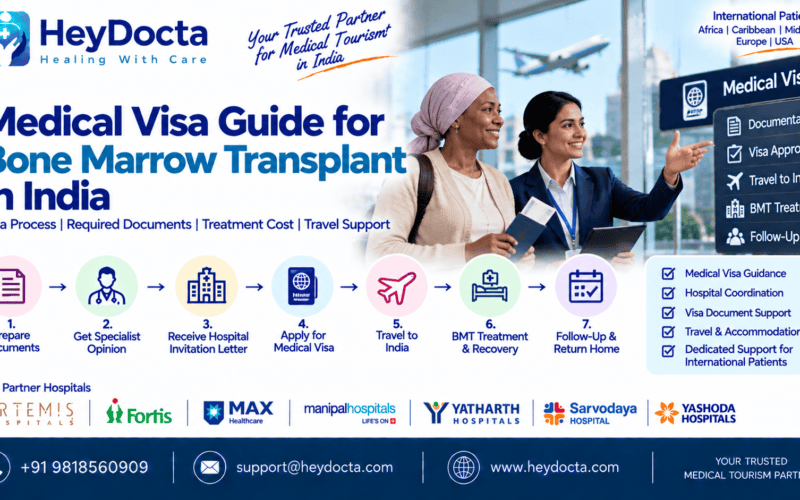
Travelling internationally with a child for BMT requires careful planning. HeyDocta can assist with:
- Medical record coordination
- Specialist consultation
- Hospital coordination
- Treatment-cost estimates
- Medical visa guidance
- Accommodation planning
- Airport assistance
- Local transportation
- Follow-up coordination
Parents should also plan for an accompanying family member and allow sufficient time in India because recovery and follow-up can extend beyond the initial hospital admission.
FAQs
Is bone marrow transplant safe for children?
BMT can involve significant risks, including infections, bleeding and treatment-related complications. Donor transplantation can also cause graft-versus-host disease. The medical team assesses the expected benefits and risks for each child.
How much does pediatric BMT cost in India?
A general planning range is around USD 15000–31000+, but the final cost depends on the child’s condition, transplant type, donor requirements, medicines, hospital stay and complications.
Which diseases in children may require BMT?
BMT may be used for selected leukemias, thalassemia, sickle cell disease, aplastic anemia, immune deficiencies, congenital bone-marrow failure and certain other inherited or blood disorders.
How long does a child stay in hospital after BMT?
The hospital stay can last several weeks, depending on engraftment, infections, complications and overall recovery.
Can parents be donors for their child?
In some situations, a parent may be considered as a partially matched donor. HLA testing and the child’s clinical situation determine whether a particular donor is appropriate.
How long should families stay in India?
The required stay varies by transplant type and recovery. Families should expect several weeks of intensive care and potentially additional time for outpatient monitoring before travelling home.
Can international children receive BMT in India?
Yes, eligible international patients can seek treatment in India. The child’s medical records should be reviewed by a transplant specialist before travel to determine suitability and treatment planning.
Conclusion
Bone marrow transplant for children in India can provide an option for families seeking specialised treatment for selected blood cancers, inherited blood disorders, bone-marrow failure and immune deficiencies. India may also offer a significant cost advantage compared with some international treatment destinations, but affordability should never replace careful evaluation of medical expertise, transplant facilities, infection control, paediatric intensive care and long-term follow-up.
For international families from Africa, the Middle East, Europe, the USA and other regions, early medical evaluation is essential. A specialist can determine whether BMT is appropriate, identify the potential transplant type and provide a personalised treatment and cost estimate.
Contact HeyDocta.com for a medical opinion and help coordinating your child’s treatment in India. We can assist with partner-hospital coordination, treatment-cost estimates, medical visa guidance, accommodation and travel support. HeyDocta does not add a separate service fee to the patient’s hospital treatment cost.