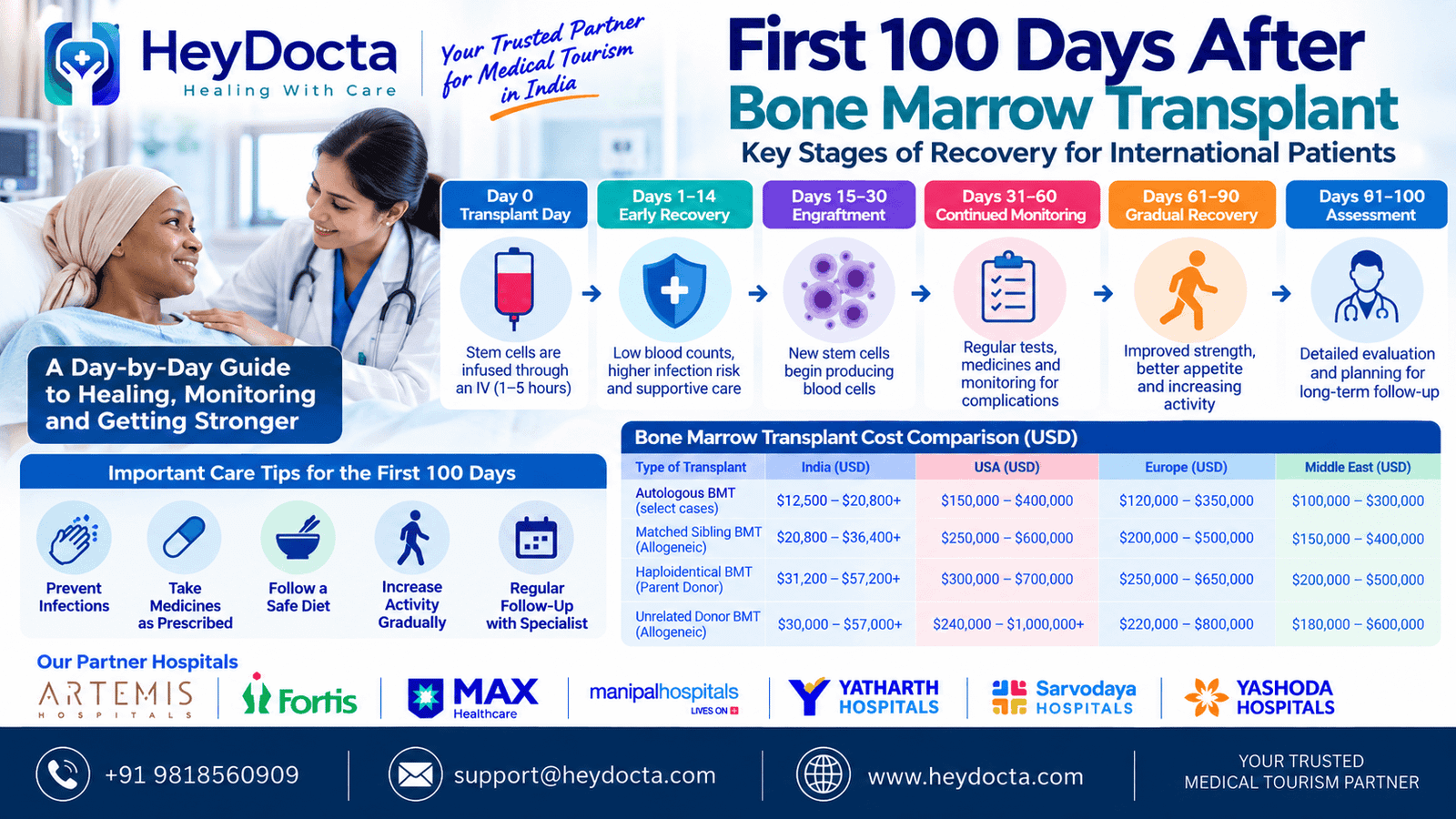
The first 100 days after bone marrow transplant are an important period of recovery and close medical monitoring. During this time, doctors monitor blood-count recovery, infections, engraftment, medication effects and, after an allogeneic transplant, possible graft-versus-host disease (GVHD). The exact experience varies according to the patient’s disease, transplant type, conditioning treatment and overall health.
For international patients travelling from Nigeria, Ghana, Kenya, Cameroon, Zimbabwe, Guyana, Jamaica, the Middle East, Europe and the USA, planning the first 100 days is especially important because it can affect the length of stay in India, accommodation, caregiver arrangements, follow-up appointments and overall treatment costs.
HeyDocta helps international patients coordinate medical opinions, hospitals, treatment estimates, medical visa guidance, travel arrangements and follow-up communication.
Get a Free Medical Opinion: Share the patient’s medical reports with HeyDocta to understand the transplant pathway, expected monitoring and estimated treatment cost in India.
Why Are the First 100 Days After Bone Marrow Transplant Important?
A bone marrow transplant does not finish when the stem cells are infused.
After transplantation, the patient’s blood-forming system needs time to recover. During the early period, blood counts can remain low and infection risk can be significant. After an allogeneic transplant, the medical team also watches for GVHD and other transplant-related complications.
The first 100 days generally involve:
- Frequent blood tests
- Monitoring for infections
- Blood and platelet transfusions when required
- Monitoring of stem-cell engraftment
- Medicines and supportive care
- Monitoring for GVHD after an allogeneic transplant
- Nutritional support
- Medication adjustments
- Regular specialist consultations
Day 100 is an important follow-up milestone, but it does not mean that recovery is complete.
First 100 Days After Bone Marrow Transplant: Timeline
| Period | Main Focus |
| Day 0 | Stem-cell infusion |
| Days 1–14 | Intensive monitoring and supportive care |
| Days 15–30 | Engraftment and blood-count recovery |
| Days 31–60 | Continued infection and complication monitoring |
| Days 61–90 | Gradual recovery and follow-up |
| Days 91–100 | Detailed assessment and longer-term care planning |
These are general stages. Some patients recover faster, while complications may require longer hospitalisation or additional treatment.
Days 1–14: Early Recovery
The first two weeks are often focused on managing the effects of conditioning treatment and waiting for the transplanted cells to begin producing new blood cells.
Patients may experience:
- Fatigue
- Nausea
- Loss of appetite
- Mouth sores
- Low blood counts
- Increased infection risk
- Need for blood or platelet transfusions
The NCI lists nausea, vomiting, fatigue, loss of appetite, mouth sores and hair loss among possible short-term effects of stem-cell transplantation.
Infection prevention is particularly important during periods of severe immune suppression. Depending on the patient’s risk and transplant protocol, doctors may use preventive antiviral, antibacterial or antifungal medicines and monitor closely for signs of infection.
Days 15–30: Engraftment
During this period, doctors closely monitor for engraftment.
Engraftment occurs when transplanted stem cells begin producing new blood cells. The NCI notes that blood counts are checked frequently during recovery as new stem cells begin producing blood cells.
The medical team may monitor:
- White blood cell recovery
- Neutrophil counts
- Platelet recovery
- Red blood cell levels
- Signs of infection
- Kidney and liver function
- Medication levels
Engraftment timing varies between patients and transplant types, so an exact day should not be assumed.
Days 31–60: Continued Monitoring
After initial engraftment, the patient’s care continues.
Blood counts may be improving, but the immune system remains vulnerable. Patients may still require frequent hospital visits or remain close to the transplant centre.
Doctors may monitor for:
- Bacterial, viral or fungal infections
- GVHD
- Medication side effects
- Poor blood-count recovery
- Nutritional problems
- Organ complications
For allogeneic transplantation, GVHD is a particularly important concern. Acute GVHD commonly affects the skin, liver and gastrointestinal tract, although other organs can also be involved.
Patients should promptly report symptoms such as fever, rash, persistent diarrhoea, vomiting, jaundice or other new symptoms to their transplant team.
Days 61–90: Gradual Recovery
During this stage, some patients gradually regain strength, appetite and ability to perform everyday activities.
However, recovery is still ongoing.
The medical team may continue:
- Blood tests
- Medication monitoring
- Infection surveillance
- GVHD assessment
- Nutritional review
- Physical activity guidance
- Specialist consultations
Patients should not assume that feeling better means that all restrictions can be stopped. The transplant team determines when activities, food choices, travel and social contact can safely be increased.
Days 91–100: The Day-100 Milestone
Around Day 100, the transplant team may conduct a detailed assessment of the patient’s recovery.
Depending on the disease and transplant type, evaluation may include:
- Blood counts
- Kidney and liver tests
- Infection testing
- Assessment for GVHD
- Medication review
- Donor chimerism testing where appropriate
- Disease-status evaluation
- Review of future follow-up requirements
Day 100 is frequently used as an important clinical milestone in transplant care and research. For example, NCI transplant studies commonly assess acute GVHD, engraftment and other outcomes at Day 100.
However, Day 100 is not the end of transplant recovery. Immune recovery can continue for many months and, after allogeneic transplantation, potentially 1–2 years.
What Is GVHD During the First 100 Days?
GVHD stands for graft-versus-host disease. It can occur after an allogeneic transplant when donor immune cells recognise the recipient’s tissues as foreign.
Acute GVHD commonly occurs within the first 100 days, although modern classification does not rely only on the day of onset. Symptoms may involve:
- Skin
- Liver
- Gastrointestinal tract
- Mouth and other organs
The NCI notes that acute GVHD can present with skin, liver and gastrointestinal involvement.
Not every patient develops GVHD, and the transplant team uses specific preventive medicines and monitoring strategies according to the transplant protocol.
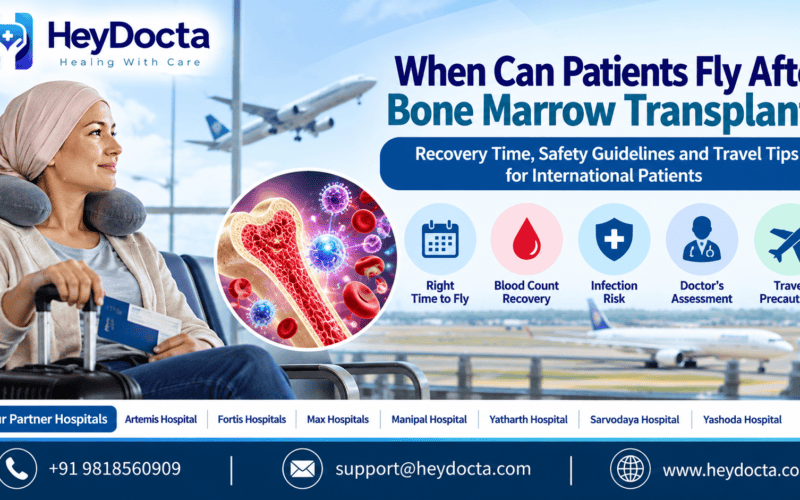
Can International Patients Return Home Before Day 100?
Possibly, but the decision must be made by the treating transplant team.
The NCI notes that patients without problems may sometimes return home around 100 days after receiving donor stem cells, but they still need close follow-up with an experienced transplant doctor.
For international patients, returning home depends on factors such as:
- Blood-count recovery
- Infection status
- GVHD or other complications
- Medication requirements
- Need for transfusions
- Access to specialist follow-up at home
- Distance from the transplant centre
- Doctor’s assessment of fitness for travel
Patients should not book a return flight based only on a standard Day-100 timeline.
First 100 Days: Estimated Bone Marrow Transplant Cost in India
The cost of BMT does not end with the stem-cell infusion.
Expenses during the first 100 days may include:
- Hospitalisation
- Medicines
- Blood and platelet transfusions
- Diagnostic tests
- Infection treatment
- GVHD treatment if required
- Follow-up consultations
- Additional procedures
- Accommodation after discharge
- Local transportation
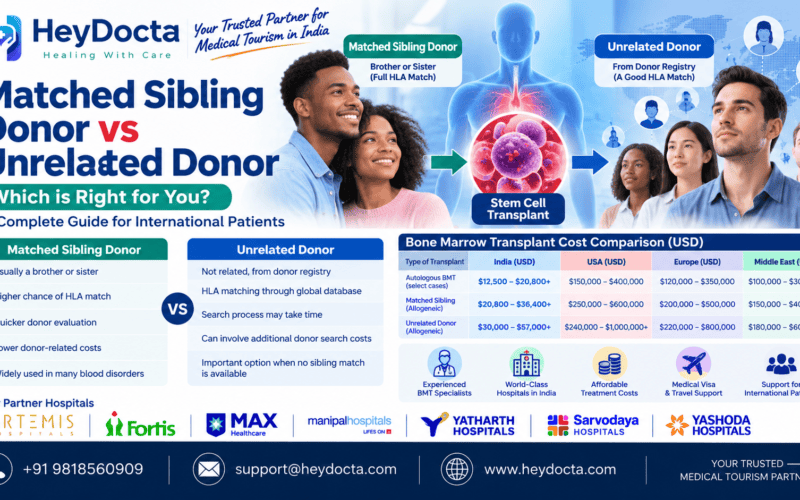
Some Hospitals currently publishes a general BMT cost in India of approximately USD15000–31000 noting that the actual cost varies according to hospital, location, room category and complications.
This is a general planning range rather than a fixed package price.
India vs USA: Cost Perspective
The U.S. Health Resources and Services Administration reports that an unrelated bone marrow or cord blood transplant can cost USD 240,000 to more than USD 1 million, including the transplant and up to six months of care. Donor searches may add USD 10,000 to more than USD 50,000 in some circumstances.
| Cost Factor | India | USA |
| General BMT planning range | USD 15000–31000 * | — |
| Unrelated BMT + up to 6 months care | Hospital-specific | USD 240,000 to >USD 1 million** |
| Donor search | Depends on centre/registry | USD 10,000–50,000+ in some cases |
| Extended complications | Additional | Can substantially increase costs |
| Accommodation/travel | Additional | Additional depending on location |
HRSA’s U.S. range includes transplant and up to six months of care and is not directly comparable with every Indian hospital package.
Costs in Europe, the Middle East and African countries vary considerably based on healthcare systems, insurance coverage, hospital and transplant type.
Talk to Our Medical Tourism Expert: HeyDocta can help international patients obtain an individual hospital estimate and understand what may be included in the quoted transplant package.
Bone Marrow Transplant Specialists in India
Dr. Gaurav Dixit is Head – Haematology Oncology & Bone Marrow Transplant at Artemis Hospitals, Gurugram. His official profile lists 20 years of experience and specialties including BMT, haematopoietic stem cell transplant, haematology and oncology. His listed procedures include autologous transplant, matched sibling allogeneic transplant, haploidentical transplant and matched unrelated donor transplant.
Patients should choose a transplant team according to their diagnosis, donor situation, transplant protocol and individual medical assessment.
HeyDocta’s partner hospital network includes Artemis Hospitals, Fortis Hospitals, Max Hospitals, Manipal Hospital, Yatharth Hospital, Sarvodaya Hospital and Yashoda Hospital.
Medical Visa and Travel Support for International Patients
International patients travelling to India for BMT should plan medical documentation and visa requirements before departure.
The Government of India’s e-Visa information states that an e-Medical Visa application requires a scanned passport bio page and a hospital letter from India containing the suggested or tentative admission/treatment date.
HeyDocta can assist with:
- Medical report sharing
- Hospital coordination
- Specialist consultation
- Treatment-cost estimates
- Donor coordination
- Medical visa documentation guidance
- Airport and local travel support
- Accommodation coordination
- Follow-up communication
HeyDocta provides medical-tourism facilitation without adding a separate service fee to the patient’s hospital treatment cost.
How to Prepare for the First 100 Days
Patients and caregivers should plan carefully for this period.
Medical Planning
Keep:
- All medical reports
- Medication lists
- Hospital discharge documents
- Blood-test records
- Emergency contact details
- Transplant team’s contact information
Lifestyle and Infection Prevention
Follow the transplant team’s instructions regarding:
- Hand hygiene
- Food safety
- Visitors
- Crowded places
- Physical activity
- Medicines
- Masks or other protective measures when advised
Do not change medicines or dietary restrictions without discussing them with the transplant team.
FAQs About the First 100 Days After BMT
1. Why are the first 100 days after BMT important?
They are an important period for monitoring engraftment, blood-count recovery, infections and, after allogeneic transplantation, GVHD and other complications.
2. What happens around Day 100 after bone marrow transplant?
The transplant team may conduct a detailed assessment of blood counts, organ function, disease status, infections, GVHD and other recovery factors.
3. Can I go home before Day 100?
Some patients may return home earlier if their transplant team considers it safe. However, patients need continued specialist follow-up after leaving the transplant centre.
4. How long does immune recovery take?
Immune recovery can take several months after autologous transplantation and around 1–2 years after allogeneic transplantation.
5. What symptoms should be reported urgently?
Fever, new rash, persistent diarrhoea, vomiting, breathing problems, jaundice or other significant new symptoms should be reported promptly to the treating transplant team.
6. How much does BMT cost in India?
Some Hospitals currently publishes a general BMT range of approximately USD15000–31000 but actual costs depend on transplant type, hospital, disease and complications.
7. Can HeyDocta help during the first 100 days?
Yes. HeyDocta can coordinate hospital communication, follow-up arrangements, accommodation and travel-related support for international patients.
Conclusion
The first 100 days after bone marrow transplant are a critical period of monitoring and gradual recovery. The early weeks focus heavily on blood-count recovery, engraftment and infection prevention, while the following weeks involve monitoring for complications and supporting the patient’s return to greater stability.
Day 100 is an important clinical milestone, but it does not represent the end of recovery. Immune-system recovery, particularly after an allogeneic transplant, can continue for many months or longer.
For international patients, planning should include not only the transplant cost but also follow-up care, accommodation, medicines, travel, caregiver expenses and possible additional treatment.
Get Treatment Cost from Indian Hospitals: Contact HeyDocta.com for medical report review, specialist consultation, hospital coordination, treatment-cost estimates, donor support, medical visa guidance, travel arrangements and continued assistance throughout your bone marrow transplant journey in India.