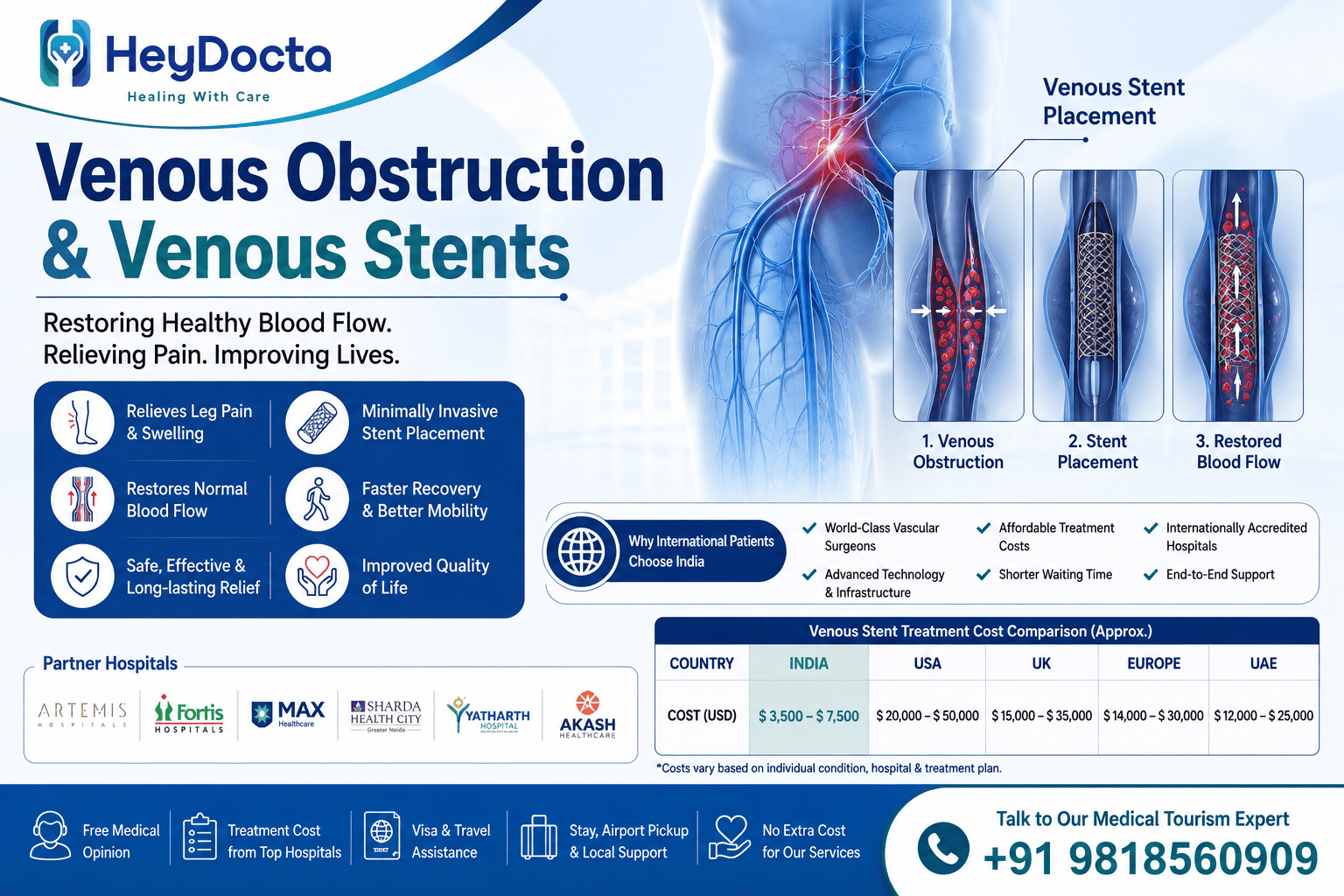
Venous obstruction can significantly affect your quality of life, causing persistent leg swelling, pain, skin discoloration, venous ulcers, and difficulty walking or standing for long periods. If left untreated, blocked veins can lead to chronic venous insufficiency and serious complications. Modern venous stenting offers a minimally invasive solution that restores blood flow and relieves symptoms without major surgery. Patients from Nigeria, Kenya, Ghana, Zimbabwe, Cameroon, Guyana, Jamaica, the Middle East, Europe, and the USA increasingly choose India because of its experienced vascular specialists, world-class hospitals, and affordable treatment costs.
If you have been diagnosed with venous obstruction or have been advised to undergo venous stenting, heydocta.com helps you connect with India’s leading vascular specialists. Receive expert opinions, treatment recommendations, and transparent cost estimates from top hospitals without additional service charges.
What Is Venous Obstruction?
Venous obstruction occurs when one or more veins become narrowed or blocked, preventing normal blood flow back to the heart. The blockage can develop in the deep veins of the pelvis, abdomen, or legs.
Common causes include:
- Deep Vein Thrombosis (DVT)
- Post-thrombotic syndrome
- Compression of veins (May-Thurner Syndrome)
- Scar tissue inside veins
- Congenital venous abnormalities
- Previous vascular surgery
- Pelvic tumors causing compression
Without treatment, blood pools in the legs, increasing pressure within the veins and leading to chronic symptoms.
Symptoms of Venous Obstruction
Symptoms vary depending on the location and severity of the blockage.
Common symptoms include:
- Persistent leg swelling
- Leg heaviness
- Chronic leg pain
- Skin discoloration
- Varicose veins
- Venous ulcers
- Tightness in the calf
- Difficulty standing for long periods
- Recurrent Deep Vein Thrombosis
Patients experiencing these symptoms should consult a vascular surgeon for proper evaluation.
Why International Patients Choose India for Venous Stenting
India has become a preferred destination for advanced vascular interventions because patients receive internationally recognized care at significantly lower costs.
Advantages include:
- Highly experienced vascular surgeons
- Modern catheterization laboratories
- Advanced imaging technology
- Latest venous stent systems
- Minimally invasive procedures
- International patient departments
- Short waiting times
- Affordable treatment packages
- English-speaking healthcare professionals
Many patients who face long waiting periods or high treatment expenses in their home countries choose India for faster access to specialized care.
Get Treatment Cost from Top Indian Hospitals
heydocta.com coordinates consultations with India’s leading vascular specialists and partner hospitals, helping international patients compare treatment plans and estimated costs before traveling.
Dr. Bishwarup Purkayastha – Leading Vascular Surgeon
Dr. Bishwarup Purkayastha is one of India’s leading vascular surgeons with extensive experience in diagnosing and treating complex venous disorders. He specializes in minimally invasive vascular procedures designed to restore blood circulation while reducing recovery time.
His expertise includes:
- Venous stenting
- Peripheral angioplasty
- Deep vein interventions
- Peripheral arterial disease treatment
- Hybrid vascular procedures
- Limb salvage surgery
- Endovascular therapies
International patients value his evidence-based treatment approach and comprehensive vascular assessment.
What Are Venous Stents?
Venous stents are specially designed metal mesh tubes placed inside narrowed or blocked veins to keep them open permanently.
Unlike arterial stents, venous stents are larger and specifically engineered to withstand compression while maintaining continuous blood flow.
Venous stenting is commonly used to treat:
- Iliac vein obstruction
- Inferior vena cava obstruction
- May-Thurner Syndrome
- Chronic venous obstruction
- Post-thrombotic syndrome
Benefits of Venous Stenting
Compared with open surgery, venous stenting offers several advantages.
These include:
- Minimally invasive procedure
- Small skin puncture
- No large surgical incision
- Faster recovery
- Less postoperative discomfort
- Short hospital stay
- Improved blood circulation
- Relief from swelling and pain
- Better healing of venous ulcers in appropriate patients
Individual outcomes depend on the severity of disease, overall health, and adherence to follow-up care.
Diagnostic Tests Before Treatment
Accurate diagnosis is essential before planning treatment.
Your vascular specialist may recommend:
- Doppler ultrasound
- CT Venography
- MR Venography
- Venography
- Intravascular Ultrasound (IVUS)
- Blood clotting profile
- Routine blood investigations
These tests help determine the location and extent of venous blockage.
Venous Stenting Procedure
The procedure is usually performed under local anesthesia with sedation.
Step-by-step process:
- Small puncture is made in the vein.
- A catheter is guided to the blocked vein.
- Contrast imaging identifies the narrowed segment.
- Balloon angioplasty widens the vein.
- A venous stent is deployed.
- Blood flow is confirmed.
- The catheter is removed.
The procedure generally takes one to three hours depending on complexity.
Cost of Venous Stenting in India
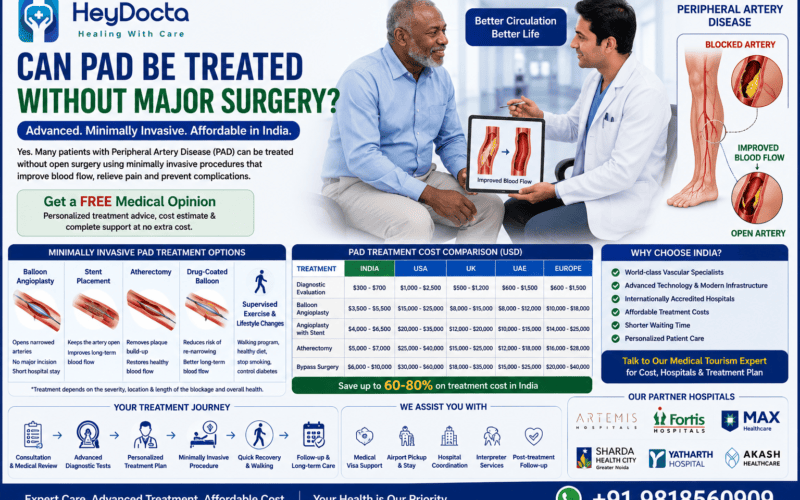
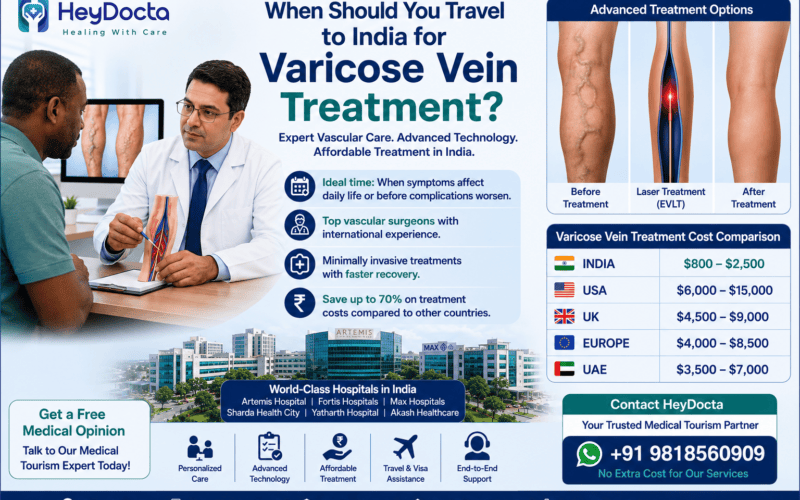
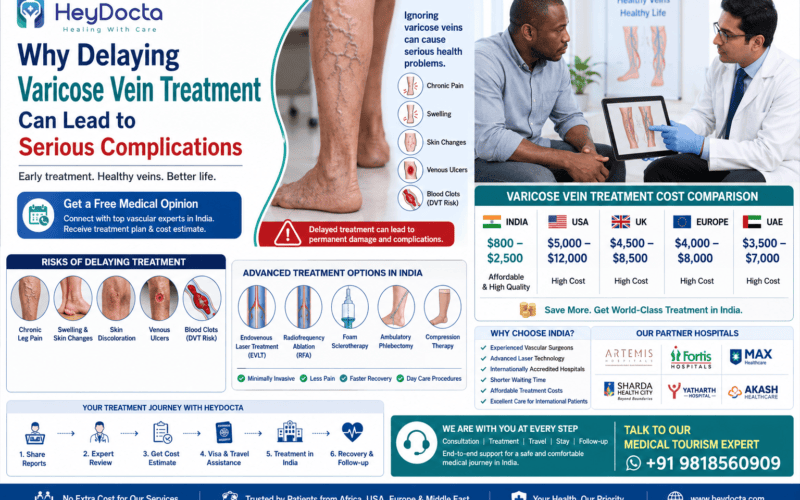
India offers advanced vascular treatment at significantly lower prices than many Western countries.
| Country | Estimated Cost (USD) |
|---|---|
| India | $3,500–$7,500 |
| USA | $20,000–$50,000 |
| UK | $15,000–$35,000 |
| Europe | $14,000–$30,000 |
| UAE | $12,000–$25,000 |
The total treatment cost depends on:
- Number of stents required
- Hospital category
- Complexity of obstruction
- Imaging requirements
- ICU stay if needed
- Length of hospitalization
Even after including airfare and accommodation, India remains one of the most affordable destinations for venous stenting.
Best Hospitals in India for Venous Obstruction Treatment
India has internationally recognized hospitals with dedicated vascular surgery departments.
Our partner hospitals include:
- Artemis Hospital
- Fortis Hospitals
- Max Hospitals
- Sharda Health City
- Yatharth Hospital
- Akash Healthcare
These hospitals provide:
- Advanced vascular imaging
- Hybrid operating rooms
- International patient services
- Multidisciplinary care
- Comprehensive rehabilitation support
Treatment Journey for International Patients
Step 1: Online Medical Review
Patients share:
- Medical reports
- Doppler scans
- CT or MR Venography
- Previous treatment records
The vascular specialist reviews the case and recommends suitable treatment.
Step 2: Cost Estimate
heydocta.com provides treatment estimates from leading hospitals to help patients make informed decisions.
Step 3: Medical Visa Assistance
Our team supports patients with:
- Hospital invitation letters
- Visa documentation
- Appointment scheduling
- Travel planning
Step 4: Arrival in India
Patients receive assistance with:
- Airport pickup
- Accommodation arrangements
- Hospital admission
- Local support
Step 5: Procedure
The vascular intervention is performed using minimally invasive techniques.
Step 6: Recovery
Patients receive:
- Pain management
- Blood thinner guidance
- Compression therapy recommendations
- Walking instructions
- Follow-up planning
Medical Visa and Travel Support
heydocta.com simplifies medical travel by providing:
- Hospital coordination
- Doctor appointments
- Visa assistance
- Hotel booking support
- Airport transfers
- Interpreter assistance when required
- Post-treatment follow-up coordination
Patients receive complete support without additional facilitator fees.
Recovery After Venous Stenting
Recovery is generally quicker than traditional open vascular surgery.
Typical recovery timeline:
| Recovery Stage | Duration |
|---|---|
| Hospital stay | 1–2 days |
| Walking | Same day or next day |
| Return to light activities | 3–7 days |
| Return to normal routine | 1–2 weeks |
Patients should:
- Take prescribed blood-thinning medication
- Wear compression stockings if advised
- Stay physically active
- Attend follow-up appointments
- Maintain hydration
- Follow lifestyle recommendations
Recovery varies depending on individual health and the extent of venous disease.
Why Choose heydocta.com?
heydocta.com is a trusted medical tourism facilitator offering:
- Free medical opinion
- Access to experienced vascular surgeons
- Coordination with leading hospitals
- Transparent treatment estimates
- Medical visa assistance
- Travel planning
- Accommodation support
- Follow-up coordination
- No extra cost to patients
Frequently Asked Questions
Is venous stenting a major surgery?
No. Venous stenting is a minimally invasive endovascular procedure performed through a small puncture rather than a large surgical incision.
How long does a venous stent last?
Venous stents are designed to remain in place permanently. Long-term success depends on regular follow-up and adherence to medical advice.
Is venous stenting painful?
Most patients experience minimal discomfort during the procedure due to local anesthesia and sedation.
Can venous stents treat leg swelling?
Many patients experience significant improvement in swelling and pain after successful restoration of blood flow. Results vary depending on the underlying condition.
How long should international patients stay in India?
Most patients remain in India for approximately 7–14 days for treatment, recovery, and follow-up evaluation.
Are venous stents safe?
Venous stenting is a well-established procedure when performed by experienced vascular specialists. Every medical procedure carries risks, which your treating doctor will discuss before treatment.
Can I travel after venous stenting?
Most patients can travel after receiving clearance from their treating vascular surgeon, following an appropriate recovery period.
Conclusion
Venous obstruction can significantly affect mobility and daily life, but modern venous stenting offers an effective minimally invasive treatment for many patients. India has become a trusted destination for international patients because of its experienced vascular surgeons, advanced medical technology, internationally recognized hospitals, and affordable treatment costs. Patients benefit from high-quality care, shorter waiting times, and comprehensive medical tourism support throughout their treatment journey.
If you have been diagnosed with venous obstruction, chronic leg swelling, or have been advised to undergo venous stenting, heydocta.com can help you connect with leading vascular surgeons in India. Our team will arrange expert consultations, provide transparent treatment cost estimates, coordinate with top hospitals, assist with medical visas and travel, and support you throughout your medical journey—all at no additional cost.