
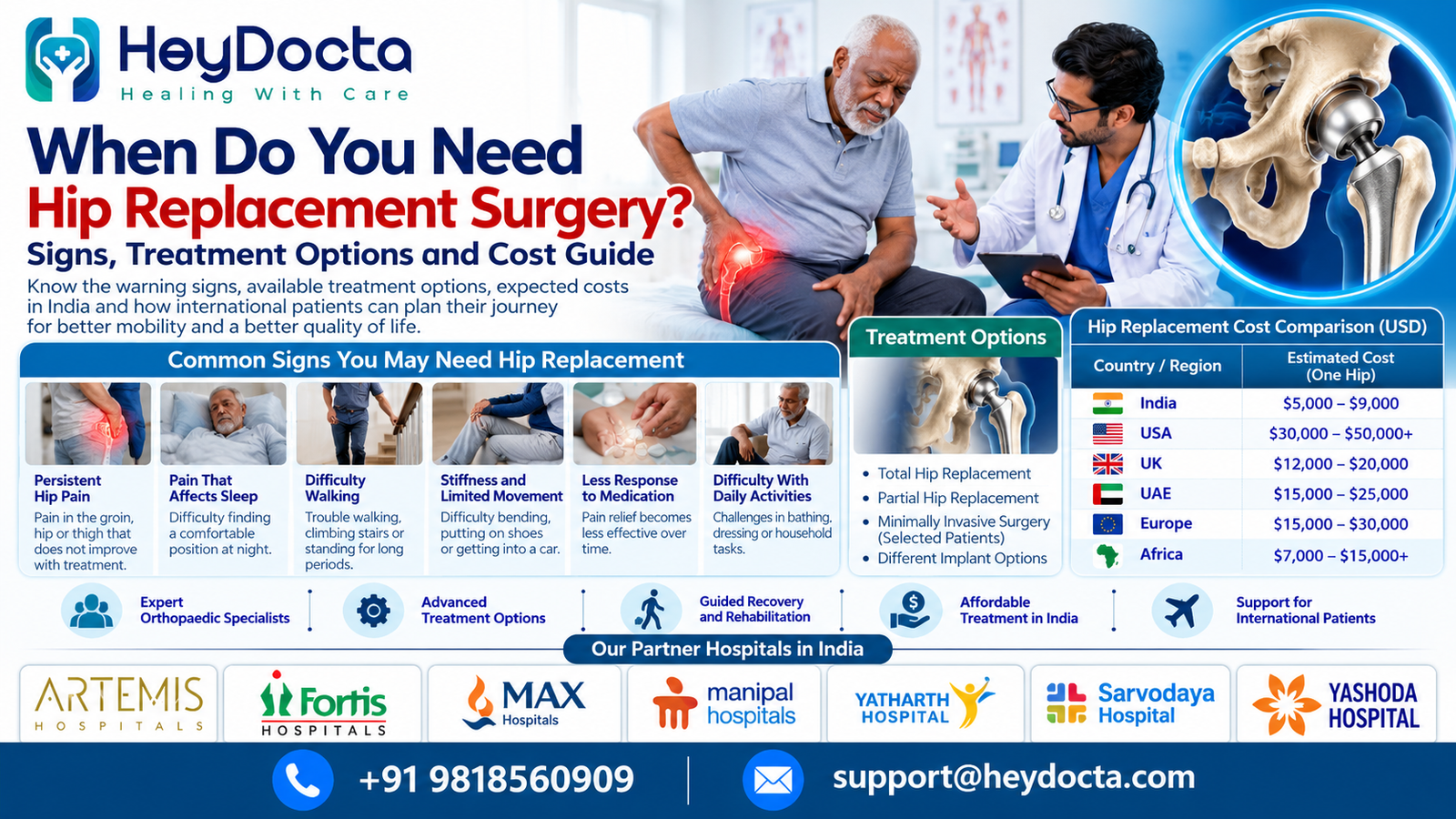
When do you need hip replacement surgery? It may be recommended when persistent hip pain, stiffness, and reduced mobility interfere with daily life and non-surgical treatments no longer provide enough relief. For patients from Nigeria, Ghana, Kenya, Zimbabwe, Cameroon, Guyana, Jamaica, the Middle East, the USA, and Europe, understanding when surgery is necessary and how much it costs can help with informed treatment planning.
Hip replacement is not required for every person with hip pain. The decision depends on the underlying condition, the extent of joint damage, the patient’s general health, and how much symptoms affect everyday activities. India is an option for international patients seeking orthopaedic treatment at comparatively affordable private healthcare prices.
Get a Free Medical Opinion: Contact HeyDocta to discuss your medical reports, explore suitable partner hospitals, and request a personalised treatment estimate before travelling to India.
What Is Hip Replacement Surgery?
Hip replacement, also called hip arthroplasty, is a procedure in which damaged parts of the hip joint are replaced with artificial components. In a total hip replacement, the damaged ball at the top of the thigh bone and the joint socket are replaced. In a partial hip replacement, only the ball component is replaced, which may be appropriate for selected conditions, particularly certain hip fractures.
The procedure aims to reduce pain, improve mobility, and help patients return to everyday activities. The expected benefit depends on the patient’s condition, rehabilitation, and overall health. Surgery cannot guarantee complete pain relief or restore every person to their previous activity level.
8 Signs You May Need Hip Replacement Surgery
Hip pain can have several causes, and these symptoms do not automatically mean that surgery is necessary. However, persistent or worsening symptoms should be assessed by an orthopaedic specialist.
1. Persistent Hip Pain
Pain in the groin, outer hip, or upper thigh that continues for weeks or months may indicate joint damage. Pain that persists despite appropriate treatment deserves medical assessment.
2. Pain That Affects Sleep
Hip pain that wakes you at night or makes it difficult to find a comfortable sleeping position can indicate significant joint problems, particularly when it occurs alongside stiffness and reduced movement.
3. Difficulty Walking
If you struggle to walk short distances, climb stairs, stand for long periods, or get in and out of a chair, hip joint damage may be affecting your independence.
4. Stiffness and Limited Movement
Difficulty bending, putting on shoes, crossing your legs, or getting into a car may be associated with arthritis or other hip conditions.
5. Reduced Response to Medication
Pain relief may become less effective as a condition progresses. Do not increase pain medication or continue taking it long-term without discussing the risks with your doctor.
6. Difficulty With Daily Activities
When bathing, dressing, shopping, working, or completing household tasks becomes increasingly difficult, a specialist may evaluate whether joint replacement could improve function.
7. Advanced Arthritis on Imaging
X-rays may show severe cartilage loss, narrowing of the joint space, bone changes, or other damage. Imaging findings must be considered alongside symptoms and physical examination.
8. Hip Damage From Other Conditions
Avascular necrosis, certain fractures, inflammatory arthritis, and previous hip injuries can damage the joint. Depending on the condition and its severity, hip replacement may be considered.
When Is Hip Replacement Actually Necessary?
Hip replacement is generally considered when three factors are present:
- The patient has substantial pain or disability.
- Examination and imaging support a diagnosis that may benefit from joint replacement.
- Non-surgical treatments have not provided sufficient relief, or the nature of the injury makes surgery the more appropriate option.
A doctor may first recommend physiotherapy, suitable pain management, activity modification, walking aids, or weight management where appropriate. Some patients improve with these measures and do not need surgery.
Urgent medical assessment is important after a fall or injury if you experience severe hip pain or cannot put weight on the leg. A sudden painful, hot, swollen joint accompanied by fever also requires prompt evaluation.
Common Conditions That May Require Hip Replacement
Osteoarthritis: The protective cartilage gradually wears down, causing pain, stiffness, and reduced movement. Hip replacement may be considered in advanced cases.
Avascular necrosis: Reduced blood supply damages the bone and may cause the femoral head to collapse. Joint replacement can be an option when damage is advanced.
Rheumatoid arthritis: This inflammatory condition can progressively damage the joint despite medication and other treatments.
Hip fractures: Certain fractures, especially in older adults, may be treated with partial or total hip replacement depending on the fracture pattern, bone quality, and patient’s health.
Post-traumatic arthritis: Previous injuries can cause lasting joint damage and arthritis that may eventually require replacement.
Why International Patients Consider Hip Replacement in India
Patients travelling from Africa, the Caribbean, the Middle East, the USA, and Europe may consider India for several reasons.
More Affordable Private Treatment
Private hip replacement costs in India are often lower than those in the USA, the UK, and some other destinations. Patients should compare complete quotations rather than advertised starting prices.
Access to Orthopaedic Care
Patients can seek specialist assessments, surgical opinions, implant recommendations, and rehabilitation plans according to their medical needs.
Treatment Coordination
Overseas patients often need help arranging consultations, hospital appointments, accommodation, travel planning, and follow-up care. HeyDocta helps coordinate these arrangements through its partner hospitals.
Hip Replacement Surgery Cost in India vs Other Countries
The cost depends on the hospital, surgeon, implant, surgical technique, length of stay, medical complexity, and rehabilitation requirements. The following figures are indicative private-treatment planning estimates in USD, not guaranteed quotations.
| Country or region | Estimated cost |
| India | $5,000–$9,000 |
| USA | $30,000–$50,000+ |
| UK | $12,000–$20,000 |
| UAE | $15,000–$25,000 |
| Western Europe | $15,000–$30,000 |
| Selected African destinations | $7,000–$15,000+ |
Actual prices vary considerably. African countries have different public and private healthcare systems, while European costs differ by country and insurance arrangements. These ranges are not directly comparable unless the same services are included.
What Can Change the Final Cost?
- Type and brand of implant
- Total versus partial hip replacement
- Surgeon and hospital fees
- Anaesthesia and diagnostic tests
- Length of hospital stay
- Physiotherapy and rehabilitation
- Management of complications
- Flights, accommodation, visas, and local transport
Ask for a written estimate that explains what is included and excluded. A lower price should not come at the expense of appropriate clinical assessment, implant suitability, infection prevention, or rehabilitation.
Request a Personalised Treatment Estimate: HeyDocta can help you coordinate a medical opinion and clarify the proposed treatment package with a partner hospital.
Hip Replacement Specialists and Partner Hospitals in India
Patients considering surgery can discuss their condition with Dr. Dhananjay Sabat at Yatharth Hospital, subject to confirmation by the hospital of his current availability and relevant hip replacement services.
HeyDocta coordinates international patient enquiries through its partner hospital network:
- Artemis Hospital
- Fortis Hospitals
- Max Hospitals
- Manipal Hospital
- Yatharth Hospital
- Sarvodaya Hospital
- Yashoda Hospital
The most suitable hospital and surgeon depend on the patient’s diagnosis, medical history, implant requirements, and rehabilitation needs. Confirm the availability of the specific procedure, surgeon experience, and complete treatment costs before making travel arrangements.
How Is Hip Replacement Surgery Planned?
Step 1: Share Medical Reports
Provide recent X-rays, scan reports if available, details of symptoms, previous treatments, current medications, and relevant medical history.
Step 2: Specialist Consultation
The orthopaedic team assesses your symptoms, joint movement, imaging, general health, and surgical risks. Further investigations may be required.
Step 3: Receive a Treatment Plan
If surgery is appropriate, the team explains the proposed procedure, implant options, estimated hospital stay, risks, rehabilitation, and costs.
Step 4: Prepare for Surgery
Pre-operative assessment may include blood tests, heart and lung evaluation, medication review, and management of conditions such as diabetes or high blood pressure.
Step 5: Surgery and Rehabilitation
After the procedure, patients generally begin supervised movement and physiotherapy when medically appropriate. Recovery progresses according to individual needs and the surgeon’s instructions.
Recovery and Length of Stay in India
Many patients remain in hospital for several days after hip replacement, but the exact stay depends on the operation and recovery. International patients may need approximately 2–4 weeks in India for hospitalisation, initial rehabilitation, wound assessment, and travel planning. Some require a longer stay.
Do not book a fixed return date until the treating team confirms that travel is medically appropriate. Patients should discuss blood-clot prevention, safe movement during flights, medication, wound care, and follow-up arrangements.
Medical Visa and Travel Support
International patients should check the current Indian visa requirements for their nationality and treatment. A medical visa and an accompanying attendant visa may be relevant depending on eligibility. Confirm the latest requirements through official Indian government and embassy channels.
HeyDocta can assist with hospital coordination, consultation scheduling, cost estimates, and travel-planning guidance. Visa approval remains the responsibility of the relevant authorities. Flights, accommodation, visa fees, and other third-party expenses are separate unless explicitly included in a written quotation.
Frequently Asked Questions
1. What is the right age for hip replacement surgery?
There is no single correct age. The decision depends on pain, joint damage, mobility, overall health, and the expected benefits and risks of surgery.
2. Can hip arthritis be treated without surgery?
Yes. Depending on severity, treatment may include physiotherapy, suitable medication, activity modification, walking aids, and weight management. Advanced joint damage may require a surgical assessment.
3. How do I know if my hip pain is severe enough for replacement?
Persistent pain, poor sleep, difficulty walking, and reduced independence despite appropriate treatment are reasons to seek an orthopaedic assessment. The decision requires clinical examination and usually imaging.
4. How much does hip replacement cost in India?
An indicative private-treatment planning range is $5,000–$9,000. Your actual quotation will depend on the procedure, implant, hospital, medical needs, and package inclusions.
5. Is hip replacement cheaper in India than in the USA or UK?
Private hip replacement is often less expensive in India, but compare complete treatment estimates, including rehabilitation, travel, accommodation, and follow-up care.
6. How long does a hip replacement last?
Many modern hip replacements function for 15–20 years or longer, but longevity varies with implant design, activity, bone health, and other factors. No specific lifespan can be guaranteed.
7. Can international patients travel home soon after surgery?
Patients should return home only when the treating team considers them medically fit to fly and provides advice on blood-clot prevention, movement, medication, and follow-up care.
Conclusion
Hip replacement may be appropriate when severe joint damage causes persistent pain and limits daily activities despite non-surgical treatment. Recognising the warning signs, obtaining a specialist opinion, comparing complete treatment costs, and planning rehabilitation can help patients make informed decisions.
For international patients from Nigeria, Ghana, Kenya, Zimbabwe, Cameroon, Guyana, Jamaica, the Middle East, the USA, and Europe, HeyDocta provides support with medical opinion requests, partner hospital coordination, treatment estimates, and travel planning.
Contact HeyDocta.com to request a medical opinion and personalised hip replacement cost estimate in India. HeyDocta’s facilitation support is provided without an additional facilitation fee to patients; hospital treatment and other third-party expenses remain separate. All cost figures in this guide are indicative estimates, and the final treatment recommendation and quotation must be confirmed by the treating hospital.