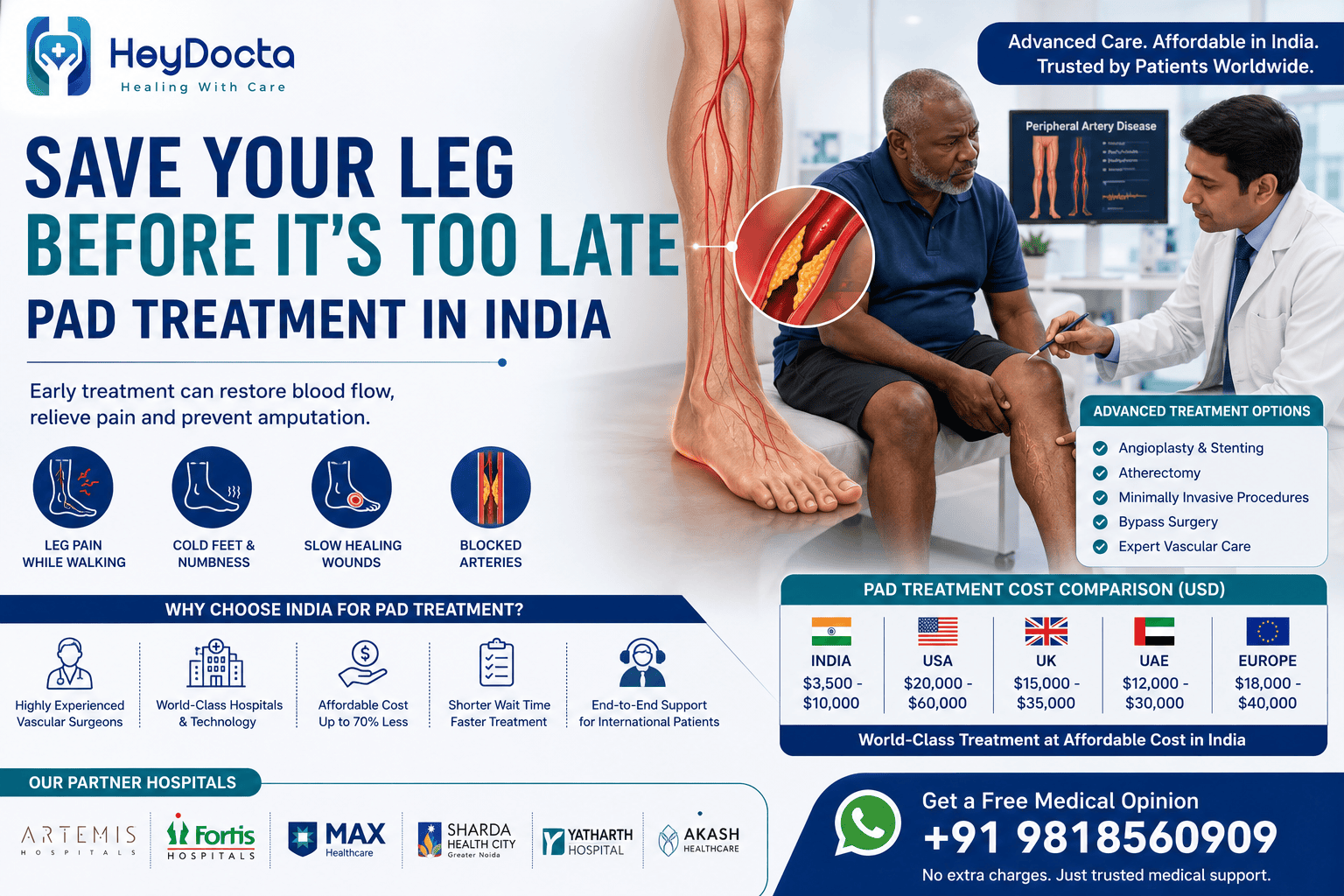
Peripheral Artery Disease (PAD) is a serious condition that reduces blood flow to your legs. Many people ignore early warning signs like leg pain while walking, numbness, cold feet, or slow-healing wounds until the disease becomes severe. Delaying treatment increases the risk of infection, tissue damage, and even limb loss. The good news is that early diagnosis and advanced PAD treatment in India help restore blood flow, relieve symptoms, and protect your leg.
Whether you are traveling from Nigeria, Kenya, Ghana, Guyana, Jamaica, Cameroon, Zimbabwe, the Middle East, Europe, or the USA, India offers world-class vascular care at a fraction of international treatment costs. Patients receive advanced treatment from experienced vascular surgeons using the latest minimally invasive techniques.
What Is Peripheral Artery Disease (PAD)?
Peripheral Artery Disease is a circulatory disorder caused by narrowing or blockage of arteries supplying blood to the legs. The blockage usually develops because of fatty deposits called plaque that build up inside blood vessels.
As blood flow decreases, muscles and tissues receive less oxygen, resulting in pain during walking and poor wound healing. Without treatment, severe PAD may lead to critical limb ischemia, ulcers, gangrene, and possible amputation.
Early diagnosis significantly improves treatment outcomes.
Common Symptoms of PAD
Symptoms vary depending on the severity of arterial blockage.
Common signs include:
- Leg pain while walking (claudication)
- Pain relieved by rest
- Cold feet or lower legs
- Numbness or weakness
- Slow-healing foot wounds
- Skin discoloration
- Hair loss on the legs
- Weak or absent foot pulses
- Pain while resting in advanced disease
- Blackened toes or gangrene in severe cases
If you experience these symptoms, seek evaluation by a vascular specialist as soon as possible.
Who Is at Higher Risk?
Certain medical conditions increase the likelihood of PAD.
Risk factors include:
- Diabetes
- Smoking
- High blood pressure
- High cholesterol
- Obesity
- Chronic kidney disease
- Age above 50 years
- Family history of cardiovascular disease
Managing these risk factors helps reduce disease progression.
Why Early Treatment Matters
Ignoring PAD can lead to serious complications.
Possible complications include:
- Chronic leg pain
- Non-healing ulcers
- Severe infections
- Gangrene
- Limb amputation
- Increased risk of heart attack
- Increased risk of stroke
Early intervention restores circulation before permanent tissue damage develops.
Why International Patients Choose India for PAD Treatment
India has become one of the leading destinations for vascular surgery because patients receive internationally accepted treatment standards at affordable prices.
Advantages include:
- Highly experienced vascular surgeons
- Advanced diagnostic imaging
- Modern hybrid operation theatres
- Minimally invasive endovascular procedures
- Lower treatment costs
- Short waiting periods
- English-speaking healthcare teams
- International patient departments
- Comprehensive rehabilitation services
HeyDocta.com helps patients receive treatment from leading hospitals across India while managing appointments, medical records, visa guidance, accommodation, airport transfers, and follow-up coordination.
PAD Treatment Options Available in India
Treatment depends on the severity of arterial blockage and the patient’s overall health.
Lifestyle Modification
Patients with early PAD benefit from:
- Walking exercise programs
- Smoking cessation
- Diabetes control
- Healthy diet
- Weight management
- Blood pressure control
Medications
Doctors may prescribe medications to:
- Improve blood circulation
- Prevent blood clot formation
- Lower cholesterol
- Control blood pressure
- Reduce cardiovascular risks
Balloon Angioplasty
A small balloon is inserted into the blocked artery and inflated to restore blood flow.
Benefits include:
- No large incision
- Faster recovery
- Short hospital stay
- Minimal discomfort
Stent Placement
A metal mesh stent keeps the artery open after angioplasty and improves long-term blood flow.
Atherectomy
Special devices remove plaque from blocked arteries before balloon treatment.
Bypass Surgery
Patients with extensive arterial blockage may require bypass surgery using a vein or artificial graft to redirect blood around the blocked artery.
Hybrid Procedures
Complex cases sometimes require a combination of open vascular surgery and endovascular techniques.
Step-by-Step PAD Treatment Process in India
| Step | What Happens |
|---|---|
| Initial Consultation | Medical history and symptom review |
| Diagnostic Tests | Doppler ultrasound, CT Angiography, MR Angiography or Digital Angiography |
| Treatment Planning | Vascular surgeon recommends the best option |
| Procedure | Angioplasty, stenting, atherectomy or bypass surgery |
| Hospital Stay | Usually 1–5 days depending on treatment |
| Recovery | Walking begins early with medical supervision |
| Follow-up | Lifestyle advice, medications and remote consultations |
Cost of PAD Treatment in India
One of the biggest reasons international patients choose India is affordability.
| Treatment | Average Cost in India (USD) |
|---|---|
| Diagnostic Evaluation | $300–$700 |
| Balloon Angioplasty | $3,500–$5,500 |
| Angioplasty with Stent | $4,000–$6,500 |
| Atherectomy | $5,000–$7,000 |
| Peripheral Artery Bypass Surgery | $6,000–$10,000 |
Actual costs depend on disease severity, hospital, devices used, and overall medical condition.
PAD Treatment Cost Comparison
| Country | Average Cost (USD) |
|---|---|
| India | $3,500–$10,000 |
| USA | $20,000–$60,000 |
| UK | $15,000–$35,000 |
| UAE | $12,000–$30,000 |
| Europe | $18,000–$40,000 |
Patients traveling to India often save between 50% and 80% while receiving treatment from internationally accredited hospitals.
Leading Hospitals for PAD Treatment in India
HeyDocta partners with some of India’s trusted multi-specialty hospitals, including:
- Artemis Hospital
- Fortis Hospitals
- Max Hospitals
- Sharda Health City
- Yatharth Hospital
- Akash Healthcare
These hospitals offer comprehensive vascular care, advanced imaging, minimally invasive interventions, intensive care support, and international patient services.
Leading Vascular Surgeon in India
One of the leading vascular surgeons associated with advanced PAD treatment is Dr. Bishwarup Purkayastha, who has extensive experience in minimally invasive vascular procedures and complex peripheral artery disease management.
Your treatment plan will always be determined after a complete medical evaluation by the treating specialist.
Medical Visa and Travel Assistance
International patients traveling through HeyDocta receive support with:
- Hospital appointment scheduling
- Medical visa guidance
- Invitation letters
- Airport pickup
- Hotel arrangements
- Language assistance
- Local transportation
- Follow-up coordination
- Online consultations after returning home
These services are provided without additional facilitation charges to patients.
Recovery After PAD Treatment
Recovery depends on the procedure performed.
After Angioplasty
- Hospital stay: 1–2 days
- Resume walking within 24 hours
- Return to routine activities within one week
After Bypass Surgery
- Hospital stay: 5–7 days
- Recovery: 4–8 weeks
- Regular follow-up visits recommended
Doctors also advise:
- Daily walking
- Smoking cessation
- Diabetes control
- Cholesterol management
- Blood pressure monitoring
- Healthy eating habits
Why Choose HeyDocta?
HeyDocta supports international patients throughout their medical journey.
Services include:
- Free medical opinion
- Hospital comparison
- Cost estimates
- Appointment coordination
- Visa assistance
- Accommodation support
- Airport transfers
- Interpreter support
- Follow-up care
- No additional service charges
Frequently Asked Questions
Is PAD a medical emergency?
Early PAD is not usually an emergency, but severe pain at rest, ulcers, or gangrene require urgent medical evaluation.
Can PAD be treated without surgery?
Yes. Mild PAD is often managed with lifestyle changes, medications, and supervised exercise programs. Advanced disease may require angioplasty or surgery.
How long should I stay in India?
Most international patients stay 7–14 days for angioplasty and around 2–3 weeks for bypass surgery, depending on recovery.
Is angioplasty painful?
The procedure is minimally invasive and usually performed under local anesthesia with mild sedation. Most patients experience minimal discomfort.
Can PAD return after treatment?
Yes. Long-term success depends on controlling diabetes, quitting smoking, maintaining healthy cholesterol levels, and following medical advice.
Is India safe for international patients?
Yes. Many Indian hospitals have dedicated international patient departments offering coordinated medical, travel, and accommodation support.
Conclusion
Peripheral Artery Disease should never be ignored. Early diagnosis and timely treatment help restore blood flow, reduce pain, improve mobility, and lower the risk of serious complications such as limb loss. India offers advanced vascular treatment using modern technology, experienced specialists, and internationally recognized hospitals at highly affordable costs.
If you or a loved one has leg pain while walking, non-healing foot wounds, or symptoms of poor circulation, seeking expert evaluation early can make a significant difference.
Get a Free Medical Opinion from top vascular specialists through HeyDocta today. Our team helps you compare hospitals, receive transparent treatment cost estimates, coordinate consultations with leading experts, arrange medical visas and travel, and access end-to-end support throughout your treatment journey in India—all at no extra cost.