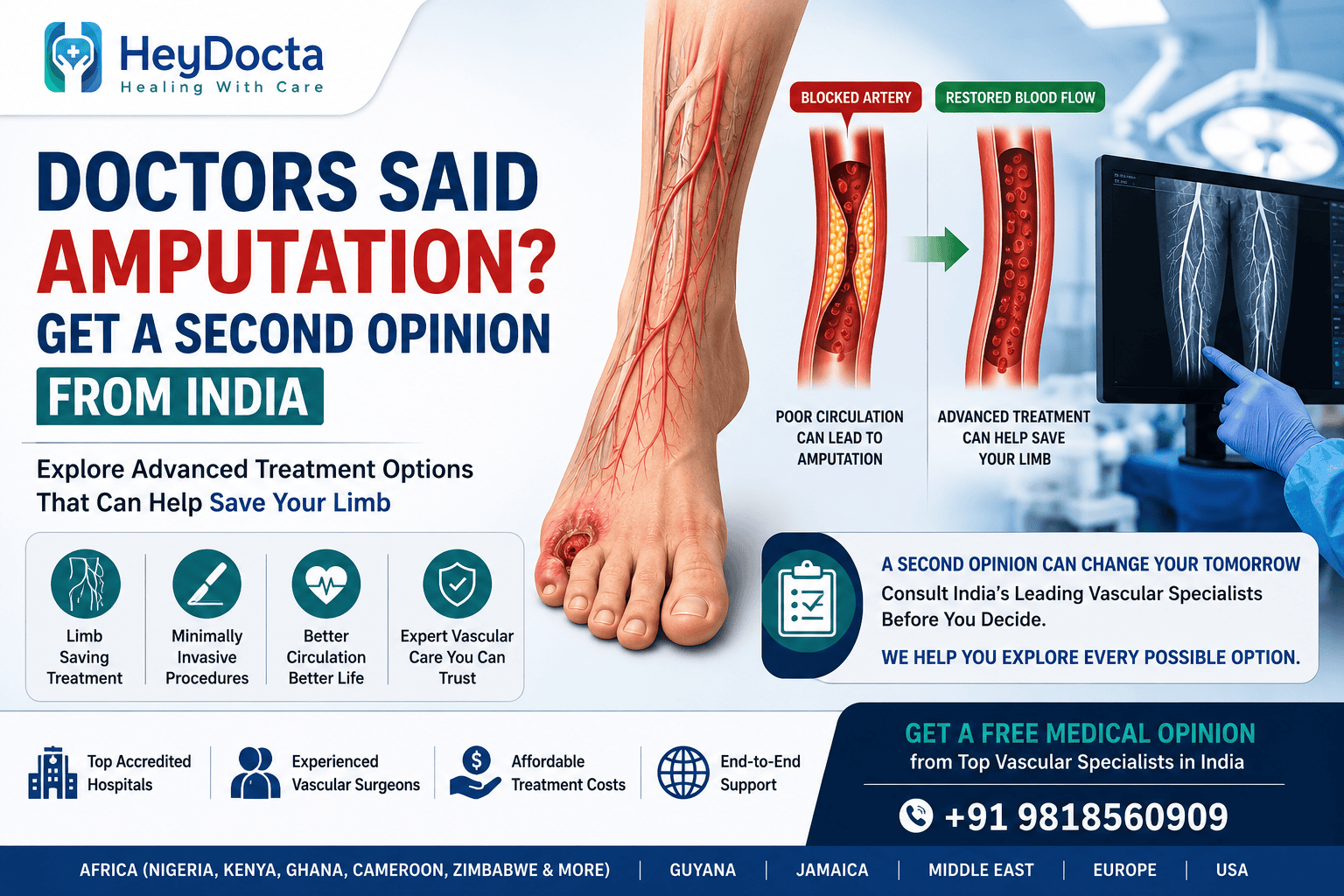
Being told that amputation is the only option can be overwhelming for patients and their families. In many cases, however, advanced vascular treatments can improve blood flow, relieve symptoms, and help save the affected limb when evaluated by an experienced specialist. Seeking a second medical opinion allows you to explore every available treatment option before making a life-changing decision.
India has become a trusted destination for international patients from Nigeria, Ghana, Kenya, Cameroon, Zimbabwe, Guyana, Jamaica, the Middle East, Europe, and the USA who are looking for affordable, advanced vascular care. With experienced vascular surgeons, modern technology, and internationally recognized hospitals, India offers comprehensive evaluations and limb salvage treatments at significantly lower costs than many Western countries.
If you have been advised to undergo amputation, HeyDocta can arrange a second opinion from leading vascular specialists in India. Share your reports and receive expert guidance, treatment options, and estimated costs without any additional service charges.
Why You Should Consider a Second Opinion Before Amputation
Amputation is sometimes the safest and most appropriate treatment, especially when there is irreversible tissue damage or life-threatening infection. However, not every patient requires immediate amputation.
A second opinion can help determine whether limb-saving treatments are still possible.
Benefits include:
- Confirmation of the diagnosis
- Review of imaging and test results
- Assessment by experienced vascular specialists
- Evaluation of minimally invasive treatment options
- Better understanding of risks and expected outcomes
- Confidence in making an informed treatment decision
A second opinion does not delay necessary treatment when arranged promptly. Instead, it ensures that all suitable options have been carefully considered.
Conditions That May Lead to Amputation
Several vascular and medical conditions can severely reduce blood flow to the limbs.
These include:
- Peripheral Artery Disease (PAD)
- Critical Limb Ischemia (CLI)
- Diabetic foot complications
- Severe leg artery blockages
- Chronic non-healing ulcers
- Gangrene
- Traumatic vascular injuries
- Advanced infections affecting blood circulation
Many of these conditions benefit from early evaluation by a vascular surgeon.
Can Limb Salvage Be Possible?
Every patient is different.
After reviewing medical history, imaging studies, blood circulation, wound condition, and overall health, a vascular specialist determines whether the limb can be preserved.
The goal of treatment is to:
- Improve blood circulation
- Promote wound healing
- Reduce pain
- Prevent infection
- Improve mobility
- Preserve the limb whenever medically appropriate
While limb salvage is not possible in every case, many patients benefit from advanced vascular interventions before considering amputation.
Why International Patients Choose India
India offers several advantages for patients seeking vascular care.
These include:
- Experienced vascular surgeons
- Advanced diagnostic technology
- Modern hybrid operating rooms
- Minimally invasive procedures
- International-quality hospitals
- Affordable treatment costs
- Short waiting periods
- English-speaking healthcare teams
Patients from Africa, Europe, the Middle East, Guyana, Jamaica, and the USA often save thousands of dollars without compromising quality.
Advanced Treatment Options Available in India
Treatment depends on the severity of disease, blood vessel blockage, and overall patient health.
Comprehensive Vascular Assessment
Doctors perform detailed evaluation using:
- Doppler ultrasound
- CT angiography
- MR angiography
- Digital subtraction angiography
- Blood investigations
- Wound assessment
Balloon Angioplasty
A catheter with a small balloon opens narrowed arteries and restores blood flow.
Benefits include:
- Small puncture instead of large incision
- Short hospital stay
- Faster recovery
- Reduced discomfort
Vascular Stenting
A stent keeps the artery open after angioplasty to maintain blood circulation.
Atherectomy
Plaque removal devices clear blocked arteries in selected patients.
Bypass Surgery
When blockages are extensive, surgeons create an alternate pathway for blood flow using the patient’s vein or a synthetic graft.
Advanced Wound Care
Patients with diabetic foot ulcers or chronic wounds receive specialized wound management to improve healing.
Multidisciplinary Care
Complex cases often involve vascular surgeons, diabetologists, wound care specialists, plastic surgeons, infectious disease experts, and rehabilitation teams working together.
Expert Vascular Care in India
Leading vascular surgeon Dr. Bishwarup Purkayastha is known for evaluating complex peripheral arterial disease and critical limb ischemia cases. Every patient receives an individualized assessment based on clinical findings and imaging studies before recommending the most appropriate treatment plan.
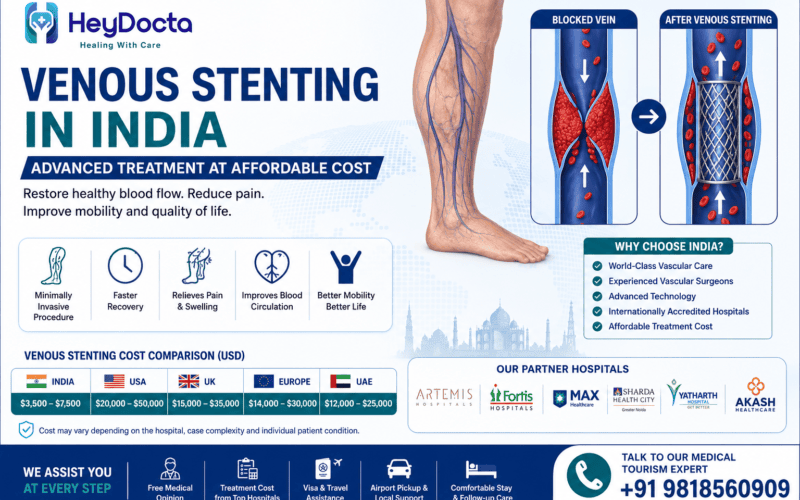
Cost Comparison: India vs Other Countries
One of India’s greatest advantages is affordable, high-quality vascular treatment.
| Country | Estimated Cost (USD) |
|---|---|
| India | $3,000–$8,000 |
| USA | $20,000–$60,000 |
| UK | $15,000–$40,000 |
| Europe | $12,000–$35,000 |
| UAE | $10,000–$30,000 |
Treatment costs depend on:
- Type of vascular procedure
- Hospital selection
- Diagnostic investigations
- Duration of hospitalization
- Complexity of disease
- Rehabilitation needs
Patients often reduce treatment expenses by 50–80% compared to many developed countries.
HeyDocta helps patients compare hospitals, treatment plans, and estimated costs before they travel.
Leading Hospitals for Vascular Treatment in India
HeyDocta partners with reputed hospitals including:
- Artemis Hospital
- Fortis Hospitals
- Max Hospitals
- Sharda Health City
- Yatharth Hospital
- Akash Healthcare
Hospital recommendations are based on your medical condition, budget, and preferred location.
Treatment Journey Through HeyDocta
Step 1: Share Your Medical Reports
Upload your reports, scans, and doctor’s recommendations.
Step 2: Specialist Review
Leading vascular specialists review your case and determine available treatment options.
Step 3: Receive a Second Opinion
You receive a detailed treatment recommendation and estimated cost.
Step 4: Travel Planning
HeyDocta assists with:
- Medical visa support
- Invitation letters
- Accommodation
- Airport pickup
- Hospital appointments
Step 5: Arrival in India
Doctors perform detailed examinations and confirm the treatment plan.
Step 6: Treatment
Depending on your condition, angioplasty, stenting, bypass surgery, wound care, or combined procedures are performed.
Step 7: Recovery
Patients receive rehabilitation guidance, medications, and follow-up instructions before returning home.
Step 8: Virtual Follow-Up
HeyDocta coordinates online consultations after discharge.
Recovery After Treatment
Recovery depends on the chosen procedure.
| Treatment | Hospital Stay | Recovery Time |
|---|---|---|
| Angioplasty | 1–2 days | 1–2 weeks |
| Stenting | 1–2 days | 1–2 weeks |
| Bypass Surgery | 5–7 days | 4–8 weeks |
| Advanced Wound Care | Varies | Individualized |
Patients should:
- Control diabetes
- Stop smoking
- Walk regularly as advised
- Take prescribed medications
- Attend follow-up visits
- Maintain healthy cholesterol and blood pressure
These measures support long-term vascular health.
Medical Visa and Travel Assistance
HeyDocta offers complete medical travel support, including:
- Hospital coordination
- Medical visa guidance
- Accommodation assistance
- Local transportation
- Language assistance when required
- Dedicated patient coordinators
- Post-treatment follow-up
These facilitation services are provided without additional service charges.
Why Choose HeyDocta.com?
HeyDocta.com is a trusted medical tourism facilitator helping international patients access advanced healthcare in India.
Patients receive:
- Free medical opinion
- Second opinion from experienced specialists
- Transparent treatment estimates
- Hospital comparison
- Visa assistance
- Travel planning
- Dedicated patient support
- Continuous follow-up
- No additional service fees
Frequently Asked Questions
Is it always necessary to amputate when blood flow is poor?
Not always. Some patients may benefit from vascular procedures that improve circulation. An experienced specialist can determine the most appropriate treatment after evaluation.
Can I get a second opinion without traveling first?
Yes. Medical reports and imaging can often be reviewed remotely before travel planning.
How quickly should I seek a second opinion?
As soon as possible. Delaying evaluation may reduce available treatment options in some cases.
How long should I stay in India?
Most patients remain in India for 7–21 days, depending on the procedure and recovery.
Is vascular treatment in India affordable?
Yes. Treatment costs in India are significantly lower than in many countries while maintaining high standards of care.
What documents should I share?
Medical history, imaging reports, blood test results, wound photographs (if applicable), medication list, and previous treatment records.
Does a second opinion guarantee limb salvage?
No. Every case is unique. The specialist evaluates whether limb preservation is medically appropriate based on the severity of disease and overall health.
Conclusion
An amputation recommendation is a major decision that deserves careful evaluation. Seeking a second opinion from experienced vascular specialists in India allows you to understand all available treatment options before proceeding. Advanced diagnostic technology, minimally invasive procedures, experienced surgeons, and affordable healthcare make India a preferred destination for patients seeking comprehensive vascular care.
If you or a loved one has been advised to undergo amputation, contact HeyDocta today to Get free medical opinion from leading vascular specialists in India. We help international patients from Africa, the Middle East, Europe, the USA, Guyana, and Jamaica access advanced vascular treatment with complete hospital coordination, transparent cost estimates, medical visa assistance, travel support, and post-treatment follow-up—without any additional service charges.