PCOS and IVF Success is an important topic for women with polycystic ovary syndrome who have been trying to conceive without success. PCOS is one of the common causes of ovulation problems, but having PCOS does not mean you cannot become pregnant. Many women with PCOS conceive naturally or with fertility treatment. When IVF is recommended, careful ovarian stimulation and monitoring are important because women with PCOS often produce a higher number of follicles.
For international patients from Ghana, Zimbabwe, Cameroon, Nigeria, Kenya, the wider African region, the USA, Europe, and the Middle East, India offers experienced IVF specialists, advanced fertility laboratories, and comparatively affordable treatment. HeyDocta helps patients coordinate consultations, hospitals, treatment planning, travel, visa assistance, and follow-up support.
Get a Free Medical Opinion: Share your medical reports with HeyDocta and receive guidance about IVF treatment options in India.
What Is PCOS and How Does It Affect Fertility?
Polycystic ovary syndrome, commonly called PCOS, is a hormonal condition associated with irregular ovulation, hormonal changes, and sometimes increased androgen levels. Not every woman with PCOS has the same symptoms or fertility challenges.
For some women, the main problem is irregular or absent ovulation. If an egg is not released regularly, it becomes harder to conceive naturally. Other factors such as age, fallopian tube problems, sperm quality, endometriosis, and reduced ovarian reserve can also affect fertility.
PCOS itself does not automatically mean IVF is required. Doctors usually consider simpler fertility treatments first when appropriate. IVF becomes an option when other treatments have not worked, when additional infertility factors are present, or when the fertility specialist believes IVF offers a suitable treatment approach.
Can Women With PCOS Have Successful IVF?
Yes, women with PCOS can undergo IVF. However, IVF treatment needs careful planning because the ovaries in women with PCOS often respond strongly to stimulation medicines.
The fertility specialist adjusts medication doses and monitors follicular development through ultrasound and, when appropriate, blood tests. The objective is to develop an appropriate number of mature eggs while reducing the risk of complications such as ovarian hyperstimulation syndrome, or OHSS.
Your age, ovarian reserve, egg quality, body weight, metabolic health, previous fertility treatment, sperm quality, and other reproductive factors also influence the overall treatment plan.
PCOS and IVF: What Treatment Options Are Available in India?
The appropriate treatment depends on your fertility history and medical evaluation. Options might include:
Ovulation Induction
Women with PCOS who do not ovulate regularly might first receive medicines to help stimulate ovulation. This approach is often considered before IVF when there are no other major fertility problems.
IUI
Intrauterine insemination involves placing prepared sperm directly into the uterus around ovulation. IUI might be considered in selected patients, depending on the cause of infertility and other fertility factors.
IVF With Self Eggs
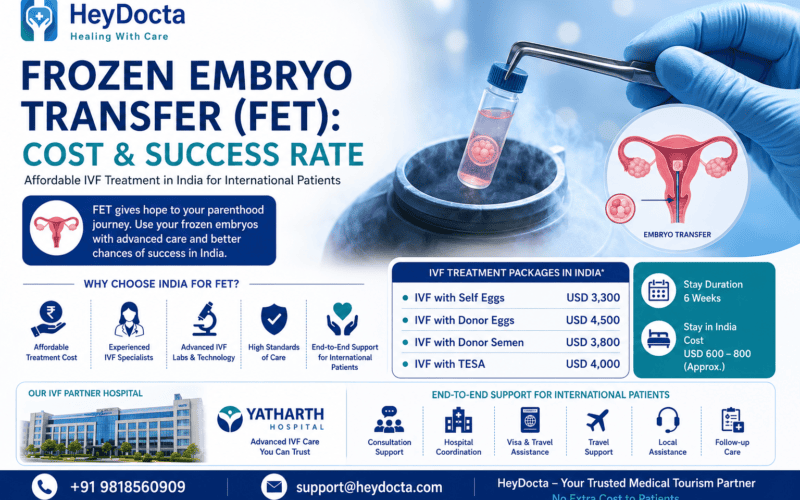
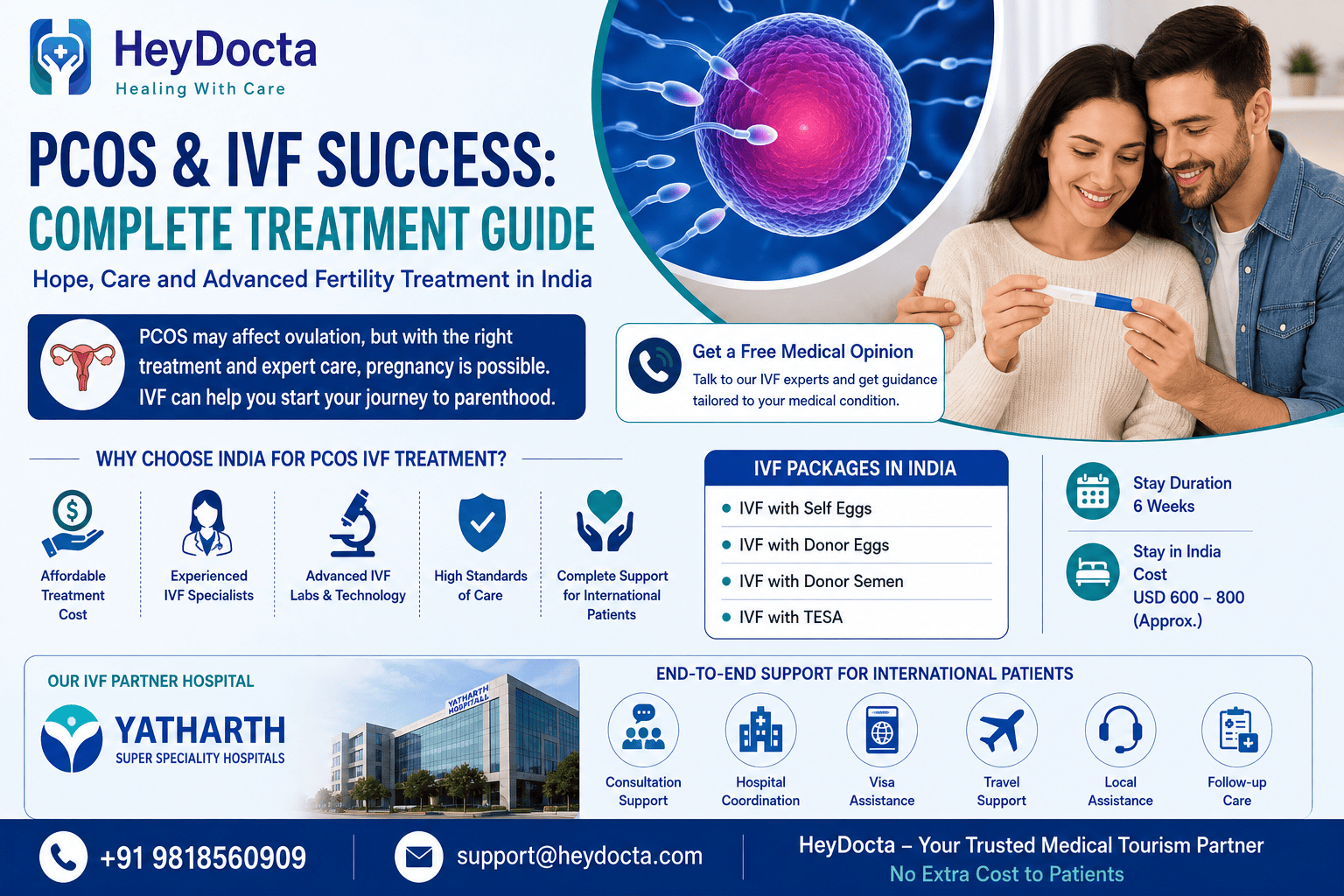
IVF using your own eggs is a common option when the ovaries are producing suitable eggs. At HeyDocta’s partner hospital, the indicative package for IVF with self eggs is USD 3,300.
IVF With Donor Eggs
Donor egg IVF is considered when using the patient’s own eggs is not suitable because of factors such as severely reduced ovarian reserve or poor egg quality. The indicative package provided is USD 4,500.
IVF With Donor Sperm
Donor sperm IVF might be considered in selected cases involving severe male-factor infertility or other circumstances where donor sperm is required. The indicative package is USD 3,800.
IVF With TESA
TESA, or testicular sperm aspiration, is a sperm retrieval procedure used in selected cases of male infertility. The indicative IVF with TESA package is USD 4000.
The final treatment recommendation should always come from the fertility specialist after reviewing both partners’ medical history and test results.
PCOS and IVF Success: How Doctors Improve Treatment Planning
There is no single IVF protocol for every woman with PCOS. Individualisation is important.
A fertility specialist might focus on:
- Assessing ovarian reserve
- Reviewing menstrual and ovulation history
- Checking hormone levels
- Performing pelvic ultrasound
- Evaluating the uterus and endometrium
- Assessing sperm quality
- Selecting an appropriate stimulation protocol
- Monitoring follicular development
- Reducing the risk of excessive ovarian response
- Deciding whether a fresh or frozen embryo transfer is appropriate
In some cases, the medical team might recommend freezing embryos and transferring them during a later cycle rather than performing a fresh transfer. The decision depends on the patient’s medical situation and the specialist’s assessment.
PCOS IVF Treatment Process in India
For international patients, planning before travelling helps make the treatment journey more organised.
Step 1: Online Medical Consultation
You can share previous fertility reports, ultrasound results, hormone tests, AMH reports, and previous IVF records with the fertility team. The specialist reviews your history and advises which investigations are required.
Step 2: Fertility Assessment
After arriving in India, the fertility specialist may repeat or request additional tests. These might include hormonal investigations, ultrasound, ovarian reserve assessment, and other tests based on your medical history.
Step 3: IVF Protocol
The specialist selects medicines and an IVF stimulation protocol based on your age, ovarian reserve, PCOS characteristics, and previous treatment history.
Step 4: Ovarian Stimulation and Monitoring
Fertility medicines stimulate the ovaries to develop multiple follicles. Regular ultrasound monitoring helps the medical team assess the response and adjust treatment when required.
Step 5: Egg Retrieval
Once the follicles reach the appropriate stage, the eggs are collected through a minimally invasive procedure under appropriate anaesthesia or sedation.
Step 6: Fertilisation and Embryo Development
The eggs are fertilised in the IVF laboratory using the selected sperm source. Embryos are monitored as they develop.
Step 7: Embryo Transfer
An embryo is transferred into the uterus using a thin catheter when the specialist considers the patient ready for transfer.
Step 8: Pregnancy Testing and Follow-Up
A pregnancy test is performed after the recommended interval. If pregnancy occurs, the fertility team advises on further monitoring and follow-up.
IVF Cost for PCOS Patients in India
One of the major reasons international patients consider India is the difference in IVF costs compared with countries such as the USA, UK, UAE, and several European countries.
The indicative IVF package costs provided by HeyDocta are:
| Treatment | Approximate Cost |
|---|---|
| IVF with Self Eggs | USD 3,300 |
| IVF with Donor Eggs | USD 4,500 |
| IVF with Donor Sperm | USD 3,800 |
| IVF with TESA | USD 4000 |
| Stay in India | Approximately 6 weeks |
| Estimated Stay Cost | USD 600–800 |
These are indicative package figures and should not be considered a guaranteed final quotation. The actual expense depends on medicines, diagnostic tests, additional laboratory procedures, complications, additional cycles, and individual treatment requirements.
India vs Other Countries: IVF Cost Comparison
| Country/Region | Typical IVF Cost Range |
|---|---|
| India | USD 3,300–4,500 |
| USA | USD 12,000–20,000 |
| UK | USD 8,000–15,000 |
| UAE | USD 7,000–12,000 |
| Europe | USD 6,000–12,000 |
Prices vary between hospitals and countries, and packages do not always include the same services. International patients should compare inclusions, medicines, laboratory procedures, consultations, and follow-up care before making a decision.
Talk to Our Medical Tourism Expert: HeyDocta can help you understand the expected treatment expenses and coordinate your consultation with a suitable IVF specialist in India.
Why International Patients Choose India for PCOS IVF
India attracts fertility patients from Africa, the USA, Europe, and the Middle East for several reasons.
Patients often consider India because of:
- Experienced fertility specialists
- Modern IVF laboratories
- Multiple fertility treatment options
- Competitive treatment costs
- International patient services
- Availability of diagnostic facilities
- Hospital infrastructure
- Medical tourism coordination
HeyDocta’s IVF partner hospital is Yatharth Hospital. Patients seeking IVF guidance can also be coordinated with Dr. Amreen Singh, IVF specialist with 16 years of experience, based on treatment requirements and availability.
Doctor selection and treatment suitability should always be based on individual medical evaluation.
How Long Should You Stay in India for IVF?
For the IVF package discussed by HeyDocta, international patients should plan for approximately 6 weeks in India. The actual stay depends on the IVF protocol, ovarian response, monitoring schedule, embryo transfer timing, and follow-up requirements.
Some patients might require a longer stay if additional tests or treatment procedures are required. Patients should confirm the expected timeline with the fertility team before booking flights.
Medical Visa and Travel Assistance
Travelling overseas for IVF requires preparation beyond the medical treatment itself. International patients need to review Indian visa requirements applicable to their nationality and prepare the necessary medical and identification documents.
HeyDocta assists patients with hospital coordination, appointment scheduling, visa guidance, travel planning, and communication with the healthcare team.
Patients should arrange their travel only after discussing the expected treatment timeline with their fertility specialist.
Recovery and Follow-Up After IVF
Most IVF procedures do not require a prolonged hospital admission. After egg retrieval or embryo transfer, your doctor provides specific instructions regarding medicines, activity, travel, and follow-up.
Patients should contact their medical team promptly if they experience severe abdominal pain, heavy bleeding, difficulty breathing, fainting, or other concerning symptoms.
After returning home, follow-up with your fertility specialist or local doctor remains important. The Indian fertility team can provide treatment records and recommendations for continued care.
Frequently Asked Questions About PCOS and IVF
1. Can PCOS reduce IVF success?
PCOS does not automatically prevent IVF success. However, women with PCOS often require carefully monitored ovarian stimulation because they might respond strongly to fertility medicines. Age, egg quality, sperm quality, uterine health, and other factors also influence treatment outcomes.
2. Is IVF necessary for every woman with PCOS?
No. IVF is not automatically required. Depending on the cause of infertility, doctors might first recommend lifestyle changes, ovulation induction, timed intercourse, or IUI. IVF is considered when medically appropriate.
3. How much does IVF for PCOS cost in India?
The indicative IVF with self eggs package provided by HeyDocta is USD 3,300. The final cost varies according to medicines, investigations, laboratory procedures, and individual treatment requirements.
4. How long do international patients need to stay in India for IVF?
The suggested stay for the package is approximately 6 weeks, although the exact duration depends on the treatment plan and medical response.
5. Can women with PCOS use their own eggs for IVF?
Yes. Many women with PCOS undergo IVF using their own eggs. The fertility specialist evaluates ovarian reserve, egg quality, age, previous treatment history, and other factors before recommending the treatment approach.
6. Is PCOS IVF treatment available for international patients?
Yes, fertility centres in India provide IVF services for eligible international patients. Patients should complete the required medical assessment and confirm applicable legal and travel requirements before treatment.
7. Does HeyDocta provide support during IVF treatment in India?
HeyDocta provides medical tourism coordination, including hospital coordination, consultation scheduling, visa guidance, travel assistance, and follow-up coordination. The medical treatment itself is provided by the treating hospital and fertility specialist.
Conclusion:
PCOS is a common fertility challenge, but it does not mean pregnancy is impossible. IVF provides an established treatment option for selected women, particularly when other fertility approaches have not produced the desired outcome or when additional infertility factors are present.
India offers international patients access to fertility specialists, IVF laboratories, and treatment options at comparatively affordable costs. The indicative IVF with self eggs package through HeyDocta is USD 3,300, with other options available depending on medical requirements.
HeyDocta.com helps international patients connect with IVF specialists and partner hospitals while providing end-to-end assistance with consultation, hospital coordination, visa guidance, travel support, and follow-up. Contact HeyDocta to discuss your fertility history and receive guidance on planning your IVF treatment in India.