Persistent or recurring pain after back surgery can be frustrating, especially when the original procedure did not provide the expected relief. Failed Back Surgery Syndrome (FBSS) refers to persistent or new spinal pain after one or more back surgeries. It does not necessarily mean that the surgery was performed incorrectly; several different problems can cause ongoing symptoms.
For patients from Nigeria, Guyana, Jamaica, Kenya, Ghana, Zimbabwe, Cameroon, the Middle East, Europe and the USA, India offers evaluation and treatment options for complex post-surgical spine problems, often at lower private-hospital costs than the USA and other high-cost healthcare markets.
Get a Free Medical Opinion: Send your previous surgery records, MRI/CT scans and current medical reports to HeyDocta for specialist review and treatment-cost coordination.
What Is Failed Back Surgery Syndrome?
FBSS, also called persistent spinal pain syndrome or post-laminectomy syndrome, describes continued or recurring back or leg pain following spinal surgery. The causes are diverse, so treatment should begin with identifying the specific reason for the symptoms rather than automatically planning another operation.
Common symptoms include:
- Persistent lower-back pain
- Leg or buttock pain
- Numbness or tingling
- Weakness
- Recurring disc-related symptoms
- Difficulty walking or performing daily activities
- Pain that returns after an initial period of improvement
What Causes Failed Back Surgery Syndrome?
FBSS can have several causes, and more than one may exist in the same patient.
Common causes include:
- Recurrent or residual disc herniation
- Spinal stenosis
- Epidural scar tissue or fibrosis
- Failed spinal fusion or non-union
- Spinal instability
- Adjacent-segment degeneration
- Nerve damage or persistent nerve pain
- Facet-joint or sacroiliac-joint pain
- Infection or other post-operative complications
- Inadequate relief of the original pain source
Previous surgery can also alter spinal biomechanics or affect adjacent discs and structures.
How Is Failed Back Surgery Syndrome Diagnosed?
A detailed review of the patient’s previous surgery is essential. Doctors generally examine the current symptoms, neurological findings, previous operative reports and imaging.
Depending on the case, evaluation may include:
- MRI, sometimes with contrast
- X-rays
- CT or CT myelography when appropriate
- Neurological examination
- Diagnostic nerve or joint blocks
- Blood tests when infection is suspected
MRI is particularly useful for identifying conditions such as recurrent disc herniation and epidural scar tissue.
Treatment Options for Failed Back Surgery Syndrome in India
Treatment depends on the underlying cause. A second surgery is not automatically the answer.
1. Medication and Physical Therapy
For patients without an urgent surgical problem, treatment may begin with medication, physiotherapy, rehabilitation and activity modification. Conservative management is generally considered before invasive treatment when there is no emergency indication.
2. Pain Management Procedures
Depending on the source of pain, doctors may consider:
- Epidural injections
- Nerve blocks
- Facet-joint procedures
- Radiofrequency ablation
- Adhesiolysis for selected cases involving epidural fibrosis
The usefulness of these procedures varies according to the diagnosis.
3. Revision Spine Surgery
If imaging identifies a structural problem that can reasonably be corrected, revision surgery may be considered.
Examples include:
- Recurrent disc compression
- Failed fusion
- Loose or broken implants
- Spinal instability
- Significant stenosis
- Adjacent-segment problems
- Deformity requiring correction
Revision surgery is more complex than many first-time spine procedures because previous surgery can result in scar tissue, altered anatomy and existing implants.
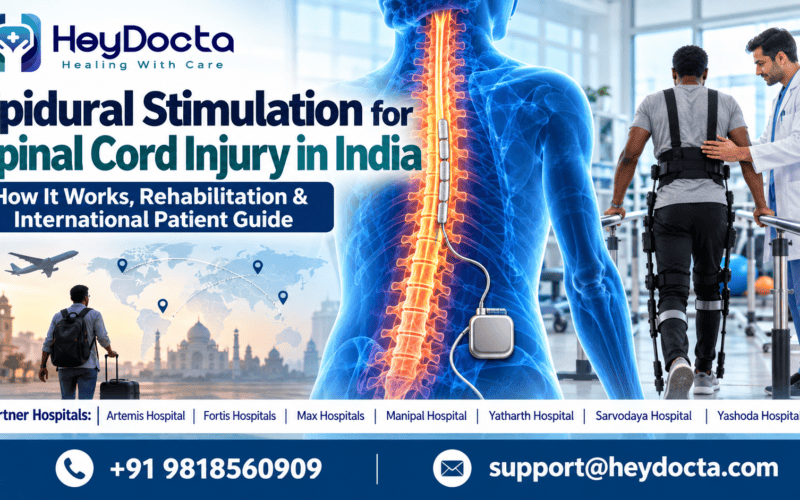
4. Spinal Cord Stimulation
For selected patients with persistent neuropathic pain despite appropriate conservative treatment, spinal cord stimulation (SCS) may be considered. A systematic review found evidence supporting SCS for selected FBSS patients, while also emphasising appropriate patient selection.
An umbrella review of systematic reviews concluded that FBSS treatment should be individualised, with conservative treatment generally considered first and neuromodulation considered for refractory pain in appropriately selected patients.
SCS is not suitable for everyone and involves a separate evaluation, trial process and discussion of device-related risks, benefits and long-term management.
Failed Back Surgery Syndrome Treatment Cost in India
The cost depends heavily on the actual cause of persistent pain. A patient requiring physiotherapy or pain management will have a very different budget from someone requiring complex revision fusion.
For international patients, current planning estimates for revision spine surgery in India are approximately $12,000–$26,000, compared with approximately $90,000–$200,000 for typical US cash pricing in one current medical-tourism cost guide. These are planning ranges, not hospital quotations.
| Treatment | India – Indicative Cost | USA – Indicative Cost |
| Revision spine surgery | $12,000–$26,000 | $90,000–$200,000 |
| Complex revision fusion | Case dependent | Often substantially higher |
| Spinal cord stimulation | Device and case dependent | Generally higher overall cost |
| Pain-management treatment | Depends on procedure | Usually higher private-sector cost |
Spinal cord stimulation costs vary significantly according to the device, leads, trial, implantation, hospital and programming. Current Indian neurostimulation-device market data places spinal-cord-stimulator systems around $6,000–$12,000 for the device system alone, so this should not be confused with the complete treatment cost.
The final quotation should clearly state whether it includes the implant, surgeon, hospital, anaesthesia, investigations, programming, follow-up and other related charges.
Talk to a Medical Tourism Expert: HeyDocta can coordinate your medical records with suitable Indian hospitals and help you understand the expected treatment pathway and indicative cost before travelling.
Spine Specialists and Hospitals in India
Patients with complex post-surgical spine problems should seek a specialist evaluation rather than selecting treatment based only on price.
At Artemis Hospital, Gurugram, Dr. Hitesh Garg is Head of the Ortho-Spine Surgery unit, and Artemis lists him among its specialists for endoscopic spine surgery. His profile also describes experience in complex spine procedures.
At Max Healthcare, Dr. Jitesh Manghwani is Associate Director and Unit Head – Orthopaedic Spine Surgery. Max lists his interests in microscopic keyhole surgery, spinal disorders and endoscopic spine procedures.
HeyDocta’s partner hospitals include:
- Artemis Hospital
- Fortis Hospitals
- Max Hospitals
- Manipal Hospital
- Yatharth Hospital
- Sarvodaya Hospital
The appropriate hospital and surgeon should be determined after reviewing the patient’s previous surgery, imaging, symptoms and overall medical condition.
Treatment Process for International Patients
Step 1: Send Your Medical Records
Share MRI or CT scans, previous operation reports, discharge summaries, prescriptions and current symptoms with HeyDocta.
Step 2: Specialist Review
The medical records can be coordinated with an appropriate spine specialist for an initial opinion.
Step 3: Diagnosis and Treatment Planning
The specialist determines whether the pain is related to recurrent compression, scar tissue, instability, failed fusion, adjacent-segment disease or another condition.
Step 4: Cost Estimate
The hospital provides an indicative treatment plan and cost based on the patient’s specific requirements.
Step 5: Travel to India
HeyDocta assists with hospital coordination, appointment scheduling and travel-related planning.
Step 6: Treatment and Recovery
After an in-person assessment, the treating team confirms the final diagnosis and treatment plan. Follow-up and rehabilitation are planned according to the procedure performed.
Medical Visa and Travel Support
Eligible international patients can apply for India’s e-Medical Visa, while eligible attendants can apply for an e-Medical Attendant Visa. The official Indian e-Visa portal currently lists medical treatment and accompanying a medical-visa holder among permitted purposes, subject to eligibility requirements.
The official portal currently states that e-Medical and e-Medical Attendant applicants can apply at least four days before arrival, within the specified advance-application window. A hospital letter containing proposed admission/treatment information is required for an e-Medical Visa application.
Visa rules can change, so patients should verify current requirements through the official Government of India portal before travelling.
Recovery and Stay in India
Recovery depends on whether the patient receives conservative treatment, an interventional pain procedure, spinal cord stimulation or revision surgery.
For complex revision spine surgery, one current international-patient planning guide estimates approximately 5–12 nights of stay, although the actual duration can be shorter or longer depending on the procedure and recovery.
International patients should also allow additional time in India for post-operative review before taking a long-haul flight. The treating surgeon should confirm when travel is medically appropriate.
Why Consider India for Failed Back Surgery Syndrome Treatment?
India has developed a significant medical-tourism sector supported by specialist healthcare professionals, healthcare infrastructure and cost competitiveness. India’s Economic Survey 2025–26 reported more than 600,000 medical tourist arrivals during 2022–2024 and identified cost competitiveness, skilled professionals and established healthcare infrastructure as factors supporting medical and wellness tourism.
For patients with complex spine problems, the ability to obtain a specialist second opinion and compare different treatment approaches can be particularly important.
The objective should not simply be to find the lowest price. Patients should compare clinical expertise, proposed treatment, hospital facilities, implants or devices, hospital stay, follow-up and total travel costs.
Frequently Asked Questions
What is failed back surgery syndrome?
It describes persistent or recurring spinal pain after back surgery. It can result from several different conditions, so identifying the specific pain generator is important before choosing treatment.
Does failed back surgery syndrome always require another surgery?
No. Treatment may include physiotherapy, medication, pain-management procedures, spinal cord stimulation or revision surgery depending on the underlying cause.
How much does revision spine surgery cost in India?
Current published international-patient planning estimates are approximately $12,000–$26,000, although the final price depends on the complexity, implants, number of levels and hospital.
Can spinal cord stimulation help after failed back surgery?
SCS can be considered for selected patients with persistent refractory pain, particularly neuropathic or radiating pain, after appropriate assessment. It is not suitable for every patient.
How long should I stay in India for revision spine surgery?
Complex revision procedures may require several nights in hospital and additional time for follow-up. A current international-patient planning estimate is approximately 5–12 nights, but the treating surgeon should provide the individual recommendation.
Can I get a second opinion before travelling to India?
Yes. Patients can share previous surgical records and MRI/CT scans for an initial specialist review and treatment-planning discussion before travelling.
Conclusion
Failed Back Surgery Syndrome requires diagnosis before treatment. Persistent pain after spine surgery can arise from recurrent compression, scar tissue, failed fusion, instability, adjacent-segment problems or nerve-related pain. Treatment may range from rehabilitation and pain management to spinal cord stimulation or carefully selected revision surgery.
For international patients from Nigeria, Guyana, Jamaica, Kenya, Ghana, Zimbabwe, Cameroon, the Middle East, Europe and the USA, India provides access to multiple spine-care options with potentially substantial cost differences, particularly for complex revision procedures.
Get a Free Medical Opinion from HeyDocta : Share your previous spine surgery reports and imaging with our team to explore specialist opinions, suitable partner hospitals, treatment options and indicative costs. HeyDocta.com provides end-to-end medical-tourism coordination, including hospital communication, appointment planning, visa assistance and travel support. Where the applicable hospital/service arrangement provides facilitation without an additional patient service fee, this can be confirmed before travel.