
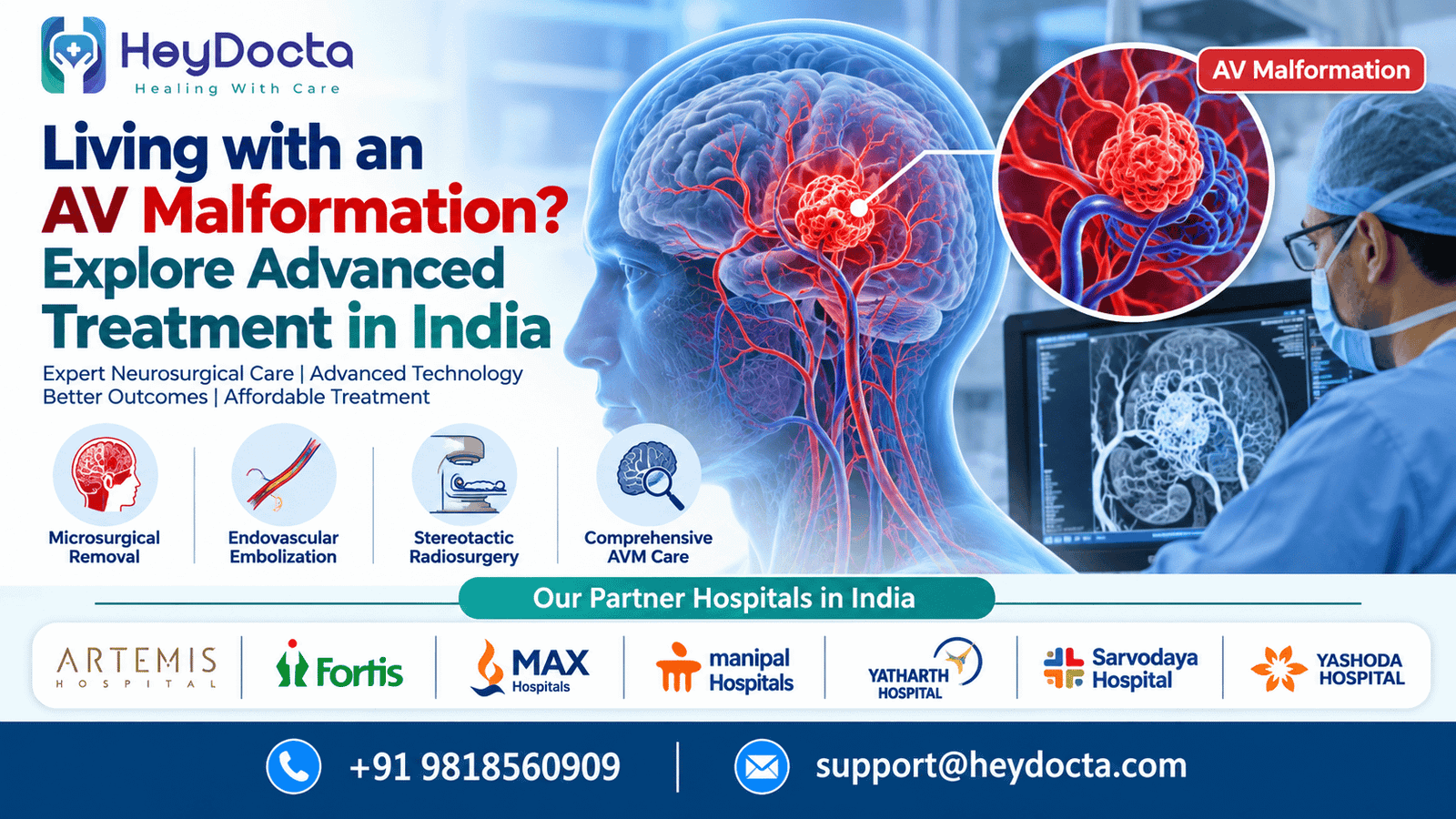
Living with an arteriovenous malformation (AVM) can raise difficult questions about bleeding risks, treatment choices, affordability and long-term health. Advanced AV malformation treatment in India may offer international patients access to specialist assessment, microsurgery, endovascular embolization and stereotactic radiosurgery, depending on the AVM’s location and characteristics.
An AVM is an abnormal connection between arteries and veins that bypasses the normal capillary network. Brain AVMs can sometimes cause headaches, seizures, neurological symptoms or bleeding, although some are discovered during scans performed for unrelated reasons. Not every AVM requires immediate treatment; the benefits and risks must be assessed individually.
For patients from Nigeria, Ghana, Kenya, Zimbabwe, Cameroon, Guyana, Jamaica, the USA, Europe and the Middle East, comparing treatment options and total costs can help with informed planning.
Get a Free Medical Opinion: HeyDocta can help coordinate a specialist review, communicate with partner hospitals and request a personalised treatment estimate before you travel.
Why Do International Patients Consider India for AVM Treatment?
International patients may consider India for access to neurosurgical and neurovascular teams, multiple treatment approaches and private-hospital cost estimates.
Key considerations include:
- Treatment affordability: Selected procedures may cost less than comparable private treatment in the USA.
- Different treatment options: Patients can be assessed for microsurgery, embolization, radiosurgery or a combination.
- Multidisciplinary care: Complex cases may require neurosurgeons, interventional neuroradiologists, neurologists and neurocritical-care teams.
- International patient support: Hospital coordination, appointment planning and travel assistance can help simplify the process.
The safest option is not necessarily the cheapest. Patients should compare specialist experience, available imaging, intensive-care support, treatment risks and follow-up arrangements.
What Are the Advanced Treatment Options for Brain AVM?
Treatment depends on the AVM’s size, location, blood-vessel structure, previous bleeding and the patient’s overall health. Some unruptured AVMs may be monitored rather than treated immediately.
1. Microsurgical AVM Removal
Microsurgery involves opening the skull and carefully removing the abnormal blood-vessel network. It may be appropriate for selected AVMs that surgeons consider accessible with an acceptable level of risk.
Potential benefits and risks depend on the AVM’s location and complexity. Risks can include bleeding, stroke, seizures and neurological disability.
2. Endovascular AVM Embolization
Embolization is a minimally invasive procedure in which a catheter is guided through blood vessels to the AVM. A specialised material is then delivered to block selected abnormal vessels.
Embolization may be used before surgery, alongside other treatment, or for selected AVMs. It does not always completely eliminate the AVM and may require multiple sessions.
3. Stereotactic Radiosurgery
Stereotactic radiosurgery delivers highly focused radiation to the AVM without a conventional surgical incision. It may be suitable for selected smaller or deeply located AVMs.
The abnormal vessels usually close gradually over months or years, rather than immediately. The bleeding risk may therefore continue during the period before the AVM is fully obliterated.
4. Combined Treatment
Some complex AVMs require a staged plan involving embolization followed by surgery or radiosurgery. This can increase the total cost, number of appointments and length of treatment.
Important: The goal may be complete AVM closure, reduction of specific risks or careful monitoring. A specialist team should explain the intended outcome and alternatives before treatment.
AVM Treatment Cost in India
The cost of AVM treatment in India varies according to the procedure, AVM complexity, number of sessions, hospital stay and need for intensive care.
The following are indicative planning estimates in USD, not confirmed package prices from HeyDocta’s partner hospitals.
| Treatment option | Approximate cost in India |
| Stereotactic radiosurgery | $6,500–$10,000 |
| Microsurgical AVM removal | $8,000–$20,000 |
| Endovascular AVM embolization | $8,000–$18,000 |
| Combined embolization and surgery | $18,000–$35,000 |
| Combined embolization and radiosurgery | $15,000–$28,000 |
These estimates are compiled from published medical-tourism cost references and can differ from an individual hospital quotation. Not every treatment is suitable for every patient.
The final estimate may include or exclude:
- Neurosurgical or interventional specialist fees
- MRI, CT angiography or catheter angiography
- Operating theatre and specialised devices
- ICU care and hospital accommodation
- Additional embolization sessions
- Medicines, rehabilitation and follow-up imaging
Ask for an itemised estimate and confirm what happens if the treatment plan changes after further investigations.
AVM Treatment Cost: India vs Other Countries
| Destination | Indicative cost-comparison guidance |
| India | Published planning estimates range from about $6,500 for selected radiosurgery cases to $35,000 for some combined treatment plans. |
| USA | One published reference gives approximately $50,000–$130,000 for AVM surgery; actual charges vary significantly. |
| UK | Costs depend on the treatment modality, provider and whether care is publicly funded or private. |
| Europe | Prices vary by country, hospital and treatment plan. |
| Middle East | Private treatment costs depend on the country, hospital and specialist team. |
| Africa and the Caribbean | Access, specialist availability and private treatment prices differ by location. |
The US figure is an indicative comparison, not a directly matched package. Reliable, current, like-for-like private prices are not consistently available for every country.
To compare costs fairly, request quotations for the same treatment approach and clarify whether imaging, hospital stay, ICU care and follow-up are included. Travel, accommodation and the cost of returning for further treatment should also be considered.
Specialist Assessment and Partner Hospitals in India
Brain AVM treatment generally requires assessment by a cerebrovascular neurosurgeon or neurovascular specialist, often working with an interventional neuroradiologist. The appropriate specialist depends on the AVM’s location and the proposed treatment.
Dr. Aditya Gupta is the Chairperson – Neurosurgery & CNS Radiosurgery and Co-Chief – CyberKnife Centre at Artemis Hospitals, Gurugram. He has over 32 years of experience and specialises in neurosurgery, cerebrovascular surgery and advanced radiosurgery. His listed areas of expertise include arteriovenous malformations (AVMs), AVM surgery and stereotactic radiosurgery.
For patients considering brain AVM treatment in India, Dr. Gupta’s team can be contacted for an assessment of the medical reports and imaging to determine which treatment options may be appropriate. The final recommendation depends on the AVM’s size, location, blood-vessel structure and individual clinical risks.
HeyDocta can help international patients enquire about appropriate services at its partner hospitals:
- Artemis Hospital
- Fortis Hospitals
- Max Hospitals
- Manipal Hospital
- Yatharth Hospital
- Sarvodaya Hospital
- Yashoda Hospital
Availability of a particular AVM procedure, specialist and treatment package must be confirmed directly with the selected hospital.
Talk to Our Medical Tourism Expert: Share your scans and medical reports so HeyDocta can help coordinate an appropriate specialist opinion and request a personalised estimate.
Step-by-Step Process for International Patients
Step 1: Share Medical Records
Provide MRI or CT scans, angiography reports, previous treatment records, medication details and a summary of symptoms.
Step 2: Obtain a Specialist Opinion
The specialist reviews the AVM’s location, size, blood supply and associated risks before recommending treatment or monitoring.
Step 3: Request an Itemised Estimate
Ask the hospital to explain the proposed procedure, expected stay, additional-session requirements and likely follow-up costs.
Step 4: Arrange Travel
After the hospital confirms suitability and timing, HeyDocta can help coordinate appointments, hospital communication, visa-document guidance and accommodation enquiries.
Step 5: Treatment and Follow-Up
Follow the treating team’s instructions and obtain a written discharge summary, medication plan and follow-up schedule before returning home.
Medical Visa, Recovery and Follow-Up
International patients should check current Indian medical visa requirements and obtain the required hospital documentation. HeyDocta can assist with coordination and travel planning, but visa approval remains the responsibility of the relevant authorities.
Recovery depends on the treatment method. Microsurgery may require a longer hospital stay and rehabilitation, while selected radiosurgery patients may need less immediate hospital observation but longer-term imaging follow-up.
After treatment, patients may require repeat angiography or other scans to confirm whether the AVM has closed. Follow-up is essential even when symptoms improve.
Urgent warning: A sudden severe headache, seizure, weakness, difficulty speaking, loss of consciousness or new vision problems may indicate a neurological emergency. Seek emergency medical care immediately rather than arranging international travel.
Frequently Asked Questions
1. Can an AV malformation be treated in India?
Yes, patients can enquire about assessment and treatment. The appropriate option depends on the AVM’s location, complexity, clinical risks and the hospital’s available expertise.
2. What is the cost of AVM treatment in India?
Indicative estimates range from approximately $6,500 for selected radiosurgery cases to $35,000 for some combined treatment plans. The final cost requires a case-specific hospital quotation.
3. Is surgery always necessary for a brain AVM?
No. Some AVMs may be monitored if the risks of intervention outweigh the expected benefits. This decision requires specialist assessment.
4. Is embolization a complete cure for AVM?
Not always. Embolization may reduce blood flow or prepare an AVM for another treatment. Follow-up imaging is needed to assess the result.
5. How long should international patients stay in India?
The duration depends on the procedure, recovery and follow-up requirements. Patients should obtain a personalised travel recommendation from the treating team before booking flights.
6. Can AVM return after treatment?
Residual abnormal vessels or incomplete closure may remain, and some cases require further treatment. Follow-up imaging helps the team assess whether the AVM has been fully obliterated.
7. Does HeyDocta charge extra for medical coordination?
HeyDocta provides its coordination support without an extra facilitation fee charged to patients. Hospital care, tests, treatment, travel, accommodation and other third-party services may still incur costs.
Conclusion
Living with an AV malformation can be challenging, but understanding the diagnosis, treatment options, potential risks and total cost can help patients make informed decisions. India offers several treatment pathways for selected brain AVMs, including microsurgery, embolization and stereotactic radiosurgery.
HeyDocta supports international patients from Africa, the Caribbean, the USA, Europe and the Middle East with specialist-opinion coordination, partner hospital enquiries, treatment estimates and travel assistance.
Contact HeyDocta.com today to request a medical opinion and explore suitable AVM treatment options in India.