
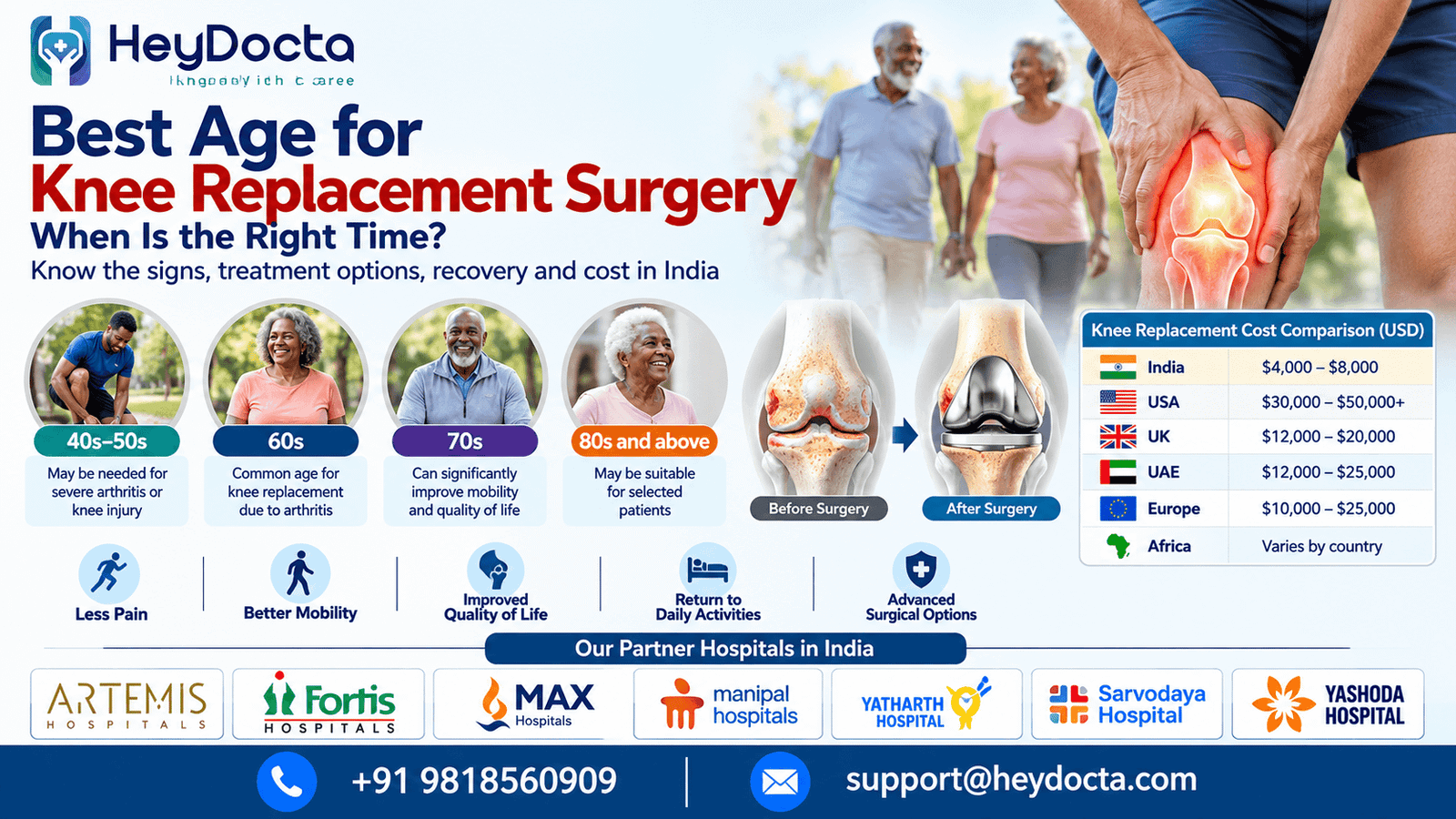
The best age for knee replacement surgery depends on the severity of joint damage, pain levels, mobility and overall health—not just the patient’s age. Many people undergo knee replacement after the age of 60, but younger adults with severe arthritis may also benefit when other treatments no longer provide adequate relief.
For international patients from Nigeria, Ghana, Kenya, Zimbabwe, Cameroon, Guyana, Jamaica, the USA, Europe and the Middle East, understanding the right time for knee replacement can help with medical decisions and financial planning. India may offer comparatively affordable private knee replacement options, with costs depending on the hospital, implant, surgical technique and rehabilitation needs.
If knee pain is affecting your daily life, a qualified orthopaedic specialist can help determine whether surgery is appropriate and whether a partial, total or other treatment option may be suitable.
Get a Free Medical Opinion : Contact HeyDocta to request a medical opinion, compare treatment estimates at partner hospitals and understand the likely costs before travelling.
What Is the Best Age for Knee Replacement Surgery?
There is no single best age for knee replacement surgery. The decision is based on symptoms, joint damage, response to non-surgical treatment and how much the condition affects everyday activities.
Many patients undergo total knee replacement in their 60s and 70s. However, surgery may be considered earlier for people with advanced joint damage, while some older adults may not need surgery if their symptoms remain manageable.
The goal is to relieve pain and improve function when the expected benefits of surgery outweigh its risks.
Knee Replacement in Your 40s and 50s
Knee replacement may be considered for younger adults who have severe osteoarthritis, rheumatoid arthritis, previous joint injuries or significant knee deformity.
However, surgeons often assess younger patients carefully because they may place greater demands on the artificial joint and have more years of use ahead of them.
Potential considerations include:
- Severity of cartilage damage and pain.
- Impact on work, walking and daily activities.
- Response to medication, physiotherapy and other treatments.
- Likelihood of needing revision surgery in the future.
- The patient’s activity goals and overall health.
Age alone should not prevent someone from receiving a specialist assessment when symptoms are severe.
Knee Replacement in Your 60s and 70s
Many patients have knee replacement surgery during this period because arthritis may have progressed enough to cause persistent pain and reduced mobility.
For suitable patients, surgery can improve the ability to walk, climb stairs and perform everyday tasks. Recovery depends on general health, muscle strength, rehabilitation and the complexity of the procedure.
Knee Replacement After Age 80
Knee replacement can be appropriate for selected adults over 80. The decision requires careful assessment of heart and lung health, frailty, bone quality, medications, mobility and support at home.
Older age can increase certain surgical risks, but it does not automatically make a patient unsuitable. The surgeon and medical team should evaluate the likely benefits and risks individually.
Signs You May Need Knee Replacement Surgery
Age is only one part of the decision. An orthopaedic specialist may recommend knee replacement when severe joint damage causes symptoms that do not improve sufficiently with appropriate treatment.
Common signs include:
- Persistent knee pain that interferes with walking, sleep or daily activities.
- Stiffness that limits bending or straightening the knee.
- Difficulty standing, climbing stairs or walking short distances.
- Knee deformity or changes in leg alignment.
- Pain that continues despite medication, physiotherapy or other recommended treatments.
- Imaging findings that show substantial joint damage.
A diagnosis of arthritis does not automatically mean surgery is necessary. The specialist considers symptoms, examination findings, imaging and the patient’s goals.
What Factors Determine the Right Time for Knee Replacement?
1. Severity of Arthritis
Advanced osteoarthritis can damage the cartilage that normally cushions the knee joint. When the damage causes severe symptoms and other treatments no longer provide enough relief, replacement may be considered.
2. Response to Non-Surgical Treatments
Doctors may recommend exercise, physiotherapy, weight management when appropriate, medication or selected injections before surgery. The suitability of these options depends on the patient’s diagnosis and medical history.
3. Overall Health
Conditions such as diabetes, heart disease and obesity may affect surgical planning and recovery. Managing existing conditions before surgery can help reduce risks.
4. Mobility and Quality of Life
If knee pain prevents a person from working, sleeping comfortably, walking or maintaining independence, surgery may be worth discussing with a specialist.
5. Future Revision Risk
Artificial knee joints can wear over time. Younger patients may have a greater lifetime chance of needing revision surgery, although implant longevity varies considerably between individuals.
Types of Knee Replacement Surgery
The appropriate procedure depends on which parts of the knee are damaged.
Total knee replacement: The damaged joint surfaces are replaced with artificial components. It may be recommended when arthritis affects multiple areas of the knee.
Partial knee replacement: Only the affected compartment is replaced. It may be suitable when damage is limited to one part of the knee and other structures are functioning adequately.
Robotic-assisted knee replacement: A robotic platform helps the surgeon with planning and selected surgical steps. The surgeon remains in control. Robotic assistance does not guarantee faster recovery or a longer-lasting implant.
Revision knee replacement: An existing implant is replaced or revised when problems such as loosening, wear, infection or other complications occur. Revision surgery is generally more complex than primary replacement.
Knee Replacement Cost in India vs Other Countries
Treatment cost is an important consideration for patients travelling from Africa, the Caribbean, the Middle East, Europe and the USA. India may offer comparatively affordable private treatment, but the final price depends on the hospital, implant, procedure and package inclusions.
The following are broad indicative planning estimates in USD, not confirmed quotations from individual hospitals.
| Country or procedure | Estimated cost |
| Total knee replacement in India | $4,000–$8,000 |
| Robotic-assisted knee replacement in India | $5,000–$10,000+ |
| Total knee replacement in the USA | $30,000–$50,000+ |
| Private knee replacement in the UK | $12,000–$20,000 |
| Private knee replacement in the UAE | $12,000–$25,000 |
| Private knee replacement in Europe | $10,000–$25,000 |
| Knee replacement in African countries | Varies by country and hospital |
These figures are broad budgeting ranges and may not represent identical procedures or package inclusions. Robotic-specific costs in other countries can differ substantially. Public healthcare eligibility, insurance and local funding arrangements can also affect what patients pay.
What Affects Knee Replacement Cost?
The total treatment cost may depend on:
- The type of surgery and complexity of the case.
- Implant brand, materials and design.
- Surgeon, anaesthesia and operating theatre fees.
- Hospital room category and length of stay.
- Preoperative tests and management of existing conditions.
- Medicines and initial physiotherapy.
- Additional care if complications arise.
International patients should also budget for flights, visa expenses, accommodation, local transport, rehabilitation and follow-up care.
Compare your options before travelling. HeyDocta can help you request estimates from partner hospitals and clarify what each treatment package includes.
Knee Replacement Specialists and Partner Hospitals in India
Patients considering knee replacement at Yatharth Hospital can enquire about Dr. Dhananjay Sabat and his current orthopaedic and joint replacement services. Confirm his current designation, experience, hospital affiliation and suitability for your condition directly with the hospital.
HeyDocta’s partner hospital network includes:
- Artemis Hospitals
- Fortis Hospitals
- Max Hospitals
- Manipal Hospital
- Yatharth Hospital
- Sarvodaya Hospital
- Yashoda Hospital
The availability of particular surgeons, implants and robotic systems varies by hospital. Patients should confirm current services and request a written treatment plan before making travel arrangements.
When choosing a hospital, compare the surgeon’s relevant experience, infection-prevention practices, rehabilitation facilities, treatment costs and arrangements for follow-up care.
How to Prepare for Knee Replacement Surgery
Once surgery has been recommended, preparation can help patients understand the process and plan for recovery.
- Complete the medical assessment: Share imaging, medical history, medication lists and previous treatment records.
- Manage existing conditions: Follow medical advice for diabetes, blood pressure, heart conditions and other health concerns.
- Discuss the procedure: Ask about total versus partial replacement, implant options, expected benefits and potential complications.
- Plan rehabilitation: Understand the physiotherapy schedule and assistance you may need after discharge.
- Confirm the treatment estimate: Review package inclusions, exclusions and possible additional expenses.
- Arrange travel and accommodation: International patients should coordinate appointments, visa requirements and suitable accommodation in advance.
HeyDocta can assist with hospital coordination, treatment estimates, appointment scheduling and travel guidance. HeyDocta provides medical tourism facilitation without an additional facilitation charge to patients; hospital treatment, investigations, medicines, flights, accommodation, visa fees and other third-party expenses remain separate.
Recovery After Knee Replacement Surgery
Recovery varies according to age, general health, surgical technique and rehabilitation progress. Patients often begin standing or walking with assistance soon after surgery when medically appropriate.
During the first few weeks, the focus is on wound care, pain management, safe walking and knee movement. Over the following weeks and months, physiotherapy helps build strength and improve function.
Many patients need several months to make substantial functional progress, and some take longer. Age alone does not determine recovery speed; muscle strength, health conditions and adherence to rehabilitation also matter.
International patients should ask their surgeon how long to remain in India and when it is safe to fly home. Major surgery can increase the risk of blood clots, so travel timing and preventive measures require medical guidance.
Frequently Asked Questions
1. What is the best age for knee replacement surgery?
There is no fixed best age. Many patients undergo surgery after 60, but younger adults and people over 80 may also be suitable depending on joint damage, symptoms and overall health.
2. Is 50 too young for knee replacement?
Not necessarily. Surgery may be considered at 50 when severe joint damage causes persistent symptoms and other treatments have not helped enough. The potential need for revision surgery later should be discussed.
3. Is 70 a good age for knee replacement?
Many people undergo knee replacement in their 70s. Suitability depends on general health, mobility, severity of arthritis and the expected benefits of surgery.
4. Can an 80-year-old have knee replacement surgery?
Yes, selected adults over 80 may be suitable. A thorough assessment of frailty, heart and lung health, medications and rehabilitation needs is important.
5. How much does knee replacement cost in India?
A broad planning estimate for total knee replacement is $4,000–$8,000. The final price depends on the hospital, implant, procedure and package inclusions.
6. How long does a knee replacement last?
Many modern knee replacements last 15–20 years or longer, but implant lifespan varies with activity, body weight, implant type and other clinical factors. No specific lifespan is guaranteed.
7. Does HeyDocta charge patients for medical tourism support?
HeyDocta provides medical tourism facilitation without an additional facilitation charge to patients. Hospital, travel, visa, accommodation and other third-party expenses remain separate.
Conclusion: Choosing the Right Time for Knee Replacement
The best age for knee replacement surgery is determined by the patient’s symptoms, joint damage, overall health and response to other treatments—not by a number alone. Patients in their 50s, 60s, 70s or older may be suitable when the expected benefits outweigh the risks.
India may provide comparatively affordable private knee replacement options for international patients, but it is important to compare complete treatment estimates, understand recovery requirements and plan follow-up care before travelling.
Contact HeyDocta.com to request a medical opinion, compare knee replacement costs at partner hospitals and plan your treatment journey in India.