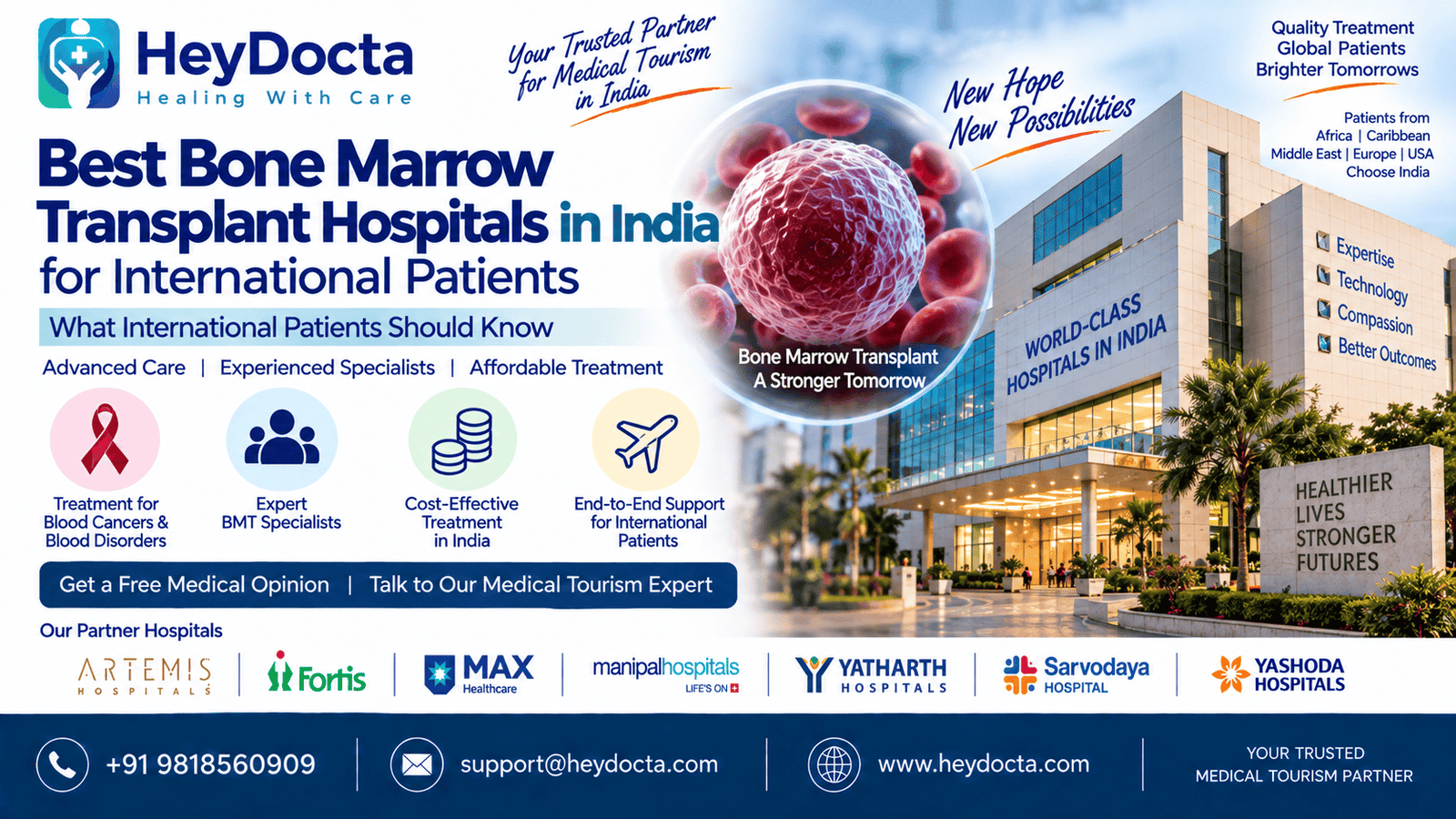
Finding the right hospital is one of the most important decisions when planning a bone marrow transplant in India for international patients. Patients from Nigeria, Kenya, Ghana, Cameroon, Zimbabwe, Guyana, Jamaica, the Middle East, Europe and the USA often compare hospitals based on transplant expertise, facilities, treatment cost, donor-matching services, infection control and international-patient support.
India has established bone marrow transplant centres offering autologous, allogeneic and haploidentical stem-cell transplantation. The cost of private BMT treatment can also be considerably lower than in several Western healthcare markets. However, there is no single “best” hospital for every patient. The appropriate centre depends on the diagnosis, transplant type, donor availability, age, previous treatment and clinical requirements.
HeyDocta helps international patients obtain medical opinions, compare suitable hospitals and coordinate treatment in India.
Get a Free Medical Opinion | Talk to Our Medical Tourism Expert
Why International Patients Consider India for Bone Marrow Transplant
India has dedicated hematology and bone marrow transplant units in major cities including Delhi-NCR, Gurugram, Mumbai, Chennai, Bengaluru and Hyderabad.
Patients commonly consider Indian hospitals because they can access:
- Specialized hematology and BMT teams
- Autologous and allogeneic transplantation
- Haploidentical transplant programmes
- HLA and donor-matching services
- Dedicated transplant and isolation facilities
- Blood-bank and transfusion support
- Intensive-care facilities
- Advanced diagnostic and laboratory services
- International-patient coordination
- More affordable private-treatment options
The Indian Society for Blood and Marrow Transplantation lists transplant centres across cities including Gurugram, New Delhi, Mumbai, Bengaluru, Chennai, Kolkata, Jaipur and others.
Patients should compare individual hospitals rather than relying only on online “best hospital” lists.
What Is a Bone Marrow Transplant?
Bone marrow transplant, more accurately called hematopoietic stem cell transplantation, replaces damaged or diseased blood-forming stem cells with healthy stem cells.
Autologous Stem Cell Transplant
The patient’s own stem cells are collected, stored and returned after conditioning treatment.
Allogeneic Stem Cell Transplant
Stem cells are obtained from another person, such as a matched sibling, unrelated donor or partially matched family donor.
Haploidentical Transplant
A partially matched family member can serve as the donor when a fully matched donor is unavailable or unsuitable.
The appropriate option depends on the disease, treatment history, donor availability and specialist assessment.
Selected Bone Marrow Transplant Hospitals in India
Rather than ranking hospitals, international patients can consider established centres based on their individual requirements.
Artemis Hospital, Gurugram
Artemis Hospitals has a dedicated BMT division offering transplantation for malignant and non-malignant blood disorders
Artemis describes BMT facilities including isolation rooms with positive air pressure and infection-prevention measures.
Dr. Gaurav Dixit is Head – Haematology Oncology & Bone Marrow Transplant at Artemis Hospitals. His listed procedures include autologous stem cell transplant, matched sibling allogeneic transplant, haploidentical transplant and matched unrelated donor transplant.
Fortis Memorial Research Institute, Gurugram
Fortis Memorial Research Institute has a BMT programme covering adults and children with complex blood cancers, blood disorders and inherited conditions. The programme lists autologous, allogeneic and haploidentical transplantation depending on patient and donor factors.
Fortis also provides international-patient services for patients seeking BMT treatment in Gurugram.
Max Hospitals
Max Hospitals, including its Delhi-NCR centres, provide hematology and stem-cell transplantation services. Patients should confirm the specific campus offering the required BMT procedure and discuss the case with the relevant transplant team before travelling.
Manipal Hospital
Manipal Hospital is another hospital network international patients can explore for hematology and transplant care. The specific hospital and BMT team should be selected according to the patient’s diagnosis, transplant type and location requirements.
Yatharth Hospital
Yatharth Hospital can also be considered by international patients seeking specialized treatment in India. Patients should request confirmation of the relevant BMT service, treating specialist and current international-patient package before making travel arrangements.
Sarvodaya Hospital
Sarvodaya Hospital is another option that international patients can discuss with HeyDocta when exploring hematology and transplant treatment in India. Suitability depends on the patient’s diagnosis and the hospital’s current transplant services.
Yashoda Hospital
Yashoda Hospital is another Indian hospital network that international patients can consider for specialized medical treatment. Patients should obtain a current case-specific treatment plan and cost estimate before selecting a centre.
How Much Does Bone Marrow Transplant Cost in India?
Cost varies significantly according to transplant type and patient requirements.
Some Hospitals currently estimates a general BMT cost range of USD 15,700–31,500 in India, noting that hospital, location, room type and complications can affect the final amount.
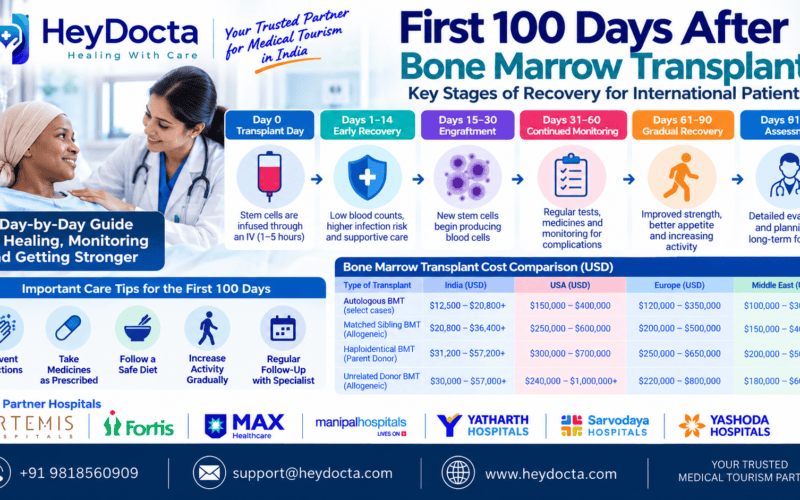
Other 2026 planning estimates show that autologous treatment may start around USD11,000–22,500 while allogeneic, haploidentical or unrelated-donor transplantation can require substantially higher budgets. These figures are indicative rather than fixed hospital quotations.
| BMT Type | Approx. Cost in USD | Main Cost Factors |
| Autologous | USD 10,500–23,000+ | Stem-cell collection, conditioning, hospitalization |
| Allogeneic – Matched Sibling | USD 15,700–31,400+ | Donor testing, HLA matching, medicines |
| Haploidentical | USD 26,200–41,800+ | Donor preparation, transplant medicines, monitoring |
| Unrelated Donor | USD 29,300–52,300+ | Donor search, HLA matching, collection and supportive care |
These are planning ranges, not guaranteed prices. Complications, ICU care, infections, graft-versus-host disease and prolonged hospitalization can increase the final bill.
India vs USA and Europe: BMT Cost Comparison
Affordability is a major consideration for international patients.
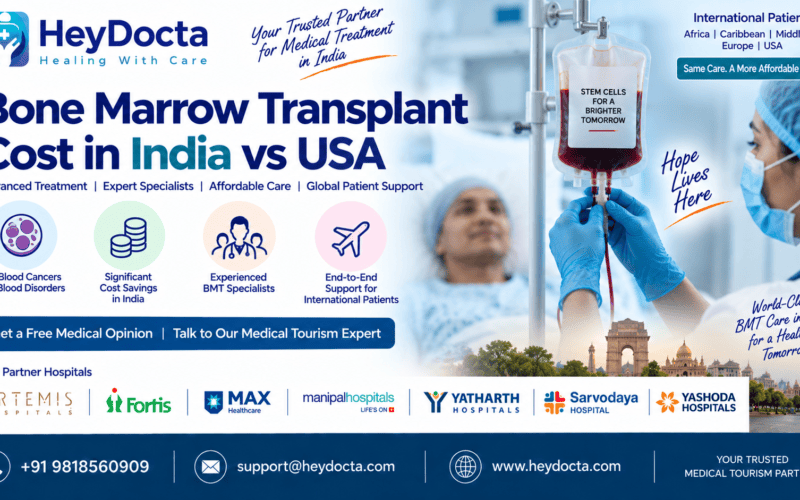
The U.S. Health Resources and Services Administration reports that an unrelated bone marrow or cord-blood transplant in the USA can cost USD 240,000 to more than USD 1 million, including the transplant and up to six months of care.
For additional context, 2026 private-treatment market data lists India at approximately USD 25,560–59,510 for autologous BMT and USD 34,660–81,380 for allogeneic BMT, while Germany is listed at substantially higher ranges. These are quoted market ranges rather than universal prices.
| Country | Autologous BMT | Allogeneic BMT |
| India | USD 25,560–59,510* | USD 34,660–81,380* |
| Germany | USD 101,700–236,940* | USD 150,180–327,900* |
| USA | Usually substantially higher | USD 240,000–1M+ in some unrelated-donor cases* |
Indicative figures. Actual prices vary by hospital, diagnosis, donor type, medicines, hospital stay, insurance and complications.
For European patients receiving public or insurance-covered care, personal out-of-pocket costs may be very different from private international-patient prices.
Talk to Our Medical Tourism Expert for a case-specific hospital quotation from India.
How to Choose the Right BMT Hospital
Instead of choosing a hospital simply because it appears in a “top” list, international patients should ask:
- Does the hospital provide the required type of transplant?
- Does the specialist treat the patient’s specific condition?
- Is HLA and donor testing available?
- What infection-control and isolation facilities are available?
- Is 24/7 critical-care support available?
- What blood and platelet support is available?
- What services are included in the quotation?
- How long is the expected hospital stay?
- Where will follow-up take place after discharge?
- Can the hospital coordinate with the patient’s doctor in their home country?
Bone Marrow Transplant Process in India
1. Medical Record Review
The hospital reviews diagnosis reports, pathology, blood tests, scans and previous treatment records.
2. Specialist Consultation
A hematologist or BMT specialist determines whether transplantation is appropriate.
3. Donor Assessment
For allogeneic transplantation, HLA testing and donor evaluation may be required.
4. Treatment Plan and Cost Estimate
The hospital provides a proposed treatment plan and estimated cost based on the patient’s case.
5. Visa and Travel Planning
HeyDocta can coordinate appointments, medical documentation, visa guidance, accommodation and airport transfers.
6. Conditioning Treatment
Chemotherapy and/or radiation may be given before stem-cell infusion depending on the treatment protocol.
7. Stem Cell Infusion
The stem cells are administered through an intravenous line or central venous catheter.
8. Engraftment and Follow-Up
The patient is monitored for blood-count recovery, infections and other complications.
Recovery and Stay Duration
BMT generally requires an extended period of medical supervision. The length of hospitalization depends on transplant type, disease, recovery and complications.
The National Cancer Institute notes that immune recovery can take several months after autologous transplantation and one to two years after allogeneic or syngeneic transplantation.
International patients should therefore plan their accommodation and return travel based on the transplant specialist’s advice rather than a fixed travel schedule.
Medical Visa and International Patient Support
HeyDocta can assist international patients with:
- Medical record coordination
- Specialist opinions
- Hospital appointment scheduling
- Treatment-cost estimates
- Medical visa documentation guidance
- Airport transfers
- Hotel or serviced accommodation
- Local transportation
- Hospital communication
- Follow-up coordination
HeyDocta does not charge patients an additional fee for its coordination service. Hospital treatment, medicines, travel and accommodation expenses remain separate.
FAQs About Bone Marrow Transplant Hospitals in India
Which hospitals in India offer bone marrow transplant?
Several Indian hospitals provide BMT services, including centres within Artemis, Fortis, Max, Manipal and other hospital networks. The exact campus and transplant programme should be confirmed before travel.
Which hospital is the best for BMT in India?
There is no single hospital that is best for every patient. The appropriate centre depends on diagnosis, transplant type, donor availability, specialist expertise, facilities and individual medical requirements.
How much does BMT cost in India?
A general published estimate is approximately USD15 ,700–31,500 although complex transplants and complications can increase the cost.
Is BMT cheaper in India than the USA?
Private BMT treatment can be considerably less expensive in India. HRSA reports that unrelated U.S. bone marrow or cord-blood transplantation can range from USD 240,000 to more than USD 1 million, including up to six months of care.
Can African patients travel to India for BMT?
Patients from Nigeria, Kenya, Ghana, Cameroon, Zimbabwe and other countries can explore treatment in India after medical evaluation and hospital acceptance, subject to applicable visa requirements.
How long should I stay in India?
The duration depends on the transplant type, recovery and complications. The treating BMT team should provide an individualized timeline.
Can HeyDocta help select a BMT hospital?
Yes. HeyDocta can help international patients compare suitable hospitals, obtain medical opinions and coordinate treatment, travel and follow-up arrangements.
Conclusion
Choosing a bone marrow transplant hospital in India requires more than comparing hospital names or advertised prices. International patients should evaluate the transplant team’s experience with their specific condition, available transplant types, donor services, infection-control facilities, critical-care support, blood-bank services, expected stay and follow-up arrangements.
India can offer a lower-cost private-treatment pathway compared with several international markets, but the final cost and hospital suitability depend on each patient’s medical situation.
HeyDocta helps patients from Africa, the Caribbean, the Middle East, Europe and the USA coordinate their BMT journey with Indian hospitals.
Get a Free Medical Opinion and Treatment Cost from Top Indian Hospitals. Contact HeyDocta.com for hospital coordination, medical-visa guidance, travel assistance and end-to-end support.v