Bone marrow transplant (BMT), also called stem cell transplant, is an important treatment option for selected blood cancers and serious blood or bone marrow disorders. However, many international patients still have questions about its safety, success, donor matching, age limits and bone marrow transplant cost in India. Myths found online can make patients delay consultation or make decisions based on incomplete information.
For patients from Nigeria, Ghana, Kenya, Zimbabwe, Guyana, Jamaica, the Middle East, Europe and the USA, India can provide access to specialised transplant centres and experienced haematology teams. The right treatment, however, depends on the patient’s diagnosis, overall health, disease status and transplant eligibility.
Get a Free Medical Opinion: Share your medical reports with HeyDocta to understand whether a bone marrow transplant may be an appropriate option and receive guidance on hospitals, doctors and estimated treatment costs.
What Is a Bone Marrow Transplant?
A bone marrow transplant replaces blood-forming stem cells that have been damaged or destroyed by intensive treatment. Stem cells may come from the patient, a related donor, an unrelated donor or, in some situations, another appropriate source.
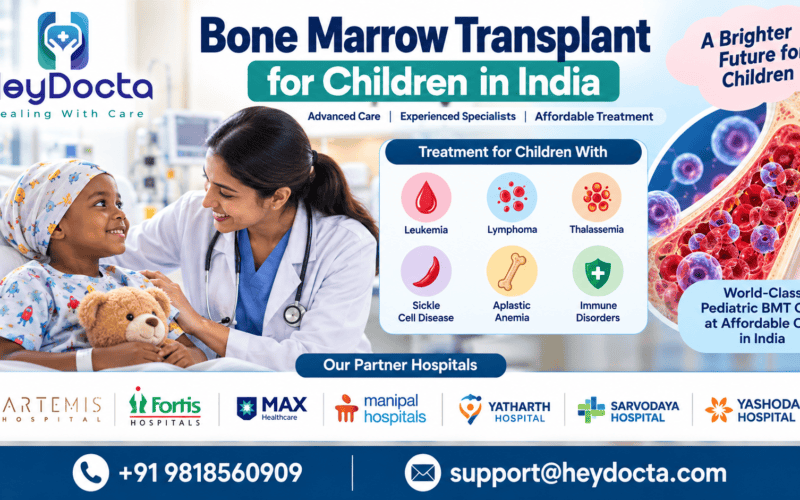
BMT or stem cell transplantation may be used for conditions such as:
- Acute and chronic leukemia
- Lymphoma
- Multiple myeloma
- Myelodysplastic syndromes
- Aplastic anemia
- Thalassemia
- Sickle cell disease
- Certain immune and inherited disorders
The transplant may be autologous, using the patient’s own stem cells, or allogeneic, using cells from a donor. Donor transplantation requires careful HLA matching and medical assessment.
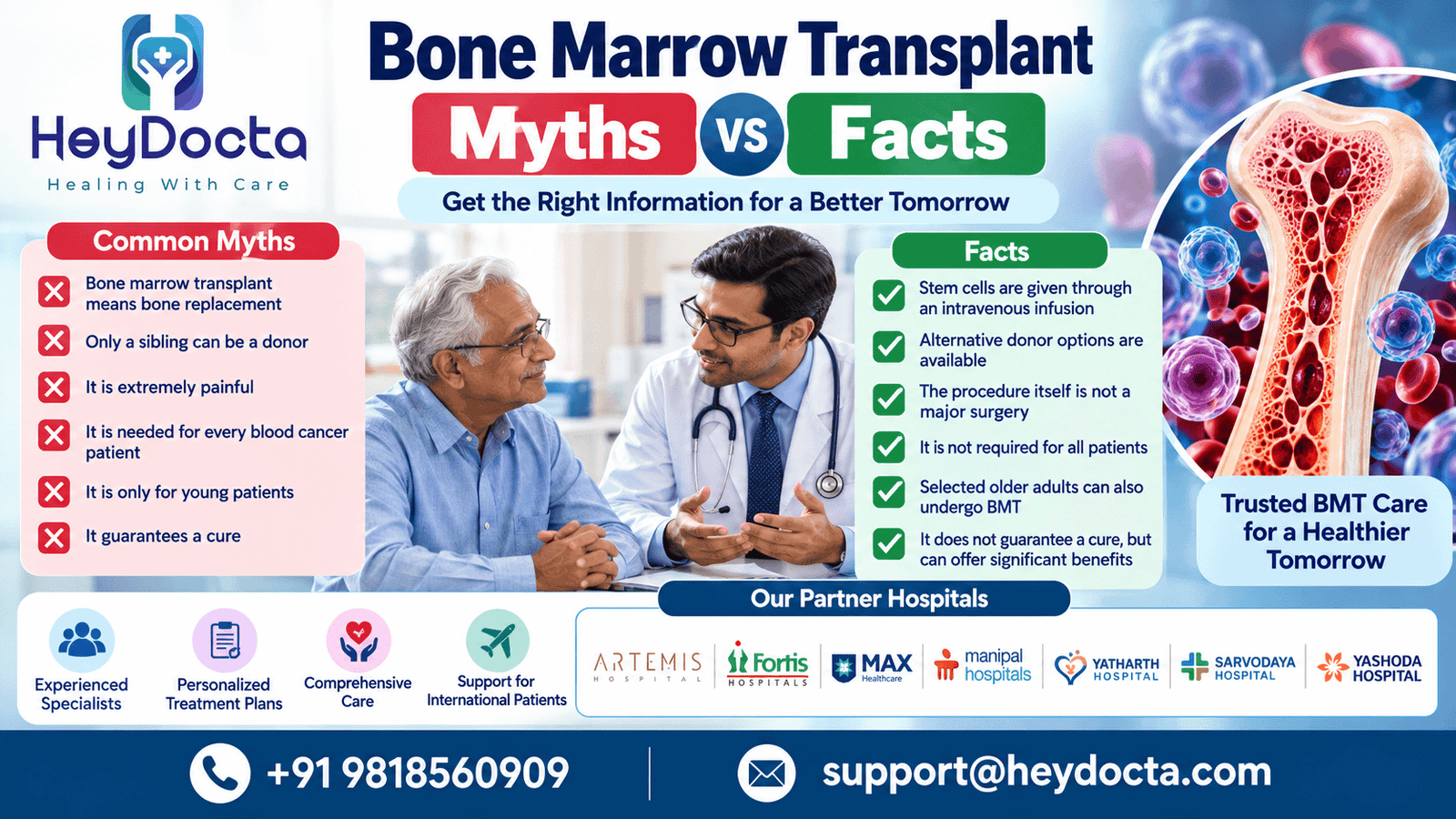
Bone Marrow Transplant Myths vs Facts
Myth 1: Bone marrow transplant means the bone has to be replaced
Fact: A bone marrow transplant does not involve replacing the patient’s bones.
In many transplants, blood-forming stem cells are collected and then given through an intravenous infusion. These cells travel through the bloodstream to the bone marrow and begin producing new blood cells.
Myth 2: Every blood cancer patient needs a bone marrow transplant
Fact: BMT is not appropriate for every patient.
Doctors consider several factors, including the type and stage of disease, previous treatment, availability of suitable donor cells, the patient’s ability to tolerate intensive treatment and other health conditions. The medical team weighs potential benefits against risks before recommending transplantation.
Myth 3: You must have a brother or sister to get a transplant
Fact: A sibling is not the only possible donor.
For an allogeneic transplant, doctors may consider a matched sibling, matched unrelated donor or haploidentical donor, depending on the patient’s circumstances and available donor options. HLA testing is an important part of donor selection.
Myth 4: Bone marrow transplant is always extremely painful
Fact: The transplant itself is generally performed through an intravenous infusion rather than a conventional operation.
However, the overall treatment journey can be physically demanding. Conditioning therapy before transplantation may cause side effects such as fatigue, nausea, vomiting, mouth sores, appetite loss, hair loss and increased infection risk.
Myth 5: A bone marrow transplant guarantees a cure
Fact: No responsible doctor can guarantee a cure or a particular outcome.
The outcome depends on the underlying disease, disease status, transplant type, donor match, age, general health, complications and response to treatment. Patients should ask their transplant team about their individual prognosis rather than relying on general success claims.
Myth 6: Older adults cannot undergo bone marrow transplantation
Fact: Age alone does not automatically rule out transplantation.
Doctors assess the patient’s overall health, functional condition, disease characteristics and ability to tolerate treatment. In selected patients, approaches using lower-intensity conditioning may be considered. The decision must be personalised by a transplant specialist.
Myth 7: Recovery ends when the patient leaves the hospital
Fact: Recovery continues after discharge.
Patients may need regular blood tests, medicines, infection monitoring and follow-up appointments. Some complications can develop after transplantation, particularly following an allogeneic transplant. One important complication is graft-versus-host disease (GVHD), where donor immune cells attack the patient’s tissues.
Myth 8: India offers the same BMT cost for every patient
Fact: There is no single fixed BMT price.
The cost can vary according to transplant type, donor requirements, hospital stay, medicines, investigations, complications and supportive care.
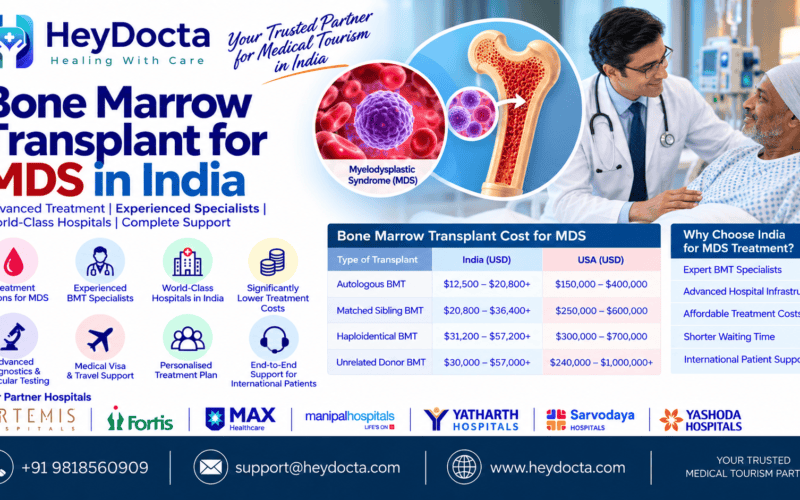
Some Hospitals currently publishes an indicative Indian BMT range of USD 15000 to 31000, while noting that the actual cost varies according to factors such as hospital, location, room category and complications.
Bone Marrow Transplant Cost: India vs Other Countries
Cost is one of the major reasons international patients investigate treatment in India. However, patients should compare complete treatment expenses, not just the initial hospital package.
| Country/Region | Indicative Cost Perspective |
| India | Approximately USD 15000–31000 for BMT in published hospital guidance; final cost varies |
| USA | An unrelated bone marrow or cord blood transplant can range from US$240,000 to over US$1 million, including the transplant and up to six months of care |
| Europe | Costs vary substantially by country, healthcare system and insurance coverage |
| Middle East | Costs vary by country, hospital, transplant type and insurance |
| Africa | Availability and total costs vary by country; overseas treatment may add travel and accommodation expenses |
The U.S. HRSA notes that donor-search expenses can also add substantially to transplant costs in some cases.
Therefore, international patients should request a patient-specific treatment estimate before travelling rather than relying only on online BMT cost figures.
BMT Specialists and Treatment Options in India
Bone marrow transplantation requires a multidisciplinary team involving haematologists, oncologists, transplant specialists, nurses, laboratory teams and critical-care professionals.
One specialist international patients may consider is Dr. Gaurav Dixit at Artemis Hospitals, Gurugram. He is Head – Haematology Oncology & Bone Marrow Transplant, with 20 years of experience. His listed expertise includes autologous stem cell transplant, matched sibling allogeneic transplant, haploidentical transplant, matched unrelated donor transplant and CAR-T cell therapy.
Patients should select a doctor based on their diagnosis, transplant requirements, experience with the relevant procedure and the hospital’s transplant infrastructure.
Partner Hospitals for International BMT Patients
HeyDocta can coordinate treatment enquiries with its partner hospitals, including:
- Artemis Hospital
- Fortis Hospitals
- Max Hospitals
- Manipal Hospital
- Yatharth Hospital
- Sarvodaya Hospital
- Yashoda Hospital
These hospitals may offer different specialties, facilities and transplant services. The appropriate hospital should be selected according to the patient’s medical requirements rather than simply choosing a hospital based on online rankings.
Bone Marrow Transplant Process for International Patients
The treatment journey generally includes:
- Medical report evaluation: Previous reports, diagnosis, scans, pathology and treatment history are reviewed.
- Specialist consultation: A haematology/BMT specialist determines whether transplantation should be considered.
- Additional investigations: Blood tests, imaging, marrow evaluation and other tests may be required.
- Donor evaluation: For allogeneic transplantation, HLA and donor compatibility testing may be performed.
- Treatment planning: The medical team determines the transplant type and conditioning approach.
- Conditioning therapy: Chemotherapy, with or without radiation depending on the treatment plan, prepares the patient for transplantation.
- Stem cell infusion: The stem cells are administered through an intravenous line.
- Monitoring and recovery: Blood counts, infections, organ function and transplant-related complications are closely monitored.
- Follow-up: Regular medical reviews continue after discharge.
Artemis Hospitals states that BMT patients may stay in hospital for several weeks depending on recovery and complications.
Planning treatment from abroad? HeyDocta can help international patients coordinate medical opinions, hospital communication, travel planning and treatment enquiries before travelling to India.
Medical Visa, Travel and International Patient Support
International patients should arrange the appropriate medical visa and obtain hospital documentation before travelling. It is also important to plan accommodation, airport transfers, caregiver arrangements and post-discharge stay.
Hospital international-patient departments may provide assistance with appointments, visa-related documentation, airport transfers, accommodation and communication.
HeyDocta can assist with the coordination process, including hospital communication, treatment planning, visa and travel guidance and follow-up coordination. HeyDocta does not add a separate service fee to the patient’s hospital treatment cost; patients should still confirm all hospital, travel, accommodation and medical expenses in advance.
Recovery After Bone Marrow Transplant
Recovery varies considerably between patients. Some patients require prolonged monitoring after discharge because the immune system and blood counts may take time to recover.
Patients may need:
- Regular blood tests
- Medicines to prevent or manage infections
- Immunosuppressive medicines after some allogeneic transplants
- Monitoring for GVHD
- Nutritional guidance
- Follow-up consultations
- Restrictions on certain activities or travel
Patients travelling internationally should not plan their return journey without discussing travel timing with their transplant team.
FAQs About Bone Marrow Transplant Myths and Facts
Is bone marrow transplant the same as stem cell transplant?
They are closely related terms. A stem cell transplant may use blood-forming stem cells collected from peripheral blood, bone marrow or cord blood. When cells are collected from bone marrow, the procedure is specifically called a bone marrow transplant.
Is BMT safe?
BMT can involve significant risks, including infections, bleeding and other short- and long-term complications. Suitability and risk depend on the individual patient.
Can international patients get BMT in India?
Yes. Indian hospitals have international-patient services, and some BMT centres accept patients from overseas. Medical records should be reviewed before travel.
How much does bone marrow transplant cost in India?
Published hospital guidance places BMT costs around USD 15000–31000, but actual expenses can be higher or lower depending on the transplant type, patient condition, hospital stay and complications.
Does a patient always need a matched sibling?
No. Depending on the situation, doctors may consider matched unrelated or haploidentical donors when appropriate.
How long does recovery take?
Recovery is highly individual. Hospitalisation can last several weeks, followed by outpatient monitoring and ongoing follow-up.
Can HeyDocta help international BMT patients?
Yes. HeyDocta can help coordinate medical opinions, hospital communication, travel and visa guidance, and international patient support.
Conclusion
Bone marrow transplant is a complex treatment, and separating myths from facts is essential before making a medical decision. Not every patient needs a transplant, not every patient requires a sibling donor, and no doctor can guarantee a particular outcome. At the same time, age or nationality alone does not automatically exclude a patient from consideration.
For patients from Africa, the Middle East, Europe, the USA, Guyana and Jamaica, India can be considered as a medical treatment destination where specialised transplant care may be available at comparatively lower published costs than some Western healthcare systems. The most important step is obtaining an individual medical assessment and a transparent treatment estimate.
Talk to HeyDocta for a medical opinion and treatment coordination in India. Share your medical reports to Heydocta.com and receive guidance on suitable partner hospitals and specialists, understand the expected treatment pathway and plan your travel with dedicated international patient support.