
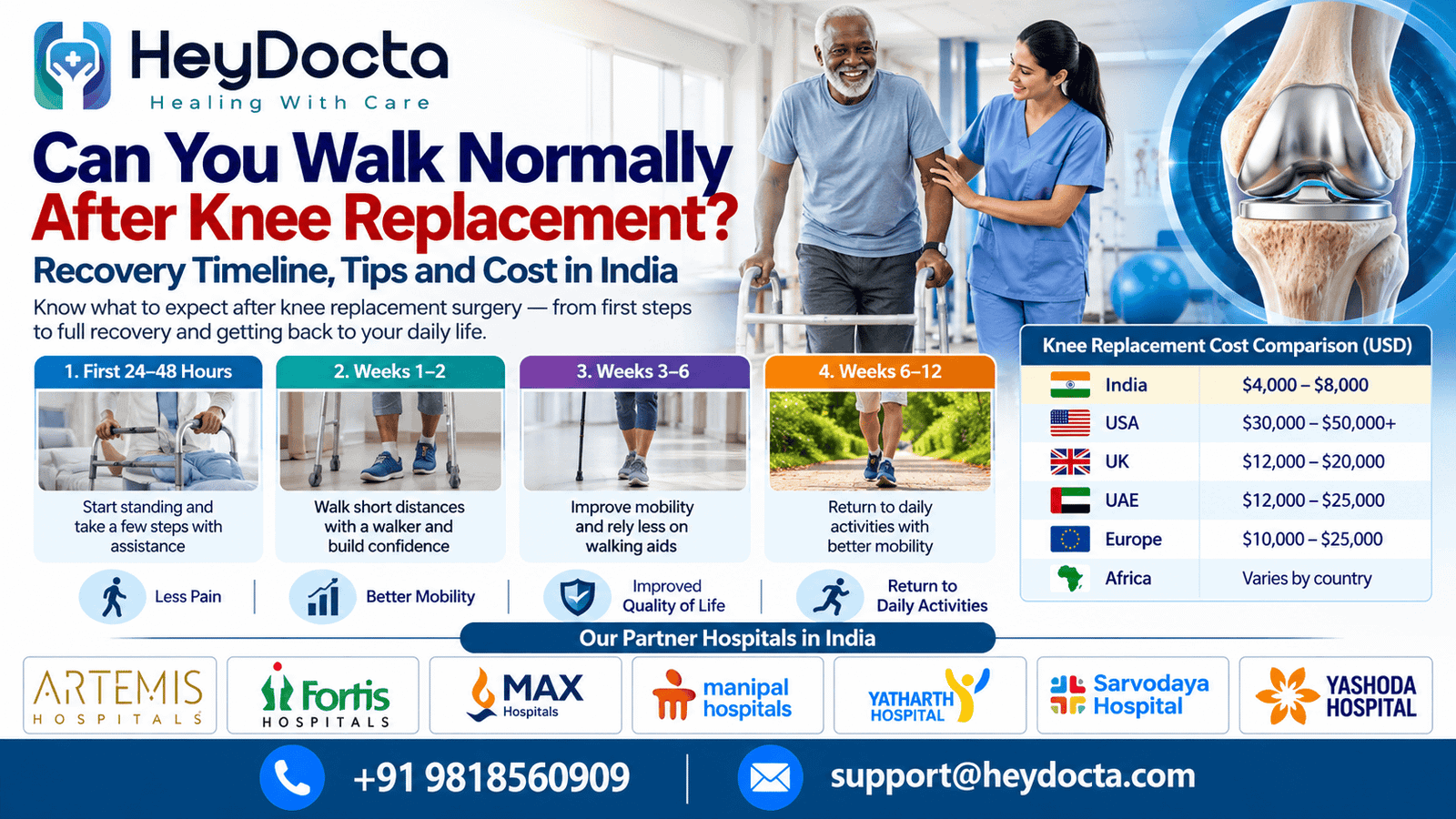
Can you walk normally after knee replacement? Yes, many patients regain comfortable walking and return to everyday activities after knee replacement surgery, although recovery takes time and results vary from person to person. Some patients walk with assistance within a day of surgery, while improving balance, strength, knee movement and confidence can take several weeks or months.
For international patients from Nigeria, Ghana, Kenya, Zimbabwe, Cameroon, Guyana, Jamaica, the USA, Europe and the Middle East, understanding the recovery process is essential when planning treatment abroad. India may offer comparatively affordable knee replacement surgery, but patients should consider the full cost of treatment, physiotherapy, accommodation and follow-up care.
This guide explains when you may walk again, how long recovery takes, what affects walking ability and how knee replacement costs in India compare with other countries.
Get a Free Medical Opinion : Contact HeyDocta to request a medical opinion, compare treatment estimates at partner hospitals and plan your treatment journey.
Can You Walk Normally After Knee Replacement Surgery?
Most patients who undergo knee replacement can expect improvements in pain and mobility over time. However, walking normally does not mean that the knee will feel exactly as it did before arthritis developed.
After surgery, patients may initially experience stiffness, swelling, muscle weakness and difficulty bending the knee. Physiotherapy and regular movement help rebuild strength and improve walking ability.
Recovery depends on several factors, including:
- The severity of arthritis before surgery.
- Muscle strength and mobility before the operation.
- Age and overall health.
- Whether a partial or total knee replacement was performed.
- The surgical approach and postoperative pain management.
- Consistency with physiotherapy and home exercises.
Some people eventually walk comfortably without support, climb stairs and resume recreational activities. Others may continue to experience mild stiffness, swelling or difficulty with certain movements.
The treating surgeon and physiotherapist can provide a more realistic recovery expectation based on your individual condition.
When Can You Start Walking After Knee Replacement?
Walking usually begins early after surgery, once the medical team considers it safe. Early movement helps patients regain confidence and reduces complications associated with prolonged immobility.
First 24–48 Hours
Many patients begin standing and taking a few steps with a walker and assistance from a physiotherapist within the first day or two. The exact timing depends on the patient’s condition, anaesthesia recovery and hospital protocol.
The initial goal is safe movement, not walking independently or covering long distances.
Weeks 1–2: Building Confidence
During the first two weeks, patients generally focus on:
- Walking short distances with a walker or other prescribed support.
- Practising safe transfers from bed to chair.
- Performing prescribed knee movement exercises.
- Managing swelling and pain.
- Following wound-care instructions.
Some patients progress quickly, while others need more assistance.
Weeks 3–6: Improving Mobility
Many patients gradually increase their walking distance and begin relying less on walking aids when their strength, balance and stability improve.
Physiotherapy focuses on knee flexibility, muscle strengthening and a safe walking pattern. Patients should not stop using a walker or cane until their healthcare team advises that it is appropriate.
Weeks 6–12: Returning to Daily Activities
Walking may feel more comfortable during this period, and many patients become more independent with everyday tasks. However, swelling, stiffness and fatigue may continue, particularly after increased activity.
Recovery can continue for several months. Some patients need longer to regain confidence or achieve their personal mobility goals.
What Does Normal Walking Feel Like After Knee Replacement?
A successful recovery often means walking with less pain and greater confidence, but the operated knee may feel different from a natural knee.
You may notice:
- Improved ability to stand and walk for longer periods.
- Less pain from arthritis.
- Better ability to climb stairs and perform daily tasks.
- Some stiffness after sitting for a long time.
- Occasional swelling after exercise or increased activity.
- A clicking or artificial sensation around the knee in some cases.
A completely pain-free knee or perfectly natural movement cannot be guaranteed. The main objective is to improve function and quality of life.
How Can You Improve Walking After Knee Replacement?
Rehabilitation is one of the most important parts of recovery. Following the surgeon’s and physiotherapist’s instructions helps you regain strength and movement safely.
1. Follow Your Physiotherapy Programme
Exercises help restore knee flexibility, strengthen the quadriceps and improve balance. Your programme should progress according to your recovery rather than a fixed timetable.
2. Walk Regularly in Short Sessions
Short, frequent walks may be more manageable than one long walk during the early stages. Increase activity gradually and follow your physiotherapist’s guidance.
3. Use Walking Aids When Needed
A walker or cane provides support while your muscles and balance recover. Stopping too early may increase the risk of falls.
4. Manage Swelling and Pain
Follow the prescribed medication plan and instructions for icing, elevation or other recommended measures. Excessive swelling and pain may interfere with rehabilitation.
5. Maintain a Healthy Weight
For patients who are overweight, appropriate weight management may reduce stress on the knee and support long-term mobility.
6. Avoid Rushing Recovery
Do not force knee bending, increase walking distance too quickly or return to demanding activities without medical advice. Recovery should be gradual and individualised.
What Can Delay Walking Recovery?
Some patients take longer to walk comfortably after knee replacement. Possible reasons include:
- Weak thigh muscles before surgery.
- Significant stiffness or deformity before the operation.
- Persistent swelling or pain.
- Other conditions affecting balance, nerves or mobility.
- Wound problems or infection.
- Inadequate access to rehabilitation.
- Complications such as blood clots or implant-related problems.
Contact your healthcare team if progress is unexpectedly slow or symptoms worsen. Sudden chest pain, shortness of breath, or significant calf pain and swelling require urgent medical assessment because they can indicate a serious complication.
Knee Replacement Cost in India vs Other Countries
Cost is a major consideration for international patients planning knee replacement surgery. India may offer lower private-treatment costs than several high-cost healthcare markets, although the final price depends on the hospital, implant, procedure and package inclusions.
The following are indicative planning estimates in USD, not confirmed quotations from individual hospitals.
| Country or procedure | Estimated cost |
| Total knee replacement in India | $4,000–$8,000 |
| Robotic-assisted knee replacement in India | $5,000–$10,000+ |
| Total knee replacement in the USA | $30,000–$50,000+ |
| Private knee replacement in the UK | $12,000–$20,000 |
| Private knee replacement in the UAE | $12,000–$25,000 |
| Private knee replacement in Europe | $10,000–$25,000 |
| Knee replacement in African countries | Varies by country and hospital |
These figures are broad budgeting ranges. They may not represent equivalent procedures, implants or package inclusions. Costs can vary significantly between providers, and public healthcare eligibility or insurance may affect what patients pay in the UK and Europe.
What Is Included in the Cost?
Before confirming treatment, ask the hospital whether the estimate includes:
- Surgeon and anaesthesia fees.
- Implant and operating theatre charges.
- Hospital admission and room category.
- Preoperative investigations.
- Medicines and postoperative monitoring.
- Initial physiotherapy.
Flights, visa expenses, accommodation, local transport, extended rehabilitation and follow-up visits may be additional expenses.
International patients should also account for the cost of staying in India until the surgeon confirms that travel is safe. A low surgical price may not represent the lowest overall cost if rehabilitation and accommodation are not included.
Need help comparing costs? HeyDocta can help you request estimates from partner hospitals and clarify treatment package inclusions before you travel.
Knee Replacement Specialists and Partner Hospitals in India
Patients considering knee replacement at Yatharth Hospital can enquire about Dr. Dhananjay Sabat and his current orthopaedic and joint replacement services. Confirm his current designation, experience, hospital affiliation and suitability for your condition directly with the hospital.
HeyDocta’s partner hospital network includes:
- Artemis Hospitals
- Fortis Hospitals
- Max Hospitals
- Manipal Hospital
- Yatharth Hospital
- Sarvodaya Hospital
- Yashoda Hospital
The availability of individual surgeons, implants and robotic systems varies by hospital. Patients should confirm current services and request a written treatment plan before making travel arrangements.
When comparing hospitals, consider surgical experience, rehabilitation facilities, infection-prevention practices, package inclusions and follow-up arrangements.
Treatment Process for International Patients
Step 1: Share Your Medical Reports
Provide recent knee X-rays, medical history, medication details and records of previous treatment. The treating team may request further tests.
Step 2: Obtain a Medical Opinion
An orthopaedic specialist assesses whether knee replacement is appropriate and discusses the procedure, expected recovery and potential risks. An in-person examination may still be necessary.
Step 3: Compare Treatment Estimates
Request written quotations and clarify implant options, admission duration, physiotherapy, exclusions and possible additional expenses.
Step 4: Arrange Your Visa and Travel
Check the current Indian visa requirements for your nationality and obtain the necessary hospital documentation before booking travel.
Step 5: Complete Surgery and Rehabilitation
Follow the hospital’s postoperative instructions and attend physiotherapy sessions. Do not plan your return flight until the surgeon confirms you are fit to travel.
Step 6: Arrange Follow-Up Care
Obtain your discharge summary, implant details, medication instructions and exercise plan. Arrange follow-up with your treating team and identify a suitable healthcare professional at home if needed.
HeyDocta can assist with hospital coordination, appointments, treatment estimates and travel guidance. HeyDocta provides medical tourism facilitation without an additional facilitation charge to patients; hospital treatment, investigations, medicines, flights, accommodation, visa fees and other third-party expenses remain separate.
Frequently Asked Questions
1. Can you walk normally after knee replacement?
Many patients regain comfortable walking and improve their daily function. However, the degree of recovery varies, and some stiffness or an artificial sensation may remain.
2. How soon can I walk after knee replacement surgery?
Many patients begin walking with assistance within 24–48 hours, when medically appropriate. The timing depends on recovery, stability and the hospital’s rehabilitation protocol.
3. How long does it take to walk without a walker?
Some patients transition to a cane or walk without support over the first several weeks, while others need longer. Stop using walking aids only when your healthcare team considers it safe.
4. Can I climb stairs after knee replacement?
Many patients gradually return to stair climbing with rehabilitation. The timing depends on strength, balance, pain and the safety instructions provided by the physiotherapist.
5. How much does knee replacement cost in India?
A broad planning estimate for total knee replacement is $4,000–$8,000. Actual costs depend on the hospital, implant, procedure and package inclusions.
6. How long should international patients stay in India?
Approximately 2–3 weeks may be an initial planning estimate after uncomplicated surgery, but some patients require a longer stay. The treating surgeon must confirm when it is safe to fly.
7. Does HeyDocta charge patients for medical tourism support?
HeyDocta provides medical tourism facilitation without an additional facilitation charge to patients. Hospital treatment, travel, visa, accommodation and other third-party expenses remain separate.
Conclusion: Walking Normally After Knee Replacement Takes Time
Many patients regain comfortable walking after knee replacement surgery, but recovery is gradual. Early assisted walking, regular physiotherapy, appropriate pain management and following medical advice can help improve mobility. Your age, preoperative strength, general health and any complications can influence how quickly you progress.
For international patients, India may offer comparatively affordable knee replacement options. Compare complete treatment costs, plan rehabilitation and arrange follow-up care before travelling.
Contact HeyDocta.com to request a medical opinion, compare knee replacement treatment costs at partner hospitals and plan your recovery journey in India.