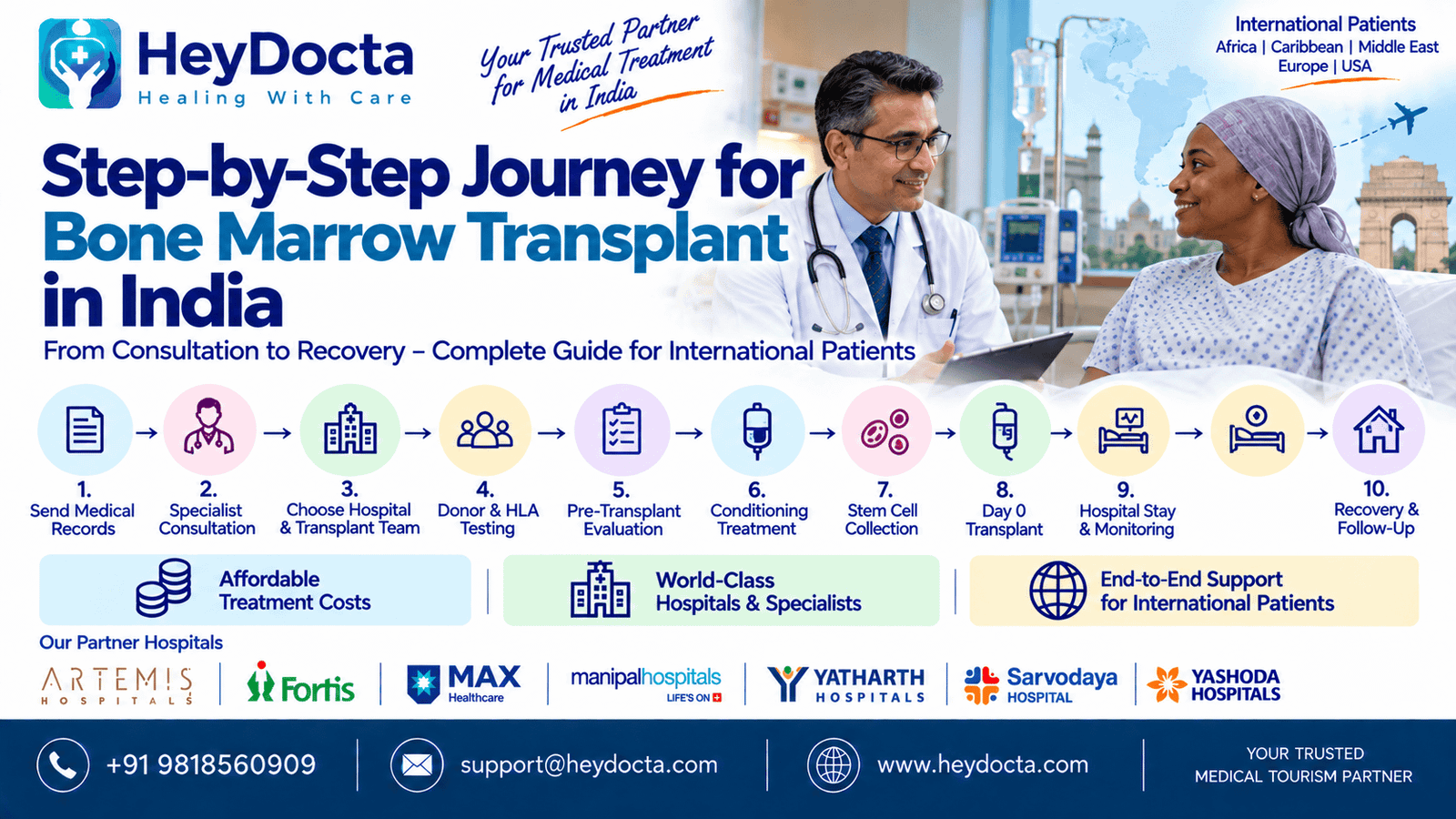
For international patients considering a step-by-step bone marrow transplant journey in India, understanding what happens before, during and after BMT can make medical travel easier to plan. Patients from Nigeria, Ghana, Kenya, Zimbabwe, Cameroon, Guyana, Jamaica, the Middle East, Europe and the USA often need to arrange medical consultations, donor testing, visas, flights, accommodation and a longer recovery period.
Bone marrow transplant, also called hematopoietic stem cell transplantation, is used for selected blood cancers and blood or immune-system disorders. The journey can take several months overall, although the main hospital phase is much shorter.
Get a Free Medical Opinion: Send your medical reports to HeyDocta for specialist review, hospital coordination and an indicative treatment plan before travelling to India.
Why International Patients Consider BMT Treatment in India
India has specialist haematology and BMT centres providing autologous and allogeneic transplantation. The available options may include matched-sibling, matched-unrelated and haploidentical donor transplantation.
For international patients, India can also be considered because of the range of private hospitals and comparatively lower published treatment costs than several Western markets. However, treatment should be selected according to the patient’s diagnosis, donor requirements, clinical complexity and transplant team’s expertise rather than price alone.
Cost planning is particularly important because BMT involves more than the transplant itself. Medicines, investigations, hospitalisation, donor testing, accommodation and follow-up may all contribute to the final expenditure.
What Is a Bone Marrow Transplant?
A BMT replaces damaged or diseased blood-forming stem cells with healthy stem cells. The cells may come from the patient or a donor.
Common transplant categories include:
- Autologous transplant: The patient’s own stem cells are collected and returned after high-dose treatment.
- Matched-sibling allogeneic transplant: Stem cells come from a compatible sibling.
- Matched-unrelated donor transplant: Stem cells come from a compatible unrelated donor.
- Haploidentical transplant: Stem cells come from a partially matched family donor.
BMT may be considered for conditions such as leukemia, lymphoma, multiple myeloma, aplastic anemia, thalassemia and sickle cell disease, depending on individual circumstances.
Step-by-Step Bone Marrow Transplant Journey in India
Step 1: Share Medical Records Before Travelling
The journey usually begins before the patient boards a flight to India.
International patients can share:
- Diagnosis and pathology reports
- Bone marrow biopsy reports
- Blood test results
- Imaging reports
- Previous chemotherapy records
- Current medicines
- HLA or donor-testing reports, if available
- Previous transplant-related information
The treating team uses these records to understand the patient’s condition and determine whether further investigations are needed.
HeyDocta can coordinate communication between the international patient and the selected Indian hospital.
Step 2: Specialist Medical Opinion
A haematologist or BMT specialist reviews the medical history and determines whether transplantation may be appropriate.
The consultation may address:
- Whether BMT is indicated
- Type of transplant
- Donor requirements
- Additional tests
- Conditioning treatment
- Expected hospitalisation
- Potential complications
- Approximate treatment cost
A final treatment plan should only be made after appropriate clinical evaluation.
Step 3: Choose the Hospital and Transplant Team
International patients may explore BMT services at hospitals such as:
- Artemis Hospital
- Fortis Hospitals
- Max Hospitals
- Manipal Hospital
- Yatharth Hospital
- Sarvodaya Hospital
- Yashoda Hospital
The right hospital depends on the patient’s disease, age, transplant type, donor availability, facilities and specialist team.
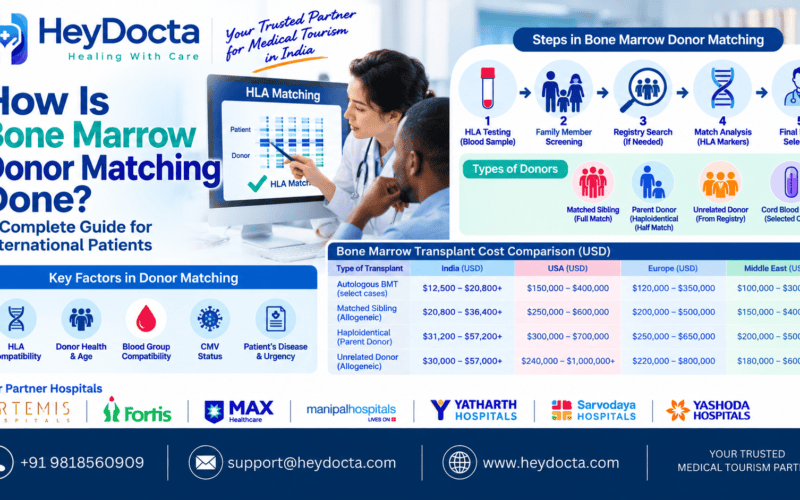
Step 4: Donor and HLA Testing
For an allogeneic transplant, doctors need to identify an appropriate donor.
Potential donors may include:
- Matched siblings
- Other family members
- Haploidentical family donors
- Matched unrelated donors
HLA testing helps determine donor compatibility. The donor pathway can influence both treatment timing and cost.
Step 5: Pre-Transplant Evaluation
Before BMT, the patient undergoes detailed medical assessment.
This may include:
- Blood tests
- Bone marrow evaluation
- Infection screening
- Heart assessment
- Lung assessment
- Kidney and liver tests
- Imaging
- Dental assessment where required
- Nutritional evaluation
These investigations help the transplant team assess whether the patient is ready for the next stage.
Step 6: Conditioning Treatment
The patient receives conditioning therapy before the stem-cell infusion.
According to the National Cancer Institute, conditioning can include high-dose chemotherapy and, in some cases, radiation. It helps prepare the body for transplantation and may destroy remaining abnormal cells.
The exact regimen depends on the disease and transplant plan.
Step 7: Stem Cell Collection
For an autologous transplant, the patient’s stem cells are collected and stored before conditioning.
For a donor transplant, stem cells may be collected from the donor’s bloodstream or another approved source.
NCI notes that blood stem-cell collection through apheresis can take approximately four to six hours, although the overall donor preparation and collection process varies.
Step 8: Day Zero – Stem Cell Infusion
The actual stem-cell infusion is often called Day 0.
The collected stem cells are infused through an IV or central venous catheter. NCI describes this process as similar to receiving a blood transfusion, with the infusion itself commonly taking one to five hours.
The transplant itself is therefore not usually a conventional surgical operation.
Step 9: Engraftment and Hospital Monitoring
After infusion, the patient enters the recovery phase.
The transplanted stem cells travel to the bone marrow and begin producing new blood cells. This process is called engraftment and commonly occurs within about two to four weeks, although individual timelines vary.
During this period, doctors closely monitor:
- White blood cells
- Red blood cells
- Platelets
- Fever and infections
- Organ function
- Nutrition
- Bleeding
- Medication response
- GVHD after allogeneic transplantation
Step 10: Discharge and Nearby Recovery
Hospital discharge does not mean the transplant recovery is complete.
Patients may need frequent outpatient appointments, blood tests, medicines and specialist monitoring. International patients are often advised to remain close to the transplant hospital until their doctor considers travel appropriate.
NCI notes that immune-system recovery can take several months after autologous transplantation and one to two years after allogeneic or syngeneic transplantation.
Step 11: Follow-Up and Return Home
Before returning home, the transplant team may review:
- Blood counts
- Infection status
- Medicines
- Organ function
- Nutritional status
- Complications
- Follow-up schedule
- Fitness to travel
The patient should receive a detailed medical summary for continued care in their home country.
BMT Care in India
International patients may consider consultation with experienced BMT specialists such as Dr. Gaurav Dixit, Head – Haematology Oncology & Bone Marrow Transplant at Artemis Hospitals, Gurugram.
His listed areas include BMT, haematopoietic stem-cell transplantation, haematology, oncology and paediatric haemato-oncology. His listed procedures include autologous, matched-sibling allogeneic, haploidentical and matched-unrelated donor transplantation.
Artemis also describes its BMT facilities, including isolation rooms with positive air pressure intended to help prevent infections.
Bone Marrow Transplant Cost in India vs Other Countries
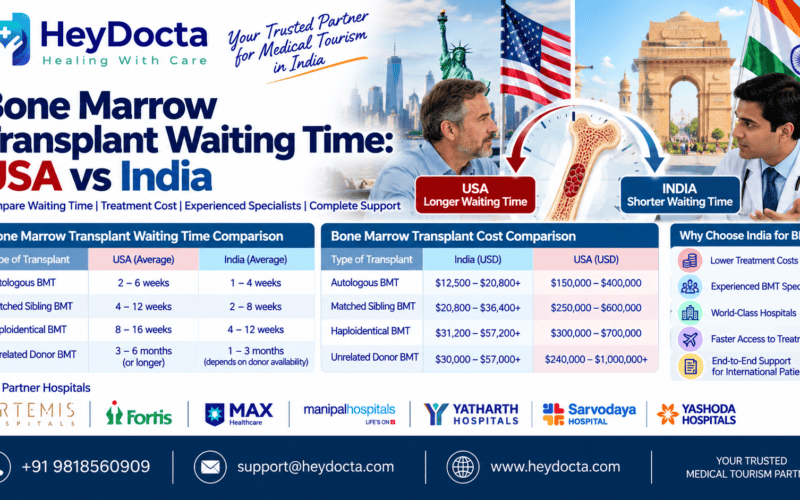
Cost varies substantially according to transplant type, patient condition, hospital, donor requirements, medicines, length of stay and complications.
Some Hospitals currently publishes a general BMT cost range of USD15,700–31,500, while 2026 international treatment estimates show broader ranges for complex transplant types.
For example, MedCasts’ May 2026 data lists these indicative ranges:
| Treatment | India | UAE | Germany |
| Autologous BMT | USD 25,560–59,510 | USD 60,490–131,770 | USD 101,700–236,940 |
| Allogeneic BMT | USD 34,660–81,380 | USD 80,510–174,900 | USD 150,180–327,900 |
| Haploidentical BMT | USD 36,440–87,040 | USD 80,520–193,070 | USD 147,360–348,160 |
These are indicative market estimates rather than guaranteed hospital quotations.
For comparison, the U.S. HRSA states that an unrelated bone marrow or cord-blood transplant can cost USD 240,000 to more than USD 1 million, including the transplant and up to six months of care.
Therefore, international patients should compare the complete treatment pathway, not only the initial hospital quotation.
Talk to Our Medical Tourism Expert: HeyDocta can help you request hospital estimates, understand what is included, coordinate specialist consultations and plan the medical journey before travelling.
Additional Costs International Patients Should Plan For
The complete budget may include:
| Expense | Possible components |
| BMT treatment | Conditioning, transplant and inpatient care |
| Donor testing | HLA and compatibility testing |
| Medicines | Supportive and post-transplant medicines |
| Investigations | Blood tests, imaging and monitoring |
| Accommodation | Hotel or serviced apartment |
| Caregiver | Food, accommodation and local expenses |
| Flights | Patient and caregiver |
| Visa | Medical and attendant visa-related costs |
| Follow-up | Consultations and laboratory tests |
The final amount should be confirmed directly through the treating hospital after reviewing the patient’s medical records.
Medical Visa and Travel Support
International patients should arrange medical travel well before treatment.
HeyDocta can assist with:
- Hospital coordination
- Specialist appointment scheduling
- Medical documentation
- Medical visa-related assistance
- Airport and local transportation guidance
- Accommodation coordination
- Caregiver planning
- Follow-up coordination
HeyDocta does not charge patients an additional fee for its medical-tourism coordination service. Hospital treatment, medicines, accommodation, flights and other third-party expenses remain separate.
How Long Should International Patients Stay in India?
BMT is not usually a short medical trip.
The main transplant process can take several weeks, while recovery and follow-up continue for months. NCI notes that patients may need to remain near their transplant hospital even after discharge, with immune recovery continuing for much longer.
International patients should therefore avoid booking a fixed return flight too early. The treating transplant team should determine when the patient is medically fit to travel.
FAQs About Bone Marrow Transplant in India
1. How many days does a bone marrow transplant take?
The overall journey can take several weeks or longer. Conditioning may take one to two weeks, followed by stem-cell infusion and recovery.
2. Is BMT a major surgery?
BMT is generally not a conventional surgical operation. The stem cells are usually administered through an IV or central venous catheter following conditioning treatment.
3. How long does engraftment take?
Engraftment commonly occurs within about two to four weeks, but the timeline varies between patients.
4. How much does BMT cost in India?
Published estimates vary. Some Hospitals currently gives a general range of USD15000–30,000 while 2026 treatment-market estimates vary by transplant type and complexity.
5. Can international patients travel home after BMT?
Yes, but the timing must be decided by the treating transplant team based on engraftment, infection risk, blood counts, complications and follow-up arrangements.
6. Can HeyDocta arrange BMT treatment in India?
HeyDocta can coordinate medical opinions, hospitals, appointments, treatment estimates, visa-related assistance, travel planning and follow-up support.
Conclusion
The step-by-step journey for bone marrow transplant in India starts well before the actual transplant. Medical-record review, specialist consultation, donor testing, pre-transplant investigations, conditioning, stem-cell infusion, engraftment and long-term follow-up are all important parts of the process.
For patients travelling from Africa, the Caribbean, the Middle East, Europe or the USA, careful planning can also help manage the financial and logistical challenges of treatment abroad. India offers multiple BMT centres and published treatment costs that can be substantially lower than some international markets, but the final choice should be based on medical suitability, transplant expertise, facilities, follow-up care and the complete cost of treatment.
Planning a bone marrow transplant in India? Contact HeyDocta.com for a Free Medical Opinion, hospital coordination, treatment cost guidance, medical visa assistance and end-to-end support for your journey to India.