Bone marrow transplant for ALL in India can be considered for selected patients with Acute lymphoblastic leukemia (ALL), particularly when the disease is high-risk, has relapsed, or when the treating team determines that an allogeneic stem cell transplant may provide an appropriate consolidation strategy. ALL is a complex blood cancer requiring specialist diagnosis, molecular testing and risk-based treatment planning. For international patients from Africa, the Middle East, Europe, the USA and other regions, India offers specialised hematology and BMT centres with potentially lower treatment costs than many Western healthcare markets.
A transplant is not automatically required for every ALL patient. Treatment depends on factors such as age, ALL subtype, genetic findings, response to treatment, minimal residual disease (MRD), relapse status and donor availability.
Get a Free Medical Opinion: HeyDocta can coordinate your medical records with Indian hematology and BMT specialists, help identify suitable hospitals and obtain an indicative treatment-cost estimate.
What Is Acute Lymphoblastic Leukemia (ALL)?
Acute lymphoblastic leukemia, or ALL, is a cancer of blood-forming tissues in which abnormal lymphoid cells multiply rapidly and interfere with normal blood-cell production.
ALL can affect both children and adults and may cause:
- Fatigue and weakness
- Fever or recurrent infections
- Easy bruising
- Bleeding
- Pale skin
- Shortness of breath
- Bone or joint pain
- Swollen lymph nodes
ALL is classified into different subtypes, including B-cell and T-cell ALL. Molecular and chromosome findings can also influence treatment decisions.
The National Cancer Institute explains that treatment for adult ALL may include chemotherapy, CNS-directed therapy, targeted therapy, immunotherapy and stem cell transplantation, depending on disease status and patient factors.
When Is Bone Marrow Transplant Used for ALL?
Not every patient with newly diagnosed ALL needs a bone marrow transplant.
Treatment commonly begins with remission-induction therapy followed by additional treatment. For selected patients in remission, allogeneic or autologous transplantation may be considered depending on risk and clinical circumstances. In recurrent ALL, reinduction treatment followed by allogeneic BMT may be an option for appropriate patients.
For children, treatment decisions are particularly age- and risk-specific. NCI notes that stem cell transplantation is used less often as initial treatment in childhood ALL and is more commonly considered in selected high-risk or relapsed situations.
Factors that may influence the decision include:
- B-cell or T-cell ALL
- Philadelphia chromosome or other molecular abnormalities
- MRD status
- Response to induction treatment
- Relapse or refractory disease
- Age and overall health
- Donor availability
- Previous treatment
Why International Patients Consider India for ALL Treatment
Patients from Nigeria, Kenya, Ghana, Zimbabwe, Cameroon, Guyana, Jamaica, the Middle East, Europe and the USA may explore treatment in India because of:
- Specialised hematology and BMT teams
- Availability of molecular and diagnostic testing
- Multiple donor-transplant approaches
- Dedicated transplant units
- Potentially lower treatment costs
- International patient coordination
- Medical visa assistance
- Travel and accommodation support
- Follow-up coordination
Treatment cost can be an important consideration, but patients should compare the complete medical package rather than only the advertised transplant price.
Types of Bone Marrow Transplant for ALL
Allogeneic Stem Cell Transplant
In an allogeneic transplant, blood-forming stem cells come from another person. The donor may be a matched sibling, matched unrelated donor or, in selected cases, a haploidentical family donor.
Allogeneic transplantation may be considered for selected patients with high-risk or recurrent ALL.
Haploidentical Transplant
A haploidentical transplant uses a partially matched family donor. It can provide an alternative donor option when a fully matched donor is unavailable.
Matched Unrelated Donor Transplant
If an appropriate family donor is unavailable, the transplant team may consider searching donor registries for a suitable unrelated donor.
Autologous Stem Cell Transplant
Autologous transplantation uses the patient’s own previously collected stem cells. Its role in ALL is more selective than in some other blood cancers and depends on the clinical situation.
BMT in India for ALL
International patients can seek evaluation from specialised hematology and BMT teams in India.
Dr. Gaurav Dixit, Head – Haematology Oncology & Bone Marrow Transplant at Artemis Hospitals, Gurugram, specialises in BMT, hematopoietic stem cell transplantation, hematology and oncology. His official profile lists acute lymphoblastic leukemia among his areas of expertise and lists matched-sibling allogeneic, haploidentical and matched-unrelated donor transplantation among his procedures.
Artemis Hospitals’ BMT services cover malignant and non-malignant hematological disorders and provide transplant-related care.
Patients should select a specialist based on the patient’s ALL subtype, molecular findings, treatment history, remission status, donor situation and individual medical requirements.
Bone Marrow Transplant Cost for ALL in India
Affordability is one of the reasons international patients explore BMT in India.
Some Hospitals currently lists a general BMT cost of approximately USD15,700 –31,500 while noting that the final cost varies according to hospital, location, room type and complications.
Current 2026 planning data gives a broader range depending on the transplant pathway. One India cost guide estimates:
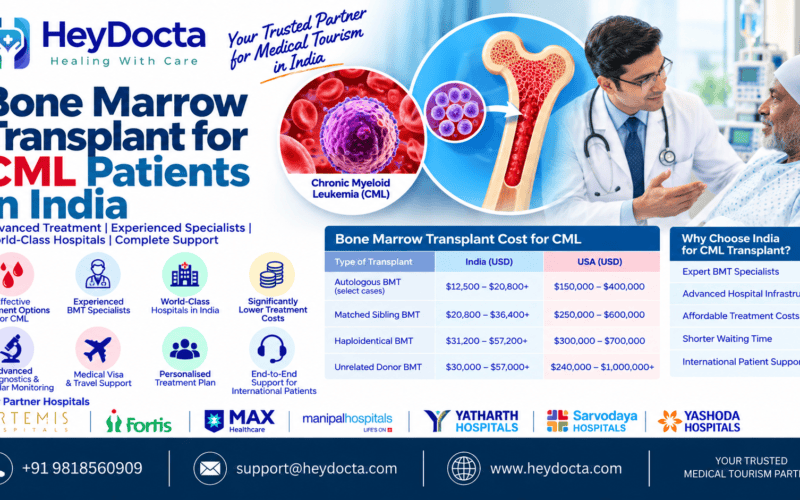
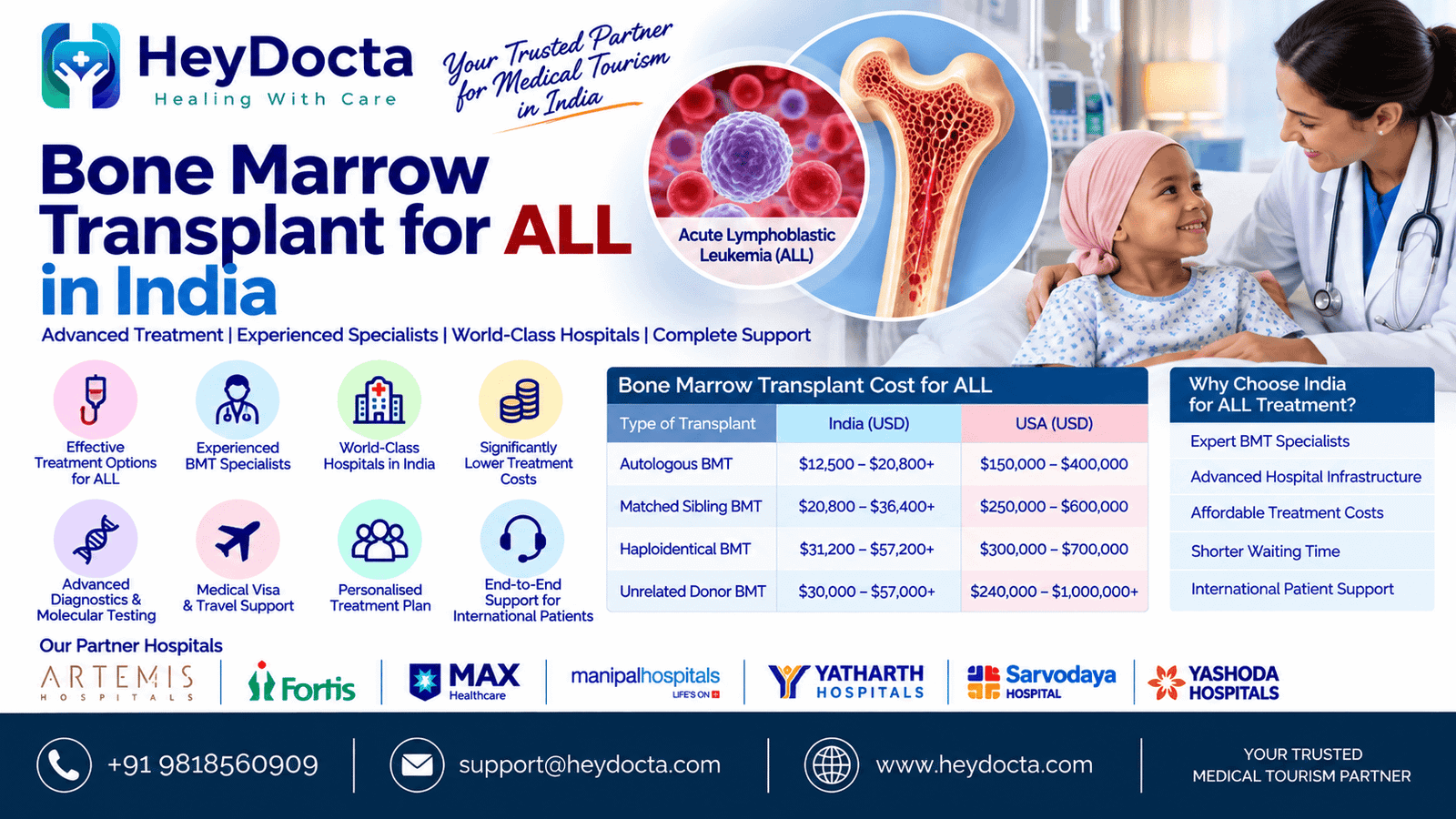
- Autologous BMT: USD 12,500–20,800
- Matched-related allogeneic BMT: USD 20,800–36,400
- Haploidentical/unrelated or complex BMT: USD 31,200–57,200+
These figures are planning ranges rather than fixed hospital quotations. Donor requirements, conditioning, medicines, hospital stay and complications can substantially change the final amount.
India vs USA: Indicative BMT Cost
| Treatment | India | USA |
| General BMT planning range | USD 12,500–57,200+ depending on type | Varies significantly |
| Matched-related allogeneic | USD 20,800–36,400+ | Generally substantially higher |
| Haploidentical BMT | USD 31,200–57,200+ | Generally substantially higher |
| Unrelated-donor transplant | Case-specific | USD 240,000 to $1M+ including extended care |
The U.S. Health Resources and Services Administration states that an unrelated bone marrow or cord blood transplant can cost USD 240,000 to more than USD 1 million, including the transplant and up to six months of care. Donor-search costs can also be approximately USD 10,000 to more than USD 50,000 in some circumstances.
These figures are not identical package definitions. Insurance coverage, hospital charges, medicines and the duration of post-transplant care can significantly affect actual patient expenses.
What Can Increase ALL BMT Cost?
The final treatment cost may depend on:
- ALL subtype and treatment complexity
- Donor type
- HLA matching and donor testing
- Donor search
- Conditioning treatment
- Stem cell collection and processing
- Hospitalisation
- Isolation/protective care
- Blood and platelet transfusions
- Medicines
- Molecular and laboratory monitoring
- Infection treatment
- Graft-versus-host disease management
- ICU care, if required
- Length of follow-up
International patients should also budget separately for flights, accommodation, local transportation and caregiver expenses.
Talk to Our Medical Tourism Expert: HeyDocta can help you request an itemised treatment estimate from a suitable Indian hospital based on the patient’s diagnosis and medical records.
Partner Hospitals for ALL and BMT
Depending on medical suitability and hospital availability, HeyDocta can coordinate enquiries with:
- Artemis Hospitals
- Fortis Hospitals
- Max Hospitals
- Manipal Hospitals
- Yatharth Hospitals
- Sarvodaya Hospital
- Yashoda Hospitals
There is no single hospital that is appropriate for every ALL patient. The treating centre should be selected according to disease characteristics, transplant requirements, specialist expertise, donor availability and supportive-care infrastructure.
Step-by-Step ALL Bone Marrow Transplant Process in India
Step 1: Send Medical Records
Patients can share bone marrow biopsy reports, flow cytometry, cytogenetic and molecular results, blood tests, imaging and previous treatment records.
Step 2: Specialist Review
A hematologist/BMT specialist reviews the case and determines whether transplantation should be considered.
Step 3: Disease and MRD Assessment
The team evaluates remission status and other disease-risk factors. MRD assessment can be an important part of treatment planning.
Step 4: HLA and Donor Assessment
Potential family donors may undergo HLA testing. If required, the hospital can consider an unrelated donor search.
Step 5: Treatment Planning
The hospital provides an individual treatment plan, expected hospitalisation period and indicative cost.
Step 6: Medical Visa and Travel
Eligible international patients can apply for an Indian e-Medical Visa. The Government of India’s official e-Visa portal states that e-Medical Visas are valid for one year from arrival with multiple entries. It also requires a letter from the Indian hospital for medical-treatment applications.
The current official portal states that eligible applicants may apply for e-Medical and e-Medical Attendant Visas at least four days before arrival, with an application window of up to 120 days.
Step 7: Conditioning and Transplant
When transplantation is indicated, the patient receives the prescribed conditioning treatment followed by stem cell infusion.
Step 8: Engraftment and Follow-Up
Blood counts, infection status, organ function and other parameters are closely monitored during recovery.
Recovery After ALL Bone Marrow Transplant
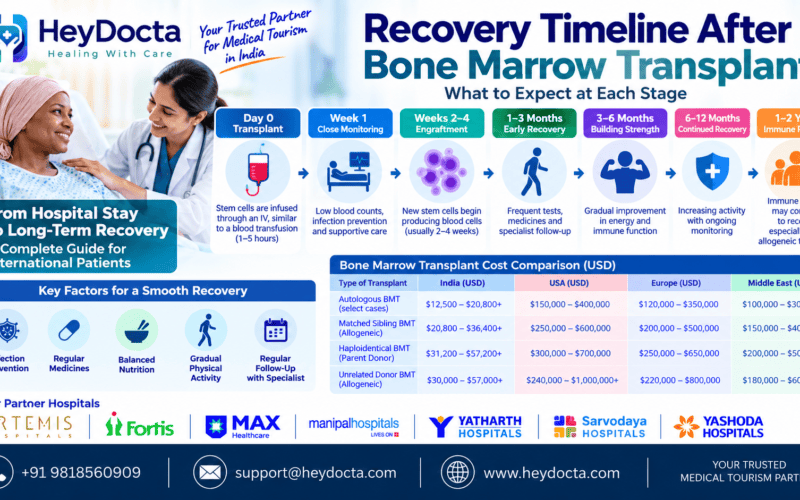
Recovery can take weeks to months and differs between patients.
Follow-up may include:
- Regular blood tests
- Infection monitoring
- Medicines
- Blood and platelet support
- Nutritional support
- Monitoring for graft-versus-host disease
- MRD monitoring when appropriate
- Specialist consultations
International patients should not make a fixed return-travel plan without discussing it with the treating team. The patient may need to remain near the transplant centre after discharge for early follow-up.
How HeyDocta Supports International ALL Patients
HeyDocta acts as a medical tourism facilitator for international patients seeking complex hematology and transplant care in India.
Support can include:
- Medical opinion coordination
- Hospital coordination
- Specialist appointment scheduling
- Treatment-cost estimates
- Medical visa assistance
- Airport and local transportation support
- Accommodation assistance
- Attendant coordination
- Follow-up communication
HeyDocta does not charge patients an additional service fee for its medical-tourism facilitation, subject to the specific hospital and travel arrangements.
Frequently Asked Questions
Is bone marrow transplant used to treat ALL?
Yes. Stem cell transplantation is one of the treatment options used for selected ALL patients, particularly in certain remission, high-risk or recurrent disease settings.
Does every ALL patient need a bone marrow transplant?
No. Treatment depends on the patient’s age, ALL subtype, genetic findings, response to treatment, MRD status, relapse risk and other medical factors.
How much does bone marrow transplant for ALL cost in India?
Indicative 2026 BMT planning ranges are approximately USD 12,500–20,800 for autologous transplantation, USD 20,800–36,400 for matched-related allogeneic transplantation and USD 31,200–57,200+ for complex or alternative-donor pathways. Actual costs require a hospital-specific quotation.
Is ALL BMT cheaper in India than in the USA?
India can have substantially lower treatment costs than U.S. private-care or uninsured rates. HRSA reports USD 240,000 to more than USD 1 million for an unrelated transplant including transplant and up to six months of care.
Can a patient without a matched sibling donor receive a transplant?
Potentially, yes. Depending on the patient’s medical situation, the transplant team may consider a matched unrelated donor or haploidentical family donor.
Can children with ALL receive a bone marrow transplant in India?
Yes, selected children may undergo stem cell transplantation. However, transplantation is not routinely used as the initial treatment for all children with ALL; the decision depends on risk, treatment response and other factors.
Can international patients travel to India for ALL treatment?
Eligible international patients can travel to India for planned medical treatment, subject to current visa and medical requirements. The official e-Visa process requires documentation from the treating Indian hospital.
Conclusion
Bone marrow transplant for ALL in India can be considered for selected international patients who require specialised hematology and transplant care. India provides access to different donor-transplant approaches, specialised BMT teams and potentially lower treatment costs compared with several Western healthcare markets.
However, ALL treatment must be individualised. The decision about transplantation should consider the patient’s age, ALL subtype, genetic and molecular findings, MRD status, response to treatment, relapse history, donor availability and overall health.
Get a Free Medical Opinion and ALL Treatment Cost Estimate: Contact HeyDocta.com to share your medical records and connect with suitable Indian BMT specialists and hospitals. HeyDocta can support your journey from medical consultation and hospital coordination through medical visa, travel planning, treatment coordination and follow-up.