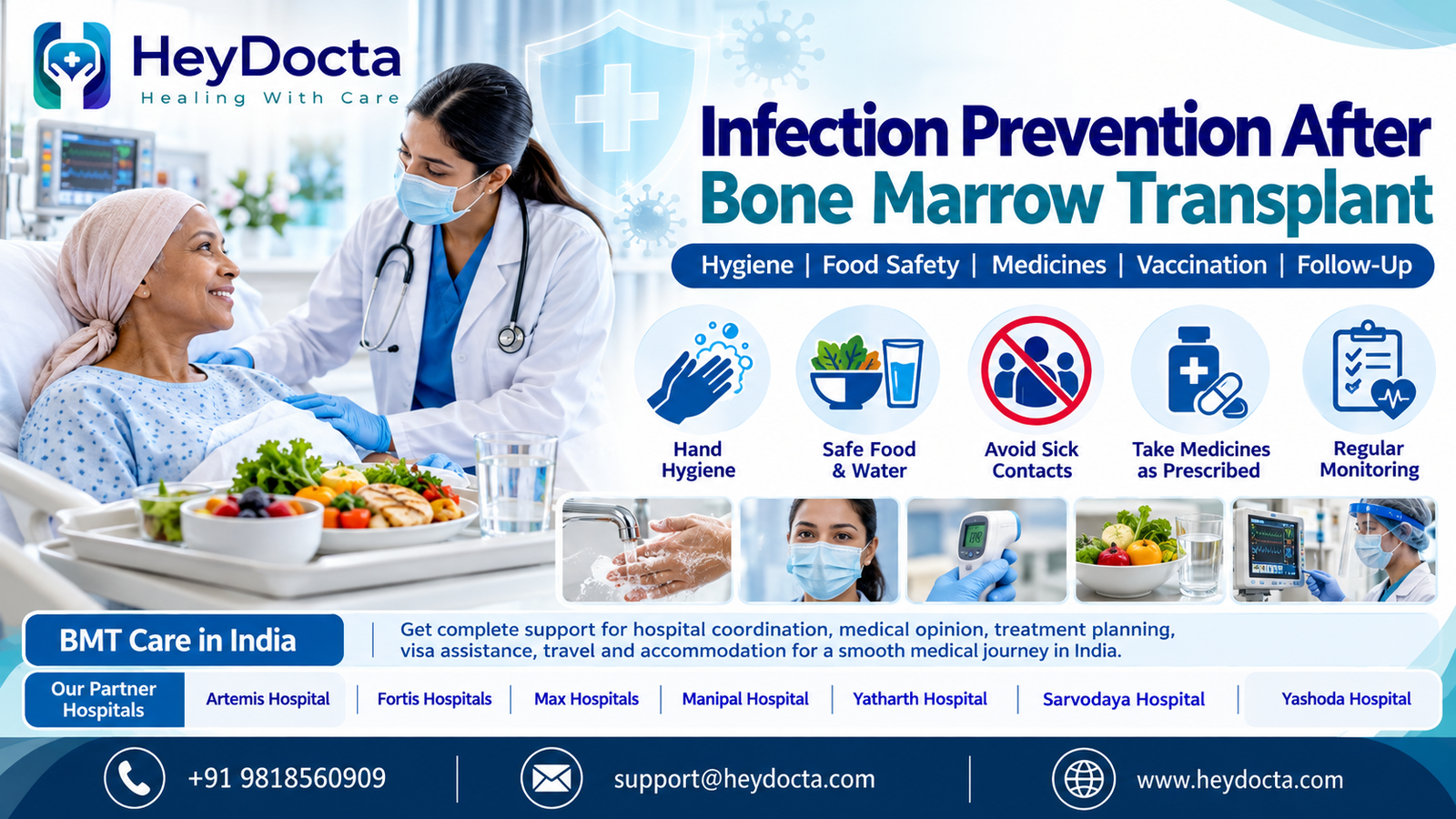
Infection prevention after bone marrow transplant is one of the most important parts of recovery. After a bone marrow or hematopoietic stem cell transplant (HSCT), the immune system may remain weakened for months, making bacterial, viral and fungal infections more likely. The risk and duration vary according to the transplant type, conditioning treatment, GVHD, medications and speed of immune recovery.
For international patients travelling to India for BMT, understanding infection precautions before treatment can help patients and caregivers prepare for hospitalisation, recovery, accommodation and follow-up.
Get a Free Medical Opinion: Share the patient’s medical reports with HeyDocta to understand the transplant pathway, expected monitoring and estimated treatment cost in India.
Why Is Infection Prevention Important After Bone Marrow Transplant?
A transplant does not immediately restore a fully functioning immune system. During the early recovery period, blood counts can be low and the body’s immune defenses may be significantly reduced.
According to the National Cancer Institute (NCI), bacterial infections commonly occur during the first few weeks after transplant, while viral and fungal infections can remain concerns during later stages of immune recovery. Patients with allogeneic transplants and those experiencing chronic GVHD may have prolonged immune suppression.
This is why infection prevention involves more than simply avoiding sick people. It can include:
- Hand hygiene
- Safe food and water
- Medication and infection prophylaxis
- Avoiding unnecessary exposure to infections
- Careful wound and catheter care
- Regular blood tests and monitoring
- Appropriate vaccinations at the recommended time
- Prompt reporting of fever or other symptoms
Common Infections After Bone Marrow Transplant
The type and timing of infection vary from patient to patient.
Bacterial Infections
Bacterial infections are particularly important during the neutropenic period following conditioning treatment. Damaged mucosal barriers and low white blood cell counts can increase susceptibility.
Viral Infections
Viruses such as cytomegalovirus (CMV), Epstein-Barr virus (EBV), adenovirus and other herpes-family viruses can cause problems after transplant, particularly in higher-risk patients. Monitoring and preventive treatment may be used according to the patient’s transplant type and risk profile.
Fungal Infections
Fungal infections can occur during significant immune suppression. NCI notes that antifungal prophylaxis is standard during the first several months in many transplant settings, with the exact approach tailored to the patient’s immune status and clinical risk.
10 Important Infection Prevention Measures After BMT
1. Wash Your Hands Frequently
Hand hygiene is one of the simplest and most important precautions.
Patients and caregivers should wash their hands:
- Before eating
- Before preparing food
- After using the toilet
- After touching pets or animals
- After being outdoors
- Before and after touching wounds
- Before and after direct patient care
CDC guidance for HSCT recipients specifically emphasises frequent and thorough hand hygiene.
2. Avoid Close Contact With Sick People
Patients recovering from BMT should avoid close contact with people who have respiratory infections whenever possible.
Caregivers and visitors should inform the medical team if they develop symptoms such as:
- Fever
- Cough
- Sore throat
- Runny nose
- Vomiting
- Diarrhea
- Other signs of infection
Avoiding crowded environments can also be recommended during periods of substantial immune suppression.
3. Follow Food-Safety Precautions
Foodborne infections can be particularly serious when immunity is weakened.
CDC recommends that people with weakened immune systems avoid higher-risk foods such as undercooked meat and eggs, unpasteurised dairy products and unwashed produce. The basic food-safety principles are clean, separate, cook and chill.
Your transplant centre may provide additional dietary restrictions based on your condition and treatment.
4. Use Medicines Exactly as Prescribed
Doctors may prescribe antimicrobial medicines to prevent certain infections during periods of increased risk.
NCI describes the use of preventive antibiotics, antivirals and antifungals in appropriate HSCT patients. Pneumocystis jirovecii pneumonia (PJP) prophylaxis is also commonly used in transplant care.
Never stop, restart or change these medicines without discussing it with your transplant team.
5. Maintain Good Personal Hygiene
Regular bathing, oral care and clean clothing can support general hygiene.
However, patients with low blood counts or mouth sores may need special instructions regarding oral care, shaving, skin care and personal products.
6. Protect the Central Line or Catheter
Some BMT patients have central venous catheters for medicines, fluids, blood products or other treatments.
The catheter area needs careful observation and proper care. Redness, swelling, pain, discharge or fever should be reported promptly.
7. Keep the Living Environment Clean
Patients should stay in a clean environment and reduce avoidable exposure to:
- Dust
- Mold
- Construction debris
- Soil and contaminated water
- Animal waste
- People with active infections
Patients should ask their transplant team before gardening, handling soil or undertaking activities involving animals.
8. Follow Vaccination Recommendations
Vaccinations may need to be repeated after transplant because previous immunity can be reduced.
Vaccination timing depends on the transplant type, immune recovery, immunosuppressive medicines and other factors. NCI notes that vaccination schedules differ between autologous and allogeneic transplant recipients and that live vaccines may be contraindicated while patients remain immunosuppressed.
Do not take any vaccine without confirming the timing with your transplant team.
9. Attend Every Follow-Up Appointment
Regular follow-up allows doctors to monitor:
- Blood counts
- Kidney and liver function
- Signs of infection
- Medication effects
- Viral reactivation
- GVHD
- Immune recovery
NCI notes that immune recovery can take approximately 3–9 months after autologous HSCT and 9–24 months after allogeneic HSCT without GVHD, although individual recovery varies considerably.
10. Report Warning Signs Quickly
Do not wait for symptoms to become severe.
Contact your transplant team promptly if you develop:
- Fever or chills
- Persistent cough
- Difficulty breathing
- Severe weakness
- Burning during urination
- Persistent diarrhea or vomiting
- New rash
- Redness or discharge around a wound or catheter
- Unusual bleeding
- Confusion or significant changes in alertness
Your hospital should provide specific instructions about what temperature or symptoms require immediate contact.
Infection Prevention During BMT Treatment in India
Indian BMT centres may use dedicated transplant units and infection-control protocols during treatment.
For example, Artemis Hospitals describes isolation rooms with positive air pressure as part of its BMT infrastructure and lists nutritional and psychological support among its supportive services.
For an international patient, the medical team may also coordinate:
- Pre-transplant infection screening
- Donor testing
- Blood investigations
- Antimicrobial prophylaxis
- Isolation precautions
- Infection monitoring
- Post-transplant follow-up
BMT Specialists and Hospitals in India
International patients can consider hospitals with dedicated hematology and BMT services, appropriate infection-control infrastructure and multidisciplinary support.
HeyDocta’s partner hospital network includes:
- Artemis Hospital
- Fortis Hospitals
- Max Hospitals
- Manipal Hospital
- Yatharth Hospital
- Sarvodaya Hospital
- Yashoda Hospital
At Artemis Hospitals, Dr. Gaurav Dixit is listed as Head – Haematology Oncology & Bone Marrow Transplant (Unit II), with expertise in BMT, hematopoietic stem cell transplantation, hematology and oncology. His listed transplant procedures include autologous, matched sibling allogeneic, haploidentical and matched unrelated donor transplantation.
Talk to HeyDocta about BMT treatment in India and get assistance with hospital coordination, medical opinions and international patient arrangements.
Bone Marrow Transplant Cost in India vs Other Countries
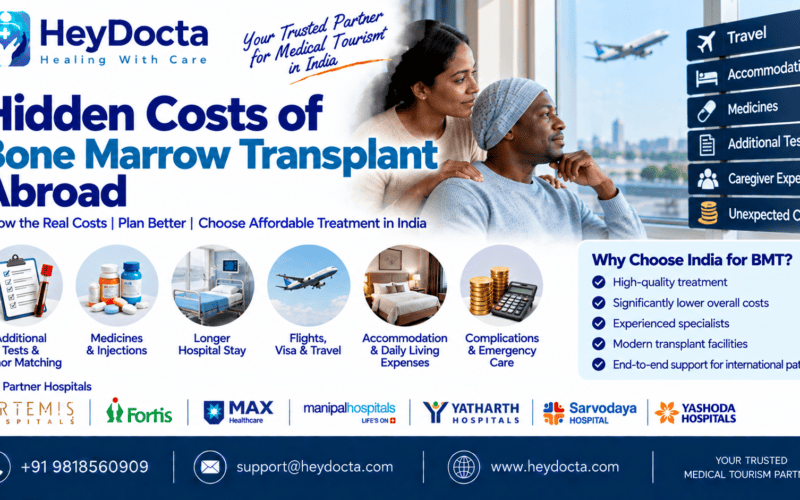
Treatment cost is an important consideration for patients from Africa, the USA, Europe and the Middle East.
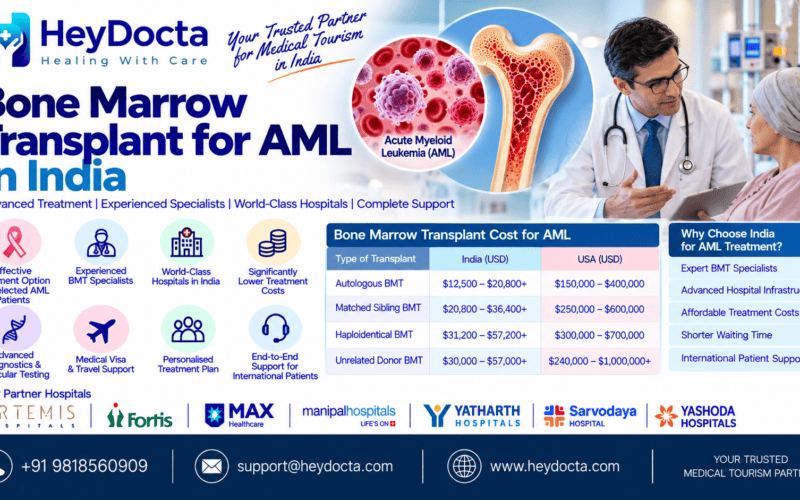
Some Hospitals currently publishes a general BMT cost range of approximately USD15000 to 31000 in India. The hospital notes that the actual cost can vary according to hospital, location, room category and complications.
The overall cost of BMT in other countries can be substantially higher, particularly when prolonged hospitalisation, donor-related services, medicines and treatment of complications are included. NCI describes stem cell transplantation as a complex and expensive treatment requiring specialised centres and multiple healthcare professionals.
| Cost Factor | India | USA/Europe/Middle East |
| BMT procedure | Published Indian ranges may start around USD15000 | Costs vary significantly by country and centre |
| Hospitalisation | Depends on transplant type and recovery | Can be substantial, especially with prolonged admission |
| Medicines | Depends on protocol and complications | May significantly increase total expenditure |
| Infection treatment | Depends on infection and severity | Can substantially increase total cost |
| Follow-up | Patient-specific | Patient-specific |
| Final quotation | Based on individual treatment plan | Based on individual treatment plan |
The table is intended for planning only. A direct country-to-country price comparison is difficult because packages, donor services, hospitalisation, medicines and post-transplant care may be included differently.
Step-by-Step Infection Prevention Plan
Step 1: Pre-Transplant Evaluation
Doctors review the patient’s diagnosis, previous treatment, infection history and laboratory results.
Step 2: Conditioning Treatment
Conditioning prepares the patient for transplantation but can temporarily reduce immune defenses.
Step 3: Stem Cell Infusion
Stem cells are infused into the patient’s bloodstream. Close monitoring continues during this period.
Step 4: Engraftment and Early Recovery
Blood counts are monitored closely while the new stem cells begin producing blood cells. Infection prevention is particularly important during this period.
Step 5: Discharge Planning
Before discharge, the patient and caregiver receive instructions about medicines, food safety, hygiene, visitors and warning symptoms.
Step 6: Long-Term Follow-Up
Follow-up continues after returning home. The duration and frequency depend on transplant type, complications and immune recovery.
Medical Visa and Travel Support for International Patients
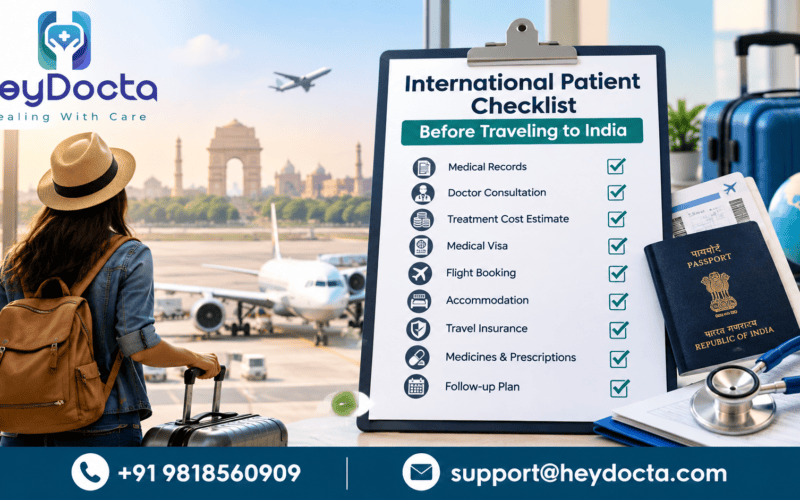
Patients travelling to India for BMT generally need appropriate medical documentation. India’s official e-Visa information states that an e-Medical Visa application requires a scanned passport bio page and a letter from the Indian hospital on its letterhead showing the suggested or tentative admission date.
HeyDocta can help international patients with:
- Medical opinion coordination
- Hospital selection and appointment coordination
- Treatment-cost estimates
- Medical visa documentation support
- Travel and accommodation coordination
- Airport assistance
- Communication with the hospital
- Follow-up coordination
HeyDocta acts as a medical tourism facilitator and does not replace the treating medical team. HeyDocta does not add a separate service fee to the patient’s hospital treatment cost.
FAQs About Infection Prevention After Bone Marrow Transplant
1. How long is infection risk high after bone marrow transplant?
The risk is particularly significant during early immune suppression, but it can continue for months. Recovery varies by transplant type and patient. NCI reports immune recovery can take several months after autologous transplant and longer after allogeneic transplant.
2. Can I meet family members after BMT?
Usually, carefully selected visitors may be permitted, but people who are sick should avoid close contact. Your transplant centre will provide specific visitor rules.
3. Can I travel after bone marrow transplant?
Travel timing should be decided by the transplant team. Patients may need frequent monitoring during the early recovery period, and travel can increase exposure to infections.
4. What foods should I avoid after BMT?
Avoid foods that carry a higher risk of foodborne infection, such as undercooked meat and eggs, unpasteurised products and improperly washed produce. Follow your hospital’s specific dietary instructions.
5. Are vaccines needed after bone marrow transplant?
Many patients require revaccination, but timing depends on transplant type and immune recovery. Vaccines should only be taken according to the transplant team’s schedule.
6. What infection symptoms require urgent medical attention?
Fever, chills, breathing difficulty, persistent diarrhea, new rashes, catheter redness or discharge and other sudden symptoms should be reported promptly. Your transplant centre should provide specific emergency instructions.
7. Can infection be completely prevented after BMT?
No. Infection prevention measures reduce exposure and risk but cannot eliminate infections completely. Close medical monitoring is essential during immune recovery.
Conclusion
Infection prevention after bone marrow transplant is a continuous part of BMT recovery. Hand hygiene, safe food preparation, avoiding unnecessary exposure, taking prescribed preventive medicines, appropriate vaccination and regular medical monitoring can all form part of an individualised infection-prevention plan.
For international patients considering BMT in India, the decision involves more than the procedure itself. Hospital infrastructure, specialist care, infection-control practices, expected stay, follow-up requirements and total treatment costs should all be discussed with the treating team.
HeyDocta helps patients from Nigeria, Ghana, Kenya, Zimbabwe, Cameroon, Guyana, Jamaica, the Middle East, Europe and the USA coordinate their medical journey to India.
Ready to explore BMT treatment in India? Contact HeyDocta.com for a free medical opinion, hospital coordination, treatment-cost guidance, medical visa support and end-to-end assistance for your medical journey.