Travelling to another country for medical treatment requires more planning than a normal holiday. An international patient checklist before traveling to India can help you organise medical records, hospital documents, visa paperwork, finances, flights, accommodation and post-treatment care before leaving your home country. This is especially important for patients travelling from Nigeria, Ghana, Kenya, Zimbabwe, Cameroon, Guyana, Jamaica, the Middle East, Europe and the USA.
India is considered a medical travel destination partly because of its large healthcare sector, specialist workforce and comparatively lower treatment costs. Government of India material also identifies cost competitiveness as an important part of India’s medical value travel proposition.
Get a Free Medical Opinion: Share your medical reports with HeyDocta before booking your flight. Our team can help coordinate specialist consultation, hospital selection, treatment estimates, visa assistance and travel planning.
Why International Patients Choose India for Medical Treatment
International patients may travel to India for treatments including cardiac procedures, orthopaedic surgery, cancer care, neurosurgery, fertility treatment, organ transplantation, bone marrow transplantation, dental procedures and other specialised care.
Common reasons patients consider India include:
- Access to specialised hospitals and doctors
- Availability of multiple treatment options
- International-patient departments at major hospitals
- Potentially lower treatment costs than some Western healthcare markets
- Availability of diagnostic and surgical services
- Medical tourism support services
- English-language communication at many major hospitals
However, patients should compare total treatment costs, not just the surgery price. Flights, accommodation, investigations, medicines, visas, local transportation and additional recovery days can affect the final budget.
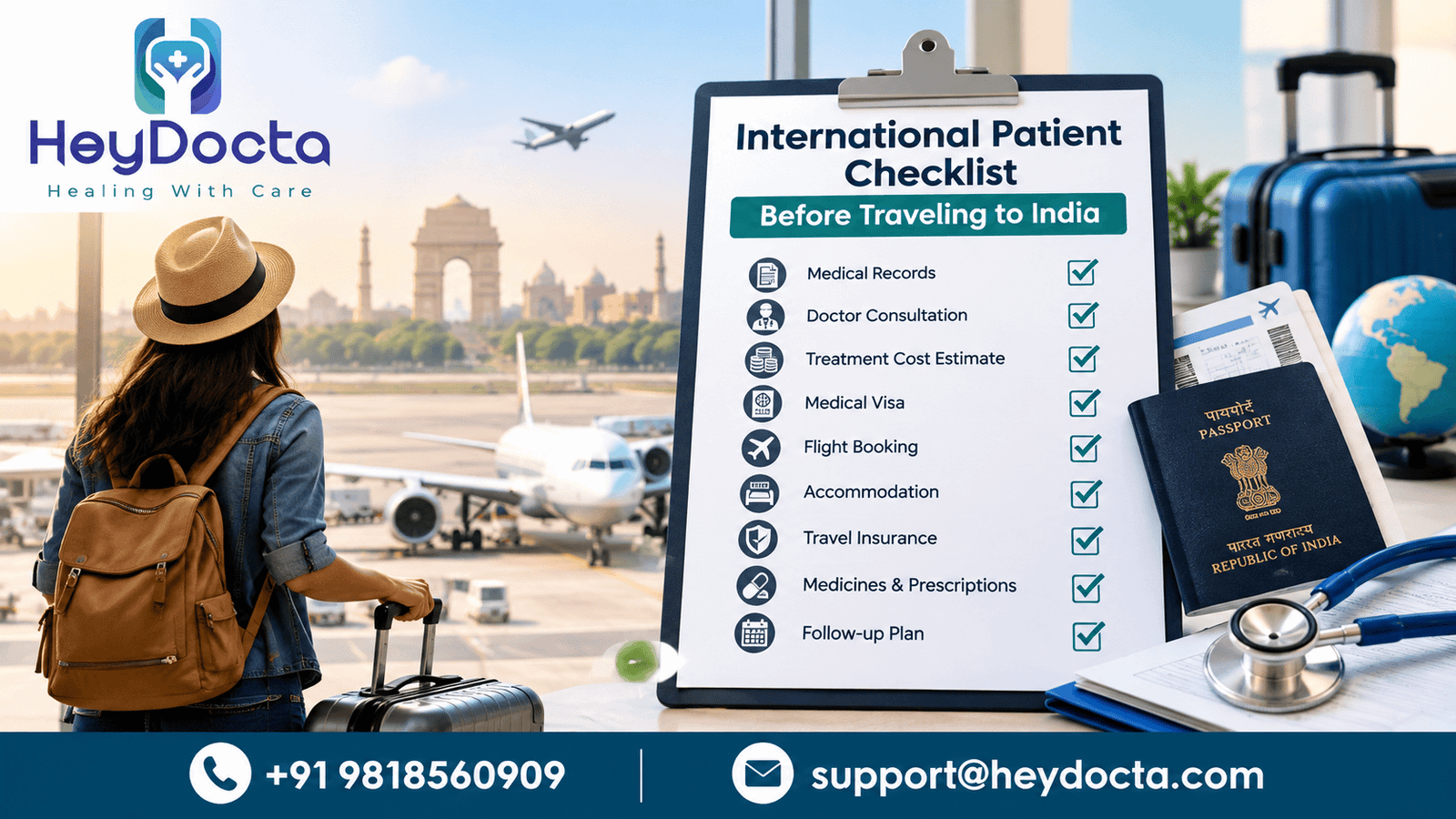
International Patient Checklist Before Traveling to India
Before leaving your home country, use the following checklist.
1. Collect All Medical Records
Create a digital and physical folder containing:
- Passport copy
- Previous medical reports
- Diagnosis reports
- Blood-test results
- CT, MRI, PET or X-ray reports
- Biopsy reports, where applicable
- Previous prescriptions
- Current medication list
- Previous surgery records
- Allergy information
- Doctor’s referral letter
- Vaccination records, if relevant
Keep scanned copies in secure cloud storage or email them to yourself.
2. Get a Medical Opinion Before Booking Travel
Send your medical records to the hospital or medical tourism facilitator before travelling.
The specialist may review your reports and provide guidance regarding:
- Possible diagnosis
- Recommended investigations
- Potential treatment options
- Expected hospital stay
- Approximate treatment cost
- Whether an in-person consultation is required
- Whether an attendant should accompany you
A pre-travel medical opinion can help prevent unnecessary travel when additional information is needed first.
For example, patients considering bone marrow transplantation can request an assessment from a haematology and BMT specialist. At Artemis Hospitals, Dr. Gaurav Dixit is listed as Head – Haematology Oncology & Bone Marrow Transplant , with expertise in BMT, haematopoietic stem cell transplantation, haematology and oncology. His listed procedures include autologous, matched-sibling allogeneic, haploidentical and matched-unrelated donor transplantation.
3. Confirm the Hospital and Treatment Plan
Before purchasing tickets, obtain written confirmation of:
- Hospital name and location
- Doctor/specialist
- Proposed treatment
- Tentative admission date
- Expected hospitalisation
- Estimated treatment cost
- What the estimate includes
- Additional costs that may arise
- Follow-up requirements
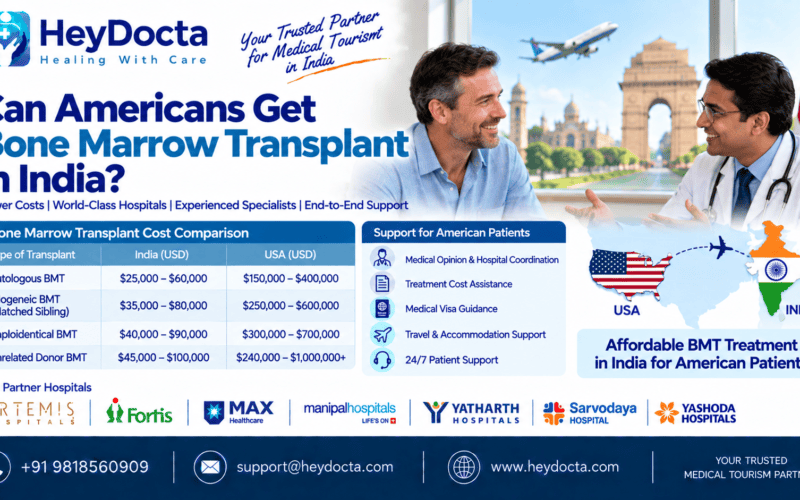
HeyDocta can coordinate with partner hospitals including Artemis Hospital, Fortis Hospitals, Max Hospitals, Manipal Hospital, Yatharth Hospital, Sarvodaya Hospital and Yashoda Hospital.
Patients should compare hospitals based on their diagnosis, specialist expertise, infrastructure, treatment requirements and overall cost rather than selecting a provider based only on advertising or price.
4. Ask for a Detailed Treatment Cost Estimate
One of the most important parts of your international patient checklist is understanding the complete treatment cost in India.
Ask whether the quotation includes:
- Doctor consultation
- Diagnostic tests
- Surgeon/professional fees
- Hospital room
- Operation or procedure charges
- Anaesthesia
- Medicines
- Medical supplies
- ICU charges, if required
- Implants or devices
- Blood products, if applicable
- Physiotherapy
- Follow-up consultation
Also ask about possible additional charges.
India vs Other Countries: Treatment Cost
India’s government medical-tourism strategy identifies affordability and cost competitiveness as factors in medical value travel.
| Cost Factor | India | USA/Western Europe | What Patients Should Compare |
| Hospital treatment | Often comparatively lower | Often higher | What is included |
| Specialist fees | Varies by doctor | Varies significantly | Consultation and procedure fees |
| Diagnostics | Varies by hospital | Varies by country/provider | Required tests |
| Medicines | Varies by treatment | Varies | Brand and duration |
| Accommodation | Wide range | Wide range | Required stay |
| Travel costs | Depends on origin | Depends on destination | Return flights |
| Follow-up | Depends on treatment | Depends on provider | Number of visits |
There is no single percentage saving applicable to every treatment. A patient should obtain a case-specific quotation from the hospital and compare the complete package with the expected cost in the home country.
5. Check Your Indian Medical Visa
Eligible international patients travelling to India for medical treatment can apply for an e-Medical Visa. The official Indian e-Visa portal states that applicants need a scanned passport bio page and a letter from the Indian hospital on its letterhead showing the suggested or tentative admission/treatment date. The passport must generally have at least six months’ validity at the time of e-Visa application and at least two blank pages.
Before applying:
- Check whether your nationality is eligible.
- Check passport validity.
- Obtain the hospital invitation/treatment letter.
- Prepare the required photograph and documents.
- Check current visa conditions on the official Indian government portal.
- Arrange an appropriate visa for your attendant if required.
Visa rules can change, so verify the latest requirements before submitting your application.
6. Plan Your Flights Carefully
Do not plan your flight schedule only around the hospital admission date.
Consider:
- Pre-treatment consultation
- Diagnostic tests
- Possible changes in treatment dates
- Hospitalisation
- Recovery period
- Follow-up appointments
- Doctor’s clearance before return travel
For major surgery or transplantation, keeping your return ticket flexible may be useful.
7. Arrange Accommodation
If your treatment requires outpatient appointments or a prolonged recovery period, accommodation near the hospital can reduce unnecessary travel.
Check:
- Distance from hospital
- Lift/elevator availability
- Accessibility
- Kitchen facilities
- Food options
- Laundry
- Attendant accommodation
- Transportation
- Cancellation policy
8. Prepare Your Medicines
Carry your regular medicines in their original packaging.
Also carry:
- Prescription copies
- Generic names of medicines
- Doctor’s letter where necessary
- Adequate medicine for the journey
- List of allergies
- Emergency contact details
Do not stop or change prescribed medication without medical advice.
9. Plan Your Budget Beyond Hospital Costs
Your medical travel budget should include more than the treatment quotation.
Typical Expenses to Consider
- Medical treatment
- Diagnostic tests
- Medicines
- Visa fees
- Return airfare
- Hotel/accommodation
- Food
- Local transportation
- Attendant expenses
- Additional hospital days
- Follow-up consultations
- Emergency or unexpected expenses
- Travel insurance, where available and appropriate
A contingency budget is particularly important when the treatment involves surgery, cancer care or transplantation.
10. Keep Important Documents Accessible
Create one travel folder containing:
Medical documents + Passport + Visa + Hospital letter + Flight tickets + Hotel booking + Insurance documents + Emergency contacts + Payment information
Keep both digital and printed copies.
Medical Tourism Support for International Patients
Travelling for treatment can involve coordination between the patient, hospital, doctor, visa authorities, airline, hotel and family members.
HeyDocta can assist international patients with:
- Medical report sharing
- Specialist consultation coordination
- Hospital coordination
- Treatment-cost estimates
- Medical visa assistance
- Flight and travel guidance
- Accommodation assistance
- Airport transfer coordination
- Follow-up planning
HeyDocta acts as a medical tourism facilitator, helping patients organise their treatment journey in India. HeyDocta does not add a separate service fee to the patient’s hospital treatment cost.
Talk to Our Medical Tourism Expert: Send your medical reports and receive assistance with treatment planning, hospital coordination and travel preparation.
What to Pack for Medical Travel to India
Medical Essentials
- Medical reports
- Prescriptions
- Medicines
- Previous scans
- Doctor’s referral
- Medical history
Travel Essentials
- Passport
- Visa
- Flight documents
- Hotel details
- Emergency contacts
- Payment cards/cash
Personal Essentials
- Comfortable clothing
- Appropriate footwear
- Personal hygiene items
- Mobile phone and charger
- Power adapter
- Important contact numbers
After Arriving in India
Once you arrive:
- Meet the hospital’s international-patient team.
- Complete registration.
- Attend the specialist consultation.
- Complete required investigations.
- Confirm the final treatment plan.
- Review the cost estimate.
- Proceed with treatment after appropriate medical consent.
- Follow the prescribed recovery and follow-up plan.
The actual treatment plan may change after physical examination or additional investigations.
FAQs About Traveling to India for Medical Treatment
1. What should I do before travelling to India for treatment?
Collect your medical records, obtain a specialist opinion, confirm the hospital and treatment plan, get a cost estimate, arrange your medical visa and book appropriate travel and accommodation.
2. How much does medical treatment cost in India?
The cost depends on the treatment, hospital, doctor, medicines, investigations, length of stay and complications. Patients should request an individual written quotation rather than relying on general online prices.
3. Can HeyDocta arrange my hospital appointment?
Yes. HeyDocta can coordinate medical reports and specialist consultations with partner hospitals in India.
4. Do I need a medical visa for India?
Eligible international patients travelling specifically for medical treatment may use India’s e-Medical Visa system. Requirements vary by nationality and current visa rules, so applicants should check the official Indian e-Visa portal.
5. Should I bring a family member or attendant?
For many major treatments, having an attendant can be helpful, but the need depends on the patient’s medical condition, procedure and hospital requirements.
6. How long should I stay in India?
The duration depends entirely on the treatment. Minor procedures may require a shorter stay, while major surgery, cancer treatment and transplantation can require substantially longer hospital and follow-up periods.
7. Can HeyDocta help with travel and accommodation?
Yes. HeyDocta can assist with hospital coordination, visa guidance, accommodation planning, airport transfers and other medical-tourism logistics.
Final International Patient Checklist
Before travelling, make sure you have:
- Medical reports
- Specialist opinion
- Hospital confirmation
- Treatment estimate
- Valid passport
- Medical visa
- Flight booking
- Accommodation
- Medicines and prescriptions
- Travel documents
- Emergency contacts
- Treatment budget
- Follow-up plan
- Attendant arrangements, if required
Conclusion
Travelling to India for medical treatment can be a major decision, particularly for patients coming from Africa, the Middle East, Europe, the USA or the Caribbean. A detailed international patient checklist before traveling to India helps reduce avoidable delays and makes the medical journey more organised.
The most important steps are to obtain a medical opinion before travelling, confirm the hospital and treatment plan, understand the complete cost, prepare the correct visa documents, arrange accommodation and plan sufficient time for treatment and recovery.
Get a Free Medical Opinion from HeyDocta: Share your medical reports with Heydocta.com to explore suitable treatment options in India, compare treatment estimates, coordinate with partner hospitals and receive assistance with visa and travel arrangements.