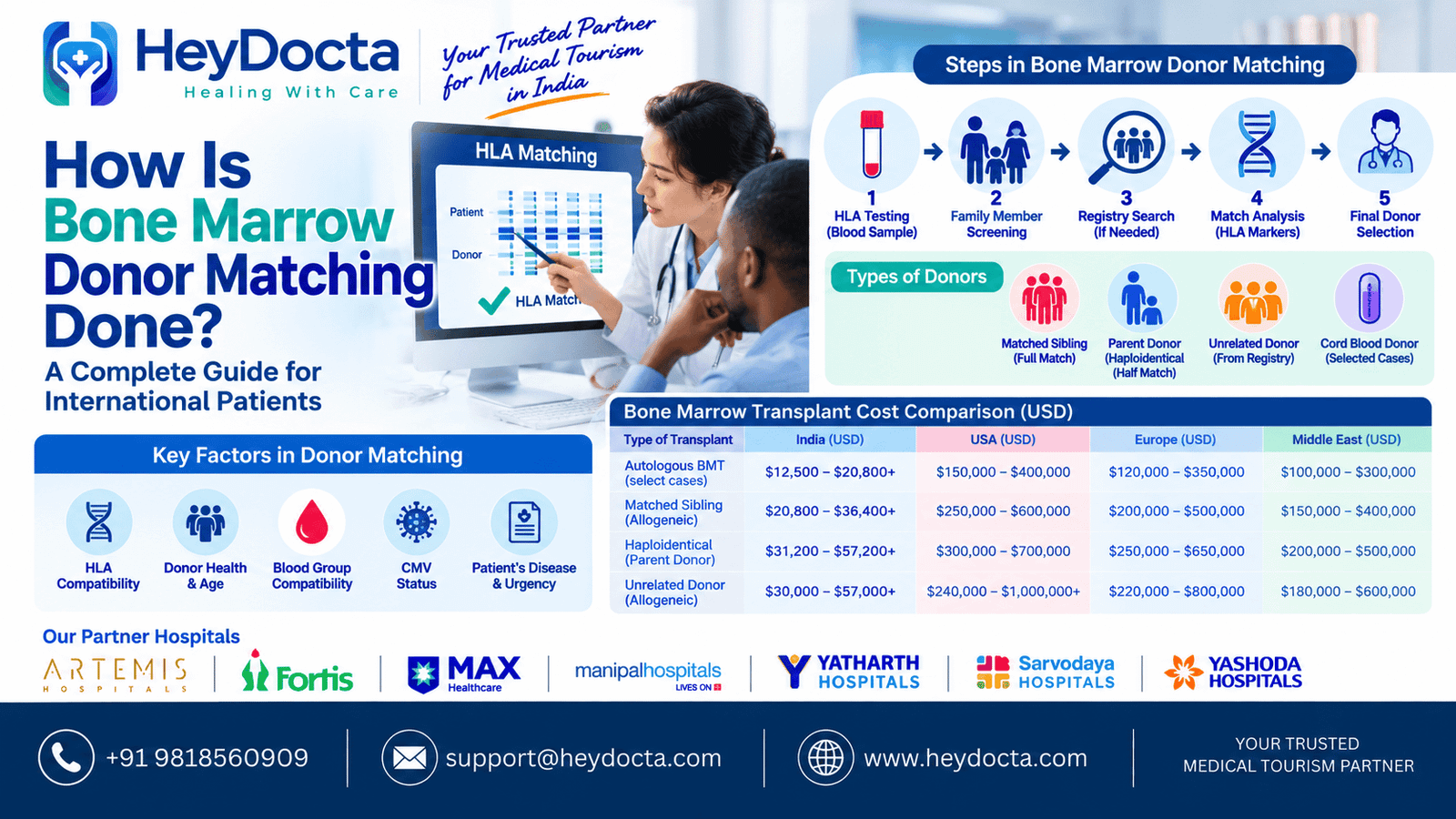
How is bone marrow donor matching done? Donor matching is mainly based on human leukocyte antigen (HLA) testing, which compares specific genetic markers between a patient and a potential donor. For an allogeneic bone marrow or blood stem cell transplant, doctors generally look for the closest suitable HLA match while also considering donor health, age, blood group, CMV status and other clinical factors.
For international patients from Nigeria, Ghana, Kenya, Cameroon, Zimbabwe, Guyana, Jamaica, the Middle East, Europe and the USA, understanding the donor-matching process is important before travelling to India. HeyDocta helps coordinate medical opinions, HLA-related hospital communication, treatment estimates, medical visas and travel arrangements.
Get a Free Medical Opinion: Share the patient’s medical reports with HeyDocta to discuss potential donor options and receive an estimated treatment plan from suitable Indian hospitals.
What Is Bone Marrow Donor Matching?
Bone marrow donor matching is the process of comparing a patient’s HLA markers with those of a potential donor.
HLAs are proteins or markers found on most cells in the body. They help the immune system distinguish the body’s own cells from foreign cells. Before an allogeneic stem cell transplant, blood or tissue samples from the patient and donor are tested to determine how closely their HLA types match.
The closer the match, the greater the likelihood that the donated stem cells will be accepted and the lower the risk of some transplant complications, including graft-versus-host disease (GVHD).
Why Is HLA Matching Important?
In an allogeneic transplant, stem cells come from another person. The patient’s immune system and the donor’s immune cells must therefore be carefully considered.
Doctors use HLA matching to help identify an appropriate donor. However, HLA matching is not the only factor used in donor selection.
The transplant team may also consider:
- Patient’s age and medical condition
- Type and stage of disease
- HLA compatibility
- Donor age and health
- CMV status
- Blood group compatibility
- Donor-specific antibodies where relevant
- Availability of the donor
- Urgency of transplantation
- Transplant centre experience and protocol
The European Society for Blood and Marrow Transplantation (EBMT) describes donor selection as a process that considers HLA matching together with factors beyond HLA, including donor age and CMV matching.
How Does HLA Matching Work?
Step 1: Patient HLA Typing
The patient’s blood sample is tested to determine their HLA type.
Depending on the transplant centre and clinical situation, testing may examine several HLA loci, including:
- HLA-A
- HLA-B
- HLA-C
- HLA-DRB1
- HLA-DQB1
- HLA-DPB1 in selected settings
High-resolution, allele-level testing is commonly important when evaluating unrelated donors. EBMT guidance describes high-resolution typing of major HLA loci as part of donor evaluation.
Step 2: Test Family Members
Doctors commonly begin by testing close relatives, particularly brothers and sisters.
A fully HLA-matched sibling can be an important donor option. However, not every sibling will have the same HLA combination.
The NHS explains that the first step is generally to determine whether a sibling is a match; if no suitable family match exists, donor registries may be searched.
Step 3: Search for an Unrelated Donor
If there is no suitable family donor, the transplant team may search an appropriate donor registry.
An unrelated donor can be a close HLA match even though the donor is not biologically related to the patient.
However, finding a suitable unrelated donor can be more difficult for some populations because HLA characteristics vary between populations. NCI notes that finding appropriately matched unrelated donors can be challenging for patients from certain ancestral groups, including African, Hispanic, Asian and Pacific-Islander populations.
This is particularly relevant for international patients because donor availability can differ according to ancestry and the donor registry being searched.
What Does 10/10 HLA Match Mean?
You may hear transplant teams use terms such as 10/10 match, 9/10 match or 8/8 match.
These numbers describe matching across particular HLA loci.
For example, EBMT registry definitions describe a 10/10 unrelated donor match as matching at HLA-A, HLA-B, HLA-C, HLA-DRB1 and HLA-DQB1. A 9/10 donor has one mismatch within those five loci.
An 8/8 match generally refers to matching at HLA-A, HLA-B, HLA-C and HLA-DRB1.
The exact matching terminology can vary depending on the transplant protocol and testing methodology, so patients should ask their transplant team to explain the specific match being reported.
What If There Is No Fully Matched Donor?
A patient does not necessarily lose the possibility of transplantation simply because a fully matched sibling is unavailable.
Depending on the disease and clinical circumstances, doctors may consider:
- Fully matched unrelated donor
- Single-mismatch or other appropriately selected unrelated donor
- Haploidentical family donor
- Cord blood in selected settings
A haploidentical donor is usually about 50% HLA matched and may be a parent, child or sibling.
Modern transplant protocols have expanded donor options, but the most appropriate approach depends on the individual patient.
Matched Sibling vs Unrelated Donor
| Factor | Matched Sibling | Matched Unrelated Donor |
| Relationship | Brother or sister | Unrelated volunteer |
| HLA testing | Required | Required |
| Donor search | Family testing | Registry search |
| Search costs | Usually limited to family testing | May include registry/search-related costs |
| Availability | Depends on family genetics | Depends on registry availability |
| Matching | May be fully matched | Can be highly matched |
| Additional donor factors | Considered | Considered |
| Final decision | Transplant team | Transplant team |
The EBMT Handbook notes that an HLA-identical sibling is generally considered an important donor option, while fully matched unrelated donors are an established alternative when a suitable sibling is unavailable.
Can Parents Be Bone Marrow Donors?
Yes. Parents can potentially serve as haploidentical donors because they usually share one HLA haplotype with their biological child.
A parent still needs formal HLA testing and medical evaluation. The transplant team determines whether that parent is an appropriate donor and whether haploidentical transplantation is suitable for the patient.
This option can be particularly relevant when a patient does not have a fully matched sibling or suitable unrelated donor.
Bone Marrow Donor Matching and Treatment Cost in India
Donor matching is only one part of the overall transplant expense.
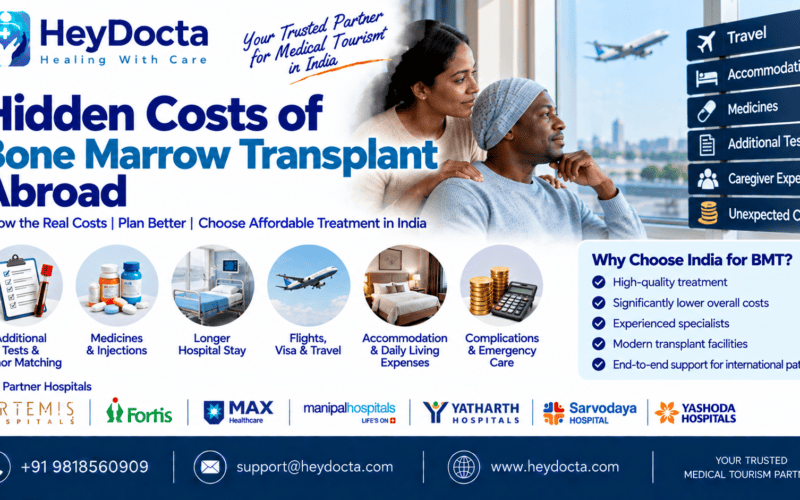
The total cost can include:
- HLA testing
- Donor evaluation
- Donor search, when required
- Conditioning therapy
- Stem cell collection
- Hospitalisation
- Medicines
- Blood products
- Infection monitoring
- Post-transplant care
- Treatment of complications
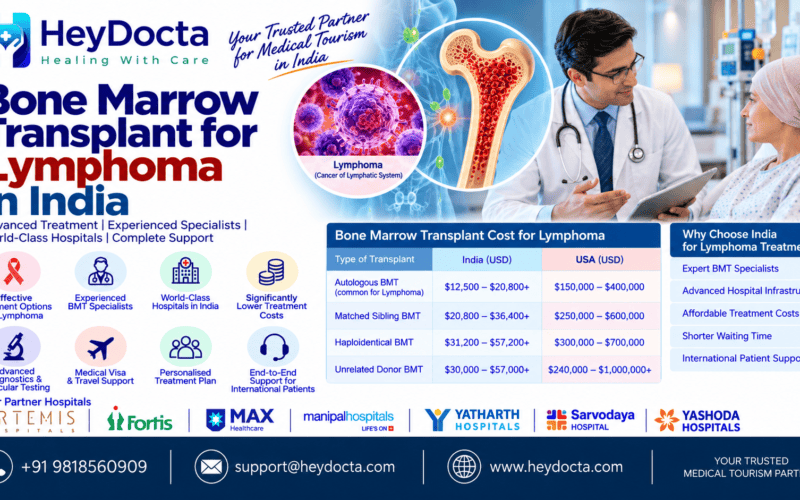
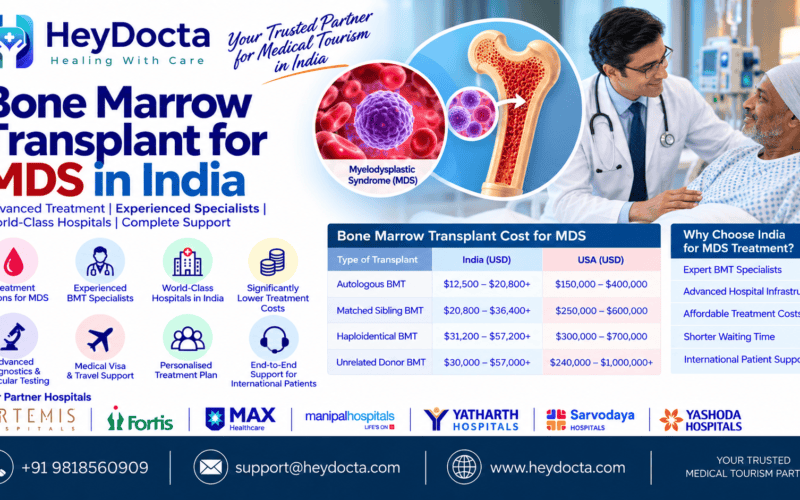
Some Hospitals currently publishes a general bone marrow transplant cost in India of approximately USD 15000 to 31000 while noting that the final cost varies by hospital, location, room type and complications.
Indicative International Cost Comparison
| Cost factor | India | USA |
| General BMT planning range | USD15000–31000* | — |
| HLA testing | Depends on hospital | Depends on centre/insurance |
| Related donor evaluation | Hospital-specific | Testing cost may apply |
| Unrelated donor search | Depends on registry and centre | USD 10,000–50,000+ in some cases |
| Unrelated transplant + extended care | Hospital-specific | USD 240,000 to >USD 1 million in reported range |
The U.S. Health Resources and Services Administration states that an unrelated bone marrow or cord blood transplant can cost USD 240,000 to more than USD 1 million, including the transplant and up to six months of care. It also reports that searching for a closely matched donor or cord-blood unit can cost USD 10,000 to more than USD 50,000 in some circumstances.
Costs in Europe, the Middle East and African countries vary significantly depending on the country, hospital, insurance coverage and transplant complexity. Therefore, patients should request an individual quotation rather than relying on a generic online figure.
*Indian BMT figures are indicative planning ranges and not a guaranteed package price.
Talk to Our Medical Tourism Expert: HeyDocta can help coordinate medical records, HLA-related communication and hospital cost estimates before you travel to India.
Why International Patients Consider India for BMT
Patients from Africa, the Middle East, Europe, the USA and the Caribbean may consider India for complex haematology and stem cell transplantation because of the availability of specialised transplant centres.
When comparing hospitals, patients should assess:
- Transplant specialist experience
- HLA testing and donor coordination
- Stem cell collection facilities
- Infection-control infrastructure
- Blood bank and laboratory services
- ICU availability
- Post-transplant monitoring
- Follow-up arrangements
- Total treatment cost
HeyDocta’s partner hospital network includes Artemis Hospitals, Fortis Hospitals, Max Hospitals, Manipal Hospital, Yatharth Hospital, Sarvodaya Hospital and Yashoda Hospital.
Bone Marrow Transplant Specialist in India
Dr. Gaurav Dixit is Head – Haematology Oncology & Bone Marrow Transplant at Artemis Hospitals, Gurugram. His official profile lists 20 years of experience and includes matched sibling allogeneic stem cell transplant, haploidentical stem cell transplant and matched unrelated donor transplant among his procedures. His areas of expertise include leukemia, myeloma, lymphoma, aplastic anemia and other haematological disorders.
Patients should also compare other transplant teams according to their diagnosis, donor requirements and individual treatment plan.
Bone Marrow Donor Matching Process: Step by Step
1. Medical Assessment
The transplant team reviews the diagnosis, previous treatment and current health.
2. HLA Testing
The patient undergoes HLA typing to establish the recipient’s tissue type.
3. Family Screening
Siblings and other appropriate family members may be tested first.
4. Donor Evaluation
Potential donors undergo additional HLA and medical assessment.
5. Registry Search
If necessary, the transplant team searches for a suitable unrelated donor.
6. Donor Selection
The team compares HLA match and other donor factors before selecting the appropriate donor.
7. Pre-Transplant Treatment
The patient receives conditioning therapy before transplantation. NHS guidance explains that conditioning commonly involves chemotherapy or radiotherapy before stem-cell infusion.
8. Stem Cell Collection and Infusion
Donor stem cells may be collected from peripheral blood or bone marrow and then infused into the patient.
9. Engraftment and Monitoring
The patient is closely monitored for blood-count recovery, infections, GVHD and other complications.
Medical Visa and Travel Support for International Patients
International patients travelling to India can apply for the appropriate medical visa if eligible.
The Government of India’s official e-Visa information states that an e-Medical Visa application requires a passport bio page and a letter from the Indian hospital on its letterhead containing the suggested or tentative admission date.
HeyDocta can support international patients with:
- Medical report coordination
- Hospital communication
- Specialist consultation
- HLA/donor-related coordination
- Treatment-cost estimates
- Medical visa guidance
- Airport and local travel support
- Accommodation coordination
- Follow-up communication
There is no separate HeyDocta service fee added to the patient’s hospital treatment cost for this facilitation service.
Recovery and Stay Duration
The length of stay varies according to the disease, transplant type, conditioning regimen, engraftment and complications.
Patients may spend several weeks receiving treatment and monitoring and may need to remain close to the transplant centre after discharge.
For international patients, it is important to budget for:
- Hospitalisation
- Accommodation after discharge
- Medicines
- Blood tests
- Follow-up consultations
- Local transportation
- Possible additional treatment
The treating transplant team should provide the most accurate estimate of the expected stay.
FAQs About Bone Marrow Donor Matching
1. How is a bone marrow donor matched?
A donor is primarily matched through HLA testing. The patient’s and donor’s HLA markers are compared to determine compatibility.
2. Who is usually tested first?
Close family members, particularly siblings, are commonly evaluated first. If no suitable family donor is available, an unrelated donor search may be considered.
3. What does a 10/10 HLA match mean?
It generally means matching at HLA-A, B, C, DRB1 and DQB1. The exact terminology can vary by transplant programme.
4. Can parents donate bone marrow?
Yes. A parent can potentially be a haploidentical donor, usually sharing approximately one HLA haplotype with the child.
5. What happens if no matched sibling is available?
Doctors may consider a matched unrelated donor, haploidentical family donor or another appropriate donor source depending on the patient’s condition.
6. How much does bone marrow transplant cost in India?
SomeHospitals currently publishes a general range of approximately USD 15000–31000 although the final cost varies by patient, hospital, transplant type and complications.
7. Can HeyDocta help with donor matching?
HeyDocta can help coordinate communication between international patients, their existing doctors and Indian transplant hospitals. The medical team performs the actual HLA testing and donor selection.
Conclusion
Bone marrow donor matching is a detailed medical process, with HLA testing at its centre. Doctors usually evaluate family members first and may search international donor registries when a suitable family donor is unavailable. A patient’s ancestry, HLA profile, disease, urgency and donor availability can all influence the options.
For international patients considering India, understanding donor matching before travelling can help with treatment planning and budgeting. India also offers specialised transplant centres, while published BMT costs can differ substantially from costs reported for unrelated donor transplantation in the United States.
Get Treatment Cost from Indian Hospitals: Contact HeyDocta.com for medical report review, donor-related coordination, hospital selection, treatment-cost estimates, medical visa guidance, travel assistance and end-to-end support for bone marrow transplantation in India.