
Bone marrow transplant for lymphoma in India is an important treatment option for selected patients with relapsed, refractory, or high-risk lymphoma. For international patients from Nigeria, Kenya, Ghana, Zimbabwe, Cameroon, Guyana, Jamaica, the Middle East, Europe, and the USA, India offers access to specialised haematology and transplant centres at comparatively lower treatment costs. However, transplant suitability depends on the lymphoma type, previous treatment, disease response, overall health, and whether the patient’s own or donor stem cells are appropriate.
HeyDocta helps international patients obtain medical opinions, compare hospital options, coordinate appointments, arrange travel and visa assistance, and plan their treatment journey in India.
Get a Free Medical Opinion: Share your medical reports with HeyDocta to understand potential treatment and transplant options in India.
Why Choose India for Lymphoma Treatment and Bone Marrow Transplant?
International patients often consider India because treatment is available through large tertiary hospitals with dedicated oncology, haematology and stem-cell transplant teams. India also provides a range of transplant approaches, including autologous and allogeneic stem cell transplantation.
Key advantages may include:
- Access to specialised haematologists and transplant physicians
- Advanced diagnostic facilities, including PET-CT and laboratory testing
- Autologous and allogeneic stem-cell transplant programs
- Multidisciplinary cancer care
- Comparatively lower treatment costs than the USA and several European countries
- International patient coordination
- Medical visa and travel assistance
- Post-treatment follow-up planning
Treatment availability and outcomes vary by lymphoma subtype and individual patient factors, so patients should receive a specialist assessment before travelling.
What Is Lymphoma and When Is a Transplant Considered?
Lymphoma is a cancer of the lymphatic system and is broadly divided into Hodgkin lymphoma and non-Hodgkin lymphoma.
Treatment may include chemotherapy, immunotherapy, targeted therapy, radiation therapy, cellular therapies, or stem-cell transplantation depending on the disease.
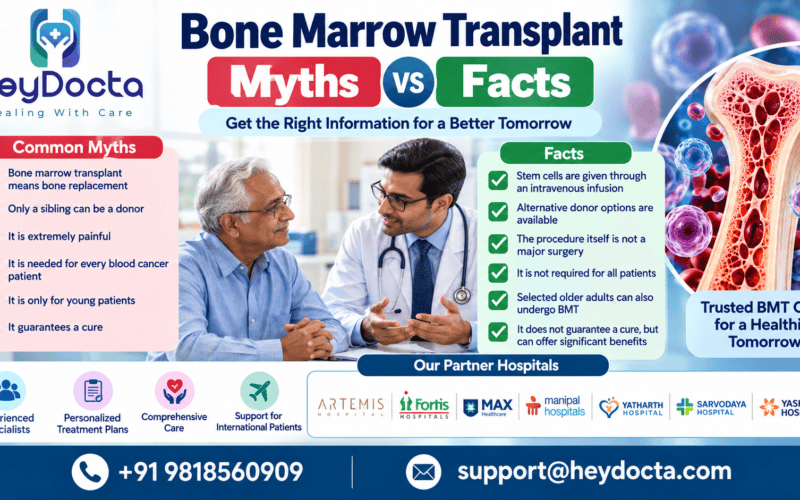
A stem-cell transplant is not required for every lymphoma patient. It may be considered in selected patients when lymphoma has relapsed, is refractory to previous treatment, or when high-dose therapy followed by stem-cell rescue is clinically appropriate. For example, NCI describes autologous stem-cell transplantation as an important treatment approach in selected relapsed lymphoma settings.
Types of Bone Marrow Transplant for Lymphoma
Despite the term “bone marrow transplant,” many modern transplants use stem cells collected from the bloodstream.
1. Autologous Stem Cell Transplant
In an autologous transplant, the patient’s own stem cells are collected and stored before high-dose chemotherapy. After the conditioning treatment, the stem cells are returned to the patient to help restore blood-cell production.
Autologous transplantation is commonly considered for selected lymphoma patients, particularly in certain relapsed or treatment-responsive situations.
2. Allogeneic Stem Cell Transplant
An allogeneic transplant uses stem cells from another person, such as a matched sibling, matched unrelated donor, or suitable alternative donor.
It may be considered for selected lymphoma patients, particularly when an autologous transplant is unsuitable or when the treating team believes a donor-based transplant is appropriate.
The decision depends on disease biology, previous treatment, response, donor availability, age, general health and transplant risks.
Bone Marrow Transplant Specialist in India
Dr. Gaurav Dixit – Artemis Hospitals, Gurugram is Head – Haematology Oncology & Bone Marrow Transplant. His areas of specialty include BMT, haematopoietic stem-cell transplantation, haematology and oncology. His listed areas of interest include lymphoma, leukemia, multiple myeloma and aplastic anemia. Artemis lists his experience as 20 years and his procedures include autologous, matched-sibling allogeneic, haploidentical and matched-unrelated donor transplantation.
Artemis Hospitals’ BMT division states that it manages malignant blood disorders including Hodgkin and non-Hodgkin lymphoma and provides both autologous and allogeneic transplant approaches.
Bone Marrow Transplant Cost for Lymphoma in India
The bone marrow transplant cost in India depends heavily on the transplant type, disease status, conditioning treatment, hospital stay, medicines, donor requirements and complications.
Some Hospitals currently gives a general BMT cost range of USD15,700 to 31,500 noting that hospital, location, room category and complications can affect the final cost.
For 2026 planning, another India-focused cost guide estimates approximately USD 12,500–20,800 for autologous transplantation, USD 20,800–36,400 for matched-related allogeneic transplantation, and USD 31,200–57,200+ for haploidentical, unrelated-donor or complicated pathways. These are planning ranges, not guaranteed package prices.
India vs USA: BMT Cost Comparison
| Country | Indicative BMT Cost | Cost Consideration |
| India | USD 12,500–20,800+ for many autologous pathways | Depends on treatment and complications |
| India | USD 20,800–36,400+ for matched-related allogeneic pathways | Donor and post-transplant care affect cost |
| USA | USD 240,000 to over USD 1 million for unrelated transplant and up to 6 months of care | Donor search and extended care may add costs |
The U.S. Health Resources & Services Administration states that an unrelated bone marrow or cord-blood transplant can range from USD 240,000 to more than USD 1 million, including the transplant and up to six months of care. It also notes that donor-search costs can be additional.
These figures should not be treated as direct package-to-package comparisons because the treatment scope and included services may differ.
What Can Affect the Total Treatment Cost?
The final quotation may depend on:
- Lymphoma subtype and disease status
- Previous chemotherapy or immunotherapy
- Autologous or allogeneic transplant
- Donor matching and donor-related testing
- Stem-cell collection and processing
- Conditioning chemotherapy
- Hospital room and protected isolation
- Blood and platelet transfusions
- Antibiotics and other medicines
- ICU requirements, if necessary
- Infections or other complications
- Length of hospitalisation
- Follow-up investigations and medicines
For international patients, flights, accommodation outside the hospital, food, caregiver expenses and local transportation may also need to be budgeted separately.
Talk to a Medical Tourism Expert: HeyDocta can help obtain a patient-specific treatment estimate from suitable Indian hospitals after reviewing the medical records.
Hospitals for Lymphoma and Bone Marrow Transplant in India
International patients can explore specialised departments at hospitals such as:
- Artemis Hospitals
- Fortis Hospitals
- Max Hospitals
- Manipal Hospitals
- Yatharth Hospitals
- Sarvodaya Hospital
- Yashoda Hospitals
The appropriate hospital should be selected based on the patient’s lymphoma subtype, transplant requirement, previous treatment, clinical condition and specialist availability rather than a generic ranking.
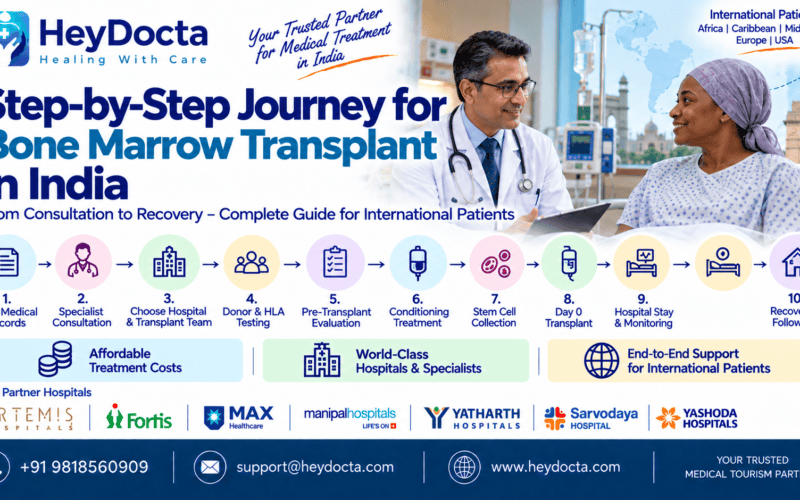
Step-by-Step Process for International Patients
Step 1: Send Medical Reports
Patients can share biopsy reports, PET-CT/CT scans, pathology reports, blood tests, previous treatment records and discharge summaries.
Step 2: Specialist Medical Opinion
The transplant and oncology team reviews the records and determines whether further investigations or a transplant evaluation is required.
Step 3: Treatment Planning
The medical team may recommend additional chemotherapy, immunotherapy or another treatment before considering transplantation.
Step 4: Pre-Transplant Evaluation
If transplant is appropriate, the patient undergoes detailed testing to assess organ function, infection status, disease response and transplant fitness.
Step 5: Stem-Cell Collection
For autologous transplantation, the patient’s stem cells are collected and stored. For allogeneic transplantation, donor evaluation and matching are required.
Step 6: Conditioning and Transplant
High-dose chemotherapy or another conditioning regimen is administered, followed by infusion of the collected stem cells.
Step 7: Engraftment and Monitoring
The patient remains under close medical observation while the transplanted stem cells begin producing new blood cells. Infection prevention, transfusions, medicines and laboratory monitoring are important during this period.
Step 8: Follow-Up and Return Planning
After discharge, regular follow-up is required. International patients should coordinate their return home with their treating transplant team and home-country haematologist.
Medical Visa and Travel Support for International Patients
India provides an e-Medical Visa category for eligible international patients. The official Indian e-Visa portal lists e-Medical and e-Medical Attendant categories and requires a hospital letter for an e-Medical Visa application. Eligibility and visa conditions should be checked on the official portal before travel.
HeyDocta can assist patients with:
- Hospital appointment coordination
- Medical invitation documentation
- Visa guidance
- Airport and local travel planning
- Accommodation assistance
- Caregiver coordination
- Follow-up appointment planning
Recovery and Stay in India After Transplant
Stem-cell transplantation is an intensive treatment and patients may need to remain near the transplant centre for several weeks or longer, depending on the transplant type and recovery.
Autologous and allogeneic transplants have different recovery pathways. Allogeneic transplantation can require longer monitoring because complications such as infections and graft-versus-host disease may occur.
Patients should not book a fixed return date until the treating team confirms that travel is medically appropriate.
Frequently Asked Questions
1. Is bone marrow transplant a treatment for lymphoma?
Yes, stem-cell transplantation is used for selected lymphoma patients, particularly in certain relapsed or refractory settings. It is not required for every lymphoma patient.
2. Is autologous or allogeneic transplant better for lymphoma?
Neither is universally better. The appropriate option depends on lymphoma subtype, treatment response, previous therapies, patient fitness and other clinical factors.
3. How much does lymphoma bone marrow transplant cost in India?
General BMT costs in India are commonly reported around USD15,700–31500 while 2026 planning ranges vary according to transplant type. Autologous pathways may be around USD 12,500–20,800, with donor-based and complex transplants costing more.
4. How long should an international patient stay in India?
The required stay varies significantly. Hospitalisation may last several weeks, followed by outpatient monitoring. Some patients need to stay near the transplant centre for additional weeks after discharge.
5. Can lymphoma patients from Africa travel to India for BMT?
Eligible international patients can travel to India for medical treatment subject to Indian visa rules and their medical condition. A specialist should review the patient’s records before travel.
6. Does HeyDocta charge patients an additional medical coordination fee?
HeyDocta’s medical tourism facilitation is designed to support international patients with hospital coordination, medical opinions, visa and travel assistance without an additional cost to the patient for these facilitation services. Patients remain responsible for hospital treatment, investigations, medicines, travel and other actual expenses.
7. Can HeyDocta arrange treatment cost estimates from Indian hospitals?
Yes. Patients can share their medical reports with HeyDocta for coordination with suitable partner hospitals and to understand potential treatment options and estimated costs.
Conclusion
Bone marrow transplant for lymphoma in India can be considered for carefully selected patients based on lymphoma subtype, treatment response, previous therapies and overall health. India offers specialised transplant centres, experienced haematology teams and comparatively lower treatment costs, but the final treatment plan must be individualised by a qualified transplant specialist.
HeyDocta supports international patients throughout the journey, from medical opinion and hospital coordination to visa guidance, travel assistance and follow-up planning. Treatment costs and outcomes vary by patient, hospital, transplant type and complications, so a personalised hospital quotation should always be obtained before making travel arrangements.
Get Treatment Cost from Top Indian Hospitals: Share your lymphoma medical reports with HeyDocta.com to receive guidance on suitable treatment options, hospital coordination and estimated costs in India.