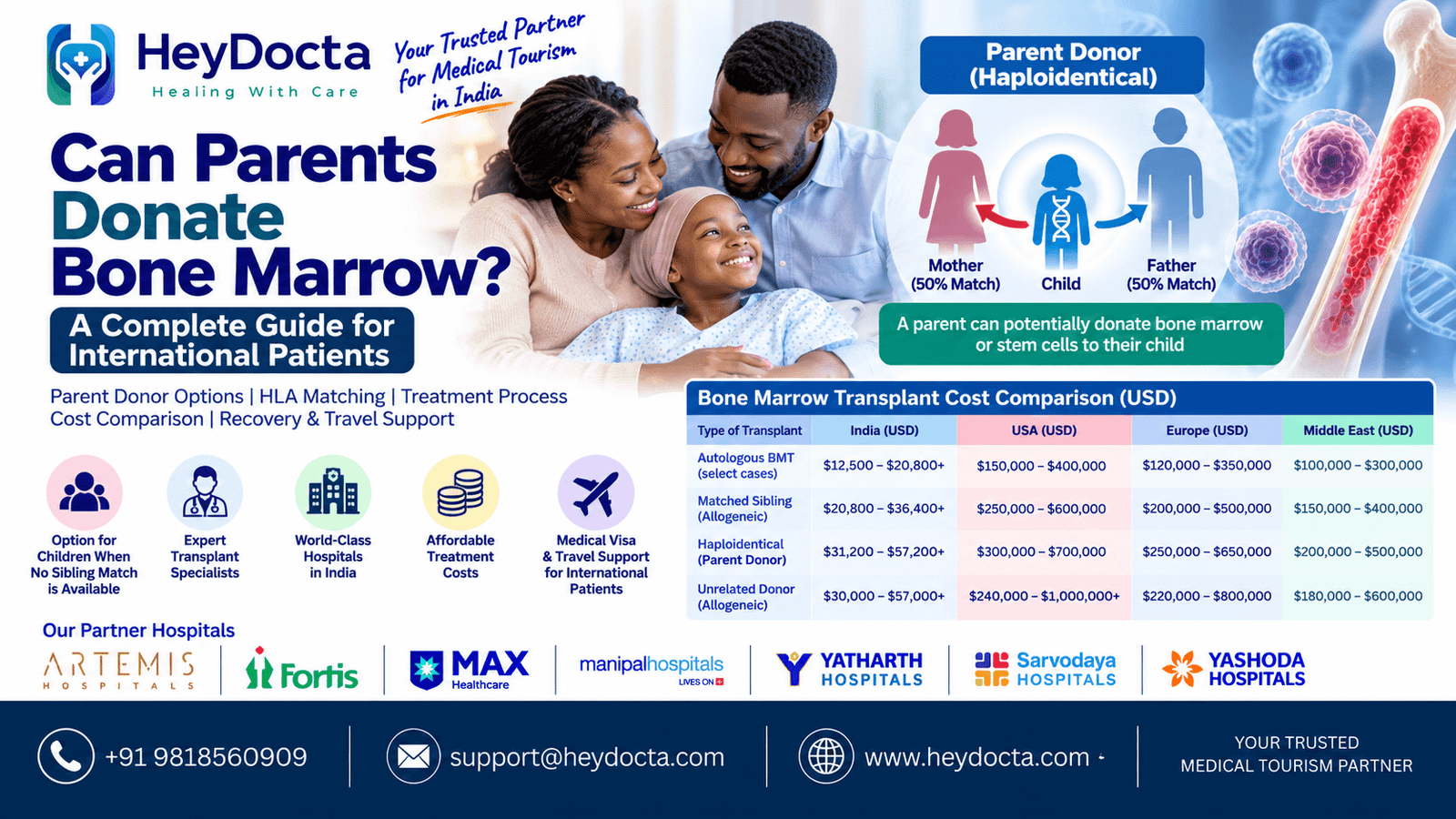
Can parents donate bone marrow? Yes. A parent can potentially donate blood-forming stem cells or bone marrow to their child when the parent is medically suitable and has an appropriate HLA relationship. Parents are commonly considered haploidentical donors, meaning they usually share about half of the child’s HLA markers. The final donor choice depends on HLA testing, donor health, the patient’s disease and the transplant team’s assessment.
For families from Nigeria, Ghana, Kenya, Cameroon, Zimbabwe, Guyana, Jamaica, the Middle East, Europe and the USA, India can be an option for evaluating and performing complex stem cell transplantation. HeyDocta helps international patients coordinate medical opinions, hospitals, donor evaluation, visas, travel and follow-up.
Get a Free Medical Opinion: Share the patient’s medical reports with HeyDocta to understand whether a parent or another donor may be considered and to receive an estimated treatment plan from an Indian transplant centre.
Can a Parent Be a Bone Marrow Donor?
Yes, but being a parent does not automatically make someone a suitable donor.
Every potential donor must undergo medical evaluation and HLA testing. A parent and child normally share one HLA haplotype, making the parent a haploidentical, or half-matched, donor. The National Cancer Institute defines a haploidentical donor as someone whose HLA tissue type is usually about 50% matched to the recipient. Parents, children and siblings can be haploidentical donors.
Haploidentical transplantation has expanded donor availability for patients who do not have a fully matched sibling or another closely matched donor. However, it involves specific transplant protocols and risks, so the transplant team must determine whether it is appropriate.
When Is a Parent Considered as a Donor?
A parent may be considered when:
- The patient requires an allogeneic stem cell transplant.
- No suitable fully matched sibling is available.
- HLA testing shows that the parent is an appropriate haploidentical donor.
- The parent passes the required medical and infectious-disease screening.
- The transplant specialist considers the donor medically appropriate.
- The transplant centre has an appropriate haploidentical transplant protocol.
Potential donors may undergo blood tests, HLA typing, infectious-disease screening and other assessments before donation.
The NCI describes haploidentical transplantation using biological parents, siblings or children and notes that donor selection involves detailed HLA and medical assessment.
Can a Mother or Father Donate Bone Marrow?
Both mothers and fathers can potentially be considered as donors.
However, the decision is not simply based on whether the donor is the mother or father. The transplant team considers HLA compatibility and other donor characteristics, as well as the patient’s circumstances.
In some clinical protocols, additional factors such as donor age, CMV status, antibodies against donor HLA and other medical characteristics are considered when choosing between potential haploidentical donors.
Therefore, families should not assume that the mother or father will automatically be selected. HLA testing and specialist assessment are essential.
What Diseases May Require a Parent Donor?
Allogeneic stem cell transplantation may be considered for selected patients with certain blood cancers and bone marrow disorders.
Depending on the individual diagnosis, examples can include:
- Acute myeloid leukemia (AML)
- Acute lymphoblastic leukemia (ALL)
- Myelodysplastic syndromes (MDS)
- Aplastic anemia
- Certain lymphomas
- Other blood and immune-system disorders
Not every patient with these conditions needs a transplant. The indication depends on factors such as disease status, previous treatment, age, overall health and available donor options.
The NCI describes allogeneic transplantation as using blood-forming stem cells from another person, including a biological parent, sibling or unrelated donor, depending on the circumstances.
Parent Donor vs Matched Sibling Donor
One of the most important questions families ask is whether a parent can be used when a sibling is not a full match.
| Feature | Matched Sibling | Parent Donor |
| Relationship | Brother or sister | Mother or father |
| Typical HLA relationship | May be fully matched | Usually half-matched |
| HLA testing | Required | Required |
| Donor search | Family-based | Family-based |
| Donor availability | Not every sibling is a match | Parents generally share one HLA haplotype |
| Transplant type | Matched allogeneic | Usually haploidentical allogeneic |
| Medical screening | Required | Required |
| Final selection | Transplant team | Transplant team |
A matched sibling and a haploidentical parent are not interchangeable donor categories. The transplant team selects the donor based on HLA and other clinical considerations.
How Is Bone Marrow or Stem Cell Donation Done?
The term “bone marrow transplant” can sometimes be confusing because the donor’s blood-forming stem cells may be collected from different sources.
Depending on the transplant protocol, stem cells can be collected from:
Peripheral Blood Stem Cells
The donor may receive medication to increase the number of stem cells circulating in the bloodstream. The cells are then collected through a process called apheresis.
Bone Marrow Collection
Stem cells are collected directly from the bone marrow, generally from the pelvic bones, using an appropriate medical procedure.
The transplant centre determines the appropriate source based on the patient’s treatment plan and donor considerations.
Is Donating Bone Marrow Safe for Parents?
Potential donors undergo medical screening before donation to determine whether they can safely donate.
The risks depend on the collection method. Bone marrow collection may cause temporary pain or discomfort, while peripheral blood stem cell collection can involve temporary symptoms associated with the medication used to mobilise stem cells.
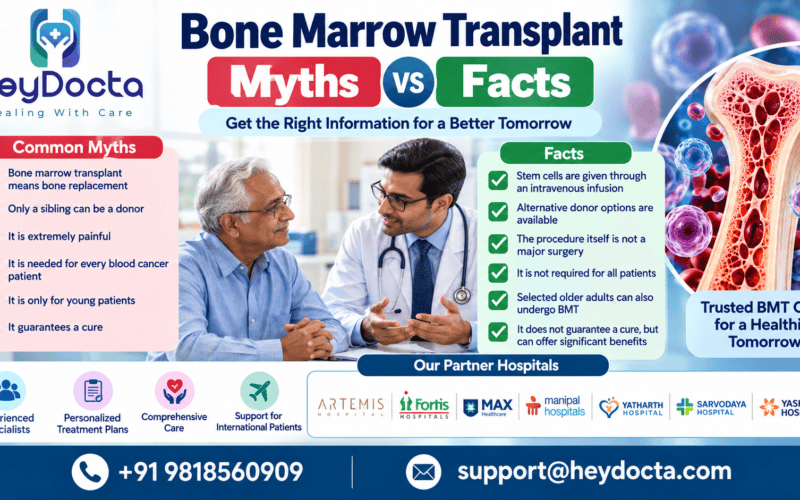
A parent should never donate simply because they feel obligated to help their child. Donation requires informed consent and independent medical assessment.
The transplant team will explain the expected procedure, potential risks and recovery before donation.
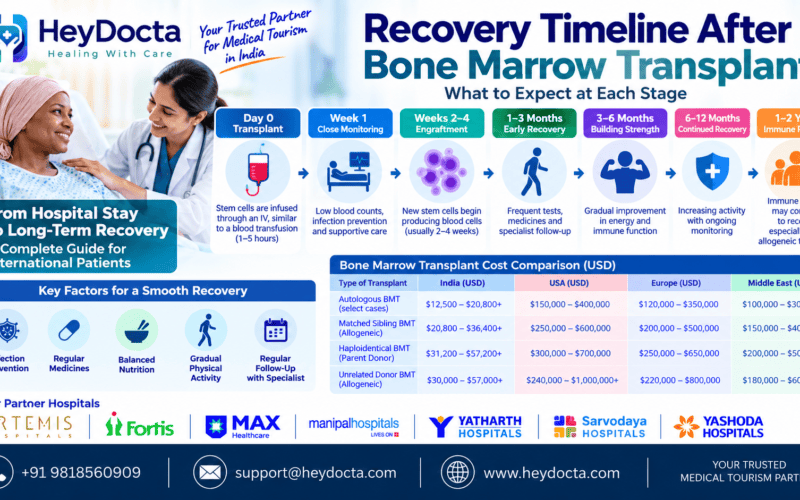
Bone Marrow Transplant Cost in India for Parent Donors
The total cost depends on whether the transplant is haploidentical, the hospital, disease, conditioning treatment, donor testing, medicines, hospital stay and complications.
Some Hospitals currently publishes a general BMT cost range of approximately USD15000 to 310000 in India and notes that costs vary according to hospital, location, room category and complications.
For international patients, this is an indicative planning range, not a guaranteed package price.
Indicative Cost Comparison
| Cost Factor | India | USA |
| General BMT planning range | USD 15000–30000* | — |
| Parent/haploidentical donor transplant | Hospital-specific quotation | Hospital-specific quotation |
| Donor evaluation | Depends on tests required | Depends on centre and insurance |
| Unrelated donor search | Not applicable when using a parent | May add significant cost |
| Complications/extended care | Additional | Can substantially increase total cost |
The U.S. Health Resources and Services Administration reports that an unrelated bone marrow or cord blood transplant can cost approximately USD 240,000 to more than USD 1 million, including the transplant and up to six months of care. It also notes that donor searches can cost from USD 10,000 to more than USD 50,000 in some cases.
This is one reason international families compare treatment costs before selecting a transplant destination. However, costs in Europe, the Middle East and African countries differ considerably depending on the healthcare system, insurance and transplant centre.
*Indian costs are indicative and should be confirmed with the treating hospital after reviewing the patient’s medical records.
Why International Patients Consider India for Parent Donor Transplantation
Families travelling from Africa, the Middle East, Europe, the USA and the Caribbean may consider India because specialised hospitals offer haematology and stem cell transplant services.
When comparing hospitals, families should consider more than the quoted price:
- Experience with haploidentical transplantation
- HLA and donor-testing facilities
- Transplant unit infrastructure
- Infection-control protocols
- Blood bank support
- ICU availability
- Post-transplant monitoring
- Availability of specialist care
- Total estimated treatment cost
- Follow-up arrangements after returning home
HeyDocta can help patients compare suitable hospitals based on their medical requirements rather than simply choosing a hospital based on price.
Bone Marrow Transplant Specialists in India
Dr. Gaurav Dixit is Head – Haematology Oncology & Bone Marrow Transplant at Artemis Hospitals, Gurugram. His official profile lists BMT, haematopoietic stem cell transplantation and haematology among his specialties. His listed procedures include matched sibling allogeneic stem cell transplant, haploidentical stem cell transplant and matched unrelated donor transplant.
Other Indian transplant centres should also be evaluated according to the patient’s diagnosis, donor availability, transplant protocol and specialist recommendation.
HeyDocta’s partner hospital network includes Artemis Hospitals, Fortis Hospitals, Max Hospitals, Manipal Hospitals, Yatharth Hospital, Sarvodaya Hospital and Yashoda Hospital.
Step-by-Step Process for a Parent Donor Transplant
1. Medical Report Review
The transplant team reviews the patient’s diagnosis, pathology, previous treatments, blood reports and other medical records.
2. HLA Testing
The patient and potential parent donors undergo HLA testing to establish the donor-recipient relationship.
3. Parent Donor Evaluation
The potential donor undergoes medical screening and tests to determine whether donation is appropriate.
4. Transplant Planning
If the parent is selected, the transplant team determines the appropriate conditioning and donor-cell collection strategy.
5. Conditioning Treatment
The patient receives conditioning therapy before donor stem cells are infused.
6. Stem Cell Collection
Stem cells are collected from the selected donor using the method chosen by the transplant centre.
7. Stem Cell Infusion
The collected cells are given to the patient through an intravenous line.
8. Engraftment and Monitoring
The patient is monitored for blood-count recovery, infections, graft-versus-host disease and other potential complications.
9. Follow-Up
After discharge, frequent laboratory tests and specialist consultations are generally required.
Medical Visa and Travel Support for International Families
International patients travelling to India for medical treatment need appropriate documentation.
The Government of India’s e-Visa information states that an e-Medical Visa application requires a scanned passport bio page and a letter from the Indian hospital on its letterhead containing the suggested or tentative admission/treatment date.
HeyDocta can assist with:
- Medical report sharing
- Hospital coordination
- Specialist consultation
- Treatment-cost estimates
- Donor coordination support
- Medical visa documentation guidance
- Airport and local travel arrangements
- Accommodation coordination
- Follow-up communication
There is no separate HeyDocta service fee added to the patient’s hospital treatment cost for this facilitation service.
Talk to Our Medical Tourism Expert: Contact HeyDocta to coordinate a medical opinion, parent donor evaluation and estimated transplant cost from suitable Indian hospitals.
Recovery and Stay in India
The patient’s stay depends on the disease, conditioning protocol, transplant type, engraftment and complications.
For international families, planning should include:
- Hospitalisation
- Donor evaluation and collection
- Post-transplant monitoring
- Medicines
- Blood tests
- Accommodation after discharge
- Follow-up appointments
- Emergency access if required
The exact duration should be determined by the treating transplant team. Patients may need to remain near the hospital after discharge for frequent monitoring.
FAQs About Parent Bone Marrow Donation
1. Can a father donate bone marrow to his child?
Yes. A father may be considered as a haploidentical donor if HLA testing and medical evaluation show that he is suitable.
2. Can a mother donate bone marrow to her child?
Yes. A mother can potentially be a haploidentical donor. The transplant team must evaluate HLA compatibility and donor health.
3. Are parents always a 50% match?
Parents generally share one HLA haplotype with their biological child, which is why they are commonly described as haploidentical or half-matched donors.
4. Can a parent donate if there is no matched sibling?
Yes. A parent may be considered when a fully matched sibling is unavailable, provided the transplant team determines that haploidentical transplantation is appropriate.
5. How much does a bone marrow transplant cost in India?
A general BMT cost range published by Some Hospitals is approximately USD15000–30000, but the actual cost depends on the transplant type, hospital, disease and complications.
6. Does the parent need medical tests before donation?
Yes. Potential donors undergo HLA typing and medical screening to determine suitability and donor safety.
7. Can HeyDocta help international families?
Yes. HeyDocta can coordinate medical opinions, suitable Indian hospitals, donor-related communication, treatment estimates, medical visa guidance, travel arrangements and follow-up support.
Conclusion
Can parents donate bone marrow? Yes, in appropriate cases. A parent is commonly considered a haploidentical donor because the parent and child generally share one HLA haplotype. However, the parent must undergo HLA testing and medical evaluation, and the transplant specialist must determine whether this donor option is suitable.
For international families, India provides access to specialised haematology and transplant centres, while published BMT costs can be considerably different from those reported for unrelated donor transplantation in the United States. The final treatment plan and quotation should always be based on the patient’s medical condition and the selected hospital.
Get Treatment Cost from Indian Hospitals: Contact HeyDocta.com for medical report review, parent donor coordination, hospital selection, treatment-cost estimates, medical visa assistance, travel support and end-to-end assistance for bone marrow transplantation in India.